Street Power and the Limits of Protest Politics
While mass protest is a fundamental democratic right, relying on street mobilization as the primary mechanism for political change carries serious structural risks for constitutional democracy.
In Nepal, Gen Z protesters are back on the streets because they believe the Gen Z-led government they helped elect has already betrayed them. Their renewed agitation threatens to prolong instability in a country still recovering from the unprecedented mob violence of last September.
The recent protests in New Delhi highlight a broader trend across the Global South, where digitally organized, decentralized youth movements increasingly bypass traditional political institutions to extract immediate concessions from the state.
Street mobilization can be effective in securing short-term political victories, but such success rarely alters the structural conditions that fuel youth unemployment, inflation and governance failure.
The result is a self-reinforcing cycle of expectation and disappointment. Youth movements win dramatic concessions, yet the underlying economic and structural conditions remain largely unchanged. Protesters soon conclude that the government has betrayed them, prompting a fresh wave of demonstrations. The consequence is chronic political volatility, with streets replacing institutions as the principal arena of democratic contestation.
New Delhi’s The Bar Behind the Sandwich Shop (TBBTSS), however, has managed to remain a well-kept secret – the mark of a true speakeasy in an era of faux-hidden bars, writes @DeepaliSingh05
https://t.co/fGuj9mC0vr
An empty DTC bus at 9 PM. Not because there are no passengers—hundreds were waiting at bus stops along the route. The driver simply wouldn't stop. Route 356STL Dwarka Cluster Depot 22 buses are notorious for this.
The only reason I managed to board was because, as I saw the driver not slowing down at my stop, so I pulled out my phone and started recording with flash. The driver immediately stopped.
For many Delhi residents, these are the everyday hurdles involved in something as basic as boarding a public bus, especially the old orange ones. Operator contracts need stricter infractions clauses for not stopping.
1/2
Ghapla @CGHS Dispensary Sector 55 Gurugram. Supplements that have been indented are not handed over to the beneficiaries on pretext that the government doesn’t give supplements. Why were they indented in the 1st place? So that they can be used elsewhere?
843 women in Beed, India had their uterus surgically removed in 2024, right before they went to cut sugarcane. 477 of them were aged 30 to 35. The Maharashtra government's own health survey, published in June 2025, said so.
The surgeries are about money. In Beed, a man and his wife sign up as a working pair, locally called a koyta (the sickle they use). A middleman called a mukadam gives them an upfront payment of Rs 50,000 to 60,000 (about $520 to $625) for a six-month sugarcane season. To work that off, the couple has to cut and load two tonnes of cane every single day, for 12 to 14 hours, with no day off all week. The mukadam keeps 15 to 25 percent of the hiring amount plus another 30 percent of what the couple earns. The fine for missing a day is Rs 250 to 500. A woman who takes one day off when her period is bad can lose almost a week of take-home pay.
The mill that buys the cane is legally separate from all of it. The mill just sells the sugar. Maharashtra has 210 sugar mills and is finishing the 2025-26 season near 10 million tonnes of sugar produced. The buyers include Coca-Cola, PepsiCo, Mondelez (which owns Cadbury), and Unilever. A 2024 New York Times and Fuller Project investigation traced the chain through two big sugar companies, Dalmia Bharat Sugar and NSL Sugars. Both fed into mills carrying the industry's main ethical stamp, called Bonsucro. Its audits caught none of it. The Times found everything those audits missed, in months.
Back in 2019, a government investigation surveyed 82,309 women cane cutters in Beed. 13,861 of them, 17 percent, had had their uterus removed. A 2024 study by the IIED, an international research group, looked harder at 423 households in Beed. In households where the women had migrated for cane work, 55.73 percent had had a hysterectomy. Where the women had stayed home, the figure was 17.06 percent. Across all of India, the national rate for women aged 15 to 49 is 3.2 percent.
After the 2024 reporting: Mondelez quietly cut ties with Dalmia. Coca-Cola launched a worker-training program in 4 mills. PepsiCo blocked a shareholder vote in February 2025, using a US rule that lets companies skip votes on parts of their business worth less than 5 percent of revenue. The US Department of Labor added Beed sugar to its list of products made using forced labour. Maharashtra set up another committee on February 25, 2026, seven years after its first one.
In those seven years, the sugar kept coming. The system that produces the hysterectomies is the same system that produces the sugar in the soda cans on the shelf. Both are still working exactly as they were built.
@MunCorpGurugram@gurgaonpolice@gurgaon
What is even the plan for improving the traffic situation, condition of roads in and around Sector - 46. Continuous inaction is making this sector unlivable.
There are no roads left at all. Everything is broken since months.
This is how Haryana’s corrupt bureaucracy and politicians are “making it a great state to live.”
They’ve sold off forests through legal paperwork and handed them to builders.
Now watch how DLF is legally clearing forest land, to sell a single flat for ₹70 crore.
जयपुर पुलिस अब साइकिल से गश्त करेगी।
उधर चोर KTM और Fortuner में निकलेंगे।
PR की भी सीमा होती है जनाब।
देश को प्रशासन चाहिए, इवेंट मैनेजमेंट नहीं। 🙏
#राजस्थान_पुलिस
2/2 @MunCorpGurugram@cmohry is there any rule on how long a sector can exist without an RWA.
Jo RWA thi, woh corrupt ho gayi, did no work. Now there is none to think of any entry exit plan for the sector. Roads within the sector have become a thoroughfare.
1/2 Padharo Mahara des Sector 46 Gurgaon. At 8:30pm, you will spend 50 min to enter the sector because the entry point is choked. No one has any sense of lane and direction.. wrong lane and wrong direction driving is the norm. @TrafficGGM@DGPHaryana
@NitinChawl15642@hryhelpdesk@MunCorpGurugram Sector 46 doesn’t even have a proper RWA. The Adhoc committee is very happy staying AdHoc. Doesn’t @MunCorpGurugram have any rules around the duration of Adhoc RWAs. Actually it serves their purpose to not have one.
@george__mack It's not an accident that Jesus was a carpenter. How instructive for the rest of us that to keep a healthy body and mind, we need to work with our hands.
People avoid govt schools despite paying taxes and an education cess, because the system has failed to earn their trust. Private schools exploit this compulsion. With no real alternatives, parents are squeezed and intimidated.
Here, a principal from a reputed private school in Hardoi is berating parents for buying books from a cheaper shop instead of the school’s designated vendor. The insulting tone, “shut up,” “naam kaat do”, says it all.
Almost everyone with power in India abuses it to bully those without it.
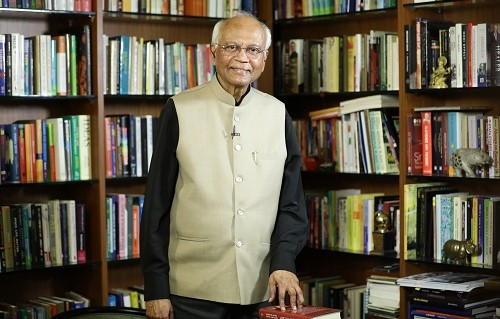
In the 1990s, India was facing a Biological Colonization. If Dr. R.A. Mashelkar had not stepped in, we might have ended up paying a royalty to a US corporation every time we used turmeric on a wound/exported Basmati rice.
In 1997, a Texas-based company called RiceTec was granted a patent by the USPTO (US Patent & Trademark Office) for Basmati Rice lines & grains. They claimed they had invented a superior strain of rice. Mashelkar realized that if this patent stood, Indian farmers would be barred from selling their own rice under the name Basmati in the US. It was a theft of Geographical Intellectual Property.
He did not just shout Injustice. He assembled a team to find Genetic Fingerprints. They proved that the new rice was actually derived from Indian germplasm that had existed for centuries. The USPTO was forced to strike down the majority of the claims.
2 researchers at the University of Mississippi were granted a patent for the use of turmeric in healing wounds. To a Western patent officer, this was a novel invention. To an Indian, it was something their grandmother did every day. Mashelkar produced an ancient Sanskrit text as Prior Art. The USPTO demanded a translation. He provided evidence from the Journal of the Indian Medical Association dating back to 1953 + ancient Ayurvedic texts.
This was the 1st time in history that a patent granted to a US entity was successfully challenged & revoked based on the Traditional Knowledge of a developing country.
Mashelkar also realized that India could not fight 10000 legal battles every yr. He needed a Scalable Solution. Patent officers in the West were not malicious; they were just Data Blind. They could not read Sanskrit/Tamil/Persian. If a discovery was not in an English journal, it did not exist in their system.
He hired 100s of experts (Ayurveda practitioners, IT engineers, & Patent lawyers). They took 500000+ formulations & converted them into a digitized Shloka to Code format. The data was rendered in English, French, German, Japanese, & Spanish.
Today, India has signed agreements with the USPTO, the European Patent Office, & others. Before an officer grants a patent, they run a TKDL Scan. If the herb/method is in the library, the patent is rejected instantly.