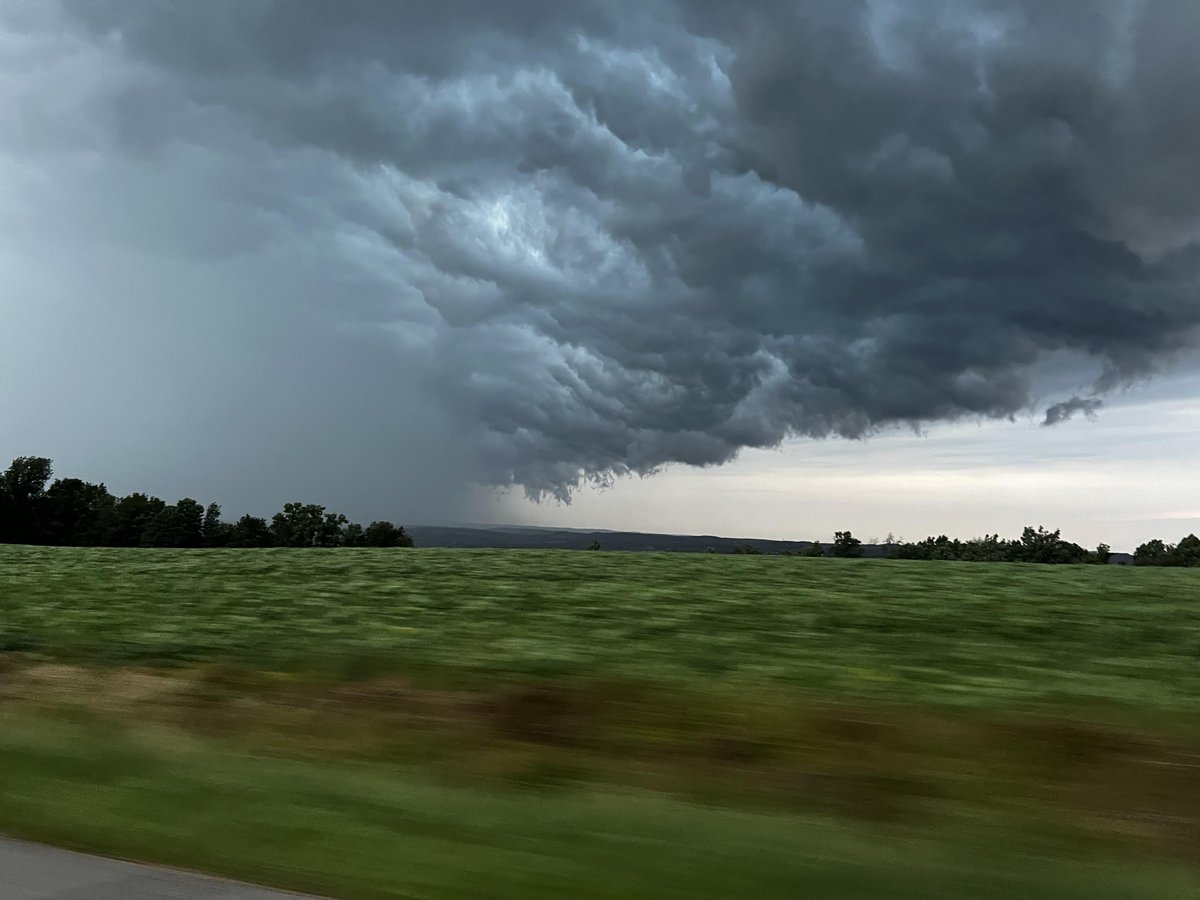
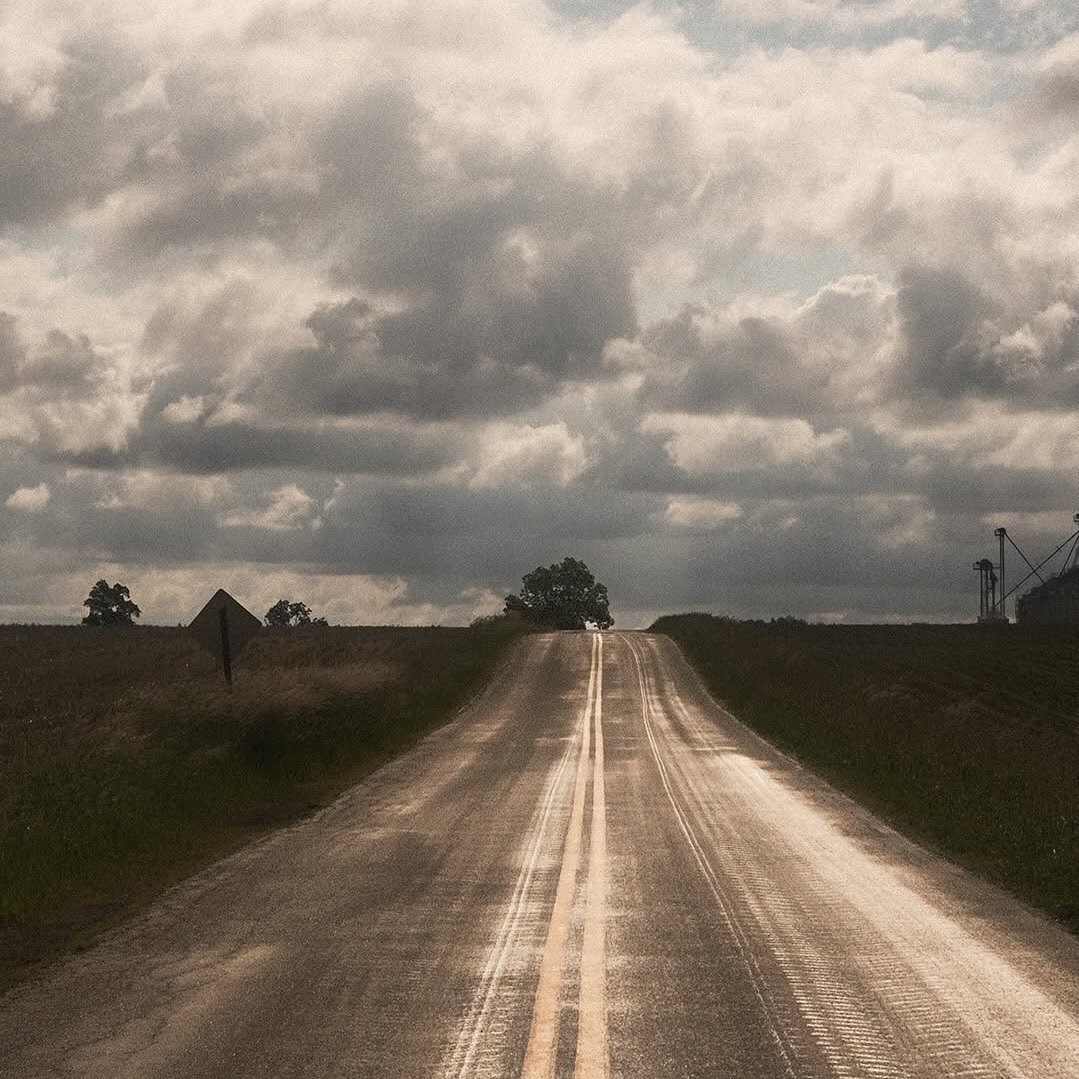
There are large swaths of the land up here where... there just isn't really hardly anybody around.
I've had many days here where the roads are empty, the villages are devoid of human activity, the trails do not appear to be well-worn, and I don't see anyone at all.
Depending on where you go, this is true regardless of the season. The desolation isn't just something seen in the winter months, though of course it is more acute then.
You might think that'd be an unnerving feeling but it really isn't. It's actually strangely comforting.
I'm not even what you'd call a misanthopist; in fact, I'm not even really "introverted" -- I like people a lot. But there's a lightness to life in an unpeopled place, a simplicity. Your mind goes quiet after a few weeks. You sleep more deeply.
And lonesomeness gives way to a kind of deep and private joy. Life becomes totally "elemental." Just line and form, shadow and light, water and sky, flora and wind. The brain shifts gears away from language itself most days; and so when you read a book, or write a paragraph, or speak to a friend on the telephone, you just feel it very deeply.
Words regain their power here.
Qbert (1982) is one of those timeless games that makes you wonder what they were smoking while designing it.
You are controlling an orange, round-bodied, armless alien-like creature with a big tubular nose (maybe a snout?), two big eyes, and rather short legs.
His frustrated "swearing" was pretty hilarious. When he dies or gets hit, a speech bubble shows symbols like @!#?@! with garbled synthesized sounds.
A unique game in many ways and another example of how incredibly innovative early 80s games were.
“Poetry is not a turning loose of emotion, but an escape from emotion; it is not the expression of personality but an escape from personality. But, of course, only those who have personality and emotion know what it means to want to escape from these.” ―T.S. Eliot
I asked Grok for a recipe.
Ingredients
• 3 large eggs (room temperature)
• ½ cup (120 ml) whole milk (room temperature)
• ½ cup (65 g) all-purpose flour
• 2–3 tablespoons sugar (adjust for sweetness; omit for savory)
• ½ teaspoon vanilla extract (optional)
• ¼ teaspoon kosher salt
• ¼ teaspoon ground nutmeg or cinnamon (optional but recommended)
• 3 tablespoons unsalted butter (divided)
• For serving: Powdered sugar, fresh lemon wedges, butter, fresh berries, maple syrup, or savory toppings like sautéed apples, ham & cheese, etc.
Equipment
• 10–12 inch cast-iron skillet (or oven-safe skillet)
• Blender or whisk + bowl
Instructions
1. Preheat the oven to 425–450°F (220–230°C). Place your skillet inside to heat up for at least 10–15 minutes (this is key for the big rise).
2. Make the batter: In a blender, combine the eggs, milk, flour, sugar, salt, vanilla, and nutmeg/cinnamon. Blend until smooth and frothy, about 30–45 seconds. (If no blender, whisk vigorously by hand.) Let it rest briefly while the pan heats. Room-temperature ingredients help with the puff.
3. Prepare the pan: Carefully remove the hot skillet (use oven mitts!). Add 2–3 tablespoons butter and swirl to melt and coat the bottom and sides. It should be sizzling.
4. Bake: Immediately pour the batter into the center of the hot, buttery skillet. Return to the oven and bake for 18–25 minutes (closer to 20 is typical). Do not open the oven door during baking, or it may deflate. It should puff up high with golden-brown edges.
5. Serve: Remove from the oven (it will start to deflate quickly—that’s normal). Dust with powdered sugar, squeeze fresh lemon juice over the top, add berries or your favorite toppings, and serve immediately while warm.
The only place in the world I’ve seen people and many young people go to cafe or park alone with a book is Japan or specifically Tokyo. Maybe not coincidentally Japanese culture storytelling is now dominating the world ever more through anime….but idk
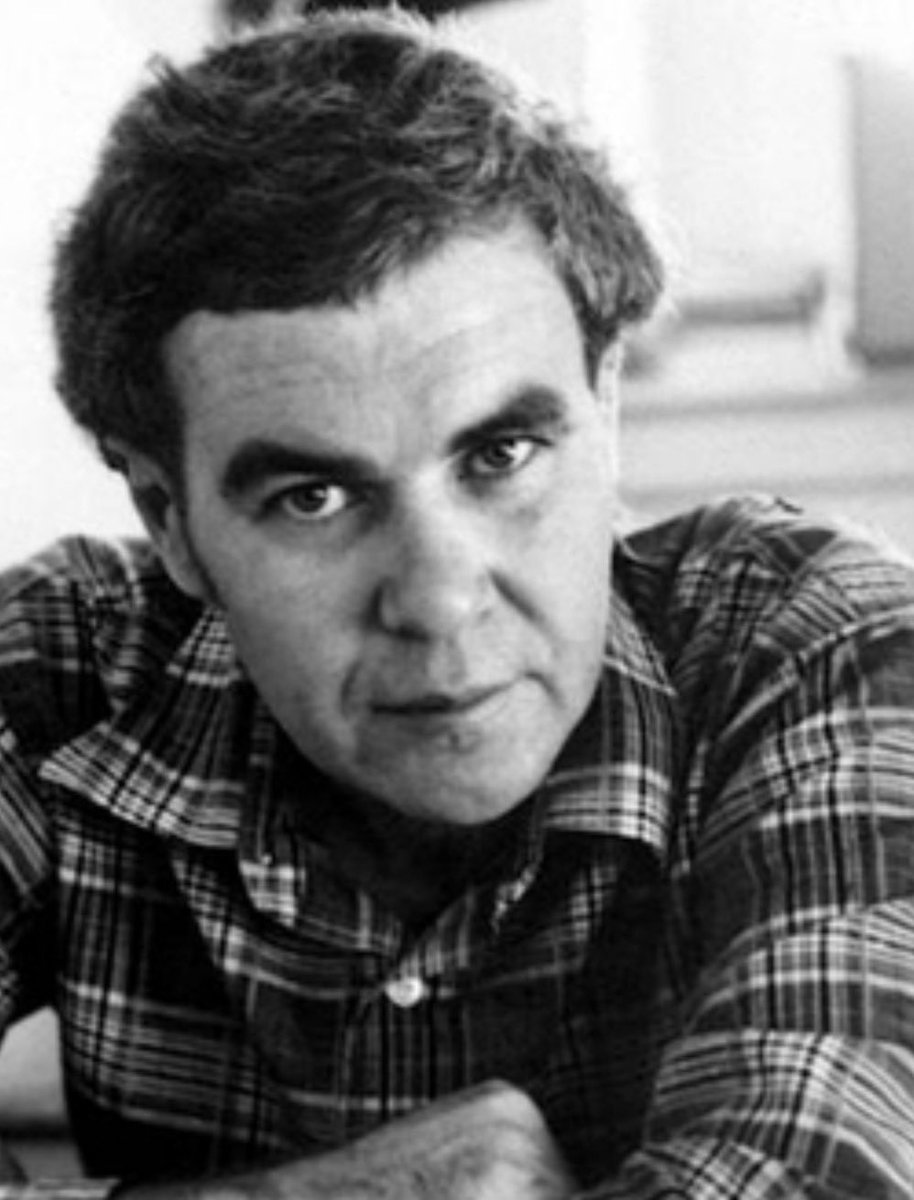
Loosely related to posts I’ve seen about the ‘reading crisis.’ A lot of authors are not writing from experience that can relate to a broad group of people. Raymond Carver (pictured here) gained an audience in the 70s-80s by writing about working class people as well as intellectuals. The stories are often descriptive without having an obvious ‘point’ or ‘lesson.’ But their honest depictions made them relatable to broad swaths of people. They are obviously rooted in real life. Carver took janitor jobs, would clean as fast as possible, and then write as much as he could on the job. That kind of desperation also keeps a man rooted in reality.
A lot of the writing now swims in abstractions and thinking as opposed to experience. Intellectuals writing for other intellectuals. This is not a novel observation. A lot of people have complained about it. But over time it means your readership of ‘literary fiction’ falls away. Stories about a guy with ear wax, his ex-wife coming over to help him get rid of it, all with the backdrop of financial problems and the wife dating a new man - that can land. (See the story ‘Careful’ in the Carver collection Cathedral).
The true lottery winners are those who got married to someone high-energy, mentally stable, intellectually curious, and above all, overflowing every day in gratitude and optimistic energy, to be able to learn, to be able to grow, to be able to experience the ups and downs of life
Many of you recommended 2 book series. Cixin Liu's "Remembrance of Earth's Past" and Dennis E. Taylor's "Bobiverse".
Thinking of doing some reading soon. :) Planning on reading both but which trilogy should go first?
No spoilers! 😇🗡️
EXCLUSIVE: The Los Angeles Metro is refusing to release videos of recent crimes on the transit system. But we've obtained footage of a man dragging a woman off the train and raping her—a horrific crime.
This is what LA authorities don't want you to see.
What if just 1 in 100 lawns gave up one patch of grass for wildflowers?
Not the whole yard, I'm not talking a massive prairie restoration here. Just one strip along the fence, one sunny corner, one useless slope, one bed where the grass already looks bad anyway.
There are roughly 40 million acres of lawn in the U.S. If even 1% of that became native flowers, grasses, shrubs, and host plants, that's about 625 square miles of new habitat.
Bees would find pollen. Butterflies would find host plants. Birds would find caterpillars. Fireflies would find less-manicured edges. Ground-nesting bees would find bare soil.
All in places that are currently being mowed, fertilized, sprayed, and treated like green carpet.
Donald Trump’s top social media advisor slams Mark Levin and other foreign influence campaigns.
0:00 The Iran War Propaganda
7:21 How Marjorie Taylor Greene Blew Up on Social Media
14:57 Was There an Epstein Cover-Up?
19:38 Who Is Mark Levin?
25:09 Why Did Trump Pivot on the War?
33:24 Foreign Influence in Social Media
41:12 Brad Parscale and Salem Media Network
50:18 The Organized Online Attack Campaign on Anti-War Voices
59:04 The Discrimination Against Whites in America
1:04:06 Why Don't We Have Voter ID?
1:05:47 James Fishback vs. Byron Donalds
1:12:51 Why Is the Trump Admin So Focused on Fox News?
1:15:56 Is Ted Cruz Worse Than Randy Fine?
1:21:21 Why Is Trump Still Friends With Mark Levin?
1:23:08 The Internet Is Not Reality
1:28:06 Why Hasn't There Been a Thorough Investigation Into Charlie Kirk's Assassinated?
1:39:47 Netanyahu, DeSantis, and Being Chronically Online
1:43:43 The Future of Donald Trump's Presidency
Oak trees have evolved a smart way to overwhelm the animals that eat acorns.
Every few years, across hundreds of miles, they drop a massive number of acorns all at once. The year before, almost nothing. The year after, almost nothing again.
It's called masting, and the strategy is brilliant. Squirrels, deer, blue jays, turkeys, and bears all eat acorns. If oaks produced a steady crop every year, the animals would maintain populations sized exactly to eat most of it. By producing almost nothing for several years and then flooding the forest floor all at once, the trees overwhelm the predators.
There are simply too many acorns for the animals to eat, and the surplus germinates into the next generation of oak trees. The ones that hoard and forget, squirrels especially, become inadvertent planters.
What's harder to explain is the synchrony. How do oaks across 700 kilometers coordinate the same decision in the same year?
The leading explanations involve shared weather cues, a specific temperature pattern in spring that acts as a trigger across the whole region, and possibly pollen coupling, where trees that need pollen from other trees synchronize flowering and, by extension, fruiting. Chemical signaling through the air or soil is a third hypothesis still being investigated.
None of these fully accounts for the scale. The trees aren't talking in any way we can intercept and understand. They're responding to the same world and arriving at the same answer, simultaneously, across a landscape larger than most countries.
In late September 1981, a ranch dog in Meeteetse, Wyoming named Shep caught something in the night. By morning it was dead beside his food bowl. John Hogg looked at it, figured it was probably a mink, and tossed it into the weeds along the river.
His wife Lucille fished it back out. She wanted it mounted.
The taxidermist recognized it immediately. It was a black-footed ferret, a species many scientists believed had disappeared. The last known captive animals had died a couple of years earlier. Wildlife biologists descended on Meeteetse and found a small wild colony nearby.
For a few years, the ferret had a second chance.
Then disease struck. Canine distemper swept through the population, and plague devastated the prairie dog colonies the ferrets depended on for food. By 1987 the species was collapsing. Scientists scrambled to capture every remaining ferret before the last wild population vanished.
Eighteen ferrets became the founders of the captive breeding program. Only seven successfully produced offspring. Every black-footed ferret alive today traces its ancestry back to those seven individuals.
One of the eighteen, a female named Willa, never reproduced. She died in January 1988. But tissue from Willa had been sent to the San Diego Zoo's Frozen Zoo, a cryogenic library preserving cells from more than a thousand species. Her genes were absent from the breeding population, and someone had the foresight to save them anyway.
For more than three decades, no one knew whether those cells would ever matter. Then they figured out what to do with them.
In December 2020, a cloned black-footed ferret named Elizabeth Ann was born from Willa's frozen cells, carried by a domestic ferret surrogate. She became the first cloned endangered species native to the United States.
Willa's genome contains nearly three times the unique genetic variation found in the average living ferret. Elizabeth Ann isn't just a scientific curiosity. She represents a potential lifeline for a population so inbred that nearly every animal is related.
The species got a second chance twice.
First from a ranch dog that caught something in the dark and a woman who didn't want to throw it away.
Then from the decision to freeze the cells of a ferret that had never had offspring, on the chance that someone, someday, might need them.