Reminder for all young parents:
You only get:
- 1 Summer with your baby
- 3 with your toddler
- 9 with your child
- 5 with your teenager
This time is precious. Don’t rush it.
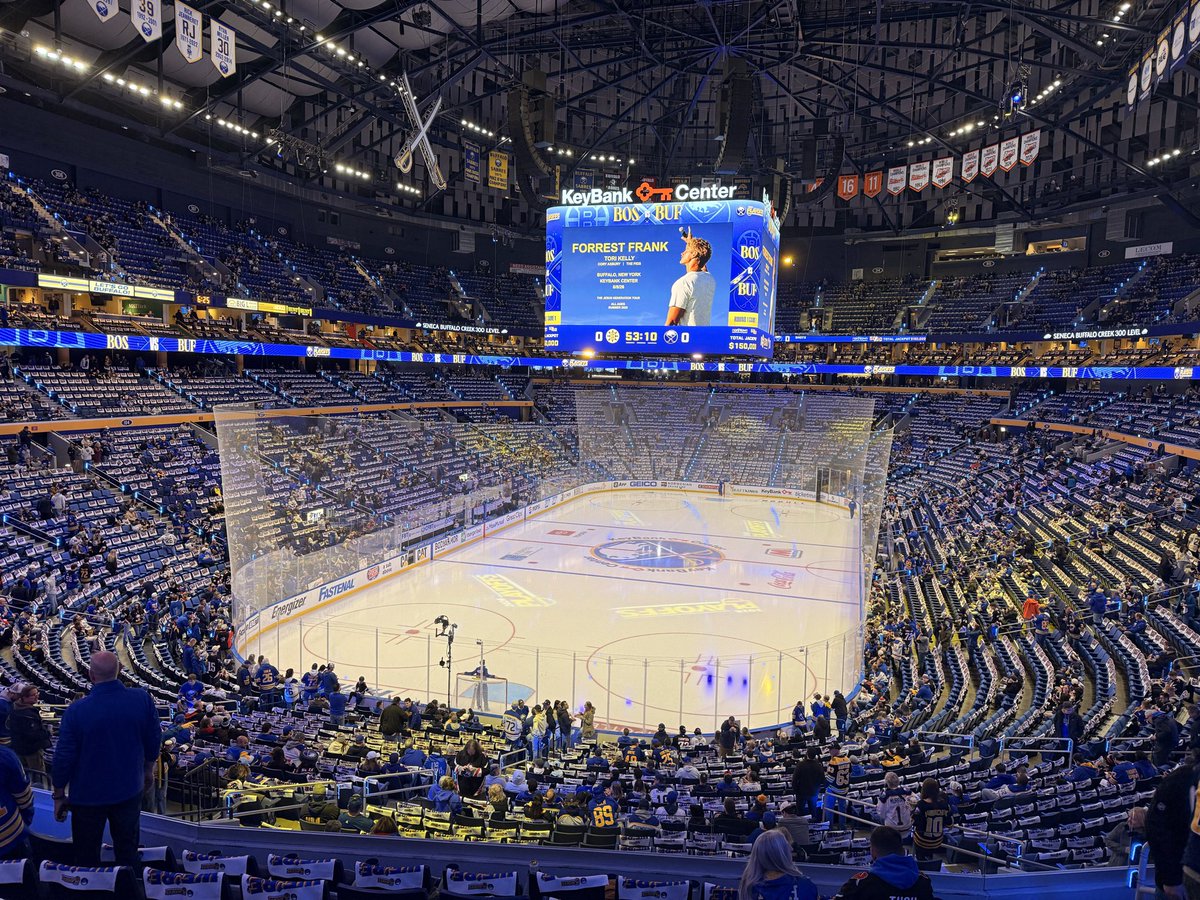
Buffalo hasn't made the playoffs since 2011... but
• they were the largest U.S. market for the 2026 Olympic Gold Medal Game
• In 2015, 2016, 2017, 2018, 2019, 2022, 2023, 2024 Stanley Cup Finals they were the largest local viewership from a neutral market
• In 2016, 2017, 2018, and 2019 they were the 3rd largest local viewership of any U.S. city for the complete postseason
• Game 1 tickets this year were $464 USD on average, the most of any team in the NHL
• they're projected as the largest U.S. market for the 2026 regular season
They're the most passionate American hockey city, hands down.
Jensen Huang just gutted the AI job panic with one profession.
Radiology.
The field AI was supposed to kill first.
Jensen Huang: “Computer vision was superhuman in 2019. And yet, the number of radiologists grew.”
Not competitive. Not close. Superhuman.
Every forecast said radiologists were finished.
Every forecast was wrong.
Not slightly wrong. Directionally wrong.
There are now fewer radiologists than the world needs. A global shortage. In the exact specialty AI was supposed to erase.
Why?
Because the task was never the job.
Huang: “The purpose of your job and the tasks and the tools that you use to do your job are related. Not the same.”
Reading a scan is a task.
Diagnosing disease is a purpose.
AI handled the task. The purpose didn’t shrink. It compounded.
Faster reads meant more patients seen. More patients seen meant more disease caught. More disease caught meant more demand for the people who decide what to do about it.
The tool did not kill the job. It fed it.
Then the fear did what the technology never could.
Huang: “The alarmist warning went too far and it scared people from doing this profession that is so important to society. It did harm.”
People heard radiologists were finished and walked away from the field.
Medicine bled talent it could not afford to lose.
Not because the work vanished. Because the panic said it would.
The prediction was wrong. The damage was real.
Huang: “The number of software engineers at Nvidia is going to grow, not decline.”
Not hold steady. Grow.
The company building the infrastructure that automates code is hiring more of the people who write it.
Huang: “I wanted my software engineers to solve problems. I didn’t care how many lines of code they wrote.”
Nobody ever hired an engineer to type. They hired them to think.
When the machine handles syntax, the engineer does not become obsolete. The bottleneck just moves upstream. To architecture. To edge cases. To the kind of reasoning no model handles alone.
The world was never short on unsolved problems.
It was short on people free to chase them.
That is the part the fear narrative misses every single time.
340,000 women once worked as telephone switchboard operators.
That job is gone. Nobody mourns it.
What replaced it created millions of roles that nobody in 1920 had the vocabulary to describe.
The losses are always visible. The gains are always invisible until they arrive.
That pattern has survived every technological shift in history.
It is surviving this one.
The people forecasting mass displacement are making the same mistake as the people who forecasted the end of radiology.
They can see the task being automated.
They cannot see the purpose expanding underneath it.
That blindness is not just wrong.
It is expensive.
Every person scared out of a career that AI will actually make more valuable is a cost the economy absorbs for nothing.
Not because of the technology.
Because of the story told about it.