Since the beginning, the most valuable computation in the world has been locked away. AI compute runs inside data centers you can't own, trade, or borrow against. A multi-trillion-dollar asset with no market.
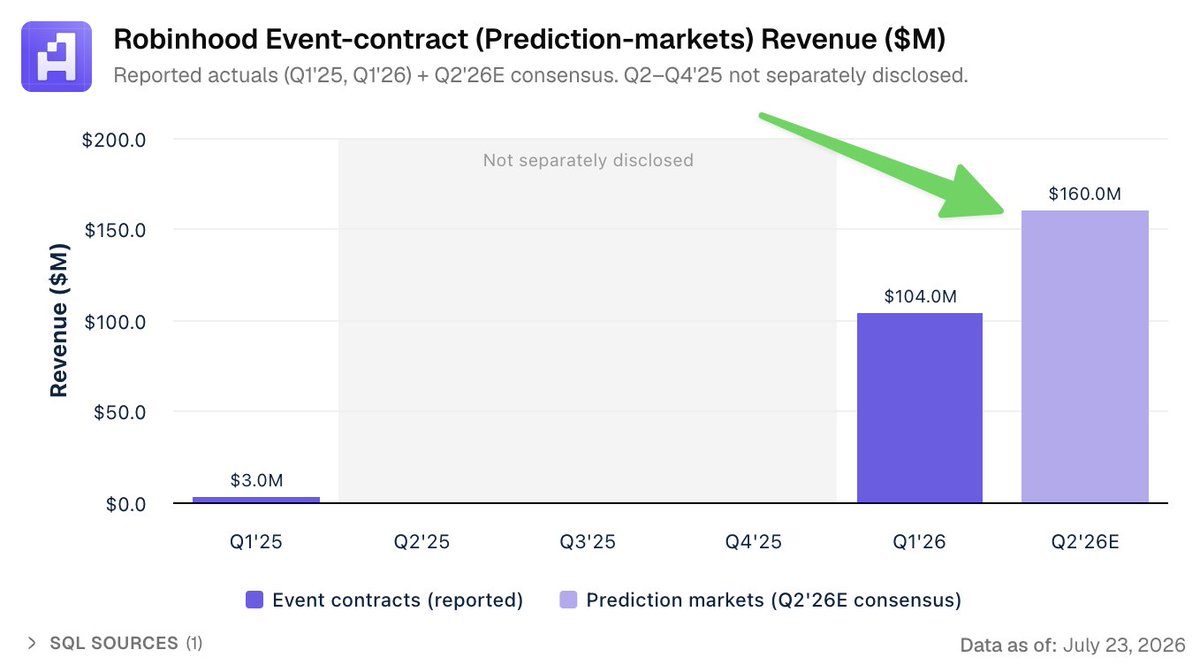
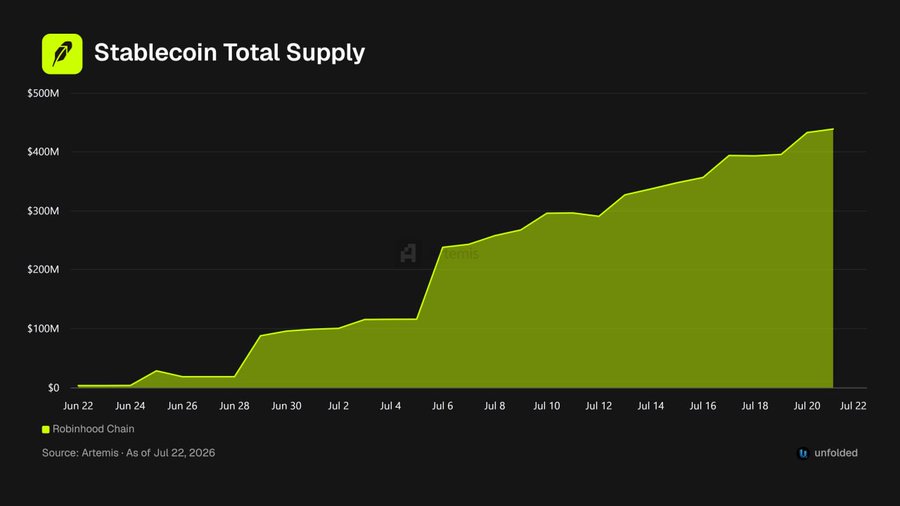
Meanwhile, tokenized stocks moved on-chain. Robinhood Chain put equities, ETFs, and real-world assets into a single 24/7 market anyone can trade and post as collateral. Every asset class arrived, except the one powering the entire AI economy: matrix multiplication.
For years compute and capital markets ran side by side with nothing to connect them. It was widely believed you could not prove a unit of AI work was real, useful, and fairly priced without trusting the provider. They were wrong.
The same matrix multiplication that powers AI can, at the same moment, mint a verifiable, tradable asset. Every GPU cycle doing double duty. Settled on Robinhood Chain, it is compute you can own, trade, and post as collateral right next to your stocks.
An asset class built for the age it lives in, backed by the most valuable computation in the world. All that was missing was the proof.
The matrix multiplications behind every AI model are the most valuable computation on earth.
Right now you can't see them, verify them, or own them.
We built Omenar to change that.
A senior Anthropic engineer just dropped 15-page PDF on "Graph Engineering and Agent Memory" for multi-agentic systems.
The shift: your agent's memory dies with its context window. A knowledge graph makes it permanent.
Extract → Store → Retrieve → Evolve
Every graph-based memory runs 4 stages:
• Extract: pull entities and typed relations out of raw docs and conversations into structured triples.
• Store: canonical nodes, typed edges, provenance on every fact. One connected graph instead of scattered chunks.
• Retrieve: multi-hop questions become graph traversal. "Who owns what breaks if this ships" is one walk, not six guesses.
• Evolve: the stage everyone under-builds. Facts get validity windows. Nothing is deleted, only marked superseded, so "who owned this in April" still answers.
This 15-page PDF changed how I'm building multi-agent systems today.
Read it now, then explore the article below👇
If you work on any of this, I'd really like to talk. LinkedIn is the quickest way to reach me, so drop me a message there. https://t.co/fdi3qOekXF
Most of what we're building at Omenar comes down to a handful of problems we still haven't fully solved.
How to prove a floating point matrix multiplication without a heavy proof, how to make proofs comparable across different GPUs and precisions, how to verify someone's private model weights in zero knowledge, and how to design a market for a compute asset that trades around the clock.
https://t.co/LVLCTklSHx
As AI scales to industry-wide adoption, it is becoming clear that the future economy will be denominated in compute cycles as much as in human labour. Yet the most valuable computation in the world has no market. AI compute — the matrix multiplications that power every model — runs inside data centres you cannot own, trade, or borrow against: a multi-trillion-dollar asset with no way to price, hold, or finance it.
Meanwhile, real-world assets moved on-chain. Robinhood Chain put equities, ETFs, and other tokenised assets into a single 24/7 market that anyone can trade and post as collateral. Every asset class arrived — except the one powering the entire AI economy: matrix multiplication.
For years compute and capital markets ran side by side with nothing to connect them. It was widely believed you could not prove a unit of AI work was real, useful, and fairly priced without trusting the provider. That belief was wrong.
Kimi's CEO laid out how they actually build their models across two talks - I compiled it into a 7-page PDF on graph engineering for agent swarms
The twist: he scored his own company 60 out of 100 while shipping open models that trade blows with the frontier
here's the playbook, step by step:
step 1 → agent swarm - with one agent, complexity converts straight into elapsed time - with 100 agents coordinating on one goal, complexity rises while execution time stays flat
step 2 → they replaced Adam - the optimizer everyone has used since 2014 - their Muon variant reaches the same loss on roughly half the FLOPs
step 3 → attention rotated into depth - ResNet logic applied to layers - a layer attends over ALL previous layers, not just the one directly below it
step 4 → loss per token position - not average loss - a good architecture keeps getting smarter deep into long context, which is the entire game for agents
step 5 → QK-Clip - a flat loss curve across 15 trillion tokens, zero spikes - he called it "the most beautiful thing I've seen in 2025"
step 6 → open weights as strategy - "Chinese open source models are gradually becoming the new standard" - chip vendors now benchmark new silicon against Kimi
the result: the swarm wins because the agents coordinate, not because there are more of them - 100 agents that can't coordinate are 100 copies of the same bottleneck
7 pages, 5 diagrams, 6 tables - including an appendix that separates what's independently verified from what's self-reported
save this ↓
For years people said you couldn't prove a unit of AI compute was real, useful, and fairly priced without trusting the provider. So the most valuable computation in the world sat locked away, with no market.
They were wrong. The same forward pass that powers a model can, at the same moment, mint a proof that the work happened. One computation, two outputs. That is what turns compute into an asset you can actually own.
CFTC extending the comment deadline by 30 days (to August 26) on its proposal covering 24/7 trading for futures and perpetual contracts tied physically delivered or storable energy commodities (like crude oil and nat gas)
In the meantime: Hyperliquid.
Opus 5 rounds out our Claude 5 family beautifully.
I think it’s an incredible daily driver, pair it with Fable for planning, brainstorming or fixing the hardest bugs.
Let’s take a quick look at these two charts about Opus 5:
1) Opus 4.8 is only two months old. In the span of just two months, its performance on the ARC-AGI 3 benchmark has improved from under 5% with Opus 4.8 to over 30% with Opus 5. Two months.
2) Over that same two month period, Opus 5 has emerged as a model that is not only better than Fable 5, but also more efficient than its predecessor, Opus 4.8. According to the Artificial @ArtificialAnlys Benchmark, Opus 5 is “offering comparable intelligence to Fable 5 at 26% lower Cost per Task.”
Two months that have completely changed the game.
Opus 5 is the release many had been hoping for, and it proves just how quickly everything is improving. Now it’s OpenAI’s turn with GPT-6, and Fable 5.1 probably won’t be far behind. Absolutely insane!
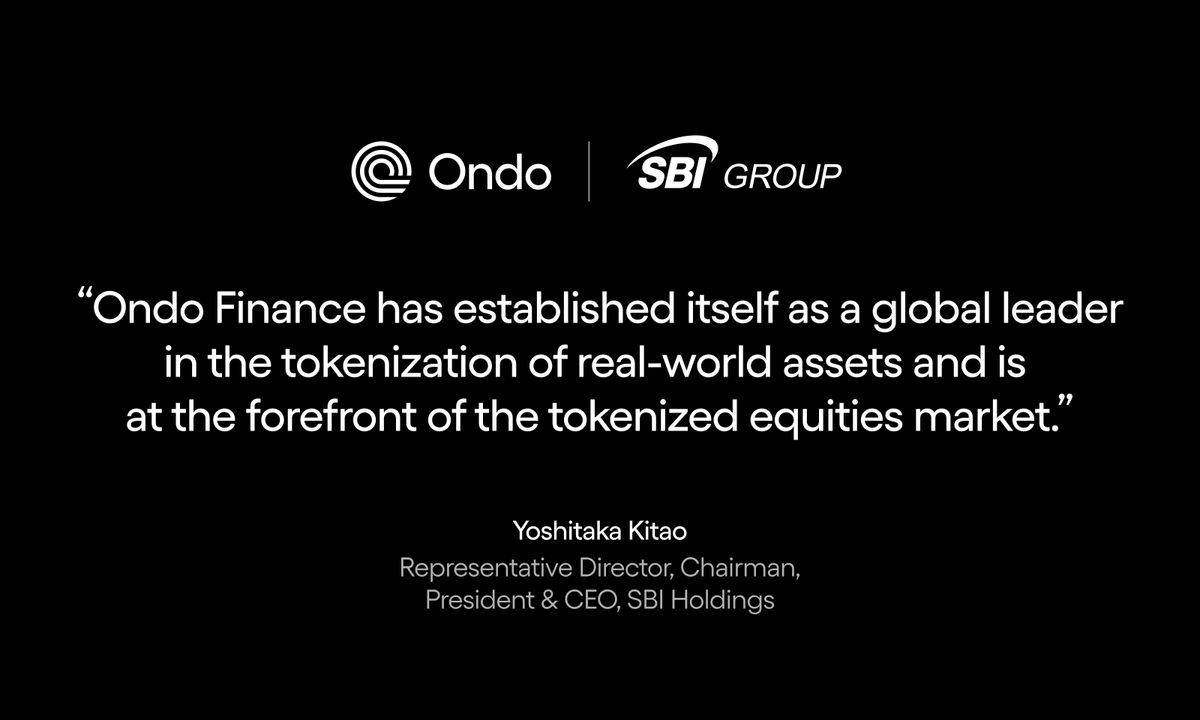
Tokenization is coming to Japan 🇯🇵
ICYMI: Ondo is partnering with SBI Group, one of Japan's leading financial institutions, to bring Japanese assets onchain.
SBI Holdings CEO Yoshitaka Kitao on Ondo's position in tokenization ↓
As the number of transactions on a chain increases, and demand for that chain’s cryptocurrency rises, more money flows into the chain’s treasury. Blockchain foundations use this treasury money to pay grants to developers to build apps on their chain, award bug bounties to developers to identify security vulnerabilities, and incentivize those that verify transactions for their chain. Having more capital to disperse could cause these blockchain ecosystems to grow and become ever more secure, encouraging more developers to build on these networks and issue their own alt coins to fund their projects and share ownership in their apps.