We have a new name and an expanded vision. 🌐
Manhattan Council is now "Positive Policy Institute". As we continue our mission to foster an equal and peaceful world, you can expect deeper expertise, tech-driven insights, and a broader global commitment to transparent governance. 📈⚖️
Follow us and stay connected across our platforms:
🔗 Web: https://t.co/ADNUOpcXfo
✉️ Email: [email protected]
▶️ YouTube: https://t.co/VpdXNgAHr2
🐦 X:https://t.co/R5b2xgwfzC
📸 Instagram: https://t.co/uOzEACO8Sn
📱 TikTok: https://t.co/jbLNpVfhoM
#Policy #Innovation #Transparency #ThinkTank #PositivePolicyInstitute
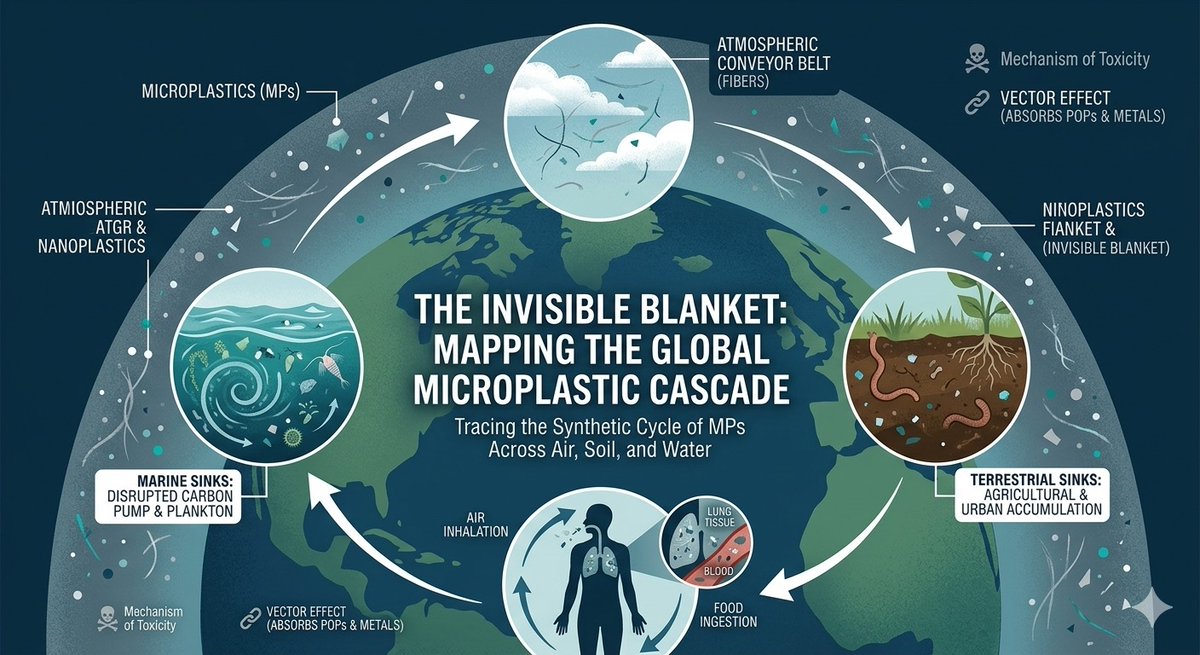
The Invisible Blanket: The Global Cascade of Microplastic Pollution 🌍🔬
For decades, we viewed plastic pollution as a visible crisis of choked beaches and ocean garbage patches. But the true threat is much smaller—and far more insidious.
Here is how microplastics are permanently altering our planet and our health:
1️⃣ 🛑 A Permanent Threat: Plastic doesn't truly decompose; it just fragments into microplastics (<5mm) and nanoplastics, establishing a permanent, endlessly cycling presence across our planet.
2️⃣ ⚖️ A Staggering Scale: Every single year, an estimated 10 to 40 million tons of microplastics are emitted into the global environment, infiltrating every major ecosystem on Earth.
3️⃣ 🧪 The Toxic Cocktail: These microscopic fragments are a mix of synthetic chemistry—everyday polymers like PET (clothing fibers/bottles), PE/PP (packaging), and PS (foam containers).
4️⃣ 🌱 Choking Our Soils: It’s not just an ocean problem. Topsoils are acting as massive sinks for microplastics, altering water flow, stunting plant roots, and physically damaging vital fauna like earthworms.
5️⃣ 🌬️ The Atmospheric Conveyor Belt: Tiny synthetic fibers act as an "invisible blanket" in our ambient air, hitching rides on wind currents to reach pristine, uninhabited regions like remote mountain peaks and Arctic glaciers.
6️⃣ 🩹 Physical & Chemical Harm: When ingested by wildlife, microplastics cause internal abrasions and false satiety (starvation). Worse, manufacturing chemicals—like flame retardants—leach directly into biological tissues.
7️⃣ 🧽 The "Vector Effect": Because they act like tiny toxic sponges in the water, microplastics absorb heavy metals and pollutants, delivering highly concentrated doses of toxins straight up the food chain.
8️⃣ 🌡️ Accelerating Climate Change: By harming microscopic marine life like phytoplankton, microplastics disrupt the ocean's biological carbon pump, diminishing the planet's natural ability to sequester carbon.
9️⃣ 🩸 The Human Breach: The environmental crisis has become a human health crisis. Through the air we inhale and the food we eat, microplastics have successfully breached our biological barriers, and are now detected in human blood, lungs, and major organs.
Environmental health and human health are bound to the exact same synthetic cycle. It's time to rethink our relationship with plastic.
#Microplastics #EnvironmentalScience #ClimateChange #PlasticPollution #Sustainability #EcoToxicity #EarthScience #PublicHealth
Saying Goodbye to the “No Service” Warning! 🌍📲
A quiet revolution is happening across the space and mobile industries to solve our most familiar problem: losing signal when you need it most. The ultimate goal? Your phone should work absolutely everywhere!
Here is everything you need to know about this revolution:
1️⃣ 🗼 Limits of Traditional Infrastructure: Cell towers work great in densely populated cities, but building and maintaining them in mountains, oceans, or deserts is incredibly expensive and impractical.
2️⃣ 🛰️ Base Stations in the Sky: The new strategy is moving part of the network into orbit. Low Earth orbit (LEO) satellites act as sky-high base stations, filling the "blind spots" left behind by traditional towers.
3️⃣ 🧱 The Old Guard (Satellite Phones): In the past, remote connectivity meant carrying a bulky, expensive satellite phone with a massive antenna. Reliable for military and maritime use, but far from consumer-friendly.
4️⃣ 📱 Path 1: Direct-to-Phone Connection: Your standard 4G or 5G smartphone connects directly to a satellite when you lose signal. No extra apps, no clip-on antennas, and you keep your same phone number!
5️⃣ 🚐 Path 2: Dedicated Terminals & Wi-Fi Bubbles: Perfect for RVs, yachts, and remote homes. A dedicated terminal connects to the sky and creates a local Wi-Fi network strong enough for streaming, video meetings, and cloud apps.
6️⃣ 🆘 Path 3: Messaging & Safety First: Focused on the absolute essentials. If you are entirely off-grid, new smartphones can already send short texts, location pings, and SOS data to first responders.
7️⃣ 💸 Who Pays for It?: Some mobile operators will include satellite fallback in premium plans, while heavy users (like ships or off-grid homes) will buy dedicated hardware and pay separate subscriptions.
8️⃣ ⚠️ The Engineering Challenge: Catching a weak smartphone signal from hundreds of kilometers away in space requires massive, highly sensitive antennas and careful spectrum coordination so it doesn't interfere with ground networks.
9️⃣ 🚀 A Connected Future: We are moving toward a continuous layer of connectivity. Your phone will soon invisibly switch between ground towers and sky satellites. The next generation might never even know what "No Service" means!
#SpaceTech #SatelliteMobile #DirectToCell #Telecommunications #TechNews #Connectivity #SatelliteInternet #FutureTech
The Chinese Room Experiment:
A Lens for Modern Generative AI
In an era where generative AI models like GPT-4, Gemini, DALL-E, and LaMDA are reshaping our digital landscape, John Searle's Chinese Room thought experiment (1980) gains renewed relevance.
The experiment posits the following scenario:
A person who doesn't understand Chinese is placed in a closed room. They're given a comprehensive rulebook with instructions in their native language. Chinese messages are passed into the room through a slot.
Using the rulebook, the person matches the incoming Chinese symbols and follows instructions to select appropriate Chinese characters as responses. These responses are then passed out of the room. To an outside observer, the room appears to understand and respond to Chinese fluently.
However, the critical point is this: Despite producing coherent and contextually appropriate responses, the person inside the room doesn't actually understand Chinese. He is merely following a complex set of rules to manipulate symbols without comprehending their meaning.
This raises profound questions about current AI systems:
- Do language models truly understand, or are they sophisticated pattern matchers?
- Can AI's ability to generate human-like text, images, and code be equated with comprehension?
- What separates artificial intelligence from artificial consciousness?
As we witness AI's rapid evolution—from crafting poetry to generating code and creating art—the line between simulation and genuine understanding becomes increasingly blurred.
This thought experiment challenges us to critically examine the nature of intelligence, consciousness, and the future of AI development.
We invite you to ponder: Are today's AI marvels approaching true understanding, or are they incredibly advanced "Chinese Rooms"?
What do you think? Share your insights below.
#AIEthics #ChineseRoom #FutureOfTech #GenerativeAI
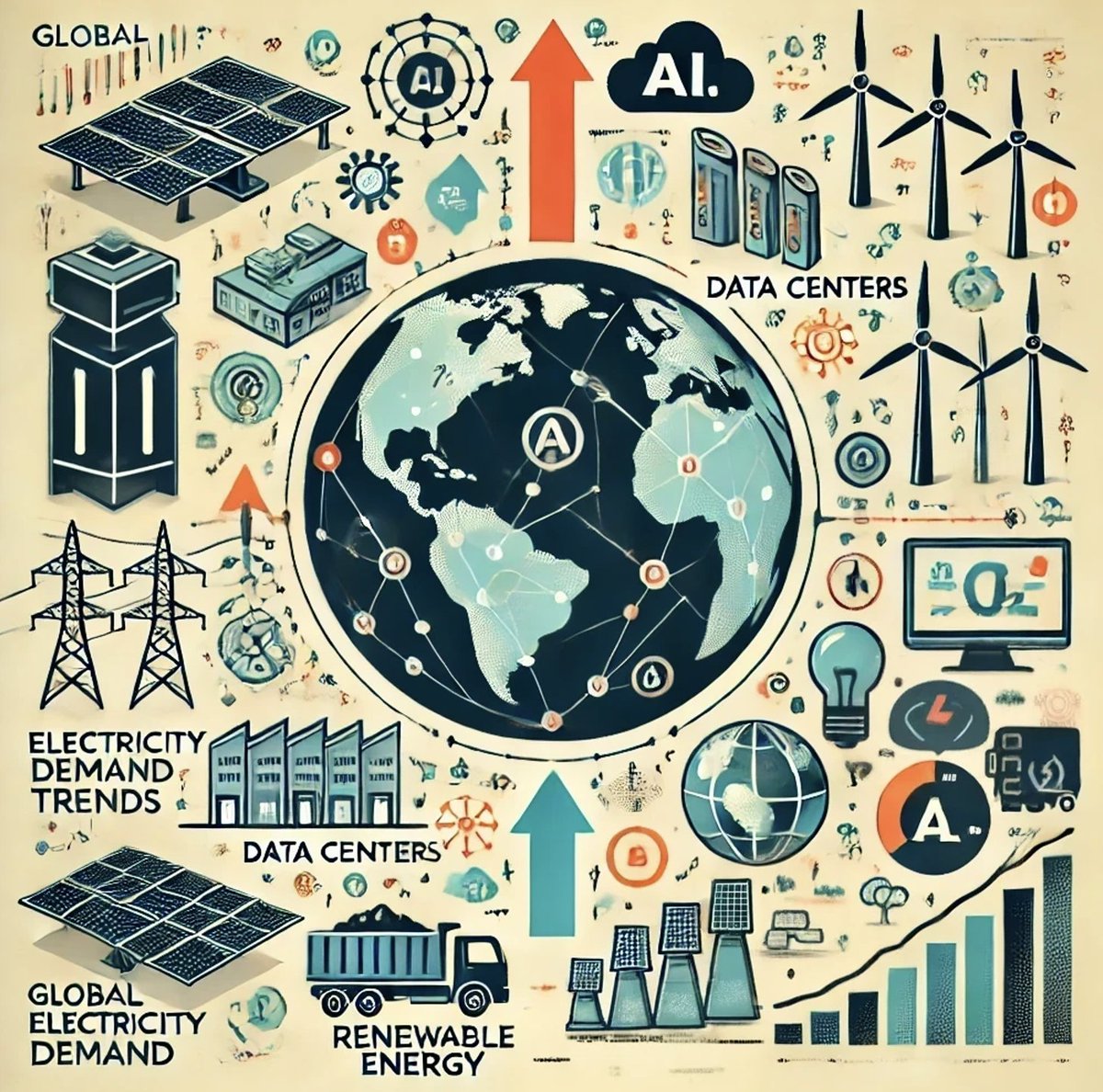
Global electricity demand grew by 2.2% in 2023, driven by robust growth in China, India, and Southeast Asia, but restrained by declines in advanced economies due to high inflation and reduced industrial output.
Demand is expected to grow faster, averaging 3.4% annually through 2026, driven by economic recovery and increased electrification of residential, commercial and transport sectors.
Data centers, AI, and cryptocurrency sectors could double their electricity consumption by 2026, with data centers alone potentially reaching over 1,000 TWh. Emerging economies, especially China and India, are set to contribute significantly to global demand growth, with China adding about 1,400 TWh through 2026.
In contrast, electricity demand in Africa has stagnated, with per capita consumption lower than in India and Southeast Asia. The United States saw a 1.6% decline in demand in 2023 but is expected to recover modestly through 2026, led by the data center sector.
Renewables are poised to meet all global demand growth through 2026, with their share in electricity generation rising from 30% in 2023 to 37% in 2026. This shift, along with increased nuclear power, will reduce global reliance on fossil fuels and decrease CO2 emissions from electricity generation.
Source: IEA (International Energy Agency) #ElectricityDemand #GlobalEnergy #Renewables #ElectricityGrowth
Investors are increasingly turning to Chinese government bonds, causing prices to soar and yields to drop to record lows. The 10-year bond yield has reached 2.18%, the lowest since 2002. This trend is driven by a search for safer investments amid uncertainties in the real estate market and volatile stocks.
The sharp rise in bond prices has sparked concerns about a potential bubble. The People's Bank of China (PBOC) has issued multiple warnings about the risks of a bond market collapse, which could destabilize financial markets and hinder economic recovery. The PBOC has taken unprecedented steps to cool the market by borrowing bonds to sell and depress prices.
Low bond yields can harm the economy by reinforcing weak growth expectations and deflationary pressures. The bond market frenzy may counteract efforts to boost economic activity and increase money supply, as capital flows into bonds instead of riskier assets like stocks and property. The PBOC is cautious to prevent rapid interest rate drops, which could lead to capital outflows and put pressure on the yuan. #ChinaEconomy #BondMarket #FinancialStability #China #Growth
Governments worldwide owe an unprecedented $91 trillion, a sum nearly equal to the size of the global economy. This massive debt, partly due to the costs of the pandemic, poses a growing threat to living standards even in wealthy nations such as the United States. The International Monetary Fund (IMF) has reiterated warnings about "chronic fiscal deficits," stressing the urgent need for corrective measures. However, in an election year, politicians are largely ignoring the problem, avoiding discussions about the necessary tax increases and spending cuts needed to manage the soaring debt.
Investors are increasingly anxious as debt burdens mount around the world. In France, political turmoil has heightened concerns, sending bond yields soaring. Higher debt servicing costs mean less money available for essential public services and for responding to crises like financial meltdowns, pandemics, or wars. As government bond yields rise, so do borrowing costs for households and businesses, which hampers economic growth. In the US, interest payments on national debt are set to surpass $1 trillion next year, a figure approaching the budget for Medicare. This trend indicates a significant economic strain as more resources are diverted to debt servicing.
Tackling this debt crisis will require difficult decisions. Economists agree that measures like tax hikes or cuts to benefits such as social security and health insurance programs are inevitable. Yet, many political leaders are reluctant to confront these issues head-on, risking financial instability and economic slowdown. Historical examples, like the collapse of the pound in the UK in 2022 following unfunded tax cuts, illustrate the dangers of ignoring debt management. As debt continues to grow, the necessity for fiscal discipline becomes more critical to prevent a potential financial crisis. #GlobalDebtCrisis #EconomicChallenges #FiscalResponsibility #US #France #Medicare #IMF #NationalDebt #4thofJuly #4thJuly
China's consumer inflation held steady at 0.3% in May, while producer price declines eased, reflecting weak domestic demand and an uneven economic recovery. Economists call for stronger fiscal and monetary measures to boost demand. #China#Inflation#Economy#CPI#PPI
Producer prices fell at a slower pace of 1.4% in May, but deflationary pressures remain. Weak consumption and a protracted property crisis continue to weigh on the economy. #ConsumerPrices #Deflation #PropertyCrisis #EconomicRecovery
Investors question if China's PPI inflation could turn positive in the second half of the year, driven by rising commodity prices. Beijing's measures to spur demand and boost consumer confidence are seen as insufficient. #Investors #Commodities #EconomicStimulus
Core inflation slowed to 0.6% in May, highlighting the challenge Beijing faces in boosting domestic demand. More comprehensive fiscal and monetary policies are needed to foster sustainable growth and meet GDP targets. #CoreInflation #FiscalPolicy #MonetaryPolicy #GDP
EU to impose extra tariffs of up to 38% on Chinese EVs starting July 4th. This move targets excessive subsidies and aims to level the playing field for European automakers. #EV#EU#TradePolicy
The European Commission announced additional duties of 17.4% for BYD, 20% for Geely, and 38.1% for SAIC. This comes after Washington quadrupled duties on Chinese EVs to 100%. The tariffs will significantly increase costs for Chinese carmakers amid slowing demand and falling prices at home. #BYD #Geely #SAIC #AutomotiveIndustry
China has condemned the EU's decision as protectionist, warning it could harm China-EU economic relations. However, the Chinese Passenger Car Association believes the impact will be limited for most firms, citing ongoing potential for brands like Tesla, Geely, and BYD in the European market. #China #EconomicRelations #Tesla
Economists predict the immediate economic effect will be small, but the long-term goal is to curb future EV imports from China. This marks a significant shift in EU trade policy, reflecting a more protective stance similar to recent US measures. #Economy #GlobalTrade #Tariffs #USChina #ElectricVehicles
US consumer prices were unchanged in May as inflation pressures abate. Cheaper gasoline offset higher rental housing costs, leading to a softest CPI reading since July 2022. Despite the slowdown, inflation remains too high for the Fed to cut rates before September. #Inflation #Economy #FederalReserve
The unchanged CPI followed a 0.3% increase in April. Economists had forecast a slight increase, but major retailers slashing prices helped ease the pressure. Gasoline prices fell 3.6%, while food prices edged up 0.1%. #CPI #GasPrices #FoodPrices
Rent costs increased by 0.4%, consistent with April, while core CPI excluding food and energy climbed 0.2%. Healthcare costs rose, but prices for used cars, new vehicles, and several other categories saw declines. #Housing #Healthcare #UsedCars #InterestRates #StockMarket #USEconomy
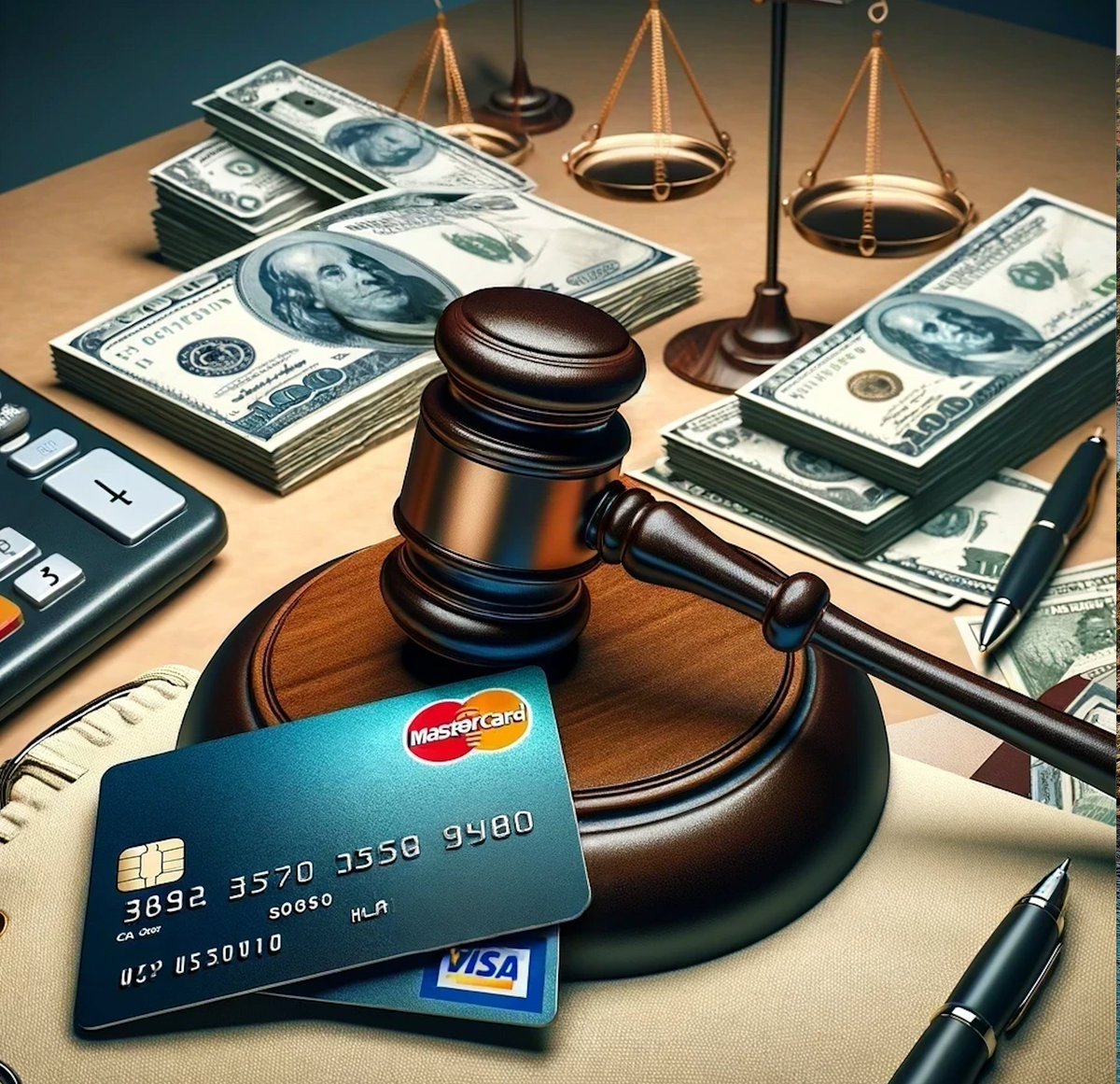
#Visa and #Mastercard have agreed to pay $197 million to settle a class action lawsuit accusing them of keeping cash access fees artificially high. The settlement, which still requires court approval, covers consumers who withdrew cash from bank-operated ATMs since 2007.
Visa will contribute $104.6 million, while Mastercard will pay $92.8 million. Previously, the banks involved in the case settled for $66 million. Plaintiffs’ lawyers announced the settlement in Washington, D.C., federal court, emphasizing that it will provide immediate and assured relief to the affected consumers. Visa and Mastercard, however, have denied any wrongdoing.
The lawsuit claimed that Visa and Mastercard's ATM network rules led to artificially high fees, and the plaintiffs were seeking damages exceeding $9 billion. The U.S. Supreme Court recently declined to hear an appeal from Visa and Mastercard, which had challenged a lower court's decision to allow the plaintiffs to proceed as a class action. Visa and Mastercard had argued that the judge did not conduct a rigorous analysis before certifying the class actions.
The proposed settlement class is estimated to include at least 175 million members. Consumers will have an opportunity to object to the settlement terms, including the amount of the fund and any legal fees awarded.
Additionally, Visa and Mastercard are involved in another long-running legal case in Brooklyn federal court, where they are accused of overcharging merchants and others in debit and credit card transactions. This case remains ongoing, highlighting the continued legal challenges faced by the financial giants.
#CreditCardFees #SupremeCourt #ATMFees #FinancialSettlement #ClassAction #ConsumerRights
Courts worldwide are hearing landmark climate-change cases, with some of the largest ever being decided in 2024 and 2025. Here are key cases to watch:
✔️The International Court of Justice (#ICJ) will issue a decision on U.N. member states' climate obligations, spurred by Vanuatu's petition. This could set major precedents in international law.
✔️ The Inter-American Court of Human Rights (#IACHR) is handling the largest climate case ever, with over 600 participants. Their advisory opinion may set new legal standards for environmental protection in Latin America and the Caribbean.
✔️ The International Tribunal for the Law of the Sea (#ITLOS) recently ruled that greenhouse gas emissions in oceans are marine pollution, reinforcing global climate change laws and mandating actions to limit global temperature rise to 1.5°C.
✔️ The European Court of Human Rights (#ECtHR) ruled that Switzerland violated rights by insufficient climate action, setting a precedent for 46 European countries. More cases are in the pipeline, including those affecting Norway's oil industry.
✔️ #SouthKorea’s Constitutional Court is tackling Asia’s first national climate lawsuit, uniting five petitions alleging failure to protect citizens from climate change.
✔️ In #Australia, Torres Strait Islanders are suing the government for not protecting their islands from rising sea levels, marking the first climate class-action by First Nations people.
✔️ These cases could shape future climate policies and accountability globally. #ClimateJustice #ClimateAction #ClimateChange #InternationalCourtOfJustice #ICJ #InterAmericanCourtOfHumanRights #IACHR #InternationalTribunalForTheLawOfTheSea #ITLOS #EuropeanCourtOfHumanRights #ECtHR #SouthKorea #ConstitutionalCourt #Australia #TorresStrait #EnvironmentalLaw #Sustainability #GlobalWarming
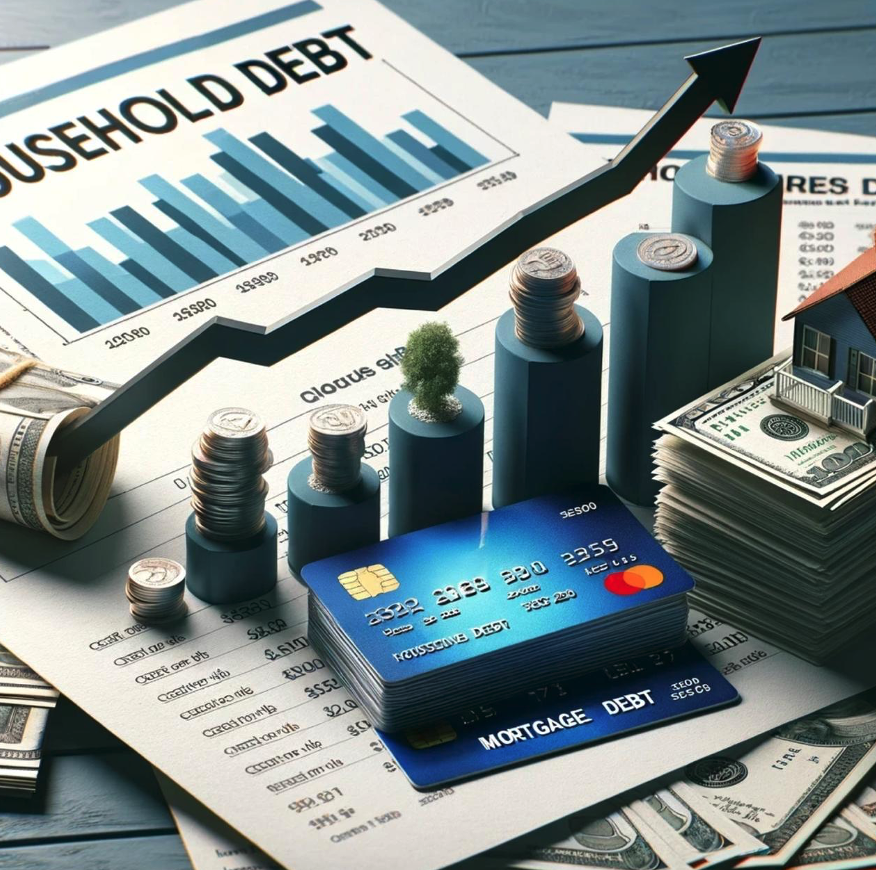
New data from the Federal Reserve Bank of New York paints a concerning picture of household debt and delinquencies in the US. As household debt balances grew during the first quarter, delinquencies also increased alarmingly. #HouseholdDebt#Delinquencies
The percentage of credit card balances in serious delinquency (90 days or more late) climbed to its highest level since 2012. This is a significant red flag for household finances and the overall economy. #CreditCardDebt #FinancialRisks
Aggregate delinquency rates increased to 3.2% of outstanding debt in some stage of delinquency, the highest since Q4 2020, according to the NY Fed's Quarterly Report on Household Debt and Credit. #DebtDelinquency #HouseholdFinances
The transitions into delinquency, especially serious delinquency, increased across all debt types, highlighting the widespread nature of this concerning trend. #DebtCrisis #FinancialStability
While delinquency rates remain below the levels seen during the Great Recession, they're running higher than pre-pandemic times. This has caught the attention of NY Fed researchers, who are closely monitoring the implications for household well-being and economic stability. #EconomicImpact
Overall household debt grew by 1.1% during Q1 to $17.69 trillion (not adjusted for inflation). This increase was largely driven by mortgage balances, as credit card balances dipped (as expected post-holidays) by $14 billion to $1.12 trillion. #MortgageDebt #ConsumerSpending
However, when adjusted for inflation, credit card balances have yet to surpass the levels seen in 2008, indicating that higher balances can be attributed to factors like population growth, increased online spending, surging costs of new and used cars, and consumer activity. #InflationImpact
The rise in delinquencies, coupled with growing household debt levels, raises concerns about the financial well-being of American households and the potential impact on the broader economy. #EconomicConcerns #HouseholdFinances
As inflation continues to strain household budgets, it remains crucial for policymakers and financial institutions to closely monitor these trends and provide appropriate support and guidance to ensure financial stability for individuals and the overall economic system. #PolicyResponse #FinancialStability
Biden announces 100% tariff on Chinese-made electric vehicles as part of measures to protect US manufacturers from cheap imports last week. The move is likely to inflame trade tensions between the world's two biggest economies. #TradeWar#USChina#EconomicTensions
White House says it's imposing stringent curbs on Chinese goods worth $18bn following a 4-year review. It's a preventive measure to stop subsidized Chinese goods from flooding US market & stifling growth of American green tech sector. #GreenTech #TradeBarriers
Tariff hikes: 25% to 100% on EVs, 7.5% to 25% on lithium batteries, 0% to 25% on critical minerals, 25% to 50% on solar cells & semiconductors. Tariffs on steel, aluminum & PPE to rise to 25%. #TariffHikes #EconomicProtectionism
Despite risks of retaliation from Beijing, Biden says increased levies are a proportionate response to China's overcapacity in EV sector. China produces 30M EVs/year but can sell only 22-23M domestically. #EVMarket #OverSupply
Biden's car tariffs largely symbolic as Chinese EVs virtually locked out of US previously. But lobby groups warn of future threat as Beijing seeks to use exports to compensate for domestic economic weakness. #TradeThreats #USAutoIndustry
Alliance for American Manufacturing says introduction of Chinese cars to US market would be an "extinction-level event" for US carmakers. Biden aims to boost US industry in hi-tech sectors & battleground states ahead of 2024 election. #DomesticManufacturing #Elections2024
Biden takes hard line on trade since arriving at White House in 2021, believes his plan offers targeted & less risky approach to China. #TradePolicy #USChinaRivalry #InflationImpact
Biden said: "He was not looking for a fight with China" but US needs to stand up to "unfair economic practices & industrial overcapacity", and he added, he aims for fair competition". #FairTrade #EconomicCompetition
New tariffs kick in after 90 days - period closely watched for signs of tit-for-tat retaliation by China. White House says aim is not to escalate trade tensions but to help disinvested parts of US economy. #EconomicDevelopment #TradeDisputes