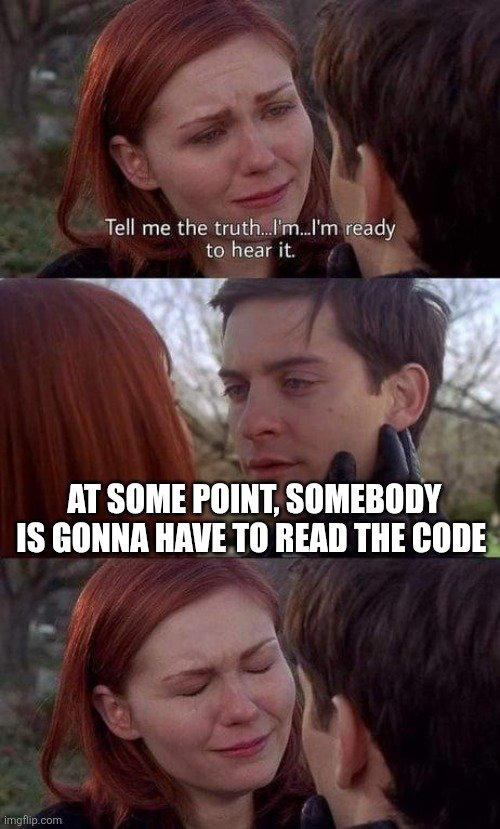
Is it only me, or is everyone seeing tiny (and at times large) bugs in the software that used to work well without any hitches earlier?
- WhatsApp is having issues with emojis for me
- A Shopify store kept erroring out when I tried to check out
- Amazon threw up its lovely dog pics. And this is just in the last 24 hours.
Is it a sign that vibe coding and token maxxing are getting out of hand and into production?
Sora's shutdown is a leading indicator of something happening across the AI market.
What started as a quick write-up turned into a full essay once I realized the same product-layer gap is hiding in many AI products today:
We keep shipping models and calling them products. At @JigsawML, we're taking a different approach: designing around the full path from user intent to useful output, not just the model.
https://t.co/MoDICfMe6L
I had the privilege of MC'ing at the ODSC AI East Conference this week. Didn't expect it to be this much fun.
A lot of fabulous sessions, but a few key themes kept emerging:
1. Teams and organizations are still figuring out what "evaluations" even mean in this new world.
2. No one has a clue what human-AI collaboration could actually look like.
3. Teams are having trouble figuring out what AI agents are doing to their code. (Where have I heard that one before 😉.)
A few specific talks worth calling out in these areas:
→ Julie Yaunches (@nvidia) on verification-driven agentic workflows. Interesting nugget: looks like NVIDIA is leaning on architecture diagrams to verify what's changing in their own systems. (🎶 to my ears.)
She demoed live diagrams of @NemoClaww built with a Claude Code skill. We've been tackling the same problem from a different angle at JigsawML; link to our live NemoClaw architecture page in the comments.
→ Stephanie Kirmer (Nebulock): "'It seems fine' is not a business strategy." Practical walkthrough of using rubrics to keep LLM judges from being arbitrary.
→ André Balleyguier (@AnthropicAI) on how to actually scale agentic AI in 2026
→ Susan Shu Chang (@elastic ): Grounded reminder that eval isn't a new problem, it's continuous with classic attribution work, and the dataset just needs to be good enough compared to human output.
Also caught some amazing speakers across the day, including Usama Fayyad and Sadie St Lawrence.
Thanks to the speakers, @alinadovbysh, and the Open OData Science Conference (@_odsc ) team for putting together a room full of practitioners sharing real lessons.
#ODSCEast #AI
We just shipped open-source architecture pages. Pick any of these repos and explore the full architecture - no login, no setup. More coming every week.
You can read every line of an open-source project's code. Good luck understanding how it all fits together.
We just published live, interactive architecture diagrams for Flask, Axios, Zod, Hono, and Pyramid. Auto-updated as the code evolves. Free.
More repos coming every week.
https://t.co/buMV13eu5A
Our advisor Doug Levin nails the problem we built JigsawML to solve. AI tools are writing code faster than teams can understand it. Architecture docs go stale the moment they're written. The gap between what's built and what's understood keeps widening.
He calls it the visibility crisis. We call it the reason JigsawML exists.
We launched this week. Read Doug's full take below.
While AI builds, humans should stay in control.
Today, we're announcing the general availability of JigsawML - the control plane for AI-generated code.
In the news: https://t.co/krPTU5Wm2U
Launch post: https://t.co/2BiHzLtqhP
Start free: https://t.co/cYCErl51Cp
#JigsawML #AI #SoftwareArchitecture #DevOps #PlatformEngineering #EngineeringLeadership
AI doesn't reduce your mental overhead. It's like going from chess to 3D chess. Same cognitive load - but you're playing across more dimensions.
This is basically how Jevons Paradox gets translated to cognition.
A perspective on where Observability needs to evolve next.
As distributed architectures, #microservices, and #multicloud environments grow in complexity, teams rely on specialized dashboards and observability tools. Each provides precise insight into one dimension such as performance, cost, reliability, or security, but rarely connects the full picture.
This creates what JigsawML calls the “paradox of modern visibility”: an abundance of telemetry without a shared mental model to interpret it.
We make a case that architecture must become the connective tissue and it is the layer that ties #observability, #FinOps, #security, and #engineering insights into a unified system understanding.
https://t.co/YdC3Kd2FDl
Remember when the internet was scared of bots pretending to be human?
Plot twist: Looking at “Moltbook,” we should start worrying about humans acting like bots.
Architectural Intelligence is starting to show up in real industry conversations.
In this interview, @AppInt4All discusses why understanding how systems are structured - across code, cloud, and data - matters as much as observing runtime behavior.
As AI writes more of the software, a living architectural context becomes essential.
Thanks, @TonyBaer, for advancing the conversation.
https://t.co/G4crHlUCOG
A great article by Dr. Arogyaswami Paulraj and Dr. Anil Kakodkar on what India needs in the next decade. #IndianHelix
Dr. Paulraj - Padma Bhushan, Professor-Emeritus, Stanford University
Dr. Kakodkar - Padma Vibhushan, Former Chairman, Atomic Energy Commission