learning investing, waiting for my multibagger stock | keep grinding | love Investing, Personal sharing, find your own edge, pls DM for any discussion.
Focus on
Schneider Electric President Systems Ltd
It is recently demerged from Schneider Electric Systems Ltd
It is direct data center infrastructure play
They make is exactly what data centers need like - Server racks, enclosures, micro data center solutions
These are the physical housing backbone of any DC deployment, edge or hyperscale.
Every server rack in every Indian data center is potentially a President Systems addressable market.
#vismaya #selectric
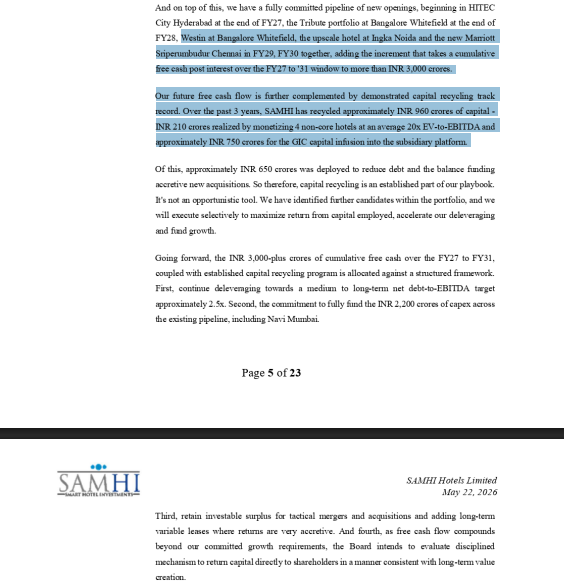
🏨 Samhi Hotels sold its *worst* hotels for 19x EV/EBITDA.
The entire company - every great property included - trades at 12x.
Let that sink in. The market paid more for the assets they were happy to dump than it's paying for the ones they're proud to keep. 🧐
Rewind two years. Samhi listed in Sep 2023 carrying debt of 5.3x EBITDA - the kind of number that makes you close the tab. "Leveraged hotel company," you mutter, and move on.
Here's what you missed while you moved on. 👇
They spent two years quietly doing the unglamorous work. GIC walked in and put ₹750 cr behind the assets. 🤝 Debt fell to 3x. Credit rating climbed BBB → A+. And the interest bill - the thing supposedly going to kill them — got cut almost in half, from ~₹240 cr a year to ₹127 cr. ✂️
Then the part I love. 💡
They owned a hotel in Delhi — Caspia — throwing off barely ₹2 cr of EBITDA. Dead weight bundled into an old acquisition. They sold it for ₹65 cr and poured the money into building a W in Hyderabad. Same trick, again and again: dump the low-ROCE hotels nobody would've bought on purpose, redeploy into capital-light leases that earn far more per rupee. 🔄
Now the math that should make you sit up. 📈
Over FY27–FY31 they'll throw off ₹3,000+ cr of free cash. Self-funded. No new debt, no dilution.
That's almost the entire market cap of the company today. 🎯
Five years of cash flow - from a balance sheet that's already fixed - for roughly what the whole thing costs now.
Mispriced? You tell me.
Disc: Invested, this is not a buy or ell recommendation
An Indian electronics company quietly playing in 5 high-moat verticals at once — defence drones, railway safety, data-centre UPS, industrial OEMs, optical transceivers.
EBITDA margin: 22% (sector runs at 5-10%)
Sitting on a ₹100 Cr+ data-centre order from a Fortune 500 customer
Order book: ~2x current revenue
Revenue ambition: ₹300 Cr → ₹1,000 Cr in 3 years
Most of fintwit still calls this 'small-cap EMS.' They're reading it wrong.
🧵 (1/12)
Interesting Article, Must read :)
Deepinder Goyal built Zomato into a $30B company starting as a government school teacher son from Muktsar.
Now he is personally putting $20M into LAT Aerospace to build gas turbine engines from scratch in Bangalore. That is the trajectory people miss when they complain about chooran sellers.
The same founder who scaled 10 minute delivery is now funding regional aircraft. Ambition in India does not skip steps, it compounds through them.
Founders sell the chooran, make the money, then put it into harder bets
India deep tech startups raised $1.65B in 2025. The US raised $147B. That is not an ambition gap, that is a capital gap of 80 to 1, this is the most imp. point - Flow of Capital is still 80x lower in india, So one have to think from this point of view too :)
India has about 7,000 deep tech startups compared to 26,000 in the US, a ratio of 1 to 4. But funding per startup is 20 times lower. The ideas, the engineers, and the startups all exist.
What does not exist is patient capital willing to wait 15 years for a semiconductor or aerospace company to mature. Scolding founders will not fix that.
China made plastic toys before it made iPhones before it made EVs before it made TikTok. No country jumps directly to the top of the value chain.
India UPI did not try to replace Visa in 1999 because adoption would have failed. It launched in 2016 and now processes over 700 million transactions a day, more than Visa and Mastercard combined by volume.
The entrepreneurs criticized for delivering ice cream in 10 minutes are building the cash flow and operational muscle that funds deeper companies next.
📊 23 stocks with market caps between ₹1,000 Cr and ₹10,000 Cr passed my latest quality + value screen.
These businesses are growing at a healthy pace, generating strong returns on capital, and still look reasonably priced across more than a couple crucial valuation metrics.
Jamun season lasts about 40 days. Then they are gone for a year.
A box of blueberries costs ₹400 in India for the antioxidants. Jamun does the same job at ₹40 from the guy on the roadside.
You either love them or your tongue cannot handle the purple aftermath. There is no in between.
If you can eat them, eat them. Iron, vitamin C, fibre, blood sugar regulation. All packed into a berry your grandmother never had to Google the benefits of.
Have them while they last.
25 SOLID SMALL CAP STOCKS TO STUDY, TRACK & RESEARCH 🔥📊🧾
▪ Vintage Coffee
▪ Aeroflex Industries
▪ KSH International
▪ Atlanta Electricals
▪ Quality Power
▪ TD Power Systems
▪ Vidya Wires
▪ POCL
▪ Sigma Advanced Systems
▪ Sedemac Mechatronics
▪ Yatharth Hospital
▪ Park Medi World
▪ Bhagyanagar India
▪ Krishna Defence
▪ Interarch Building
▪ KRN Heat Exchanger
▪ Nephrocare Health
▪ Belrise Industries
▪ Powerica
▪ Ashapura Minechem
▪ Apollo Micro Systems
▪ Senores Pharmaceuticals
▪ Astra Microwave
▪ Precision Wires India
▪ Anand Rathi Wealth
WHY TRACK QUALITY SMALL CAP BUSINESSES?
▪ Many of tomorrow's market leaders begin their journey as small-cap companies.
▪ Tracking quality businesses helps investors identify opportunities early before they become widely recognized by the market.
▪ Continuous monitoring of earnings, order books, expansion plans, industry developments, and management commentary provides valuable insights into a company's future potential.
▪ Not every stock will succeed, but studying quality businesses improves the probability of finding long-term wealth creators.
DISCLAIMER
The above list is prepared solely for educational, learning, research, and tracking purposes. This is not a buy, sell, or hold recommendation. Investors should conduct their own due diligence and assess risks before making any investment decisions.
The 2-year MBA era is ending
Today companies want someone who can use AI to deliver strategy, products and campaigns
India needs 10 lakh+ AI professionals. The ones who exist earn a 56% premium
You can build exactly that profile from India's top institutes, learning on weekends
IIMs, BITSoM & IITs are running AI-first Executive PGPs:
Details: https://t.co/wEN6Fl2HkR
Choose any of the Business, Product, Marketing & AI Engineering tracks
Do projects with real brands: Nykaa, Zepto, boAt, etc that you can show in interviews
₹999 application fee, refundable if not eligible
Worth exploring if you want to climb the corporate ladder
Glenmark. Cadila. Intas. Hetero. Reliance Life Sciences. Alkem. Torrent. Eris. Caplin Point. Amneal. Shilpa.
These 11 pharma giants all source oncology products from the same small-cap supplier.
Mcap: ~₹1,500 Cr.
Ashish Kacholia sits in the cap table.
And what this company is becoming is far more interesting than what it's selling today.
🧵👇 (1/12)
Manas Arora is overrated.
His strategies don't work.
Is what his jealous haters say.
But I took his 1-On-1 Mentorship and it transformed my trading.
Here are 8 powerful ideas I learned that you won't find anywhere else on X👇
Reading these ideas won't change your trading.
Drilling them until they're automatic will.
That's what the full video course is for — selection, exits, sizing, and psychology in one place.
Stop paying tuition to the market with no system to show for it.
Follow @HB_Stocks
Get the video course: https://t.co/Y26Y6rXqNd
No tips. No targets. Just the process.
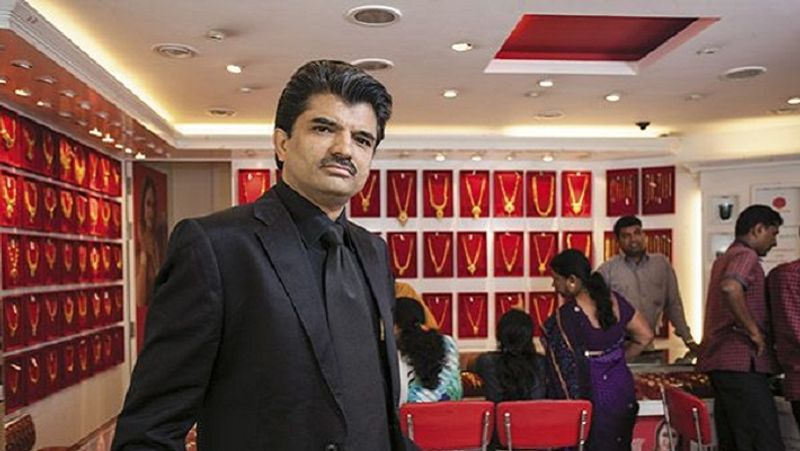
In 2015, a jewellery guy from Bengaluru bought one of the world's largest gold refineries in Switzerland for $400 million
his name was Rajesh Mehta
his company: Rajesh Exports
two years later, REL showed up in the Fortune 500 list ranked above Meta, Nike, and McDonald's.
an Indian jewellery company above Nike.
business media celebrated. retail investors bought in. LIC put in ₹2,000+ crore of policyholder money.
nobody asked: how?
here's how the trick worked.
Valcambi, their Swiss refinery, processed gold for clients. the clients owned the gold. they just sent it for refining - like dropping clothes at a laundry.
REL booked the full value of that gold as their own revenue.
clothes they didn't own. gold they held for 2 weeks max.
that's how a jewellery company "out-earned" Nike.
when SEBI started asking questions, REL had answers ready.
documents? Swiss privacy law, can't share.
concalls? stopped holding them years ago.
customer names? no records.
invoices? none.
inventory? doesn't exist.
SEBI is legally recognised in Switzerland to request exactly this data. REL knew that. cited the law anyway. bought time.
for 5 years, the structure held.
auditors signed. exchanges listed. analysts covered. LIC committees approved.
₹15.15 lakh crore in revenue FY21 to FY25 reported, filed, and accepted.
99.8% of it was fiction.
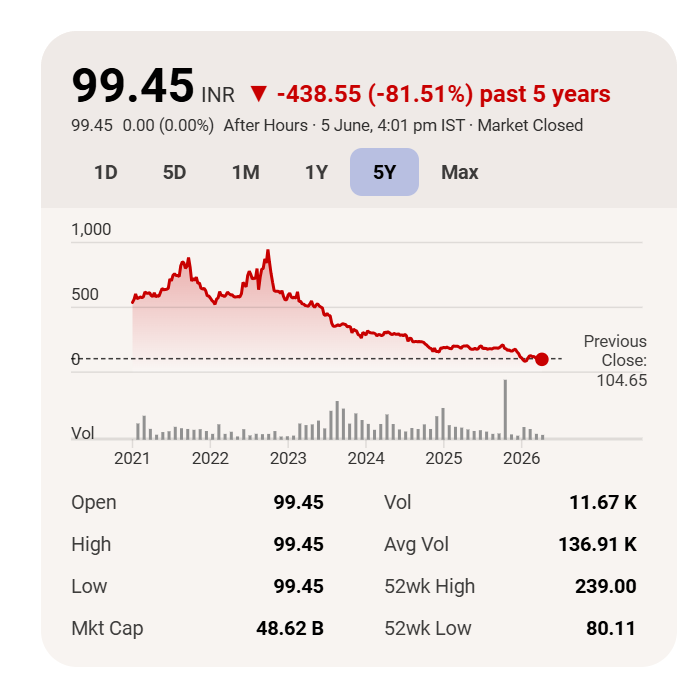
June 3, 2026.
SEBI released a 109-page order.
the stock opened and never recovered. by end of session it was down 80%.
₹12,726 crore of shareholder wealth — gone in one afternoon.
LIC lost ₹1,600 crore. not fund manager money. not bonus pool money. the monthly premium a nurse in Nagpur has been paying since 2009.
the part nobody wants to talk about:
Rajesh Mehta had photographs with the Prime Minister.
the kind of proximity that tells markets: this person is credible, this company is safe, no one is coming for them.
whether that protection was real or just perceived — it worked for 5 years.
the small investor always finds out last.
no Bloomberg terminal. no management access. no early warning.
they trusted the auditors, the exchanges, the regulators, and LIC to do the checking.
every single one of those systems failed them.
"na khaaunga, na khaane dunga."
₹1,600 crore of LIC money. 5 years of silence. one photograph.
some promises age worse than others.
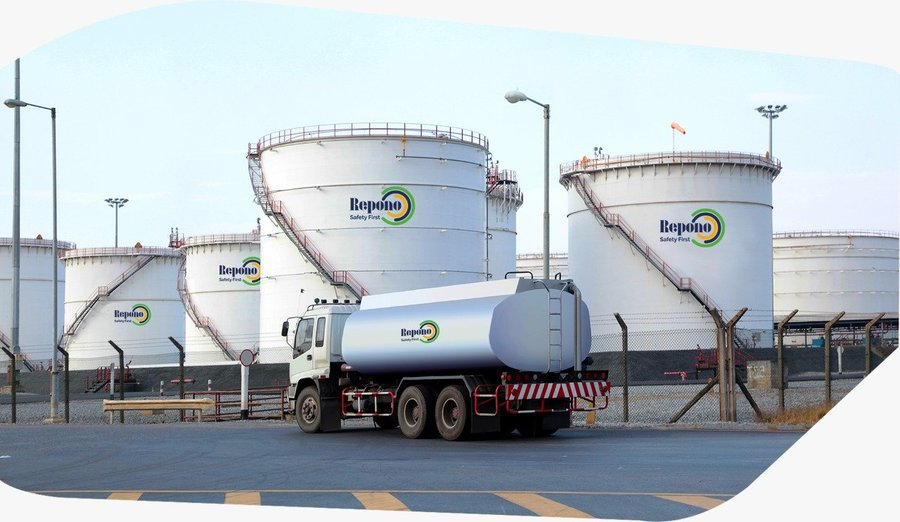
Repono Ltd : CMP: Rs 60- SME
1) Specializing in storage solutions for the oil and petrochemical sectors.
2) It has signed an MoU with Schmidt Logistics GmbH (Germany) to offer global PMC and design services.
3) Yearly sales and Np both up..
4) Order book already at 240 Cr.
5) Takeover Storeflex Pvt Ltd, which MD says, will bring huge order in next couple of months.
6) " Repono" is a brand name.
7) Available at only 9.37 P/E.
8) Repono Mathura Terminals Private Limited, a step-down subsidiary company of Repono Limited (“Company”), has entered into a longterm arrangement/agreement with Reliance Industries Limited in relation to development and operation of a common user Petroleum Oil terminal in Western Uttar Pradesh.
Do your DD. Take your Call!!
Check website- read all announcements!
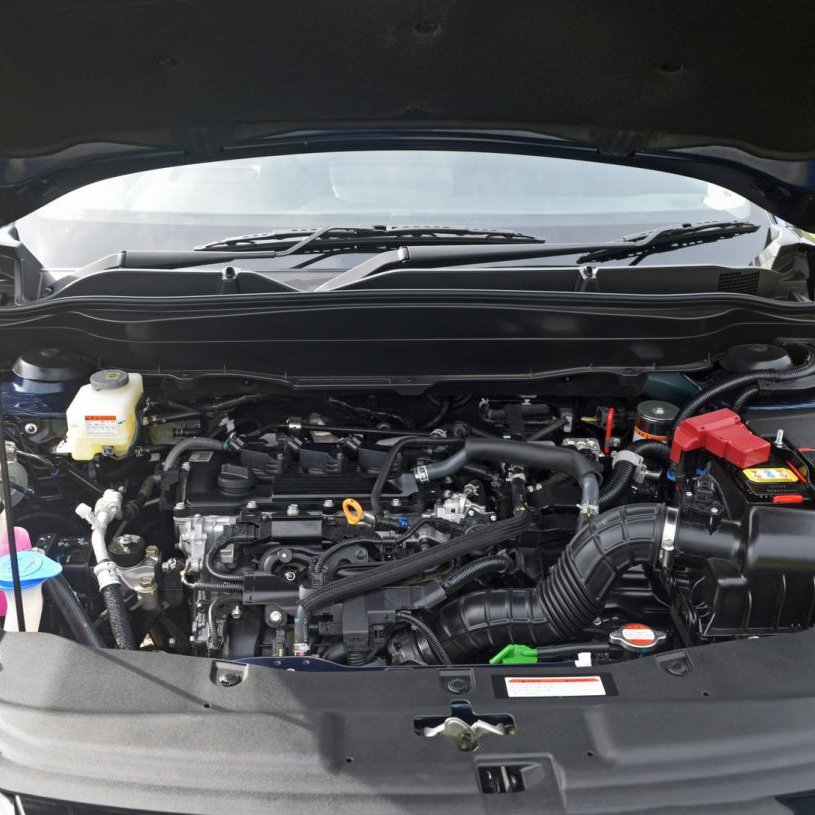
I said it last year too and will say it again, if you are picking PETROL NA 1.5 or 1.2 from Maruti or 1.5 or 1.2 i-VTEC from Honda, stay stress free. These engines will be tolerant against poor fuel quality and non compliant ethanol blends for Indian conditions. Stick to fewer petrol pumps and prefer to have 20% tank full all the time.
Not performance oriented engines like Turbo Petrols but best for Indian conditions where now travelling from A to B is a big thing in a car peacefully.
No journalist or influencer can say this openly, I can bet on that because it will offend many brands. I don't care because I am not in any race. In or out, hardly matters.
Respected @nsitharaman ji and @FinMinIndia,
Suggestion 2 of 3 for strengthening India's capital markets:
Dividend income on listed equities should not be subjected to double taxation.
A business can raise capital in only two ways: debt or equity.
When a company raises debt, the interest paid to lenders is treated as a business expense and deducted before tax. The lender may then pay tax on the interest received.
However, when a company raises equity capital, dividends are paid out of profits that have already suffered corporate tax. The shareholder is then taxed again on the same stream of income.
More importantly, equity capital bears far greater risk than debt capital. A lender has a contractual right to interest and principal repayment. A shareholder has no such guarantee. Dividends are discretionary, capital is fully at risk, and the shareholder stands last in line if a business fails.
If debt providers receive tax-deductible compensation despite bearing lower risk, there is a strong case for more favourable treatment of equity providers who supply the permanent capital that fuels entrepreneurship, innovation, employment and economic growth.
India needs to encourage long-term risk capital and greater participation in equity markets. Tax policy should reward those who provide patient equity capital to Indian enterprises rather than place them at a relative disadvantage compared to debt capital.
Respectfully submitted.
Over the past 5 years, I've read 50+ books on trading.
The truth is — most of them added nothing.
Skip the noise.
Read these 8 and you'll save yourself years ↓
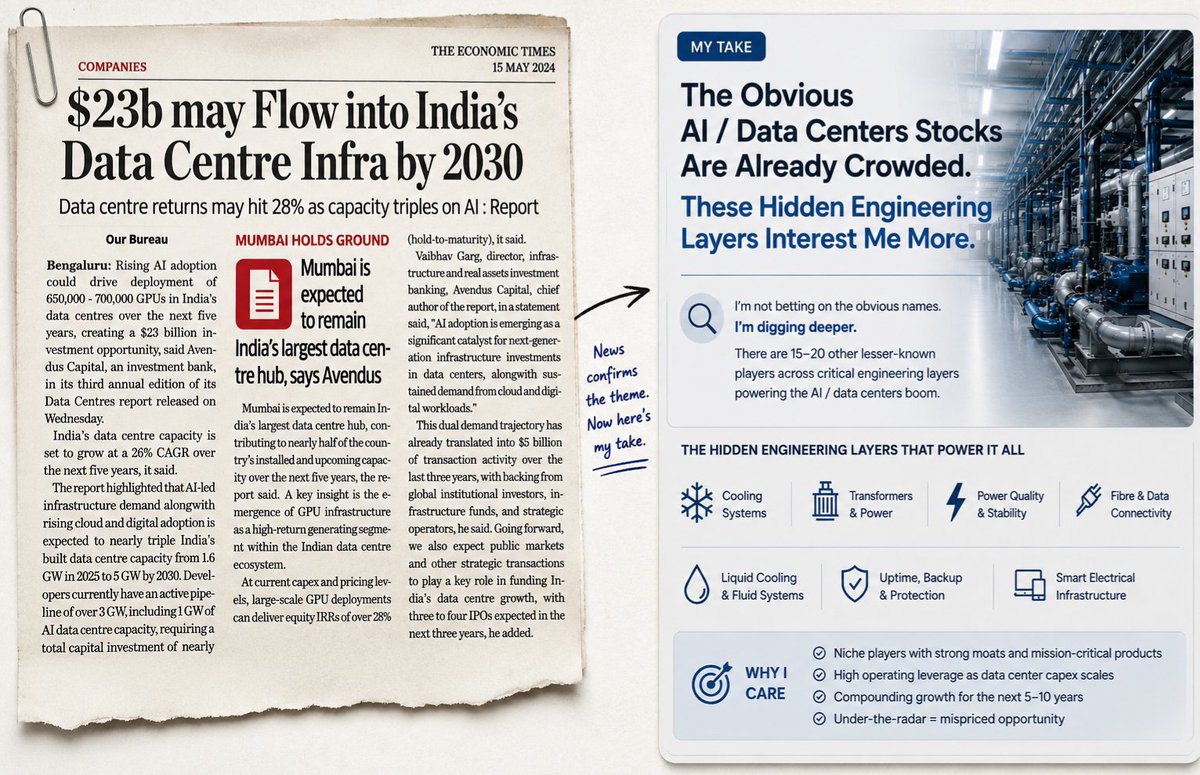
Most people are chasing the obvious AI / Data Centre names now, but I am more interested in the hidden engineering side powering this entire buildup.
The obvious large names like Siemens, ABB, Hitachi Energy, Netweb, CG Power, Schneider, Cummins, KEI, Polycab etc are strong businesses. No doubt about that, but I am personally more interested in the lesser discussed infrastructure chain connected to the Data Center ecosystem. My logic is that the hyperscale AI infrastructure needs much much more than juat GPUs. The amount of physical infra these facilities need is massive:
electricity intake, transformers, cooling systems, fibre density, backup systems, liquid circulation, electrical distribution and uninterrupted uptime engineering.
What makes this cycle very different is that AI workloads are far more power and cooling intensive than traditional cloud infrastructure. Most discussions around AI in India still remain limited to GPUs + servers, while very few people are discussing what rising AI power density could mean for cooling, transformers, electrical systems & uptime infrastructure.
Some interesting niche areas I am tracking:
1. Thermal mgm & cooling
Large: Blue Star, Amber
Niche: KRN Heat Exchanger, Aeroflex, Patels Airtemp
2. Speciality transformers & power density
Large: Hitachi Energy, CG Power
Niche: Shilchar Tech, TRIL, Bharat Bijlee
3. Grid stability & power quality
Large: ABB, Siemens
Niche: Quality Power, RMC Switchgears
4. Fibre density & backend data movement
Large: HFCL, Tejas Networks
Niche: Sterlite Tech, Aksh Optifibre, Birla Cable
5. Intelligent electrical distribution & UPS
Large: Schneider, Legrand
Niche: Marine Electricals, HBL Engg, Salzer Electronics
6. Liquid cooling & industrial fluid systems
Large: KSB, Kirloskar Bros
Niche: WPIL, Roto Pumps
7. Backup power & uptime reliability
Large: Cummins, Kirloskar Oil
Niche: Powerica, TD Power, Greaves Cotton
8. AI server deployment & electronics
Large: Netweb, Kaynes
Niche: Syrma SGS, Rashi Peripherals, Avalon Technologies
9. Enterprise networking & infra integration
Large: L&T, Tech Mahindra
Niche: Black Box, Techno Electric
India’s data centre capacity is expanding from roughly 950 MW toward nearly 1,800 MW by the end of 2026 or early 2027 & such infrastructure booms rarely create only one set of winners.
Railways created cable & transformer winners. Renewables created inverter and transmission winners. Similarly, AI infra may create hidden beneficiaries across cooling, transformers, power quality, fibre, liquid systems & uptime engg.
The obvious names may still do well, but some interesting opportunities may emerge far away from smaller engineering businesses solving some of the hardest infrastructure problems behind AI + data centres.
Which lesser names from the engineering layer of the AI infrastructure cycle interests you the most?