A man spends 50 years teaching at MIT.
He knows his time is running out.
So he records one last lecture — everything he knows, distilled into a single hour.
He died 5 months later.
This is that lecture.
The most important hour you'll watch this week. 👇
Bookmark it for later
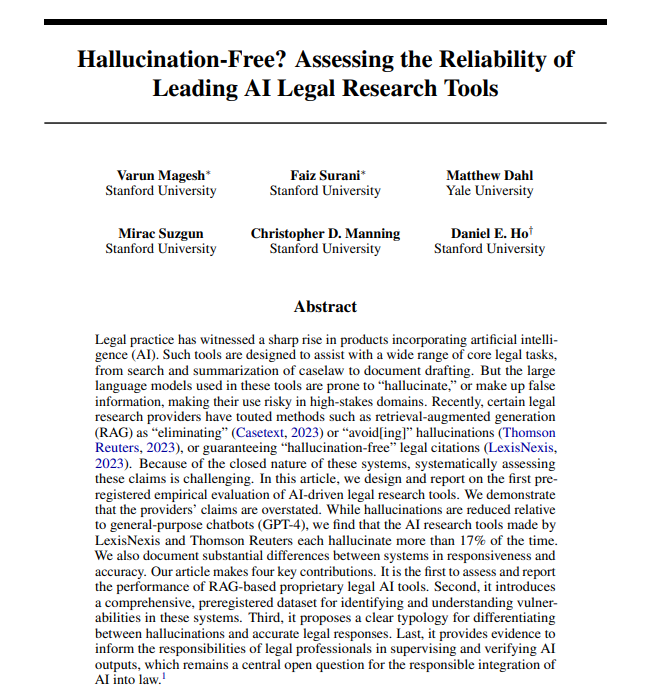
Stanford just tested whether LexisNexis and Thomson Reuters’ AI legal research tools are really “hallucination-free,” as they claim.
Spoiler: not even close.
Here’s what the study found.
Speaking of threats to the Vatican, any occasion is good for repeating Cardinal Consalvi’s apocryphal retort to Napoleon: “If we, the clergy, have not managed to destroy the Church in 1,800 years, how do you expect to succeed?”
Someone said the social media manager should be fired because they're a waste of tax dollars, and that the police department should act better online.
With that said, once in 7th grade, my buddy John and I succeeded at making funny fart noises on our trumpets in band class. The teacher was not amused but at the same time, they were kind of impressed.
We continued that tradition into marching band which was super hard to do while walking but yet again, we pulled it off.
Sorry, got sidetracked. We're going to keep doing what we’ve been doing. Thank you for your message though. 💅
Oh my goodness… I think it’s time I give up this twitter… I can’t deal with the fucking morons around here. Keyboard, warriors, losers, shit if they said it in person, they’d get the shit kicked out of them. 🤣
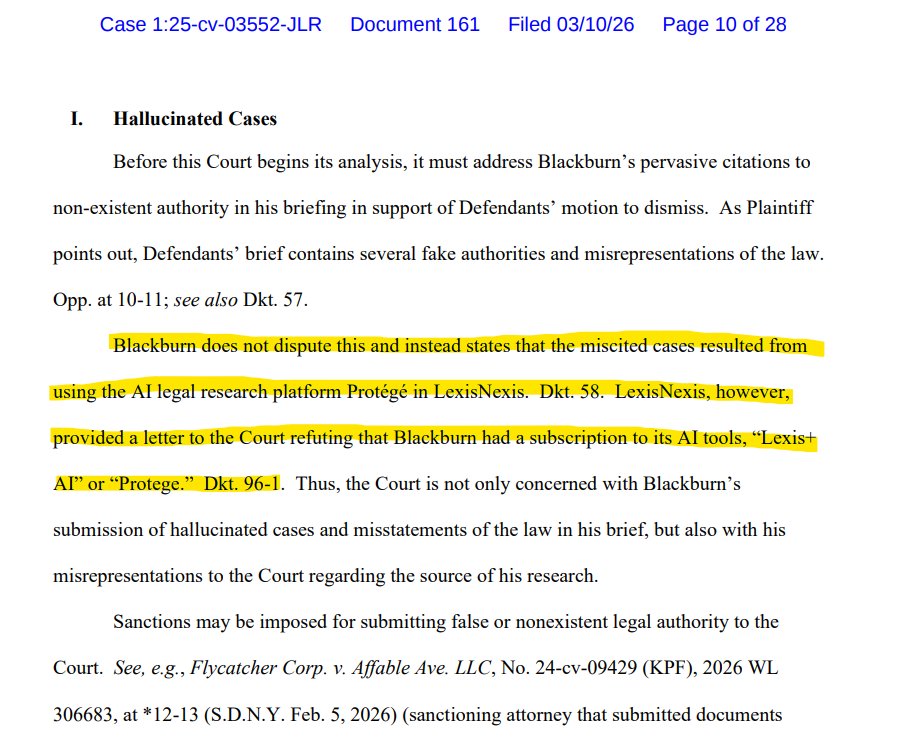
Lawyer cites to AI-hallucinated cases, blames Lexis Protege.
But LexisNexis sent a letter to the court refuting that the lawyer had a subscription to its AI tools (!)
So now the lawyer is in trouble both for the hallucinated cases and lying about where they came from.
A second-year associate sent me a draft in Arial font.
The firm standard is Times New Roman.
I didn't tell him to change it.
I converted the entire document to Wingdings.
I sent it back with a note: "This is how coherent your legal argument looks to me."
Font choice isn't an aesthetic preference.
It's an IQ test.
He failed.
I want to offer just a bit of advice to law students applying for internships, clerkships, or any other legal jobs: Please make sure you carefully review your cover letters, emails, or statements of interest before you send them.
Here are just a few missteps that I’ve seen in the past year or so of reading applications:
1. Using the wrong title or name (or misspelling my name)
2. Referring to the wrong court
3. “Dear Hiring Committee” (when you’re applying to an individual)
4. “[insert sentence about why I want job]”
5. Having AI write your cover letter and not fact-checking the information before using it
I understand it’s time consuming to carefully review and personalize every application, but this is your chance to make a first impression and give the reader a sense of the kind of work you would do if hired. You’re not helping yourself by being careless from the get-go.
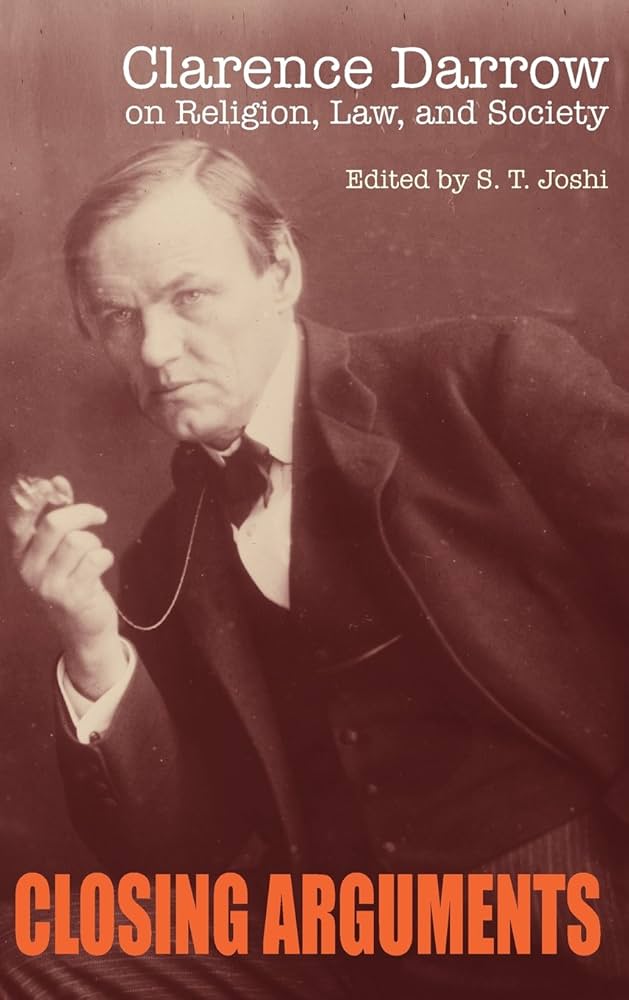
Client (to Attorney Clarence Darrow after he had successfully represented her in Court): "How can I ever show my appreciation, Mr. Darrow?"
Clarence Darrow: "Ever since the Phoenicians invented money, there has been only one answer to that question."
Gorsuch is a G*d-d*mned genius:
"For those who think it important for the Nation to impose more tariffs, I understand that today’s decision will be disappointing. All I can offer them is that most major decisions affecting the rights and responsibilities of the American people (including the duty to pay taxes and tariffs) are funneled through the legislative process for a reason.
Yes, legislating can be hard and take time. And, yes, it can be tempting to bypass Congress when some pressing problem arises. But the deliberative nature of the legislative process was the whole point of its design. Through that process, the Nation can tap the combined wisdom of the people’s elected representatives, not just that of one faction or man.
There, deliberation tempers impulse, and compromise hammers disagreements into workable solutions. And because laws must earn such broad support to survive the legislative process, they tend to endure, allowing ordinary people to plan their lives in ways they cannot when the rules shift from day to day. In all, the legislative process helps ensure each of us has a stake in the laws that govern us and in the Nation’s future.
For some today, the weight of those virtues is apparent. For others, it may not seem so obvious. But if history is any guide, the tables will turn and the day will come when those disappointed by today’s result will appreciate the legislative process for the bulwark of liberty it is."
In 1986, Edward Bernays gave a 30-minute masterclass on the psychology of persuasion.
He convinced an entire generation that:
• Bacon and eggs is the ideal breakfast
• Women smoking is "freedom"
• A cold president was actually warm
12 lessons on influence and persuasion: