#WATCH | Hyderabad | Vaishnavi Das, who secured AIR 20 in NEET UG 2026, says, "I had gone with my parents to watch the Rath Yatra; we were in the car. At that very moment, we checked the results, and tears of joy started to flow from my eyes. When I was in 11th grade, I deactivated my Instagram. It's just a distraction. One shouldn't lose hope. It's a long journey; staying positive is essential."
Received this message in the morning and was confused. So called the number mentioned in the chat. The number was constantly busy. Just now received a call and the person said I need to update payment and for which he sent me a link (.apk) extension.
@mahanagargas
Thank you for being a vigilant customer. Stay safe from sneaky WhatsApp/Message scams pretending to be MGL. Please Note: MGL will NEVER ask for personal information or ask you to click on suspicious links via WhatsApp/Message. Always check and connect with MGL on the official #WhatsApp number: +91-98992 03843. For more info, call: (022)-68674500 | (022)-6156 4500.
If you receive a suspicious message claiming to be from MGL, do NOT engage or reply. These are likely fraud attempts. Take a screenshot if possible and report the matter to your nearest police station so they can take necessary action.
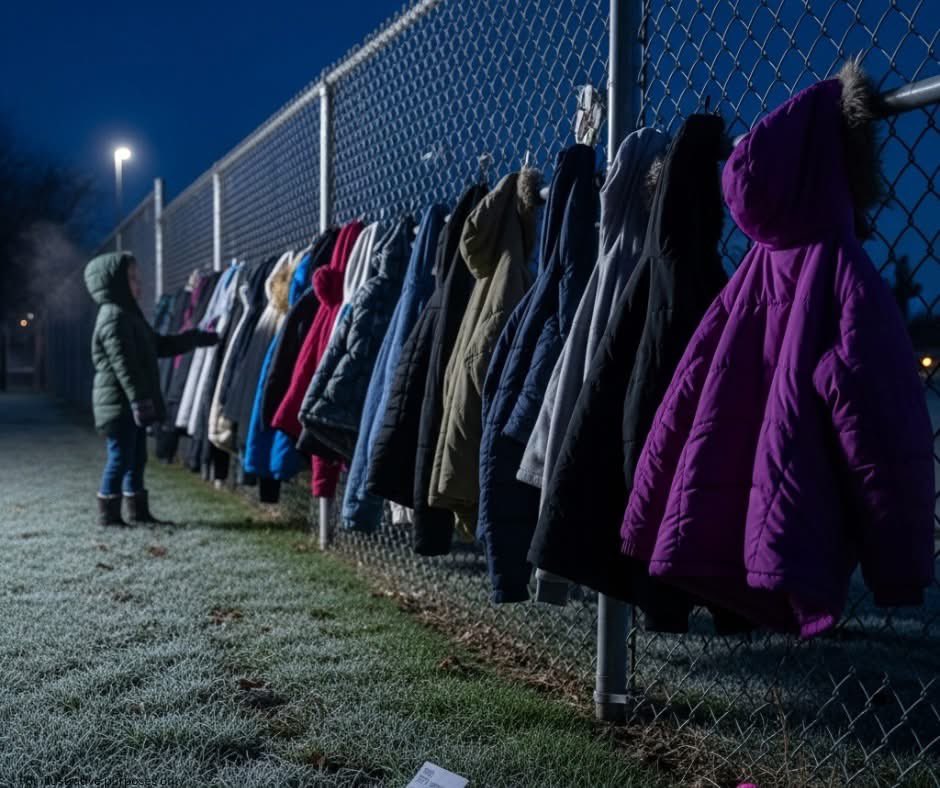
"They found the coats on Thursday morning.
Fifteen winter coats. Good ones, not garbage. Hanging on the chain-link fence outside Lincoln Elementary. No note. No explanation. Just coats, zipped up like ghosts waiting for bodies.
Principal Morris freaked out. Called the police. "Could be stolen," she said. "Could be some kind of prank."
But then Kayla Martinez, eight years old, said her mom worked nights cleaning offices and couldn't afford a winter coat this year. She'd been wearing three hoodies layered up. She touched a purple one on the fence, the right size, and whispered, "Can I?"
Mrs. Alvarez, the PE teacher, said yes before anyone could stop her.
By lunch, all fifteen coats were gone. Fifteen kids who'd been shivering through recess were warm.
The next Thursday? Twenty coats. Different fence, same neighborhood, outside the community center. Then thirty coats appeared at the downtown shelter. Then blankets. Then winter boots.
No cameras ever caught who did it. No social media claims. Just... coats. Every Thursday. All winter long.
The news picked it up. Called them "The Fence Angel." Interviewed grateful families. But nobody knew.
Until March.
Old man died, Earl Hutchins, seventy-one, lived alone in a basement apartment on Fourth Street. When they cleaned out his place, they found receipts. Thrift store receipts. Hundreds of them. He'd been buying every decent winter coat he could find, spending his entire disability check, and hanging them up at night.
His nephew found a journal entry, "Lost my son to exposure in 2004. He was homeless, prideful, wouldn't take handouts. Froze to death behind a dumpster wearing a T-shirt. If I put coats on a fence, nobody has to ask. Nobody has to admit they need help. They just take it. Dignity intact."
I'm Kayla Martinez. I'm sixteen now. That purple coat got me through fourth grade. I never knew Earl. Never got to say thank you.
But last November, I took my babysitting money to Goodwill. Bought six coats. Hung them on that same fence.
My friends saw. They bought coats. Then their parents did. Then the high school started a coat drive, not for a bin, for the fence.
Last Thursday, there were 200 coats. Scarves too. Gloves. We call it "Earl's Fence" now. There's one in Detroit. One in Manchester. One in Vancouver.
I never met the man who saved me from freezing. But I'm becoming him, one coat at a time.
Because the best kind of help doesn't ask for credit. It just hangs there, quiet, waiting for cold hands to find warmth."
.
Let this story reach more hearts....
.
Ai image is for demonstration purpose only.
.
By Mary Nelson
"My husband thinks I'm wasting my time.
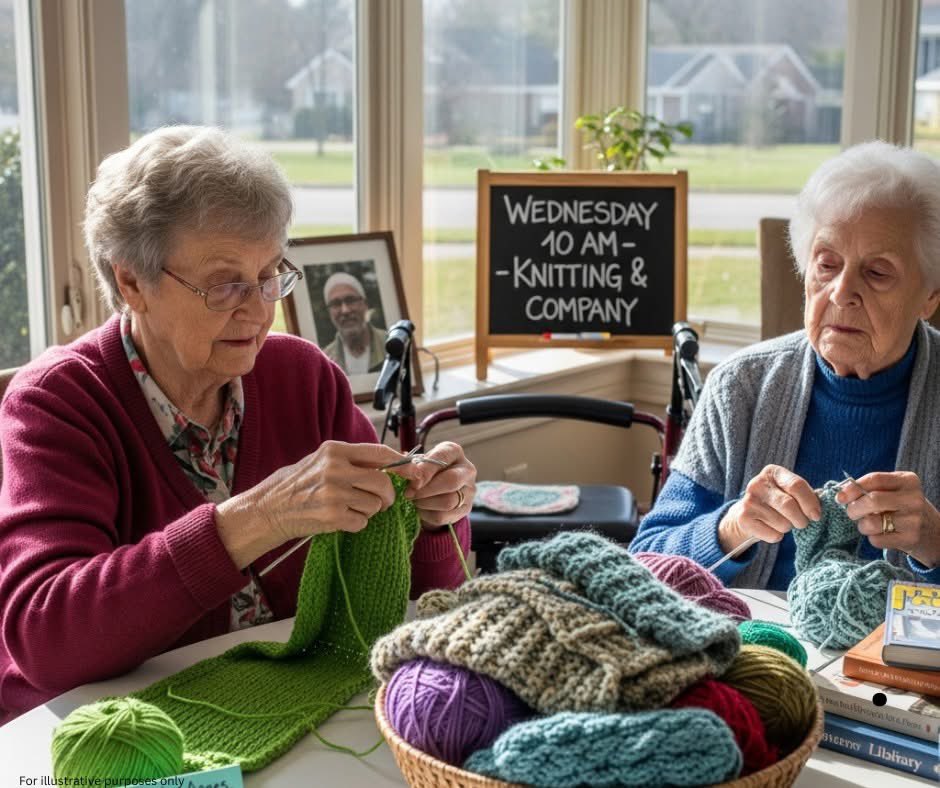
Every Wednesday morning, I drive to Riverside Nursing Home. Not to visit anyone. I don't know a soul there. I go to sit in the lobby and knit. Been doing it for three years now. I'm 67, retired teacher, got nothing but time.
The staff thought I was confused at first. "Ma'am, who are you here to see?"
"Nobody," I said. "Just sitting."
They let me stay. I think they felt sorry for me.
But I noticed something. Residents would shuffle past, some in wheelchairs, most alone. They'd see me knitting and slow down. Stop. Watch.
One woman, Agnes, finally asked. "What are you making?"
"Scarf. For nobody in particular."
"That's a waste," she said.
"Probably," I agreed. "Want to help?"
She looked startled. Like I'd offered her the moon. "I haven't knitted in 40 years."
"Good. Then you won't criticize my terrible stitches."
She sat. I handed her needles. Her fingers remembered what her mind had forgotten.
Next week, Agnes brought two friends. Then five. Then eight. The nursing home staff moved us to the sunroom. Called us "the knitting circle," though we mostly just sat together, hands moving, talking about nothing important. Grandchildren. Weather. The awful meatloaf they served on Tuesdays.
But here's what I noticed, these women started showing up to meals. Getting dressed instead of staying in robes. One woman, Clara, hadn't spoken in months according to staff. Started telling stories about knitting blankets during the Depression.
The scarves piled up. Terrible, uneven scarves in every color. "What do we do with these?" Agnes asked.
"Give them away," I said.
We donated them to the homeless shelter. Every month, a pile of scarves made by women everyone had forgotten about.
Then last winter, something happened. A homeless man came to the nursing home. Asked to meet the knitters. Staff was confused but brought him to our circle.
He held up a green scarf, terribly made, one end wider than the other. "I got this at the shelter in November. Wore it every night. There was a note in the pocket. 'Made by Agnes, age 81. Stay warm, friend.'"
Agnes's hands flew to her mouth.
"I'm in an apartment now," he continued. "Got a job. Saved that scarf. Wanted to say thank you. Nobody ever made me something before. Made me feel like I mattered enough to keep living."
Agnes cried. We all did.
My husband still thinks I'm wasting my time. Driving across town to knit with strangers.
But Agnes died last month. Peaceful, in her sleep. At her memorial, her daughter found me. "Mom talked about Wednesdays constantly. Said it gave her a reason to wake up. You gave her three good years."
The circle still meets. Eight women, ages 74 to 93, making terrible scarves for people who need to know someone cares.
I'm not saving the world. Just sitting in a sunroom, knitting with lonely women.
But sometimes that's exactly what saving the world looks like."
.
Let this story reach more hearts....
.
AI image is for Demonstration purpose only.
.
By Mary Nelson
When Khalil Gibran said, “Between what is said and not meant, and what is meant and not said, most love is lost”
When Jane Austen said, “And sometimes I have kept my feelings to myself, because I could find no language to describe them in.”
When Fyodor Dostoevsky said, “Much unhappiness has come into world because of bewilderment and things left unsaid.”
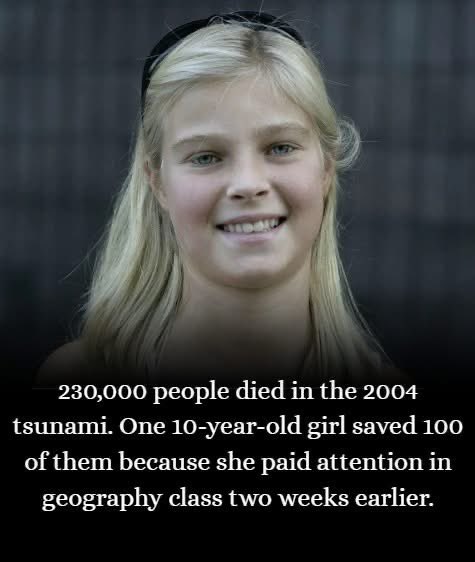
Her name was Tilly Smith. And she was about to prove that a single school lesson could mean the difference between life and death.
On the morning of December 26, 2004, Tilly was walking along Mai Khao Beach in Phuket, Thailand, with her family. They were on their first overseas holiday together—a Christmas treat.
The beach was beautiful. The weather was perfect. But something was wrong.
Tilly noticed the water wasn't behaving normally.
"It wasn't calm and it wasn't going in and then out," she later recalled. "It was just coming in and in and in."
The sea had turned frothy—"like you get on a beer," she said. "It was sort of sizzling."
Any other 10-year-old might have thought it was strange. Tilly knew exactly what it meant.
Just two weeks earlier, in her geography class at Danes Hill School in Surrey, her teacher Andrew Kearney had shown the class black-and-white footage of the 1946 tsunami that devastated Hawaii. He taught them the warning signs: the sea receding unusually far, frothy bubbling water, the ocean behaving in ways it shouldn't.
Tilly was watching those exact warning signs unfold in front of her.
She started screaming at her parents. "There's going to be a tsunami!"
They didn't believe her. They couldn't see any wave. The sky was clear. The beach was calm.
But Tilly wouldn't stop. She became more insistent, more frantic.
"I'm going," she finally said. "I'm definitely going. There is definitely going to be a tsunami."
Her father Colin heard the urgency in her voice. He decided to trust his daughter.
By coincidence, an English-speaking Japanese man nearby overheard Tilly use the word "tsunami." He'd just heard news of an earthquake in Sumatra. "I think your daughter's right," he said.
Colin alerted the hotel staff. They began evacuating the beach immediately.
Tilly's mother Penny was one of the last to leave. She had to sprint as the water began rushing in behind her.
"I ran," Penny recalled, "and then I thought I was going to die."
They made it to the second floor of the hotel with seconds to spare.
Then the wave hit.
It was 30 feet tall.
Everything on the beach—beds, palm trees, debris—was swept into the swimming pool and beyond. "Even if you hadn't drowned," Penny later said, "you would have been hit by something."
The 2004 Indian Ocean tsunami killed over 230,000 people across 14 countries. Entire beaches in Phuket were wiped out. Thousands died.
But at Mai Khao Beach, not a single person was killed.
Because a 10-year-old girl paid attention in geography class.
Tilly was hailed as the "Angel of the Beach." She received the Thomas Gray Special Award from the Marine Society. She was named "Child of the Year" by a French magazine. She appeared at the United Nations and met Bill Clinton.
Her story is now taught in schools around the world as an example of why disaster education matters.
Her father Colin still thinks about what could have happened.
"If she hadn't told us, we would have just kept on walking," he said. "I'm convinced we would have died."
Tilly is now 30 years old. She lives in London and works in yacht chartering.
She still credits her geography teacher, Andrew Kearney.
"If it wasn't for Mr. Kearney," she told the United Nations, "I'd probably be dead and so would my family."
Two weeks. One lesson. One hundred lives.
That's the power of education.
"Tilly Smith’s quick thinking saved her family during the 2004 tsunami. Click to read how one geography lesson made all the difference!"