For 60 years, only one company in India could build a nuclear reactor. NPCIL.
That law died in December.
Last Tuesday, Maharashtra signed ₹6.5 lakh crore in private nuclear MoUs. Everyone is watching the operators. The real opportunity sits one layer below.
Here's what most people missed.
On December 20, 2025, the President gave assent to the SHANTI Act. In one stroke, it repealed two laws that had blocked private nuclear for six decades: the Atomic Energy Act of 1962 and the Civil Liability for Nuclear Damage Act of 2010.
For the first time since Independence, private Indian companies, joint ventures, and foreign firms can build, own, operate, and decommission nuclear power plants. Including Small Modular Reactors.
Maharashtra moved first.
On May 19, 2026, the state signed four MoUs in a single afternoon at Mantralaya:
🔹Adani Power: 6,000 MW at Barsu in Ratnagiri. ₹1.5 lakh crore. Adani has already incorporated Adani Atomic Energy Limited with two subsidiaries (Coastal-Maha Atomic Energy and Rawatbhata-Raj Atomic Energy)
🔹Reliance Industries: 7,200 MW at Purnagad in Ratnagiri. ₹2 lakh crore. A mix of Bharat Small Reactors, SMRs and conventional units of 2x220 MW to 6x1200 MW
🔹NTPC: 7,200 MW at Devgad in Sindhudurg. ₹1 lakh crore. NTPC already runs the JV with NPCIL for the 4x700 MW Mahi Banswara project in Rajasthan and a planned 2.8 GW plant in Banka, Bihar
🔹Lalitpur Power Generation (Bajaj group): 5,000 MW. ₹2 lakh crore
Total: 25,400 MW. ₹6.5 lakh crore. About 1.23 lakh direct and indirect jobs.
To put that in perspective, India's entire installed nuclear capacity today is 8.78 GW. Maharashtra alone just contracted three times that number.
Now the part nobody is asking.
These four companies are the operators. They sign the PPAs, they own the equity, they earn the regulated returns.
But none of them actually builds a reactor.
The reactor itself. The calandria. The steam generators. The heat exchangers. The coolant pumps. The nuclear-grade tubing. The precision-machined fuel handling assemblies. Every one of these comes from a small, specialised, listed Indian supply chain that has been building for NPCIL for 40 years and is now staring at a multi-decade order book.
The supply chain that actually wins:
✍️L&T: Delivered heavy components for 17 PHWRs in India and the main and safety vessels for the PFBR at Kalpakkam. ASME-accredited for nuclear-grade pressure vessels (one of very few in Asia)
✍️BHEL: Steam generators, turbines, control systems, balance-of-plant. Q4 FY26 PAT jumped 2.5x to ₹1,283 crore. Power segment up 53% YoY. Order book at ₹2.4 lakh crore
✍️Hindustan Construction Company (HCC): Built over 50% of India's existing nuclear civil capacity, including Kudankulam. With fleet-mode 700 MW PHWRs now in execution, repeat orders are likely
✍️MTAR Technologies: Fuel machining heads, bridge and column systems, coolant channel assemblies. Long-standing NPCIL supplier
✍️Walchandnagar Industries: Calandria (the heart of the reactor), end shields, reactor headers. One of the oldest engineering names in India's nuclear story
✍️KSB Pumps: Specialist supplier of reactor coolant pumps to India's nuclear program. Listed Indian subsidiary of KSB SE Germany
✍️Venus Pipes and Tubes: Stainless steel high-precision and heat-exchanger tubing for reactor cooling systems
✍️Kilburn Engineering: Air-cooling units and heavy-water vapour recovery systems
The Fast Breeder Reactor went critical at Kalpakkam in April. Last week, four private companies signed up to build 25,400 MW. Both used the same supply chain.
The thorium story was the why.
The Maharashtra MoUs are the when.
This list is the how.
⚡️Disclaimer: The above data should not be considered as a Buy or Sell recommendation. The analysis has been done for educational and learning purposes only.
#Dell
Bought a Dell Inspiron 5510 (June 2022) 3-year warranty. Used it every year:
LCD hinge failure; Keyboard malfunction;
& OS crash
Now, just days after warranty expiry, the laptop crashes again—without warning.
“Reliability” shouldn’t end with warranty.
Modi lands in Israel today. And the deals being signed tell you this visit was never about diplomacy.
Israel has offered India full technology transfer for Iron Dome and Iron Beam. Not a sale. A transfer. Joint production, domestic manufacturing, integration into India’s multi-layered air defense grid. $8.6 billion in defense agreements expected to be formalized before Modi’s plane leaves Israeli airspace tomorrow.
Iron Beam is the part that should stop you. A 100-kilowatt laser weapon that destroys incoming drones and rockets at $2 per shot. Two dollars. An Iron Dome interceptor costs $50,000 to $100,000 per missile. Iron Beam makes the economics of attrition warfare irrelevant.
Israel has never transferred this technology to anyone. Not the United States. Not the UK. Not Germany.
India is the first.
Now ask yourself why Israel is handing its most advanced defensive technology to the world’s fifth-largest economy this week, of all weeks.
Because Netanyahu is not selling weapons. He is buying an alliance. The “hexagon” he described publicly, a coalition against what he called radical Sunni and Shiite axes, requires India to have skin in the game. You do not give a country your most classified defense technology unless you need that country committed to your security architecture for decades.
Iron Dome technology transfer makes India structurally dependent on Israeli defense integration. Maintenance, upgrades, software updates, threat library sharing, all of it creates institutional ties that outlast any single government.
This is not a transaction. It is a binding commitment disguised as a procurement.
And the timing is the signature.
Modi is addressing the Knesset at 4:30 PM today while a 48-hour deadline expires on Iran. He is signing defense agreements while 11 F-22s sit on Israeli tarmac. He is formalizing a security partnership while Turkey plans border incursions and China sells Iran supersonic anti-ship missiles.
Netanyahu is assembling his coalition before the action, not after. Every alliance signature collected before the first bomb falls becomes a diplomatic asset that cannot be retracted once the operation begins.
India cannot condemn an Israeli military action 48 hours after its Prime Minister stood in the Knesset endorsing the security partnership that enables it.
Modi did not travel to Israel despite the crisis. The crisis is why the invitation was sent.
A Grand Wedding Does Not Make You Royal — It Makes You Financially Burdened.
Taking loans to host extravagant weddings…
Lavish decorations, luxury venues, 10-car processions, DJs, fireworks, designer outfits, horses and royal entries — none of this makes anyone an Ambani.
For one day of artificial glory, many families sacrifice years of hard-earned savings and mental peace. Becoming a “king” for a few hours often means working like a laborer for years to repay the debt.
Marriage is a sacred bond — not a stage show.
Dowry, financial pressure, social comparison, and competitive display of wealth are silent evils eating into our society. The burden of loans at the beginning of a new life plants seeds of stress, conflict, and regret.
If we truly want a peaceful and stable future, we must stop celebrating beyond our means. Borrowed money cannot build a happy home.
Let us pledge:
No dowry.
No debt-funded weddings.
No fake social status.
No financial burden passed to the next generation.
A simple wedding with dignity is far more powerful than a luxurious event funded by loans.
One day of false prestige is never worth a lifetime of anxiety.
True prosperity lies in financial discipline, mutual respect, and a stress-free beginning — not in showmanship.
Change in society begins at home.
Let us choose real happiness over artificial display.
If you want to understand what is happening in COPPER right now, I highly recommend careful reading of this incredibly well-written article.
The Red Metal Singularity https://t.co/KbOOINHyCV
Bira 91 was one of the successful start-up stories of last decade. It is a popular craft beer brand. They were growing so well. Reality is strange than what you can imagine. A procedural goof up has lead to whole company being collapsing and the founder now being forced even to exit by company employees.
As Bira was very successful, it wanted to come up with IPO. So it did a small change. It changed the name from B9 beverages private limited to B9 beverages limited. Just removed the word private.
All the hell then broke loose. All the states immediately banned the sale of Bira 91 treating the new name as different entity. They demanded fresh legal approvals, label approvals, product registrations and fresh licenses for every single variant.
Google and find out. This lead to one problem after another. Once a thriving company looks like may not even survive.
I remember once someone asked Hina Nagarajan, former CEO of Diageo India as to why she is retaining the name United Spirits instead of changing it to Diageo India limited. She said that the company checked with best legal brains in the country and name change would lead to huge disruptions for business.
Though what happened to Bira is extremely unfair, you've to accept the reality of India. Procedures, compliance and proper documentation are extremely important. The rules are so complex you should never desist from taking expert advice. What you assume need not work in reality and may even go against you.
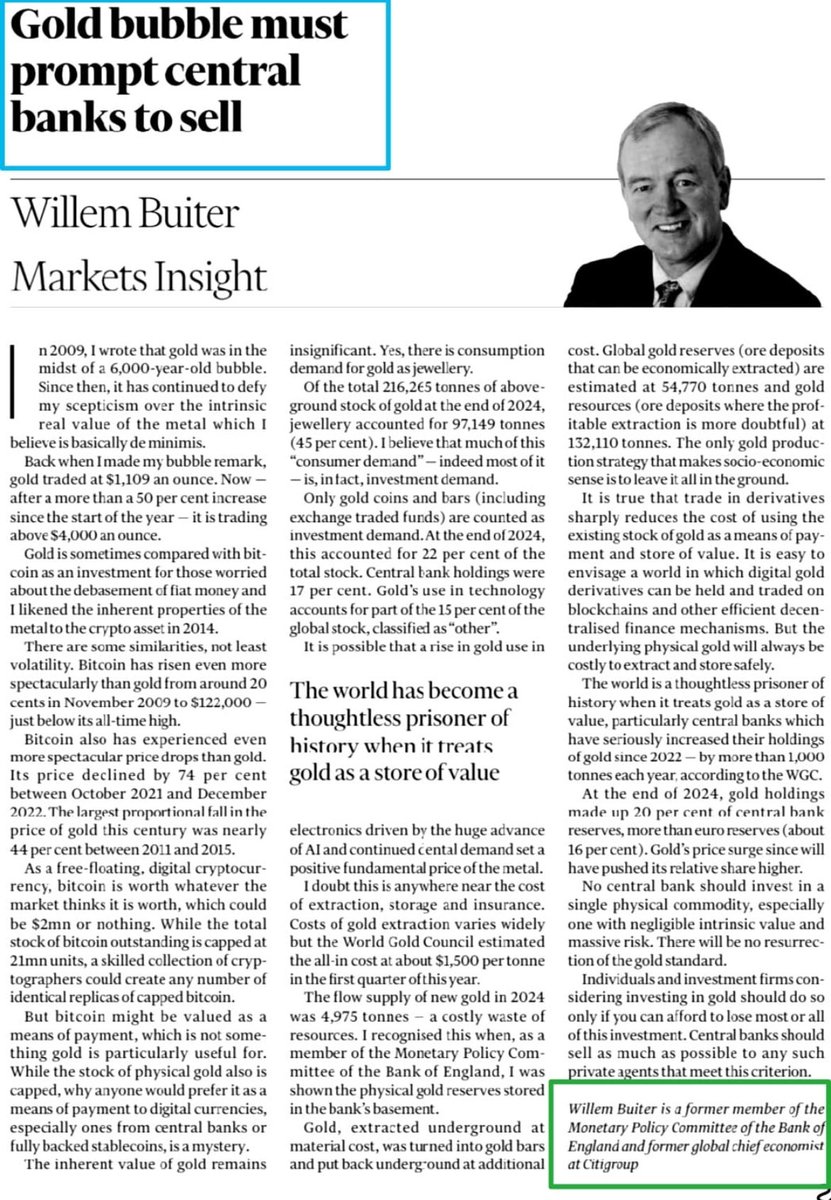
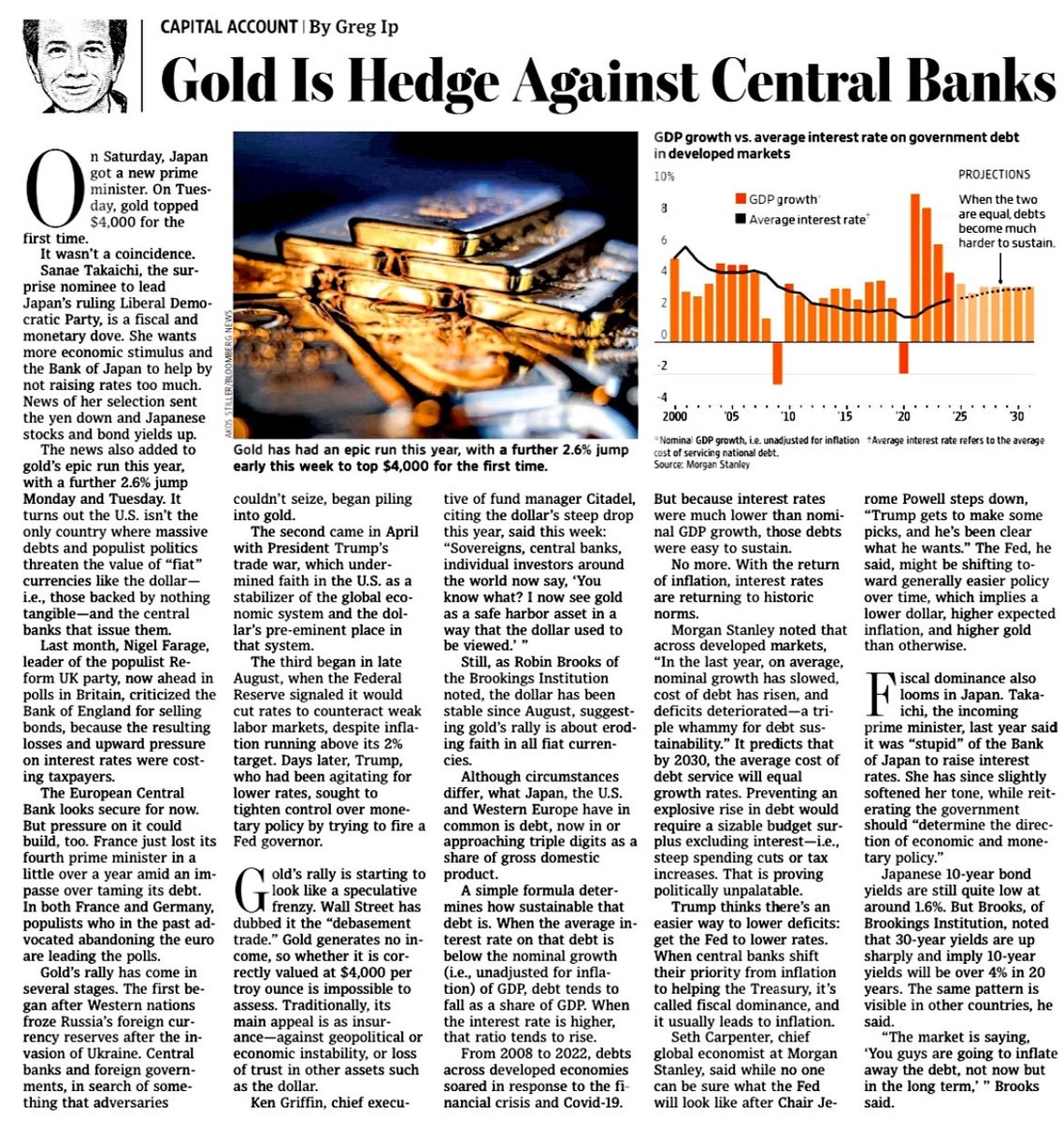
A Bull call on Gold vs a Bear call on Gold.
Both are right on focusing upon the role of the Central Bankers.
Their actions will influence Gold Prices in a material manner.