SpaceX millionaires 4,000 x $1mil , 400 x $100 mil
Every employee who joined before the first succesful launch made (unless they sold early) more than $100 million.
SpaceX lists June 12 at ~$1.75T.
Work backward from the cap table. At $1.75T, clearing $100M takes ~0.0057% of the company.
- 2002–2008, first ~500 in: joined at a ~$50M company. Held to $1.75T = a 17,000x. The core of the club — maybe 150–250 left holding
- September 2008, SpaceX has first successful launch
- 2010–2016: joined at $1B–$10B. Needs a senior grant — directors, principal engineers, early Starlink. ~100–200
- C-suite + board: Shotwell, Johnsen past $1B. A layer of SVPs below them clears $100M on equity, not salary. ~20–40
- Post-2016: joined at $20B–$350B. To hit $100M you'd have needed ~0.4% of the company. Impossible for an employee. This is the millionaire tier — almost none reach $100M
The tally:
~400–500 at $100M+
A few dozen above $500M
A handful of billionaires past Musk
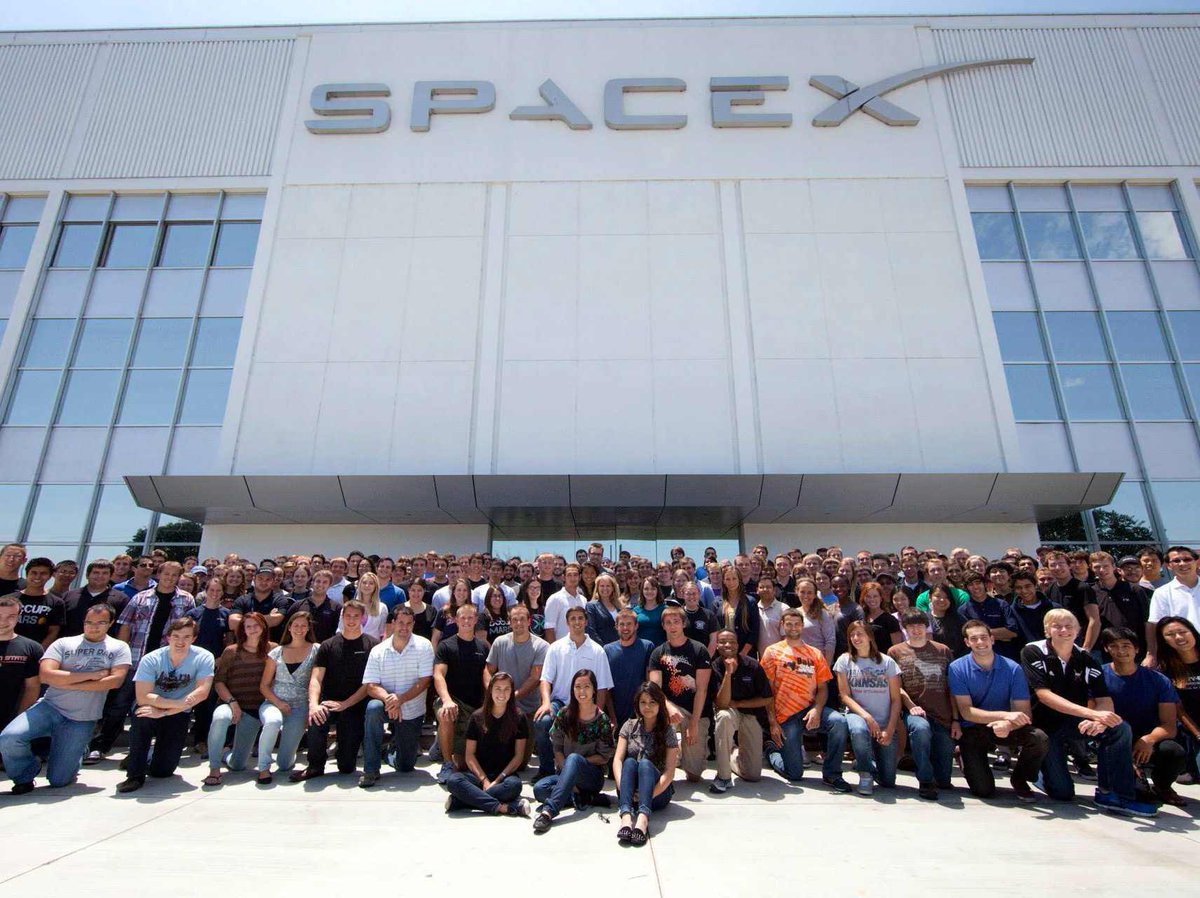
Same building. Same mission. Two orders of magnitude apart — set entirely by what year you walked in.
Early isn't a strategy. It's a date stamp.
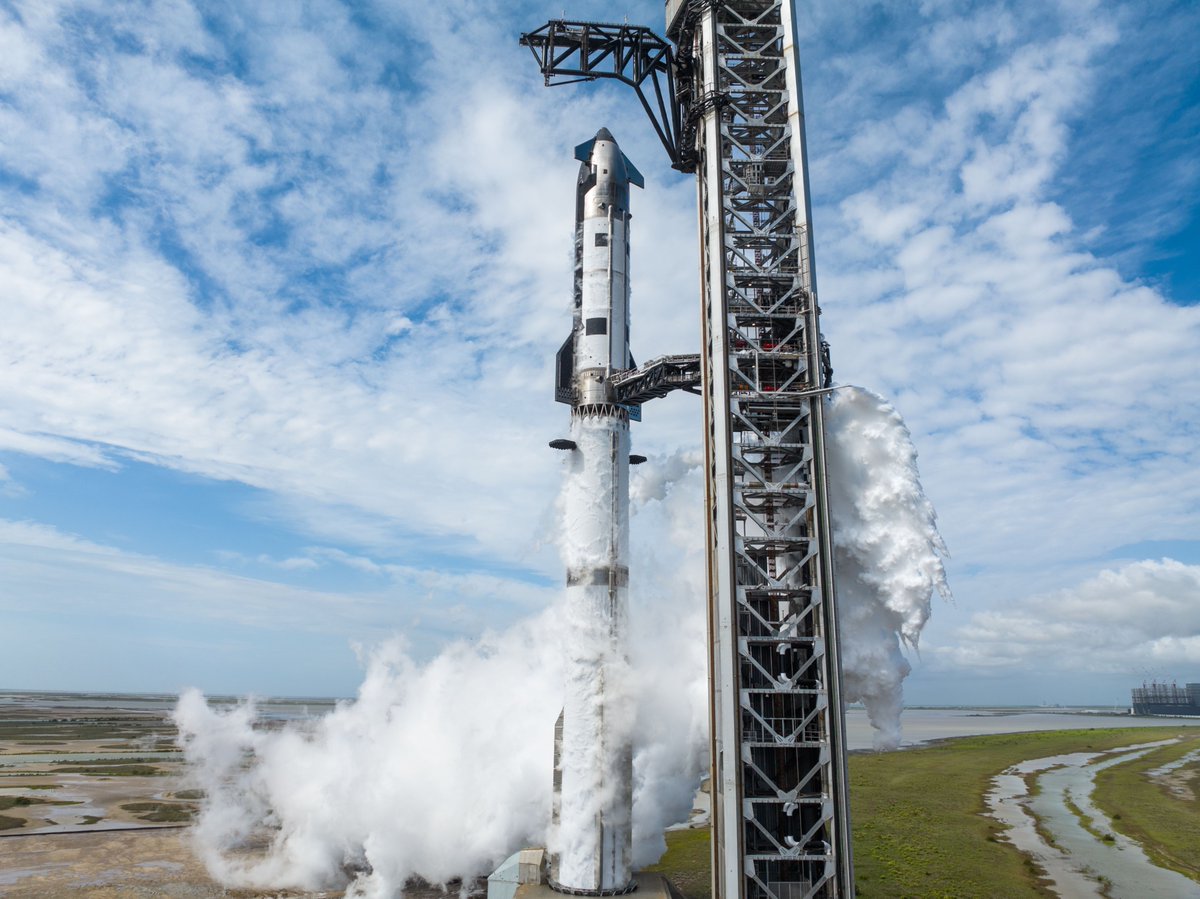
SpaceX has just released a massive new list of changes in Starship V3, which is now scheduled to launch on May 19th:
Super Heavy V3 Changes
Grid Fin Redesign:
• Reduced from 4 fins to 3
• Each fin is now: 50% larger, stronger, repositioned for better catching/lifting
• Lowered on booster to reduce heat exposure during hot staging
• Fin hardware moved inside fuel tank for protection
Integrated Hot Stage:
• Removes the old disposable interstage shield
• Booster dome now directly exposed to upper-stage engine ignition
• Tank pressure + steel shielding protect structure
• Interstage actuators retract after separation for protection
New Fuel Transfer System:
• Massive redesign of fuel transfer tube
• Roughly the size of a Falcon 9 first stage
• Allows: simultaneous startup of all 33 Raptors, faster and more reliable flip maneuvers
Engine Bay / Thermal Protection Changes:
• Engine shrouds removed entirely
• New shielding added between engines
• Propulsion + avionics more tightly integrated
• CO₂ fire suppression system removed
• Simpler and lighter aft section
Propellant Loading Improvements:
• Moved from 1 quick disconnect to 2 separate systems
• Adds redundancy
• Reduces complexity of pad interfaces
Starship V3 Changes
Completely Redesigned Propulsion System:
• Clean-sheet redesign
• Supports: new Raptor startup method, larger propellant volume and improved reaction control system
• Reduces trapped/leaked propellant risk
Aft Section Simplification:
• Fluid + electrical systems rerouted
• Engine shrouds deleted
• Large aft cavity removed
Flap Actuation Upgrade:
• Changed from: 2 actuators per flap to 1 actuator with 3 motors
• Improves:, redundancy, mass efficiency, cost
Faster Starlink Deployment:
• Upgraded PEZ dispenser
• Faster satellite deployment speeds
Long-Duration Spaceflight Capability:
• New systems added for: long orbital coasts, orbital refueling, cryogenic fluid management, vacuum, insulated header systems and high-voltage cryogenic recirculation
Ship-to-Ship Docking + Refueling:
• Added 4 docking drogues
• Added propellant transfer connections
• Directly supports in-space refueling architecture
Avionics Upgrades
Massive Electrical System Upgrade:
• ~60 custom avionics units
• Batteries/inverters/high-voltage systems integrated together
• ~9 MW peak power capability
Better Navigation + Redundancy:
• New multi-sensor navigation system
• Designed for precision autonomous flight
Propellant Monitoring in Space:
• New RF sensors measure propellant levels in microgravity
• Important for orbital refueling missions
Camera + Connectivity Upgrades:
• ~50 onboard camera views
• 480 Mbps Starlink connectivity onboard
• Low-latency redundant communications
Raptor 3 Engine Changes
Higher Thrust:
• Sea-level Raptors:
• Increased from:
230 tf → 250 tf
507k lbf → 551k lbf
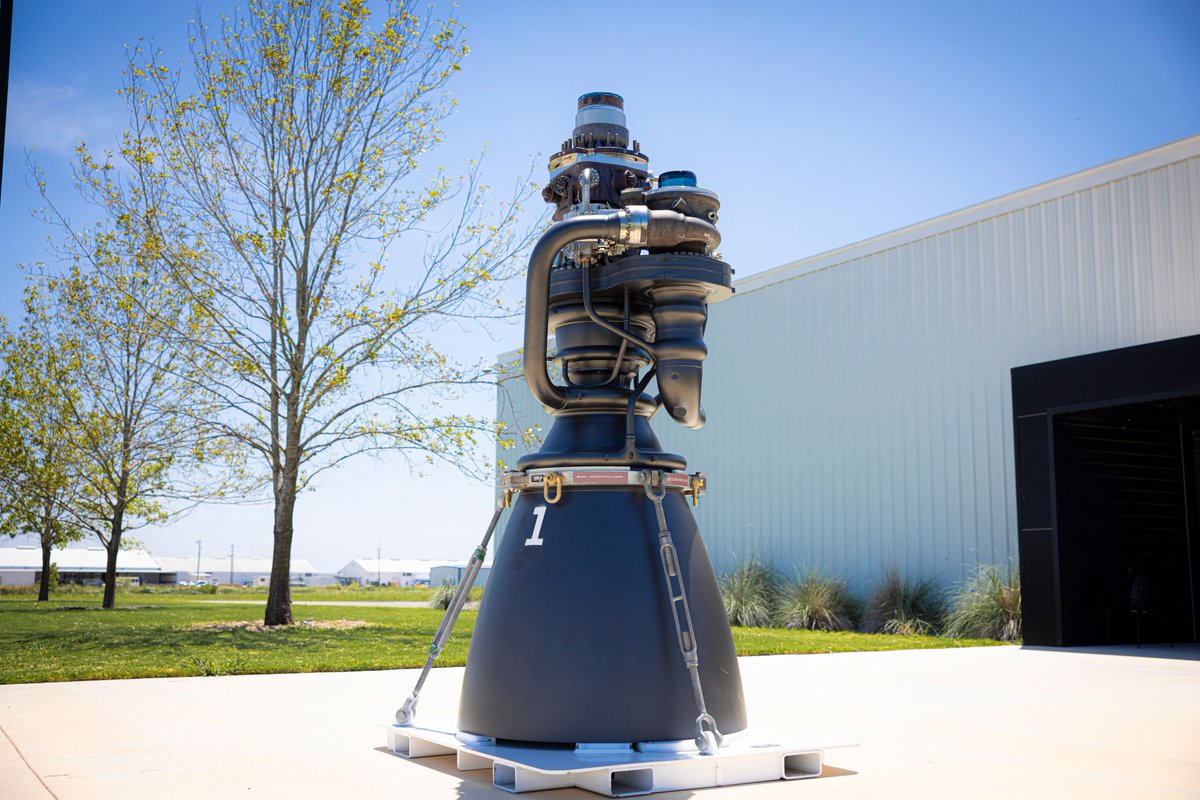
Vacuum Raptors:
Increased from:
258 tf → 275 tf
568k lbf → 606k lbf
Lower Mass:
• Sea-level engine mass reduced: 1630 kg → 1525 kg
Simpler Design:
• Sensors/controllers integrated into engine body
• Removes need for engine shrouds
• New ignition system for all variants
• Huge Vehicle-Level Weight Savings
• ~1 ton saved per engine across vehicle systems
Launch Pad 2 Upgrades (Starbase)
Faster Propellant Loading:
• Larger propellant farm
• More pumps
• Faster fueling operations
Chopstick Improvements:
• Shorter arms for faster movement
• Switched from hydraulic → electromechanical actuators
• Better reliability + redundancy
Stronger Quick Disconnect Arm:
• Reinforced and redesigned
• Swings farther away during launch
Launch Mount Redesign:
• Better load handling
• Improved launch protection
• Improved throwback reliability
New Flame Diverter System:
• Bidirectional flame diverter
• Designed to eliminate ablation/refurbishment after launch
Hardened Propellant Systems:
• Methane and oxygen systems separated
• Valves/filters moved into protected bunker
• Improves safety and reliability
SpaceX: "Together, these new elements are designed to enable a step-change in Starship capabilities and aim to unlock the vehicle’s core functions, including full and rapid reuse, in-space propellant transfer, deployment of Starlink satellites and orbital data centers, and the ability to send people and cargo to the Moon and Mars."
This is going to be an epic flight! 🚀
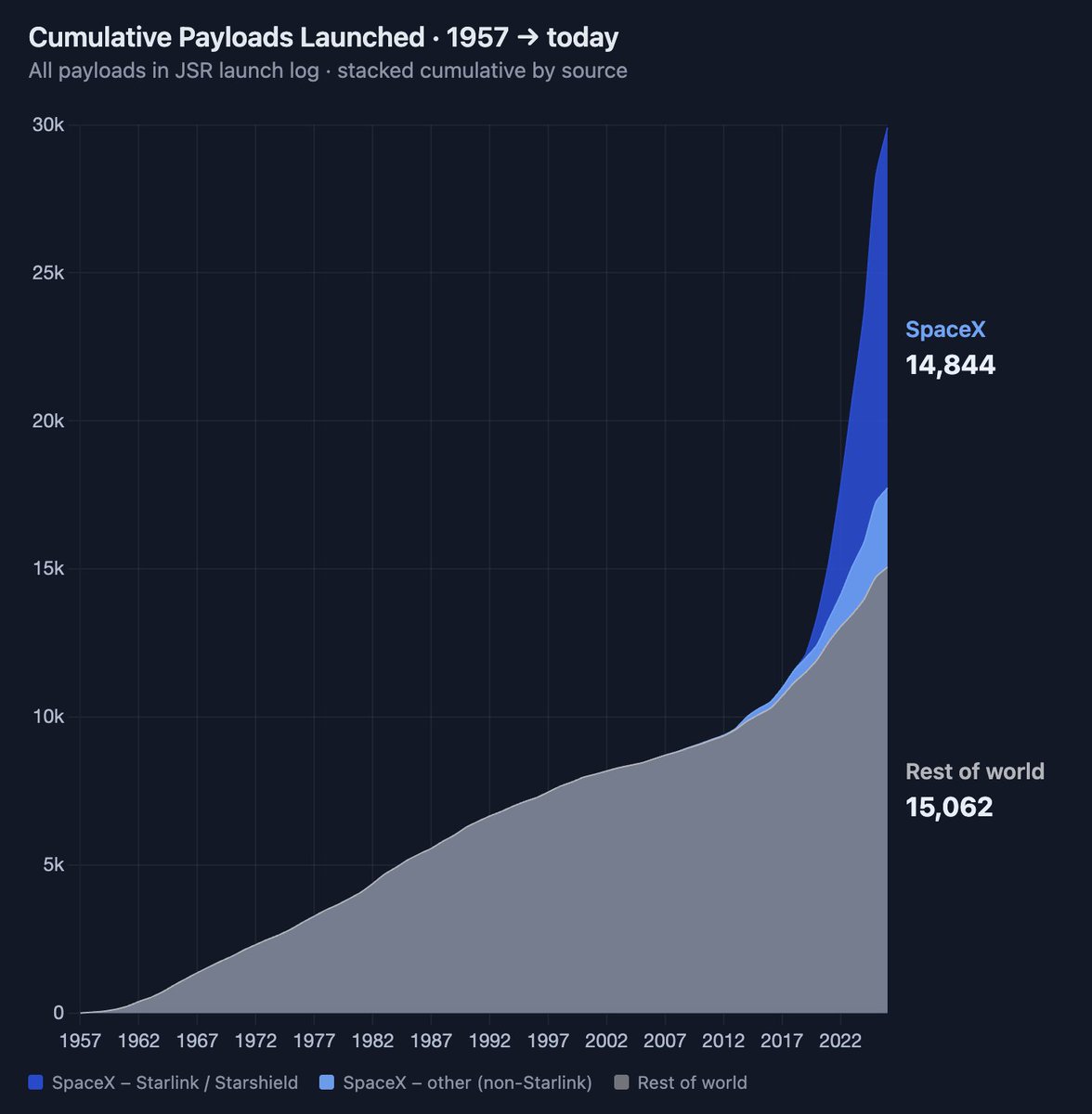
SpaceX is only ~200 satellites away from having launched as many satellites as the rest of the world combined
(despite giving the rest of the world a 61-year head start)
To think that we aren't just going "to the Moon," but rather traveling to meet it at an exact point in space... changes everything.
It all comes down to orbital mechanics: arriving at the precise location, at the precise moment.
One tiny error... and it simply doesn't happen
A major additional factor should be considered.
Satellites with localized AI compute, where just the results are beamed back from low-latency, sun-synchronous orbit, will be the lowest cost way to generate AI bitstreams in <3 years.
And by far the fastest way to scale within 4 years, because easy sources of electrical power are already hard to find on Earth. 1 megaton/year of satellites with 100kW per satellite yields 100GW of AI added per year with no operating or maintenance cost, connecting via high-bandwidth lasers to the Starlink constellation.
The level beyond that is constructing satellite factories on the Moon and using a mass driver (electromagnetic railgun) to accelerate AI satellites to lunar escape velocity without the need for rockets. That scales to >100TW/year of AI and enables non-trivial progress towards becoming a Kardashev II civilization.