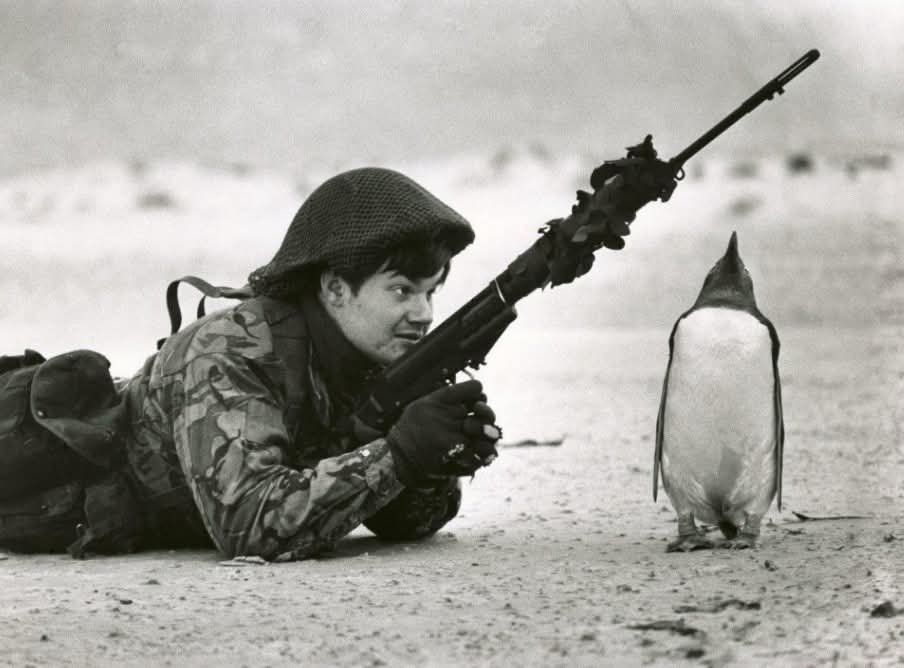
A penguin stands to attention next to a British soldier during the Falklands War, 1982....
During the Falklands War, British troops operated in some of the harshest conditions faced by modern NATO-era forces, battling freezing temperatures, powerful winds, difficult terrain, and logistical isolation across the South Atlantic islands. The conflict lasted just 74 days but resulted in heavy casualties on both sides and major political consequences in both Britain and Argentina.
The Falkland Islands are home to several penguin species, including king, gentoo, macaroni, and rockhopper penguins. Wildlife often continued its normal behavior remarkably close to military operations during the conflict due to the islands’ sparse human population and remote environment.
The war began after Argentina invaded the Falkland Islands in April 1982. Britain responded by sending a naval task force more than 8,000 miles from home, eventually retaking the territory in June.
The conflict accelerated major changes in British military planning and helped cement Prime Minister Margaret Thatcher’s political position ahead of the 1983 UK general election.
#archaeohistories
ऑस्कर विजेता मशहूर एक्टर जेवियर बा��्डेम ने कान्स फिल्म फेस्टिवल में डोनाल्ड ट्रम्प, व्लादिमीर पुतिन और बेंजामिन नेतन्याहू की कड़ी आलोचना की. उन्होंने इन नेताओं के व्यवहार को 'विषाक्त मर्दानगी' (Toxic Masculinity) और 'जहरीला' करार देते हुए कहा कि इनके अहंकार और आक्रामक बयानों के कारण दुनिया भर में युद्ध हो रहे हैं
मशहूर एक्टर Javier Bardem ने Trump, Putin, Netanyahu को कहा 'Toxic'
Actor Javier Bardem calls out Trump, Putin, Netanyahu for "male toxic behaviour" at Cannes
#JavierBardem #CannesFilmFestival
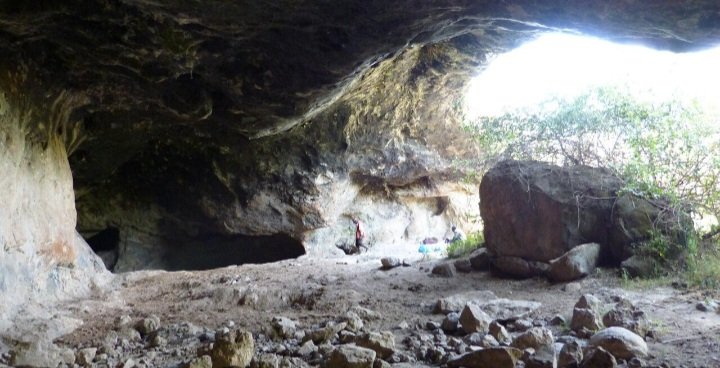
There are caves in Kenya associated with bats and viruses. especially: 🦇 Kitum Cave.
Kitum Cave linked historically to Marburg virus (a rare but severe disease).
Marburg belongs to the same family as Ebola.
Marburg virus mortality rate: From 24% to 88%, bUT this depends on outbreak, and healthcare.
These caves are not “filled with a virus” constantly — viruses exist in some specific hosts (like bats), not floating everywhere like air.
Japanese scientists have created artificial blood that works for any blood type.
It’s made from expired donor blood and can last up to 5 years in the fridge or 2 years on a shelf, unlike regular blood that spoils in just 42 days.
This discovery could be a major breakthrough in emergency care, battlefield medicine, and areas without access to proper medical facilities.
Early tests in healthy volunteers look good so far, and if all goes well, it could hit real-world use by 2030.
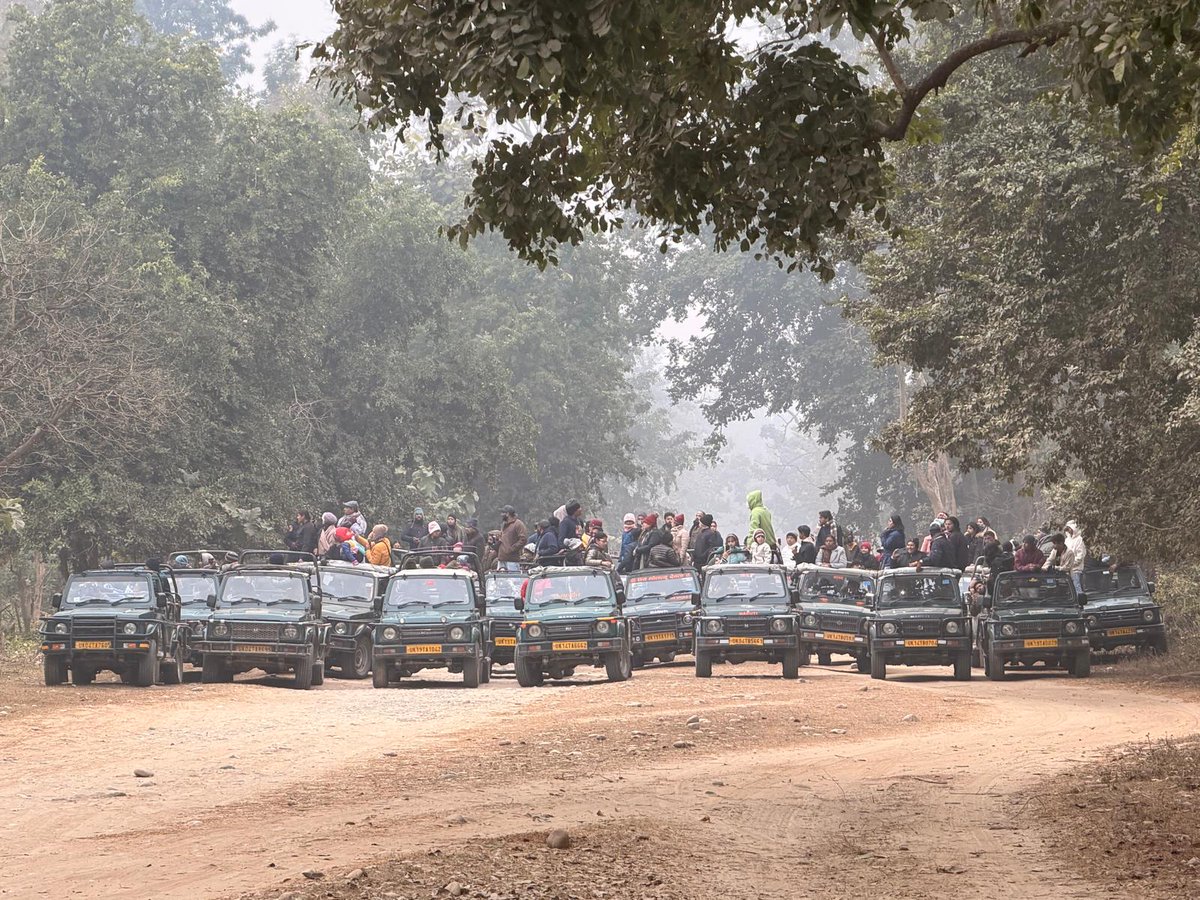
Twenty Gypsies. One tiger. No space to move.
At Corbett's Phato zone recently, we watched wildlife tourism eat itself — a petrol-fume traffic jam in the middle of a tiger reserve, where the animal was the least visible thing in the forest.
The question isn't whether to have safari tourism. It's what kind. 🐅
🔗 https://t.co/gRycH4XvLa
#TigerSafari #CorbettTigerReserve #IndiaWildlife #SafariJam #ProjectTiger #WildlifeTourism #TigerConservation #ResponsibleTourism #WildIndia
In 1991, at North Sentinel Island, Madhumala Chattopadhyay replaced arrows with curiosity by offering coconuts and respecting boundaries. Her legacy proves these groups are protective, not "savage," marking a rare moment of connection before the Indian government closed the island to protect them
Indian anthropologist Madhumala Chattopadhyay participated in one of the rare peaceful encounters with the people of North Sentinel Island. For centuries the island has been home to the Sentinelese, one of the world’s most isolated Indigenous communities, who have consistently rejected outside contact.
During earlier expeditions, approaching boats were often met with arrows and warning gestures. Chattopadhyay and her team used a different strategy: instead of forcing interaction, they slowly approached the shoreline and offered coconuts, a food not native to the island but highly valued by the Sentinelese. By keeping a respectful distance and avoiding aggressive behavior, the exchange gradually shifted from hostility to cautious curiosity. In a remarkable moment, members of the tribe came into shallow water to retrieve the coconuts and briefly interacted with the visitors.
The encounter became notable because it challenged the long-standing stereotype that the Sentinelese were inherently violent. Anthropologists observed that their hostility toward outsiders was defensive, rooted in centuries of traumatic encounters with slave raids, colonial intrusions, and disease brought by outsiders.
Following these events, the Indian government reinforced strict protections around the island. Today, North Sentinel Island is part of a tribal reserve, and approaching within several nautical miles is illegal to safeguard the Sentinelese from outside diseases and interference.
Genetic and archaeological evidence suggests the Sentinelese may have lived in the Andaman Islands for up to 50,000–60,000 years, making them one of the longest continuously isolated human populations on Earth.
#drthehistories