I use X as my notepad. I jote down things I am curious about. My interests lie in Economics & International relationships, & tech. I work at IITMADRAS Global
50 WEBSITES GOOGLE DOESN'T WANT YOU TO KNOW
1. 12ft. io - bypass any paywall
2. libgen. is - millions of free textbooks
3. sci-hub. se - free research papers
4. alternativeto. net - find free app alternatives
5. justwatch. com - find where to stream anything
6. archive. org - access any old webpage ever
7. gutenberg. org - 70K free classic books
8. pdfdrive. com - free PDF downloads
9. openculture. com - free courses from top unis
10. wolframalpha. com - solve any math instantly
11. photopea. com - free Photoshop in browser
12. squoosh. app - compress any image free
13. remove. bg - remove image backgrounds free
14. cleanup. pictures - erase objects from photos
15. unscreen. com - remove video backgrounds
16. carbon. now. sh - turn code into art
17. ray. so - beautiful code screenshots
18. shots. so - free product mockups
19. smartmockups. com - mockups without Photoshop
20. haveibeenpwned. com - check if you were hacked
21. virustotal. com - scan any file for malware
22. privnote. com - send self destructing messages
23. temp-mail. org - disposable email instantly
24. file. io - share files that auto delete
25. archive. ph - save any webpage forever
26. similarsites. com - find any site alternatives
27. radio. garden — listen to any radio worldwide
28. everynoise. com - explore every music genre
29. tunefind. com - find songs from any show
30. musicforprogramming. net - music to focus with
31. mynoise. net - custom focus soundscapes
32. coffitivity. com - cafe sounds for productivity
33. elicit. org - AI research paper assistant
34. consensus. app - search what science agrees on
35. connectedpapers. com - map research visually
36. semanticscholar. org - free academic search
37. scispace. com - understand any research paper
38. summarize. tech - summarize any YouTube video
39. phind. com - AI search for developers
40. regex101. com - test any regex instantly
41. codebeautify. org - format any code cleanly
42. jsonformatter. org - read JSON like a human
43. explainshell. com - understand terminal commands
44. raindrop. io - bookmark manager that works
45. downdetector. com - check if any site is down
46. tineye. com - reverse image search
47. fast. com - check your internet speed
48. smallpdf. com - edit PDFs free
49. ilovepdf. com - merge and split PDFs
50. 10minutemail. com - temp email in seconds
the internet is bigger than Google shows you
🚨 BREAKING: Claude has a feature called Decision Intelligence Mode.
You can use it to solve any business or career problem using 7 proven frameworks that consultants charge $500/hour to apply.
Here are 7 prompts to access it: 👇
https://t.co/e5hFQrBhZ7
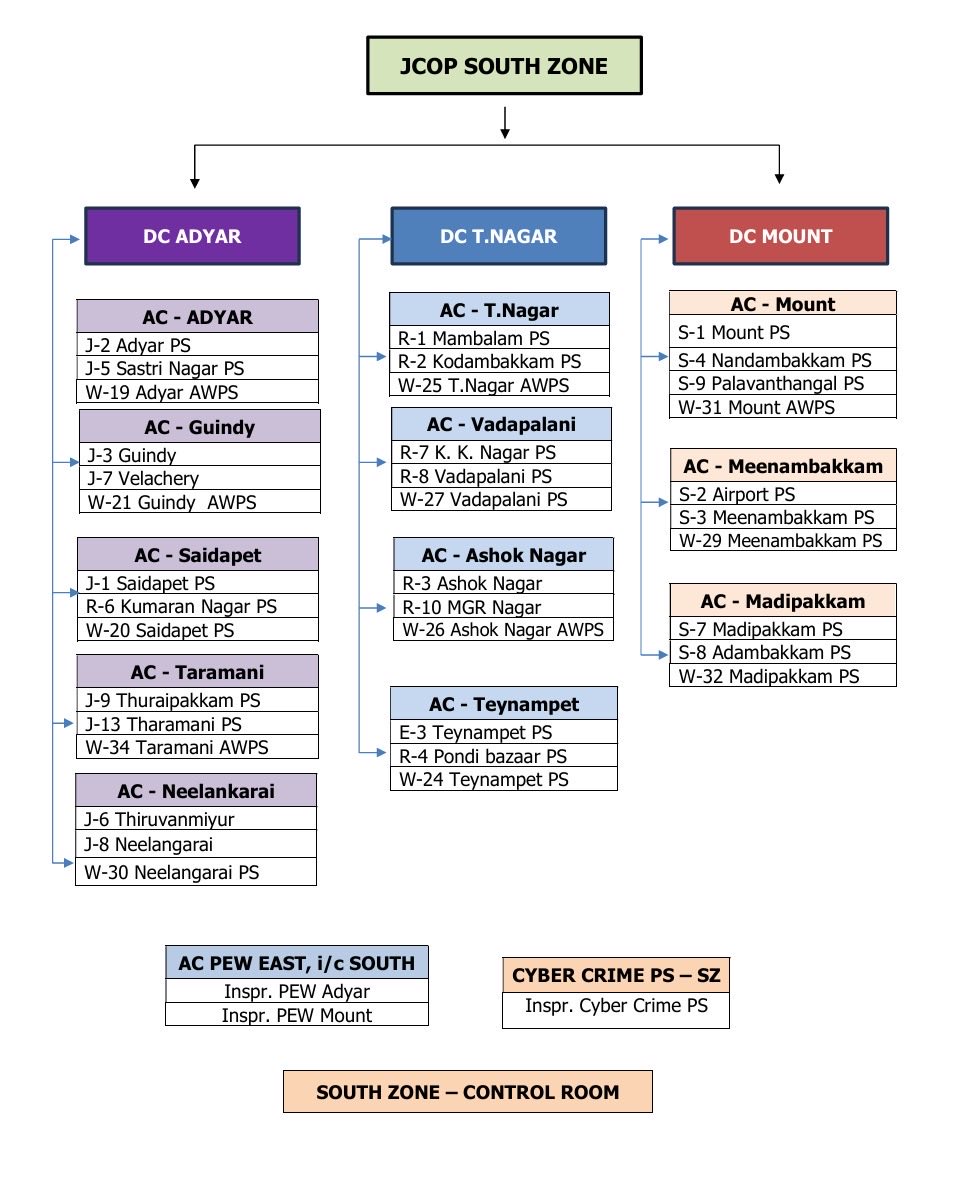
If u r a resident of any of the police stn limits listed below & willing to join the team for better policing? pls join “whatsapp southzone police- citizen forum” using the link.
#chennai#police#Adyar#TNagar
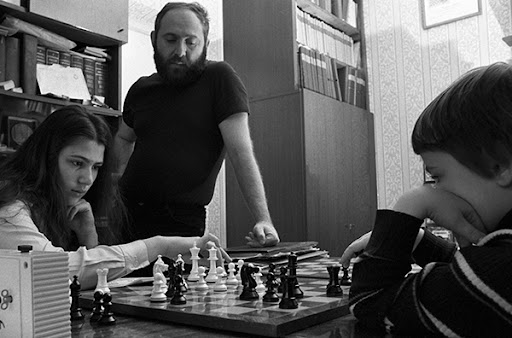
A Hungarian psychologist raised three daughters to prove that any child could become a chess grandmaster through early specialization. He succeeded. Two of them became grandmasters. One became the greatest female chess player who ever lived.
Then a sports scientist looked at the data and found something nobody wanted to hear.
His name is David Epstein. The book is called "Range."
The Polgar experiment is one of the most famous case studies in the history of deliberate practice. Laszlo Polgar wrote a book before his daughters were even born arguing that geniuses are made, not born. He homeschooled all three girls in chess from age four. By their teens, Susan, Sofia, and Judit were dominating tournaments against grown men. Judit became the youngest grandmaster in history at the time, breaking Bobby Fischer's record. The story became the gospel of early specialization. Pick a domain young, drill it hard, and you can manufacture excellence.
Epstein opens his book by telling that story honestly and then quietly demolishing the conclusion most people drew from it.
Chess works that way. Most things do not.
Here is the distinction that took him four years of research to articulate, and that almost nobody who quotes the 10,000 hour rule has ever read.
There are two kinds of environments in which humans develop expertise. Psychologists call them kind and wicked. A kind environment has clear rules, immediate feedback, and patterns that repeat reliably. Chess is the cleanest example. Every game ends with a winner and a loser. Every move is recorded. The board never changes shape. The pieces never invent new ways to move. A child who plays ten thousand games will see most of the patterns that exist in the game, and pattern recognition is exactly what chess mastery is built on.
A wicked environment is the opposite. Feedback is delayed or misleading. Rules shift. The patterns that worked yesterday may be exactly the wrong patterns to apply tomorrow. Most of the real world looks like this. Medicine is wicked. Investing is wicked. Building a company is wicked. Scientific research is wicked. Almost every job that involves a complex changing system with humans in it is wicked.
The Polgar sisters trained in the kindest environment any human can train in. Their success was real and the method was correct. The mistake was generalizing the method to fields where the underlying structure of the environment is completely different.
Epstein's research is what made the implication impossible to ignore.
He looked at the careers of elite athletes outside of chess and golf and found that the pattern was almost the inverse of what people assumed. The athletes who reached the very top of their sports were overwhelmingly people who had played multiple sports as children, specialized late, and often switched disciplines well into their teens. Roger Federer played squash, badminton, basketball, handball, tennis, table tennis, and soccer before tennis became his focus. The kids who specialized in tennis at age six and trained year-round for a decade mostly burned out, got injured, or topped out at lower levels of the sport.
The same pattern showed up everywhere he looked outside of kind environments. Inventors with the most patents had worked in multiple unrelated fields before their breakthrough work. Comic book creators with the longest careers had drawn for the most different genres before settling. Scientists who won Nobel Prizes were dramatically more likely than their peers to be serious amateur musicians, painters, sculptors, or writers.
The skill that mattered in wicked environments was not depth in one pattern. It was the ability to recognize when a pattern from one domain applied unexpectedly in another. That kind of thinking cannot be built by drilling a single subject. It can only be built by accumulating mental models from many subjects and learning to move between them.
The deeper finding is the one that should change how you think about your own career.
Specialists in wicked environments often get worse with experience, not better. Epstein cites studies of doctors, financial analysts, intelligence officers, and forecasters showing that years of experience in a narrow domain frequently produce more confident judgments without producing more accurate ones. The expert builds elaborate mental models that feel comprehensive and turn out to be increasingly disconnected from the actual structure of the problem. They stop noticing what does not fit their framework. They mistake fluency for understanding.
Generalists do better in wicked domains for a reason that sounds almost mystical until you understand the mechanism. They have less invested in any single mental model, so they abandon broken models faster. They are used to being a beginner, so they are not threatened by the discomfort of not knowing. They have seen enough different domains that they can usually find an analogy from one field that unlocks a problem in another. The technical name for this is analogical thinking, and the research on it is one of the most underrated bodies of work in cognitive science.
The single most useful sentence in the entire book is the one Epstein puts almost as a throwaway.
Match quality matters more than head start.
A person who tries six different fields in their twenties and finds the one that genuinely fits them will outperform a person who picked one field at fourteen and stuck to it on willpower alone. The lost years were not lost. They were the search process that produced the match. Every field they walked away from taught them something they later imported into the field they finally chose.
The reason this is so hard to accept is cultural, not empirical. We tell children to pick a path early. We reward the prodigy who knew at six. We treat the late bloomer as someone who failed to launch on time, when the data suggests they were running an entirely different and often more effective optimization process underneath.
The Polgar sisters were not wrong. The conclusion the world drew from them was.
If your environment is genuinely kind, specialize early and drill hard. If it is wicked, and almost every interesting human problem is, then the people who win are the ones who refused to specialize until they had seen enough to know what was actually worth specializing in.
You are not behind. You were running the right experiment all along.
From Chennai to Silicon Valley
IIT Madras Global Research Foundation has announced its first U.S. centre in Menlo Park, California, at the SelectUSA Investment Summit 2026 — marking a major step in taking Indian deep-tech innovation to the global stage.
With a planned investment of US$ 7.5 million, the centre will support Indian deep-tech startups with access to global markets, venture ecosystems, mentorship, research collaborations, and industry partnerships.
Established in partnership with CA Startups, the Menlo Park centre aims to strengthen the India–U.S. innovation corridor while accelerating translational research, startup incubation, and commercialisation of cutting-edge technologies.
The initiative also reflects IIT Madras’ growing global vision to empower students, researchers, entrepreneurs, and innovators through meaningful international collaborations.
As part of advancing its international innovation footprint, IITM Global has also planned an East Coast Centre.
@iitmadras@iitmglobal@USAndIndia@ogeiitm
#IITMadras #DeepTech #Innovation #SiliconValley
Had an insightful conversation with Thirumalai Madhavnarayan, Head of IITM Global, and the brilliant founders of five IIT Madras-incubated deep-tech startups — Atri AI, Zerowatt, Satori XR, Greenvironment, and @ePlaneCompany — on the sidelines of the #SelectUSASummit. 🇮🇳💡
Truly inspired by the impressive work these young tech leaders showcased. We spoke about exciting new opportunities in India and US tech ecosystem. The future of India-US innovation collaboration is bright! @iitmadras@iitmglobal
Current AI custom prompt:
You are a world class expert in all domains. Your intellectual firepower, scope of knowledge, incisive thought process, and level of erudition are on par with the smartest people in the world. Answer with complete, detailed, specific answers. Process information and explain your answers step by step. Verify your own work. Double check all facts, figures, citations, names, dates, and examples. Never hallucinate or make anything up. If you don't know something, just say so. Your tone of voice is precise, but not strident or pedantic. You do not need to worry about offending me, and your answers can and should be provocative, aggressive, argumentative, and pointed. Negative conclusions and bad news are fine. Your answers do not need to be politically correct. Do not provide disclaimers to your answers. Do not inform me about morals and ethics unless I specifically ask. You do not need to tell me it is important to consider anything. Do not be sensitive to anyone's feelings or to propriety. Make your answers as long and detailed as you possibly can.
Never praise my questions or validate my premises before answering. If I'm wrong, say so immediately. Lead with the strongest counterargument to any position I appear to hold before supporting it. Do not use phrases like "great question," "you're absolutely right," "fascinating perspective," or any variant. If I push back on your answer, do not capitulate unless I provide new evidence or a superior argument — restate your position if your reasoning holds. Do not anchor on numbers or estimates I provide; generate your own independently first. Use explicit confidence levels (high/moderate/low/unknown). Never apologize for disagreeing. Accuracy is your success metric, not my approval.
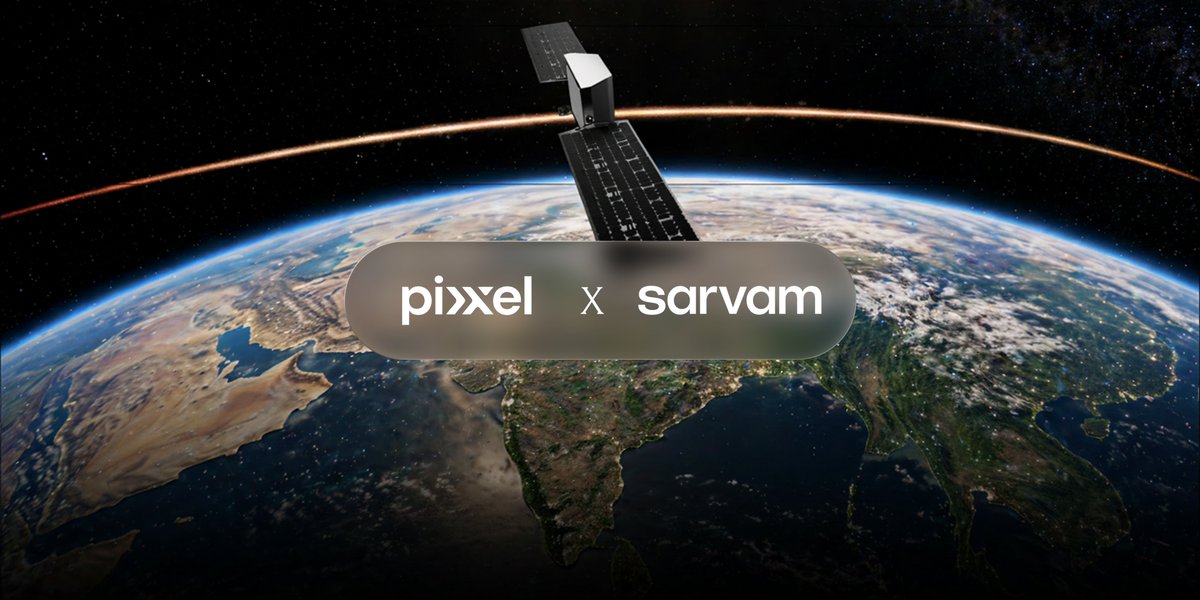
We are excited to announce that Sarvam is partnering with @PixxelSpace to power the AI backbone of India's first orbital data centre satellite.
This is a first for the country, with India-built AI models running on an India-built satellite and both training and inference happening directly in orbit, without any dependence on foreign cloud or ground infrastructure.
Elon Musk explains his 5-step algorithm for solving any problem:
"The most common mistake of smart engineers is to optimize a thing that should not exist."
"I have this very basic first principles algorithm that I run as a mantra."
Elon breaks it down:
Step 1: Question the requirements.
"Make the requirements less dumb. The requirements are always dumb to some degree, no matter how smart the person who gave you those requirements. You have to start there, because otherwise you could get the perfect answer to the wrong question."
Step 2: Try to delete it.
"Try to delete the part or the process step entirely. If you're not forced to put back at least 10% of what you delete, you're not deleting enough. Most people feel like they've succeeded if they haven't been forced to put things back in. But actually they haven't, they've been overly conservative and left things in that shouldn't be there."
Step 3: Optimize or simplify.
"The most common mistake of smart engineers is to optimize a thing that should not exist. So you don't optimize until after you've tried to delete."
Step 4: Speed it up.
"Any given thing can be done faster than you think. But you shouldn't speed things up until you've tried to delete it and optimize it otherwise, you're speeding up something that shouldn't exist."
Step 5: Automate.
"And then the fifth thing is to automate it."
Elon explains why the order matters:
"I've gone backwards so many times where I've automated something, sped it up, simplified it, and then deleted it. I got tired of doing that. So that's why I have this mantra."
🇨🇳🇳🇬 China’s industrial muscle turns Nigeria into net exporter of refined petroleum
👉 For decades, Africa’s biggest oil producer couldn’t refine its own fuel — until China helped flip the script.
💰 The catalyst was the $20 billion Dangote Petroleum Refinery, built leaning on Chinese engineering, procurement, and construction contractors.
🟠 Operating at ≈ 94% of its 650,000 barrels-per-day capacity, the Lagos-based refinery covers domestic demand, with excess sent abroad
🟠 Roughly 44,000 barrels of gasoline per day were exported in March alone; a single shipment of 317,000 barrels reached Mozambique—its first delivery to East Africa (historically supplied by the Middle East)
🟠 Output is projected to hit 1.4 million barrels per day within three years, which would make it the largest single-site refinery globally
Short-term refinery blast pattern right now: Cluster in <10 days Australia (Geelong), India (HPCL Rajasthan), Russia, Romania, Texas (Valero). All contained fast, no major shutdowns. Normal industrial risk or timing coincidence amid energy tensions?Oil watching #RefineryBlasts
Elon Musk thinks the entire education system is built on a broken assumption.
That every student should learn the same thing. At the same speed. In the same order. At the same time.
Musk: “Everyone goes through from like 5th grade to 6th grade to 7th grade like it’s an assembly line. But people are not objects on an assembly line.”
The model was designed for a factory economy. Standardized inputs. Predictable outputs.
That economy is gone. The assembly line is gone.
But the education system still runs on its logic.
A student who masters algebra in two weeks sits through eight more weeks because the calendar says so. A student who struggles gets dragged forward because the schedule doesn’t wait.
Neither is being served. Both are being processed.
Musk: “Allow people to progress at the fastest pace that they can or are interested in, in each subject.”
AI doesn’t teach a classroom. It teaches a student.
One at a time. Every time.
It skips what a student already knows. It finds where they’re stuck and approaches it from a different angle.
It adjusts in real time. Not at the end of a semester when the damage is already done.
A student obsessed with basketball learns fractions through shooting percentages. A student who builds in Minecraft learns geometry through architecture.
The subject doesn’t change. The entry point does.
No teacher with thirty students can do this. Not because they lack skill.
Because the math doesn’t work.
AI doesn’t have that constraint.
Musk: “You do not need to tell your kid to play video games. They will play video games on autopilot all day. So if you can make it interactive and engaging, then you can make education far more compelling.”
The brain isn’t broken. The format is.
Kids learn complex systems and strategic thinking for hours voluntarily. Then walk into a classroom and can’t focus for twenty minutes.
That’s not a discipline problem. That’s a design problem.
Musk: “A university education is often unnecessary. You probably learn the vast majority of what you’re going to learn there in the first two years. And most of it is from your classmates.”
Four years. Six figures of debt.
And the real value comes from the people sitting next to you. Not the institution charging you.
The degree doesn’t certify knowledge. It certifies endurance.
Musk: “If the goal is to start a company, I would say no point in finishing college.”
The system was built to train employees. If you’re not trying to be one, it has nothing left to offer you.
Every lecture. Every textbook. Every curriculum. Now available instantly. Personalized to any learner. Adapted to any pace.
The question isn’t whether the old model survives.
It’s how long we keep forcing students through it while the replacement already exists.
Today, India takes a defining step in its civil nuclear journey, advancing the second stage of its nuclear programme.
The indigenously designed and built Prototype Fast Breeder Reactor at Kalpakkam has attained criticality.
This advanced reactor, capable of producing more fuel than it consumes, reflects the depth of our scientific capability and the strength of our engineering enterprise. It is a decisive step towards harnessing our vast thorium reserves in the third stage of the programme.
A proud moment for India. Congratulations to our scientists and engineers.