The thing about true legends, the absolute best of the best historically, is they somehow always find themselves in these moments, no matter the stage of their career, and just deliver. Over and over again.
Sports are just the best, man.
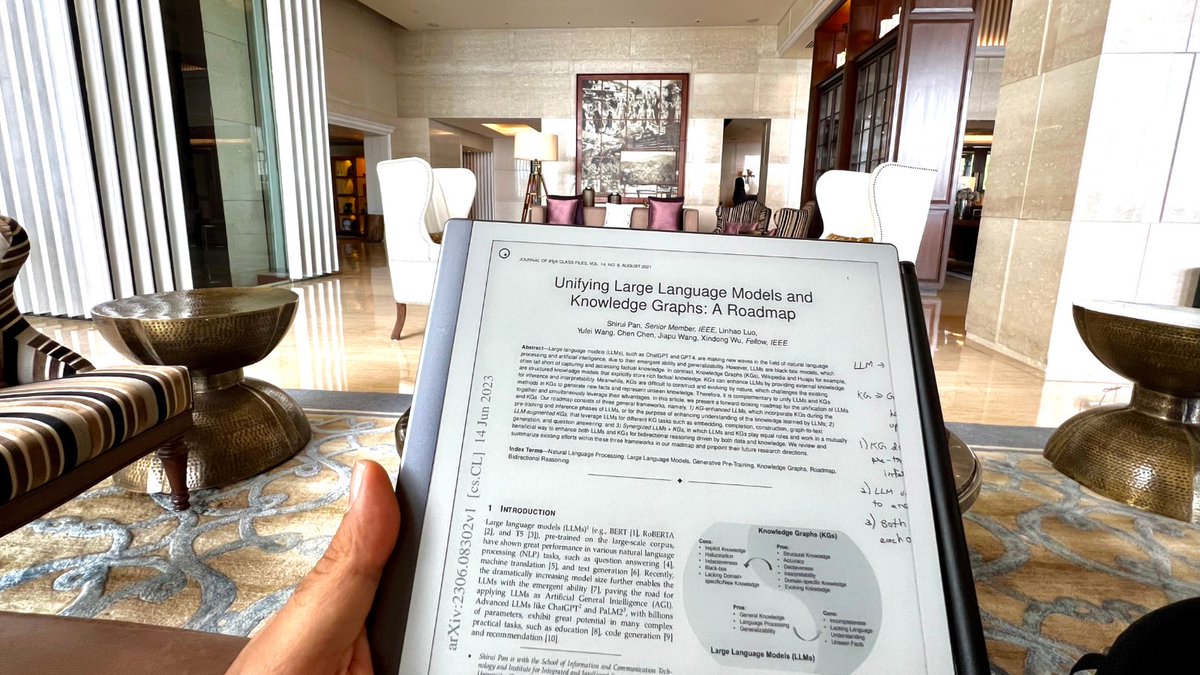
Combining Knowledge Graphs and LLMs! 🙏
To my surprise, this paper is extremely detailed around training strategies of building such models and goes beyond “just prompting” ChatGPT and GPT-4.
In fact, I realised after reading-it doesn’t even mention these models in most of the bits!
Why is this a cool read?
LLMs are great at conversations but bad at facts.
KGs are great at capturing facts as graph but we need to convert this into a sentence.
As you can see, the two are quite complimentary to each other, the paper covers 3 approaches in extreme details:
- KG enhance LLM: LLM is the primary interface and KG provides information
- LLM augments KG: LLM is used to create embeddings, complete graphs or generate them
- Synergy: both work in parallel
This is an enjoyably detailed overview of the topic and I’d recommend this paper with a strong cup of chai:
https://t.co/5AQF0OOwq7
There are many ways you could spend the next 27 minutes of your life, but few will be as engaging or enlightening as Nicholas Indorf's patient walkthrough of a recent project where he tried to train a neural network to predict hip hop songs' popularity. https://t.co/RjXR25dQAC
One of the first things I recommend in my ML class is vectorization & replacing for-loops wherever possible -- e.g., when applying the same op to multiple elements (https://t.co/xRQN8ZsOa6). Just saw this amazing article that goes into way more depth: https://t.co/NeN2nmPOae
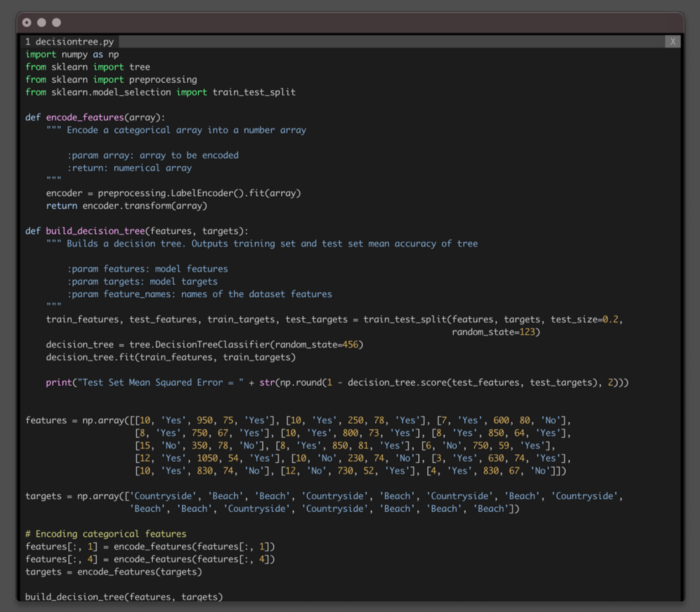
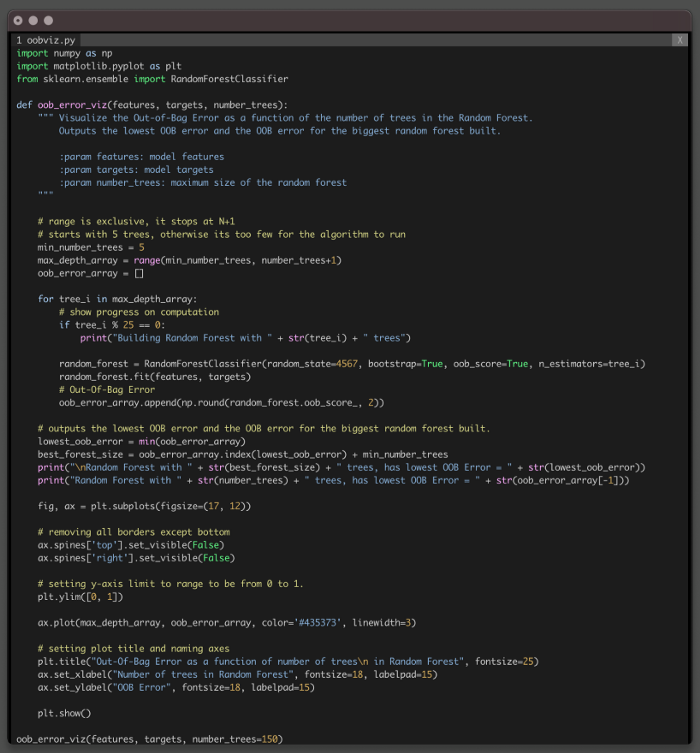
📍 Random Forests is a machine learning algorithm that tackles one of the biggest problems with decision trees - variance. This guide explains the random forests algorithm with a real-life example and some Python code: https://t.co/1fw8MDgnGi
Reminder that `huggingface_hub` is our new Python package to interact with the hub programmatically, from any app or library (not just transformers or datasets).
Check it out! ⤵️
https://t.co/hXA7SR1DVf
Autoencoders are data compression algorithms built using neural networks.
They made me fall in love with machine learning early on, so this may be what you need to get involved!
Here is what you need to know about them:
https://t.co/I50jv8GlvW
Perhaps my most controversial opinion: In machine learning education, the focus on supervised learning and particularly on classification problems gives people a totally misguided idea about how to use data to solve real problems.
@omarsar0 This is so on point. Ironically most viewed ML videos on YouTube will be under 10 mins. Interviewed a lot of data scientists who do not understand AUC but have built 10s of deployed production models. Go figure!!
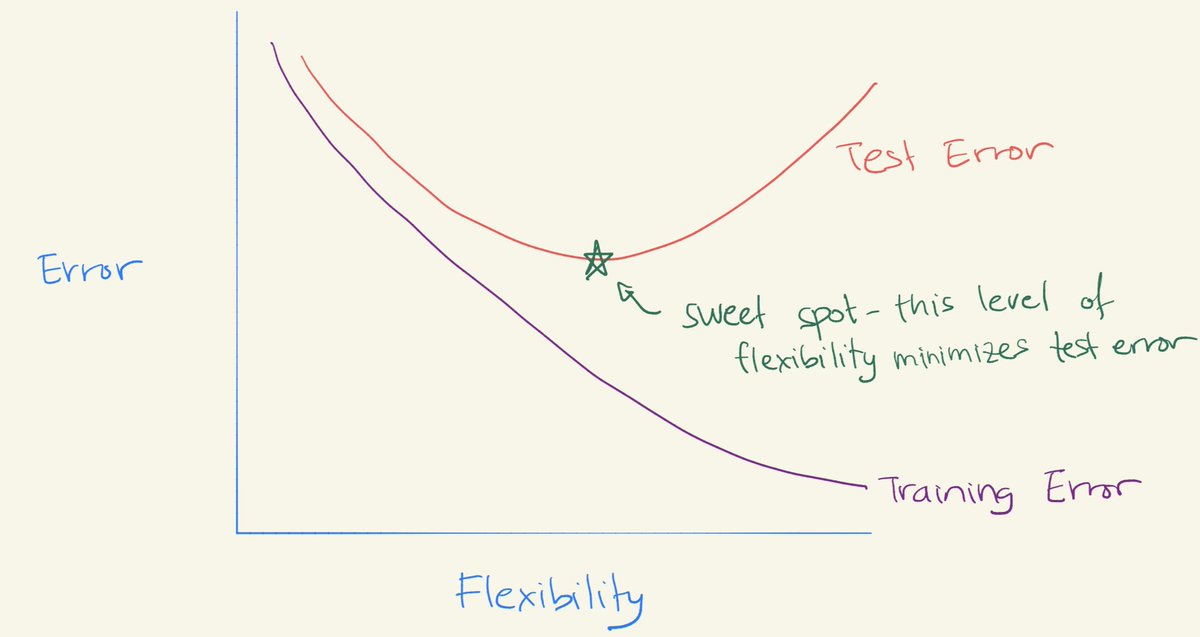
The Bias-Variance Trade-Off & "DOUBLE DESCENT" 🧵
Remember the bias-variance trade-off? It says that models perform well for an "intermediate level of flexibility". You've seen the picture of the U-shape test error curve.
We try to hit the "sweet spot" of flexibility.
1/🧵
I saw a job post the other day. 👔
It required 4+ years of experience in FastAPI. 🤦
I couldn't apply as I only have 1.5+ years of experience since I created that thing. 😅
Maybe it's time to re-evaluate that "years of experience = skill level". ♻