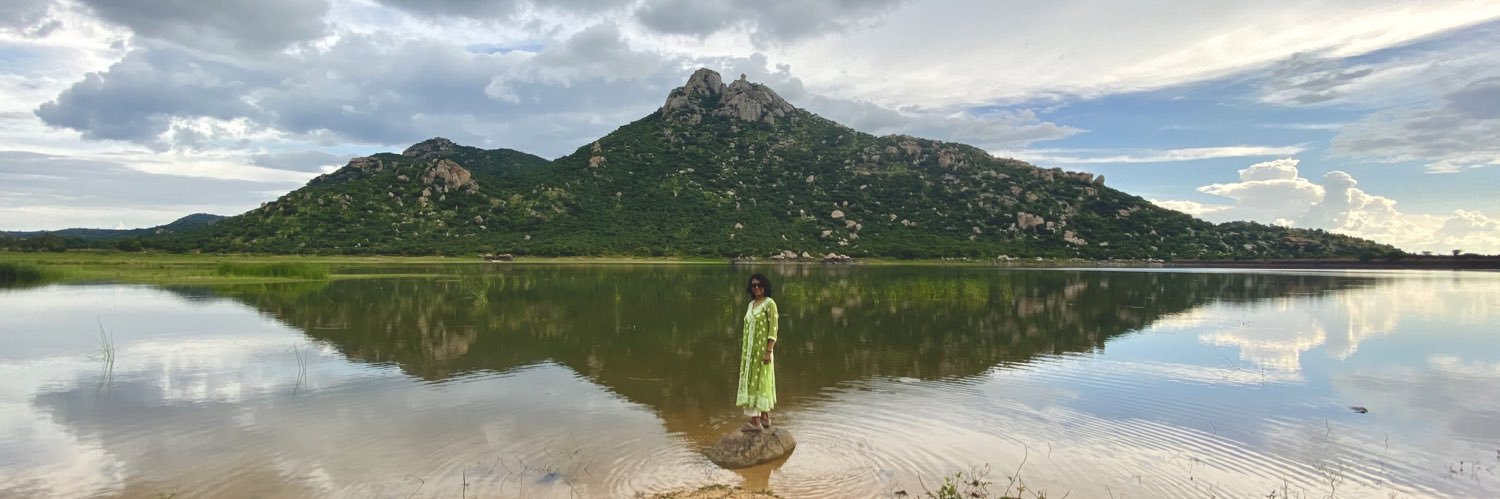
The first song from my boy @rishirajesh03 ‘ s album is out and I’m so proud of what he’s created… go listen and share..The song ‘Only You’ is out on all platforms.. #music#zultonsays
https://t.co/hMCY8NtG6V
Popped in to say hi and then stayed on and on remembering why I used to love this space so much when it had just started.. so may amazing connections and such fabulous exchanges..
And so.. I watched #durandhar-2
Went in with bare minimum expectations and more importantly the stress that I had to sit through 4 hours..
I have to say.. there is a lot of gore and unimaginable semantics to the story telling..but I came away.. impressed. @AdityaDharFilms 🔥👏🎬
Dear @OfficialBMRCL
What is the thought behind this nonsense move to allow only descending traffic on the stairs and escalator and leaving just one way up or take the round about stairs to go up from platforms 3and 4 to platform 1?
This invitation from history of Jayanagara’s inauguration in 1948 is a reminder of how Bengaluru went from Jayanagar’s planned blueprint to today’s maddening chaos.
The invitation reveals the seriousness with which our leaders once approached city-building. It wasn’t merely an inauguration. It was a declaration - that urban development was an act of nation-building.
Jayanagar was conceived by the Bangalore City Improvement Trust Board (CITB) - precursor to today’s BDA - guided by the spirit of Sir M. Visvesvaraya and the Mysore Maharajas’ foresight. It was one of Asia’s earliest and most thoughtfully planned urban layouts.
It was built on principles that cities like Tokyo, New York and London followed:
• Grid-based planning
• Dedicated civic zones and markets
• Wide tree-lined roads and footpaths
• Abundant public parks and playgrounds
Even the act of inviting the Governor-General to inaugurate a neighbourhood showed how civic growth was seen as a matter of pride, not paperwork. Urban planning was driven by engineers, architects, and visionaries - not contractors and consultants.
Every road had a logic. Every park had a purpose. Every design decision carried dignity.
Leaders like the Maharajas and Visvesvaraya believed that cities reflected a civilisation’s discipline.
The Mysore administration treated urban growth as a long-term institution-building exercise. They built universities, dams, townships, and layouts that still function after seven decades. Their belief was simple: a city must be engineered, not improvised.
Today, unfortunately, we live amid the ruins of that foresight.
Where there were walkable boulevards, we have potholes and parking chaos. Where there were civic squares, we have encroachments and flyovers. Where there was once planning, we now have “projects.”
Our political leadership - cutting across parties - has confused construction with development and visibility with vision.
Institutions like the BDA, once envisioned as planning agencies, have been reduced to contractors’ departments.
The result is what we see daily:
• Roads without design logic
• Footpaths that begin nowhere and end abruptly
• Drainage systems built after the rain
• Metro alignments retrofitted into chaos
It’s not just inefficiency; it’s the absence of imagination. Lack of commitment and sincerity.
The 1948 Jayanagar inauguration invitation is is a mirror showing us how much dignity our forebears attached to civic order, and how little we have preserved of it.
That single event symbolised urban governance as a national calling.
Today, our cities are governed by short-termism and populism - with no professional planning cadre, no respect for design, and no accountability for outcomes. Just sheer opportunism.
We have lost the plot of urbanisation.
And in losing that, we are losing the very quality of urban life.
If we are to rebuild Bengaluru - or any Indian city - we must go back to the ethos that created Jayanagar:
• Plan before you build.
• Design for people, not for vehicles.
•Let professionals lead, not politicians meddle.
• Treat civic dignity and urban quality of life as non-negotiable.
The story of Jayanagar should inspire a new generation of urban reformers to ask:
“What kind of city do we want to leave behind - a monument to neglect and greed, or a model of vision and inspiration?”
Urbanisation is India’s destiny. But without leadership like the Mysuru Maharajas or Sir Visvesvaraya’s, it may also become our greatest failure.
@narendramodi@yaduveerwadiyar
#urbanindia #urbanisation