@JanHrebicek69 Myslite, ze je srovnatelny konecny pocet jednotek dany BTC protokolem s akciema firmy, ktera je muze dle potreby vydavat ci stahovat z trhu?
@petrblahos@adent Ja bych si tak pral, aby skoly byly mimo stat, soukrome a dobrovolne. Rodice plati a vybiraji si skolu, deti chodi jen kdo chce, ucitele si taky vyberou, kde budou ucit a za jakych podminek...
Tak to už se na Chat Control můžeme pomalu začít připravovat.. 🤦♂️🤦♂️🤦♂️Ale pěkný příklad, až se zas budou vést debaty o demokratickém deficitu EU.
"Použití tohoto neobvyklého postupu znamená, že navrch mají podporovatelé návrhu.
Aby Parlament návrh přicházející z Rady odmítl nebo pozměnil, potřebuje „absolutní“ většinu, tedy alespoň polovinu všech europoslanců, čili 361 hlasů. K jeho přijetí však stačí pouhá „prostá“ většina, tedy polovina poslanců přítomných v daný den.
Když Parlament v březnu pozici Rady odmítl, učinil tak poměrem 311 hlasů proti návrhu, 228 pro a 92 se zdrželo – výsledek, který by při případném čtvrtečním hlasování nestačil k pohřbení návrhu.
Pokud Parlament nedospěje k rozhodnutí do tří měsíců, pozice Rady je podle jednacího řádu automaticky přijata."
https://t.co/3mK3nIzENc
Sylvain Saurel writes:
“According to a comprehensive research report titled “A Mechanistic Derivation of the Bitcoin Price Power Law: Network Adoption Dynamics and Generalised Metcalfe Scaling,” authored by Giovanni Santostasi and Stephen Perrenod of the Scientific Bitcoin Institute, the price of Bitcoin is not primarily driven by speculative dynamics.
Instead, the authors argue that Bitcoin’s long-term price trajectory reflects the deterministic, mathematical consequences of its network topology and value architecture. Beneath the surface noise of the market lies a remarkably stable power-law scaling relationship, rooted in the same physical laws that govern the spread of epidemics and the growth of complex biological and social systems.”
@ScientificBTC
I’m turning 41, but I don’t feel like celebrating.
Our generation is running out of time to save the free Internet built for us by our fathers.
What was once the promise of the free exchange of information is being turned into the ultimate tool of control.
Once-free countries are introducing dystopian measures such as digital IDs (UK), online age checks (Australia), and mass scanning of private messages (EU).
Germany is persecuting anyone who dares to criticize officials on the Internet. The UK is imprisoning thousands for their tweets. France is criminally investigating tech leaders who defend freedom and privacy.
A dark, dystopian world is approaching fast — while we’re asleep. Our generation risks going down in history as the last one that had freedoms — and allowed them to be taken away.
We’ve been fed a lie.
We’ve been made to believe that the greatest fight of our generation is to destroy everything our forefathers left us: tradition, privacy, sovereignty, the free market, and free speech.
By betraying the legacy of our ancestors, we’ve set ourselves on a path toward self-destruction — moral, intellectual, economic, and ultimately biological.
So no, I’m not going to celebrate today. I’m running out of time. WE are running out of time.
@MarBenjak @Nicnevim11 Flow Traders (AMS). Liquidity Provider na ETF, ETP, Crypto a nyni uz na vetsine kontinentu. 5% divi kdyz se nic nedeje. A kdyz jo, tak vyplati klidne 50% divi/rok. V podstate long put, za kterou ale dostava clovek zaplaceno.
Shocking stat of the day:
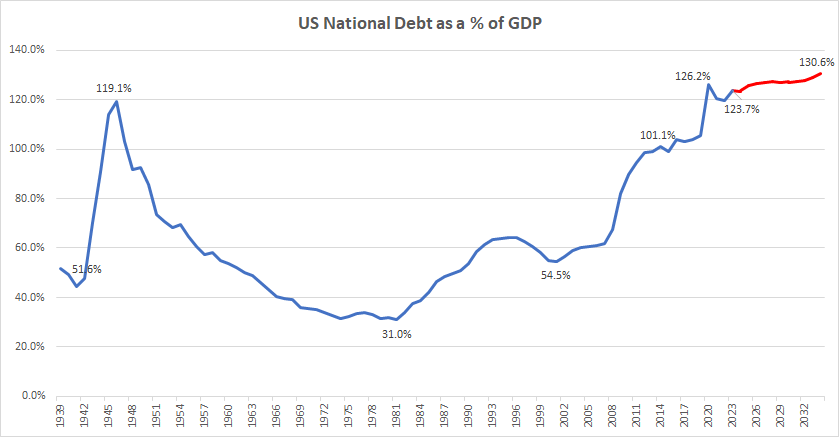
Since 1800, 51 out of 52 countries who have reached a 130% Debt-to-GDP ratio have defaulted.
According to the US CBO itself, Debt-to-GDP in the US is on track to hit 130% for the first time by 2033.
In 2007, Debt-to-GDP in the US was just 60% and it has quickly doubled since then.
Currently, Debt-to-GDP is at ~124% which is HIGHER than the peak of World War 2, at 119%.
Since 2020, Debt-to-GDP is up a whopping 20% after the government's massive borrowing spree.
Simply put, this is unsustainble.
Od roku 2000 dolar ztratil 40% kupní síly. Ostatní měny na tom nejsou o moc lépe.
Je to nenápadný systém přerozdělování bohatství od chudých k bohatým. Protože chudí nemohou investovat.
Ale nebylo tomu tak vždy. My se jen tváříme, že to je normální a že peníze fungují jak mají.
Po druhé světové válce byl dolar pevně navázán na zlato (1 unce = 35 USD). Ostatní měny byly víceméně navázány na dolar.
Jenže USA tiskly víc dolarů, než měly kryto zlatem a v roce 1971 prezident Nixon ukončil směnitelnost dolaru za zlato (“Nixonův šok“). Tím Brettonwoodský systém fakticky skončil a přešlo se na plovoucí měnové kurzy a náš současný systém ničím nekrytých papírků.
My už dneska víme, že zlatý standard není optimální. Každopádně peníze v té době plnily roli uchovatele hodnoty, kterou už dnes neplní. Proto jsou lidé nuceni investovat, aby si zachovali kupní sílu. Problém je, že většina lidí to neumí a naopak si tu kupní sílu likvidují ještě rychleji.
K optimálnímu fungování ekonomiky potřebujeme flexibilní peněžní nabídku, ale velmi rozumně řízenou. Centrální banky musí být racionální a hlavně nezávislé na politicích. Jenže to je utopie. Politici by nejradši jenom tiskli a kupovali si voliče. V praxi to tak trochu vypadá. Nezřízené tištění peněz a nekonečná spirála dluhu. Jak to asi dopadne…
It's hard for most people to believe, but Bitcoin is likely to be the main store of value on Planet Earth in 20 years.
- It will have a market cap of around 10 Million per coin
- It will be worth 200 Trillion Dollars, more than 5 times the market cap of Gold.
- It will be worth about 50% of the global M2 money supply, or 400 Trillion. No individual currency will be worth as much
- It will be worth more than any country's stock market or bond market.
Boomers are hated by Millenials because they "Bought Cheap Houses". But this will be nothing compared to the hate of the GenZ to the Millenials who "Bought Cheap Bitcoin".
Jack Mallers just gave the most powerful generational wake-up call in Bitcoin history.
He explained:
• The reason Bitcoin isn't just money — it's a moral imperative
• How your government literally steals from your unborn children
• Why traditional investing can't save you from monetary debasement
I watched the whole thing — here are the 12 essential takeaways: 🧵
Do skvěle rozběhnuté národní debaty o tom, co je vlastně Bitcoin ( zdravíme do Brna a děkujeme! ), přidávám otázku:
Cenu téměř všeho určují trhy: chleba, aut i nemovitostí. Ale cenu peněz ne. Tu určuje hrstka úředníků v centrálních bankách. Proč?
@ProberteSe Hlas @spanelx z pohledu jeho jako jedince s pravdepodobností hranicici s jistotou nic nezmeni. Jinak receno, to, co bude zvoleno, je z jeho pohledu dane. Je tedy uplne jedno, jestli volit pujde, nebo nepujde.
Zanadavat si samozrejme muze v obou pripadech :-)
@TomasRoud Pro tohle je super https://t.co/wstWubwA2e
Clovek si vybere 5 ruznych organizaci a castku - klidne 1kc - a kazdy mesic mu to z karty samo strhne a nemusi na to uz nikdy myslet. Uz to tak delam roky. ;-)