Well done, Arjun. ❤️
Proud of the way you’ve carried yourself through this season, always believing in your ability, staying patient, working hard quietly, and remaining positive despite having to wait for your opportunity till the very last match.
Cricket tests patience as much as skill, and you handled both beautifully today.
Keep your feet on the ground, and continue being in love with the game like you always have.
Love you always.👏
One of the biggest realizations I have had this year is that the model race ended and nobody noticed.
The real race is inference. The real moat is inference.
I just read the best breakdown of inference engineering I have come across. Read this article.
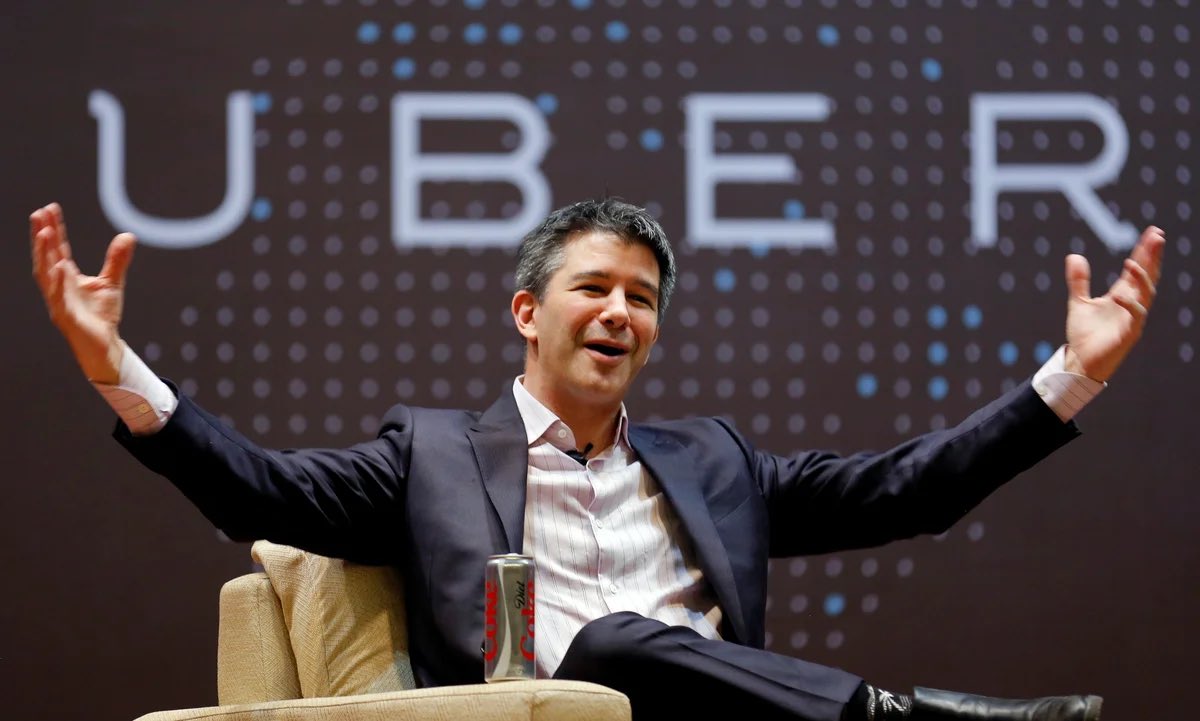
Travis Kalanick built a global company in total secrecy for 8 years. Thousands of employees across 30 countries, and none of them were allowed to put the company name on LinkedIn.
He just came out of stealth, launched Atoms, and dropped an hour with @tbpn. One of the best founder interviews I've heard in a long time.
My notes:
𝟭. 𝗛𝗲 𝗯𝘂𝗶𝗹𝘁 𝗮 𝗺𝗮𝘀𝘀𝗶𝘃𝗲 𝗰𝗼𝗺𝗽𝗮𝗻𝘆 𝗶𝗻 𝘀𝗲𝗰𝗿𝗲𝘁 𝗳𝗼𝗿 𝟴 𝘆𝗲𝗮𝗿𝘀.
After leaving Uber in 2017, Travis started City Storage Systems and deliberately chose the most boring name possible. Employees, numbering in the thousands across 30 countries, were not allowed to put the company name on LinkedIn. Zero inbound leads, zero press. Every recruiter and every salesperson had to be outbound.
This man built a global conglomerate without anyone knowing it existed.
𝟮. 𝗛𝗶𝘀 𝗲𝗻𝘁𝗶𝗿𝗲 𝗰𝗮𝗿𝗲𝗲𝗿 𝗿𝘂𝗻𝘀 𝗼𝗻 𝗼𝗻𝗲 𝗳𝗿𝗮𝗺𝗲𝘄𝗼𝗿𝗸: 𝗯𝗶𝘁𝘀 𝗮𝗻𝗱 𝗮𝘁𝗼𝗺𝘀.
CPU manipulates bits, manufacturing manipulates atoms. Storage stores bits, real estate stores atoms. Network moves bits from A to B, transport moves atoms from A to B. Uber was the network layer for atoms. Atoms is the full stack.
The best founders see one pattern and run it for decades. Travis has been running this one since UCLA.
𝟯. 𝗧𝗵𝗲 𝗳𝗼𝗼𝗱 𝘁𝗵𝗲𝘀𝗶𝘀: 𝗺𝗮𝗸𝗲 𝗱𝗲𝗹𝗶𝘃𝗲𝗿𝘆 𝗰𝗵𝗲𝗮𝗽𝗲𝗿 𝘁𝗵𝗮𝗻 𝗴𝗿𝗼𝗰𝗲𝗿𝗶𝗲𝘀.
If a prepared, delivered meal approaches the cost of buying groceries, you do to the kitchen what Uber did to the car. Atoms already has facilities with 30 restaurants each, single couriers carrying 100 personalized orders to one office building. Automated food production and automated delivery add up to what he calls "autonomous burritos."
Your $15 bowl becoming $30 after delivery fees is one of the biggest quiet frustrations in America right now. This one is personal for everyone.
𝟰. 𝗦𝗽𝗲𝗰𝗶𝗮𝗹𝗶𝘇𝗲𝗱 𝗿𝗼𝗯𝗼𝘁𝘀 𝘄𝗶𝗹𝗹 𝗯𝗲𝗮𝘁 𝗵𝘂𝗺𝗮𝗻𝗼𝗶𝗱𝘀 𝘁𝗼 𝗺𝗮𝗿𝗸𝗲𝘁.
Kalanick watched the humanoid Olympics in Beijing, and his first thought was: imagine if those things had wheels. Atoms is building "wheelbase for robots," a platform for purpose-built industrial machines. Humanoids have their place, but wheeled, task-specific robots will reach commercial viability faster because they operate in controlled environments.
The most profitable robots will be the boring ones. It has always been the case with technology.
𝟱. 𝗠𝗶𝗻𝗶𝗻𝗴 𝗶𝘀 𝘁𝗵𝗲 𝗳𝗶𝗿𝘀𝘁 𝗯𝗶𝗴 𝗯𝗲𝘁.
Atoms is acquiring Pronto, the autonomous vehicle startup for industrial sites co-founded by Anthony Levandowski. An automated mine runs 24 hours with no off-shifts. The autonomy problem is hard but more controlled than city roads: no pedestrians, predictable terrain, geo-fenced environments. Kalanick says mining is the gold medal of the category.
Everything you see around you is either grown or mined. That line alone should make you rethink the entire physical economy.
𝟲. 𝗥𝗲𝗮𝗹 𝗲𝘀𝘁𝗮𝘁𝗲 𝗶𝘀 𝘁𝗵𝗲 𝗺𝗼𝗮𝘁.
Atoms owns the physical facilities. They are the landlord and the operator. If you want to compete, go buy hundreds of millions of dollars of real estate in every major city. Then they will go head-to-head. The density of buildings on the Picnic platform creates network effects: more floors in a tower ordering means greater efficiency per courier, which further lowers delivery costs.
In a world where software gets commoditized overnight, physical assets become the hardest moat to replicate. Travis figured this out early.
𝟳. 𝗖𝗮𝗽𝗶𝘁𝗮𝗹 𝗶𝘀 𝗮 𝘀𝘁𝗿𝗮𝘁𝗲𝗴𝗶𝗰 𝘄𝗲𝗮𝗽𝗼𝗻, 𝗮𝗻𝗱 𝗲𝗮𝘀𝘆 𝗺𝗼𝗻𝗲𝘆 𝗶𝘀 𝗱𝗮𝗻𝗴𝗲𝗿𝗼𝘂𝘀.
At Uber's last major raise (~$60-70B valuation), they ran four parallel rooms in New York for a full week. 90-minute investor meetings for 12 hours a day. They aggregated demand like an IPO book, told investors their bids were too low, and iterated the curve upward. But Kalanick warns: if raising money felt easy, you left differentiation on the table.
His marathon analogy is perfect. A world-class runner at mile 21 is in pain. If they are smiling, someone hungrier is about to pass them.
𝟴. 𝗨𝗻𝘁𝗶𝗹 𝘀𝘂𝗽𝗲𝗿 𝗔𝗚𝗜, 𝗵𝘂𝗺𝗮𝗻𝘀 𝗯𝗲𝗰𝗼𝗺𝗲 𝗺𝗼𝗿𝗲 𝘃𝗮𝗹𝘂𝗮𝗯𝗹𝗲, 𝗻𝗼𝘁 𝗹𝗲𝘀𝘀.
Kalanick's plumber thought experiment: automate every job except plumbing. Machines build a thousand buildings simultaneously. How valuable are those plumbers? Each one becomes LeBron James. Because plumbing is the bottleneck on which all that automated progress depends. Entire categories will become the constraint that the rest of the economy waits on.
I keep hearing the "jobs are going away" narrative. This is the clearest reframe I have encountered: irreplaceable humans become the most expensive input in the system.
𝟵. 𝗗𝗼 𝘁𝗵𝗲 𝗯𝗼𝗿𝗶𝗻𝗴, 𝗵𝗮𝗿𝗱 𝘁𝗵𝗶𝗻𝗴𝘀.
Kalanick did taxis when people looked at him funny. He is doing food delivery and mining when everyone else is chasing software and LLMs. The graveyard is stacked with tech people who thought they could crack food. But the boring, hard categories are where you find the least competition and the widest moats. Physical AI is where the real value accrues because the training data problem is harder, the capital requirements are heavier, and AI still cannot do the math required to design a single machine part.
The whole "AI can't even do math" line is worth sitting with. We are very far from one-shotting machine design. That is exactly why the opportunity is massive for anyone willing to chew glass.
The full interview is worth watching. Link in thread.
Anthropic just launched Anthropic Academy
Totally free — 13+ official courses, complete with certificates, and zero subscription required.
Some highlights:
→ Claude 101 (perfect starting point)
→ Claude Code in Action
→ Building with the Claude API (seriously in-depth, 8+ hours of content)
→ Intro to MCP + Advanced MCP
→ Agent Skills
→ Claude on AWS Bedrock & Google Vertex AI
https://t.co/f2ImVQI1F6
I am not anti-science, I am pro-results. And here is what the results show, that more medicated we become, the sicker we get. The more we depend upon therapies, the lonelier we feel. The more connected the world has become, the more isolated the human being inside it. Science is extraordinary at telling you what the brain does. It has no answer for why there is something it is like, to be you. It can map every neuron, it cannot tell you why consciousness exists at all. That question is the only question that actually matters. Science ignores that question, but it was not ignored by ancient India. It was the ONLY question ancient India worked on, for 5000 years. The one civilization on earth, that made the inner world, its only laboratory. Unless the modern world starts working on the inner world, the way it does on the outer world- human civilisation will remain incomplete, and will continue to suffer.
That one neuron connects to about 7,000 others. Your brain has 86 billion of them. Do the math and you get somewhere around 100 trillion connections inside your head. More connections than stars in 1,500 galaxies.
And each connection point is way more complicated than anyone expected. A Stanford lab found that every single connection contains about 1,000 tiny switches that can store memories and process information at the same time. So your brain is running roughly 100 quadrillion switches right now, while you read this sentence.
The wild part is the power bill. Your brain runs on 20 watts. That’s less energy than the light in your fridge. The world’s fastest supercomputer needs 20 million watts to do the same amount of raw calculation. A million times more power for the same output.
We’re still nowhere close to understanding how any of this works. In October 2024, a team of hundreds of scientists finished mapping every single connection in a fruit fly’s brain. Took six years and heavy AI help. That fly brain had 140,000 neurons. Yours has 86 billion. Google and Harvard also mapped a piece of human brain last year, a speck smaller than a grain of rice. That speck alone contained 150 million connections and took 1,400 terabytes to store. The lead scientist said mapping a full human brain at that detail would produce as much data as the entire world generates in a year.
A tiny worm had its 302 brain cells mapped back in 1986. Almost 40 years later, scientists still can’t fully explain how that worm’s brain keeps it alive. Your brain has 86 billion of those cells, each one wired to thousands of others, each wire packed with a thousand switches, all of it humming along on less power than a lightbulb.
BREAKING: Claude can now research like a Stanford PhD student.
Here are 10 insane Claude prompts that turn 40+ research papers into structured literature reviews, knowledge maps, and research gaps in minutes (Save this)
imagine you’re Travis Kalanick
you built Uber from nothing into a $70 billion company and changed how every city on earth moves
then in the worst three weeks of your life, family tragedies hit, and five of your investors hand you a letter demanding you resign
so you step down
the board replaces you, your successor and board sell off the self driving division you created, the thing you believed was Uber’s entire future
gone
$4 billion to Aurora
the mainstream media tries to write your obituary: toxic culture, bad leadership, and a cautionary tale
silicon valley moves on
as they always do
but you don’t
you don’t really forget
you go quiet, completely quiet
you take $150 million and buy a ghost kitchen company called CloudKitchens
you raise over a billion dollars, hit a $15 billion valuation, build a company with thousands of employees
and nobody even knows the name
eight years in stealth, employees aren’t even allowed to put your company on their LinkedIn
then today you rename the company Atoms, and it’s not a kitchen company anymore
it’s a robotics company
1. food
2. mining
3. transport
your first move?
acquiring Pronto
the autonomous vehicle startup
built by Anthony Levandowski, the same engineer you originally swooped away from Google to build Uber’s self driving program
oh and he went on to deploy 100+ autonomous trucks for one of the largest materials companies on earth
now he’s coming back to work with you
and the reports say Uber itself
the same company that pushed you out, is now backing you to go after self driving harder than Waymo
the guy they removed is the guy they end up needing
poetic justice
your framework aka everything in civilization is mined or grown, manufactured and moved
you call it the golden age
your manifesto ends with three words:
“I never left”
eight years of silence
then this
but here’s what people keep getting wrong about your situation
everyone wants to call it a comeback or a revenge story
it’s neither
you just went quiet and built for eight years while everyone who wrote you off had stopped paying attention
that’s not revenge, that’s just what true builder obsession looks like
most founders would’ve stayed bitter
most would’ve written a book and done a podcast tour, most would’ve taken the $2.5 billion in shares and disappeared off to a beach or Epstein’s island
you didn’t do any of that
you just kept building
and now the same people who pushed you out need you again
so whether you love him or hate him
the most dangerous person in any room is the one who goes quiet yet never stops building
karma is real
welcome back Travis
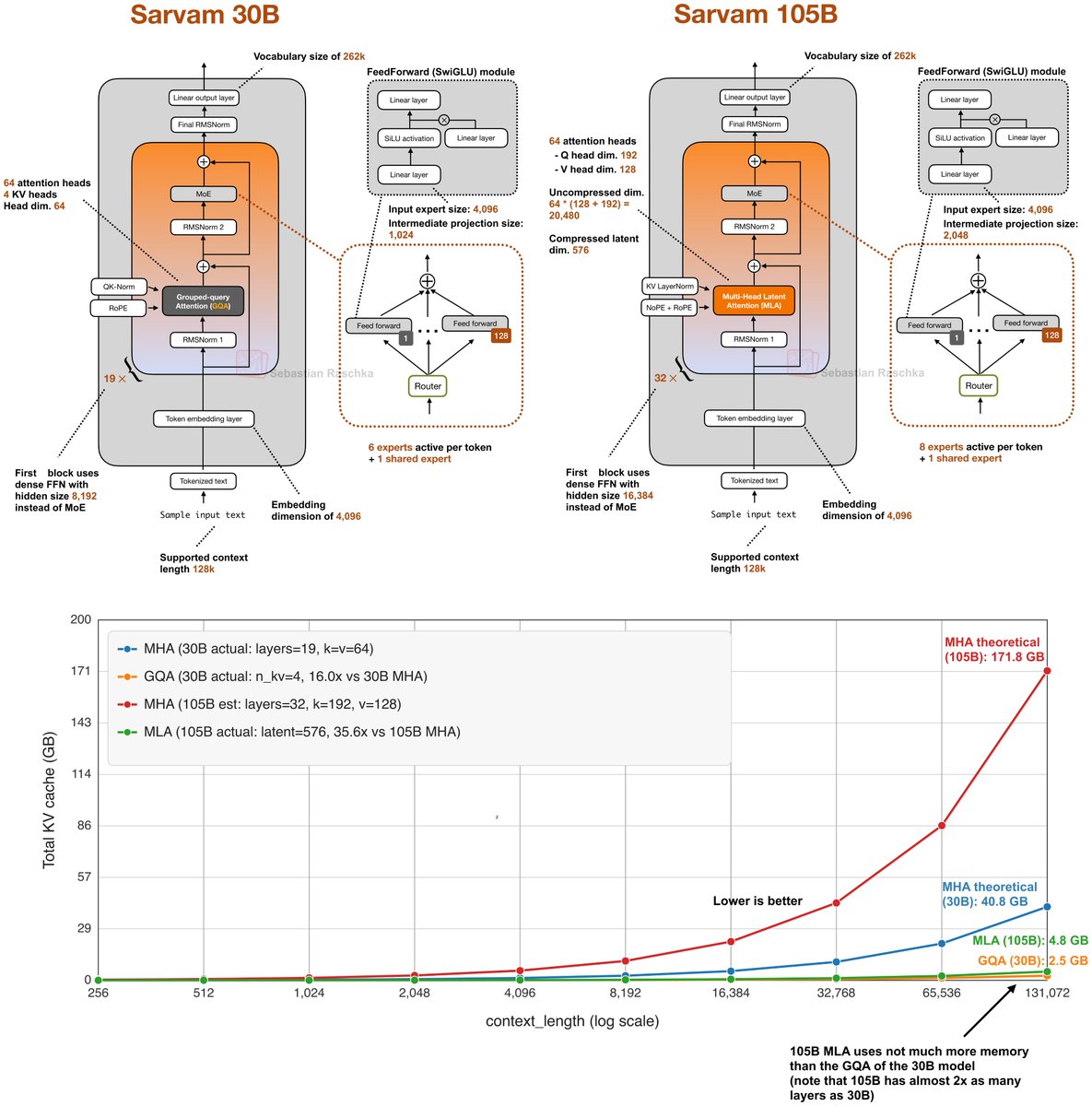
While waiting for DeepSeek V4 we got two very strong open-weight LLMs from India yesterday.
There are two size flavors, Sarvam 30B and Sarvam 105B model (both reasoning models).
Interestingly, the smaller 30B model uses “classic” Grouped Query Attention (GQA), whereas the larger 105B variant switched to DeepSeek-style Multi-Head Latent Attention (MLA).
As I wrote about in my analyses before, both are popular attention variants to reduce KV cache size (the longer the context, the more you save compared to regular attention).
MLA is more complicated to implement, but it can give you better modeling performance if we go by the ablation studies in the 2024 DeepSeek V2 paper (as far as I know, this is still the most recent apples-to-apples comparison).
Speaking of modeling performance, the 105B model is on par with LLMs of similar size: gpt-oss 120B and Qwen3-Next (80B). Sarvam is better on some tasks and worse on others, but roughly the same on average.
It’s not the strongest coder in SWE-Bench Verified terms, but it is surprisingly good at agentic reasoning and task completion (Tau2). It’s even better than Deepseek R1 0528.
Considering the smaller Sarvam 30B, the perhaps most comparable model to the 30B model is Nemotron 3 Nano 30B, which is slightly ahead in coding per SWE-Bench Verified and agentic reasoning (Tau2) but slightly worse in some other aspects (Live Code Bench v6, BrowseComp).
Unfortunately, Qwen3-30B-A3B is missing in the benchmarks, which is, as far as I know, is the most popular model of that size class. Interestingly, though, the Sarvam team compared their 30B model to Qwen3-30B-A3B on a computational performance analysis, where they found that Sarvam gets 20-40% more tokens/sec throughput compared to Qwen3 due to code and kernel optimizations.
Anyways, one thing that is not captured by the benchmarks above is Sarvam’s good performance on Indian languages. According to a judge model, the Sarvam team found that their model is preferred 90% of the time compared to others when it comes to Indian texts. (Since they built and trained the tokenizer from scratch as well, Sarvam also comes with a 4 times higher token efficiency on Indian languages.
I accidentally discovered how to compress a semester of learning into 48 hours.
A grad student at MIT showed me his NotebookLM setup. I thought he was just organized. Then I watched him pass a qualifying exam on a subject he'd never studied before.
Here's exactly what he did:
First: he didn't upload a textbook.
He uploaded 6 textbooks, 15 research papers, and every lecture transcript he could find on the subject.
Then he asked NotebookLM one question:
"What are the 5 core mental models that every expert in this field shares?"
Not "summarize this." Not "explain this topic."
Mental models. The stuff that takes professors years to develop.
But the next part is what broke my brain.
He followed up with:
"Now show me the 3 places where experts in this field fundamentally disagree, and what each side's strongest argument is."
In 20 minutes he had a map of the entire intellectual landscape of the field:
the debates, the consensus, the open questions.
Most students spend a full semester just figuring out what those debates even are.
Then he did something I've never seen before.
He asked:
"Generate 10 questions that would expose whether someone deeply understands this subject versus someone who just memorized facts."
He spent the next 6 hours answering those questions using the source material. Every wrong answer triggered a follow-up:
"Explain why this is wrong and what I'm missing."
By hour 48, he could hold a conversation with his thesis advisor without getting destroyed.
The tool didn't change. The questions did.
Most people treat NotebookLM like a fancy highlighter.
These students are using it like a private tutor who has read everything ever written on the subject.
The difference between a semester and 48 hours isn't the amount of content.
It's knowing which questions to ask.
Former Tesla AI Chief Andrej Karpathy just broke down exactly how Musk engineers a company to win the AI arms race.
It starts with one absolute mandate.
Karpathy: “Keep a small, strong, highly technical team. No middle management that is kind of like non-technical.”
At most legacy companies, teams grow by default.
Headcount becomes a status symbol.
Layers of management accumulate between the CEO and the code until the CEO has no idea what the code is doing.
Musk runs the exact opposite playbook.
Karpathy: “Elon was always like a force against growth.”
Because every layer you add is a filter between leadership and reality.
And in the AI arms race, losing contact with reality is how you lose.
Karpathy: “If the team is small and strong, then engineers and the code are the source of truth.”
Not the VP. Not the project manager. Not the deck.
The code itself.
When Musk talks directly to engineers, he’s looking for one thing.
The bottleneck.
If an engineer says they need more GPUs, Musk doesn’t ask for a budget proposal.
Karpathy: “Someone dials the phone and he’s just like, ‘Okay, double the cluster right now. Let’s have a meeting tomorrow sending daily updates until the cluster is twice the size.’”
When procurement says NVIDIA needs six months to deliver the hardware, Musk doesn’t accept the constraint.
Karpathy: “Then you get a rise of an eyebrow. And then he’s like, ‘Okay, I want to talk to Jensen.’”
The bureaucracy says six months.
Musk calls the CEO of NVIDIA.
The constraint disappears.
Karpathy: “Elon is very friendly to by default getting rid of low performers.”
Not because he’s ruthless.
Because he’s paying attention to what’s actually happening in the world.
The nations and companies that move fastest will determine what the next era of human civilization looks like.
That is not a drill.
You cannot win that race with a workforce optimized for comfort and a procurement process optimized for caution.
That’s not a management style.
That’s the organizational architecture of a company that actually understands the moment it’s operating in.
I am a proud investor in this ambitious startup.
The returns from this investment go far beyond financial rewards.
It’s about getting a ringside seat to watch the literal ‘take-off’ of Indian talent…
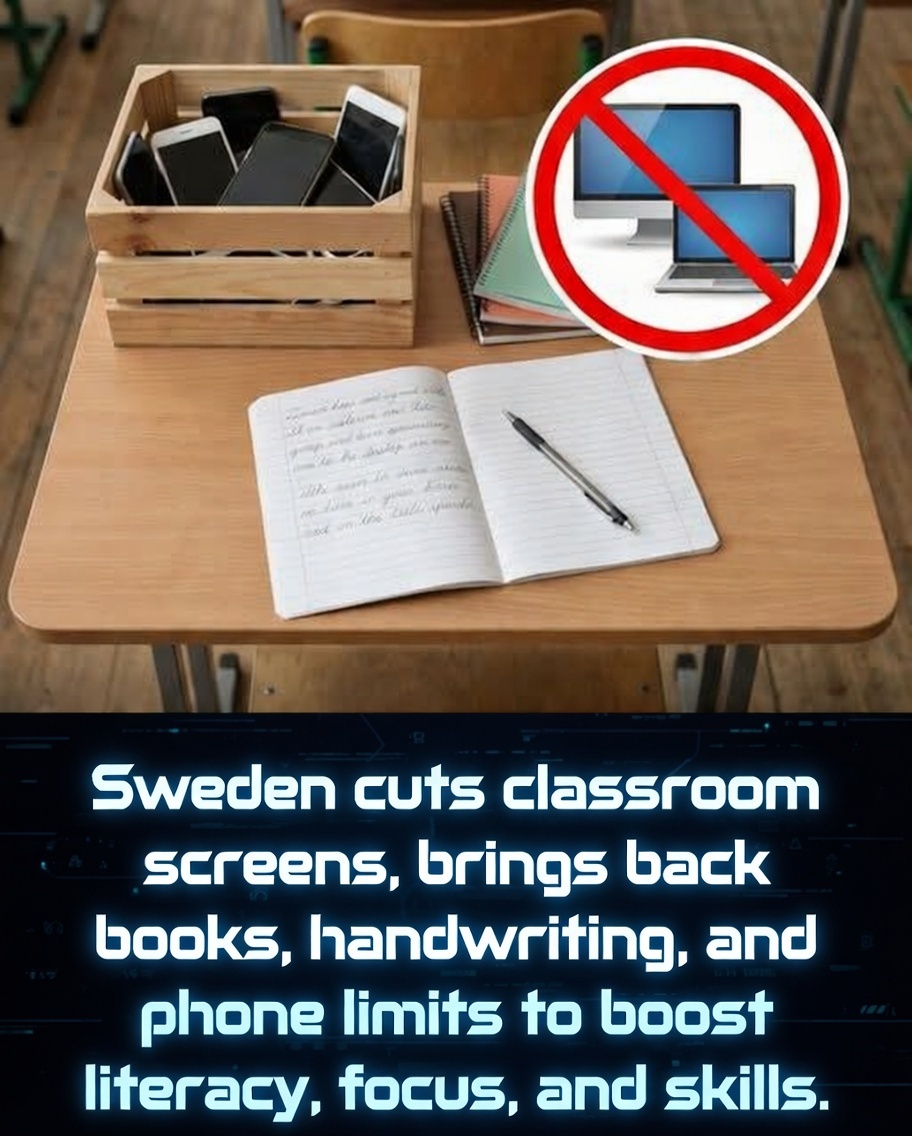
Sweden is committing more than €100 million to a sweeping classroom overhaul: replacing tablets and screens with traditional printed textbooks to help reverse falling student performance and sharpen focus.
After more than a decade of embracing digital-first education, Swedish authorities are now pivoting back to paper-based learning. Official data and recent studies cited by the Ministry of Education show that prolonged screen use in class has been linked to shorter attention spans, weaker reading comprehension, and reduced critical-thinking abilities.
Research consistently finds that reading on illuminated screens requires greater mental effort and invites more distractions compared to the calm, linear experience of physical books—factors believed to have contributed to declining academic outcomes in recent years.
Under the new plan, every student will receive printed textbooks for all core subjects, restoring books as the central learning tool. Digital devices and online resources will remain available as supportive tools, but they will no longer dominate daily instruction.
This bold €100+ million investment signals Sweden’s leadership in rethinking the role of technology in education. It underscores a broader, growing recognition worldwide: while screens provide speed and access, the hands-on, distraction-free engagement of physical books supports deeper concentration, stronger memory retention, and more effective long-term learning.
By choosing paper over pixels, Sweden is charting a path toward a more balanced, evidence-informed classroom future—one that puts proven pedagogical principles ahead of unchecked digital trends.
Everyone talks about AI replacing jobs. The more interesting shift is AI replacing the excuses teams use to skip the hard work.
User research is the most skipped step in product development. PMs know they should do it. They have the frameworks. They've read the books. They still ship features based on 3 Slack conversations with friendly customers.
The real blocker was never methodology. It was labor. Transcribing, coding, synthesizing, cross-referencing, verifying patterns across dozens of participants. That workflow took weeks and cost thousands in research ops headcount.
This walkthrough compresses that entire pipeline into Claude. Load context, run per-participant analysis, verify patterns, audit the AI's reasoning. Four steps that used to require a dedicated research team.
The PMs who adopt this won't just ship better products. They'll make decisions so fast that competitors still running 6-week research cycles can't keep up. Speed of insight is becoming the new moat.
Google and Microsoft just co-authored the spec that turns every website into an API for AI agents. The second-order effects here are massive.
Right now, browser agents work by taking screenshots, parsing the DOM, and guessing which buttons to click. It works about as well as you’d expect. Fragile, expensive, slow. WebMCP replaces all of that with a single browser API: navigator.modelContext. Websites register structured tools directly in client-side JavaScript. The agent reads a menu of available actions, calls them, gets structured data back. No scraping. No backend MCP server in Python or Node. The tools run inside the browser tab and share the user’s existing auth session.
Early benchmarks show ~67% reduction in computational overhead compared to visual agent-browser interactions. Task accuracy around 98%.
The second-order effect is where this gets wild. Today, when a browser agent visits two competing airline sites, it’s guessing at both interfaces equally. Once WebMCP adoption spreads, the site that exposes structured tools gives the agent a clean, reliable path to complete the task. The site that doesn’t forces the agent to fumble through the UI. Agents will prefer the cheaper path. Every time.
This means “Agent Experience Optimization” becomes a real discipline. Tool naming, schema design, description quality. Sound familiar? It’s the same shift that happened when meta descriptions and structured data became optimization surfaces for search engines. Except this time, the traffic source isn’t Google’s crawler. It’s every AI agent on the internet.
Bots already make up 51% of web traffic. Google just gave them a front door.
An xAI engineer just described how the company operates, and buried in that description is the only thing that might save Western technological dominance.
No organizational overhead. No documentation requirements. No approval chains. You identify what needs building and you build it.
xAI engineer: “There isn’t organizational overhead getting in your way, having to write docs. You just do stuff.”
That’s not a workplace perk. That’s an emergency response to an existential competitive threat most people refuse to acknowledge.
China owns 50% of the world’s AI researchers. Not the developing world combined. Not Asia collectively. China alone controls half of every brain advancing the most important technology in human history.
While the West celebrates chip sanctions and export controls, China is doing something infinitely more dangerous: removing every organizational barrier between brilliant people and execution.
xAI engineer: “If you want to get shit done, you can get shit done.”
In most Western companies, that sentence would be fantasy. Compliance reviews. Documentation mandates. Approval hierarchies. Risk assessments. Process optimization. Every layer bleeds velocity while competitors operate without friction.
This isn’t about efficiency. It’s about survival.
Talent compounds generationally. Elite researchers train the next wave. Each generation builds on everything before it. When you control half the pipeline and let them operate at maximum speed, your advantage doesn’t grow linearly. It explodes exponentially.
The West responds with governance frameworks. Ethics committees. Responsible AI initiatives. All valuable in peacetime. All fatal when you’re being systematically outpaced by an adversary that captured the talent advantage and eliminated the one thing slowing them down: bureaucracy.
xAI engineer: “It’s truly an environment where you just do stuff.”
That’s not unique culture. That’s the minimum operational requirement to compete against a system that owns half the world’s AI minds and removed every organizational obstacle between their ideas and reality.
Western advantages are real. Capital markets. Research institutions. Democratic innovation. All of it becomes irrelevant if the output gap keeps widening because one side builds while the other holds meetings about building.
China isn’t trying to slow the West down. They don’t need to. They’re accelerating their own execution while Western organizations debate whether acceleration needs additional oversight.
The math is brutal. Control half the researchers. Remove bureaucratic friction. Compound that advantage across generations. The West doesn’t lose slowly. It becomes a spectator watching the future get built in a language it can’t read fast enough to translate.
The choice isn’t between chaos and order. It’s between execution and extinction.
Either we build environments where the smartest people can operate at the speed of thought without permission structures, or we watch capability concentrate where those structures were already eliminated and wonder how we lost a war we didn’t realize we were fighting.
This isn’t about xAI’s culture. It’s about whether Western civilization can remember how to move fast enough to matter before the advantage gap becomes permanent.
This is the most read article on Artificial Intelligence. Read 8 crore times!!
I strongly suggest everyone in White Collar jobs to read it.
In short - if your job involves doing things on the screen, AI is changing it. If manual, robots will change.
https://t.co/01OKoOjZbR