@YannMeridex The essence of neutrality lies in the fact that there should lie an ambiguity to represent ideas wrt chance of favour.
Publically,it gives one an appeal & acceptance of being broad minded while in personal,a sense of safety that he's not offended anyone.
"WEAK CONFORMITY"
People learn that Aśoka converted to Buddhism and automatically imagine him "converting" from Hinduism to Buddhism.
Back then most Purāṇas and Dharmaśāstras which shaped Classical Hinduism hadn't been composed; he most probably followed a mixed belief system already centered in non-Vedic belief, influenced by Ājīvika, Bauddha, Jaina and even Vedic thoughts.
In his edicts, he says he has respect for Brāhmaṇas, Śramaṇas, Ājīvikas and Nigaṇṭhas alike.
There was no formal conversion. He definitely mentions he was associated with the Buddhist Sangha and he spread Buddhist values a lot, from which he drew his inspiration from.
He just used "Dhamma" a lot, an Eastern Magadhan word for Dharma, which stressed on good moral values.
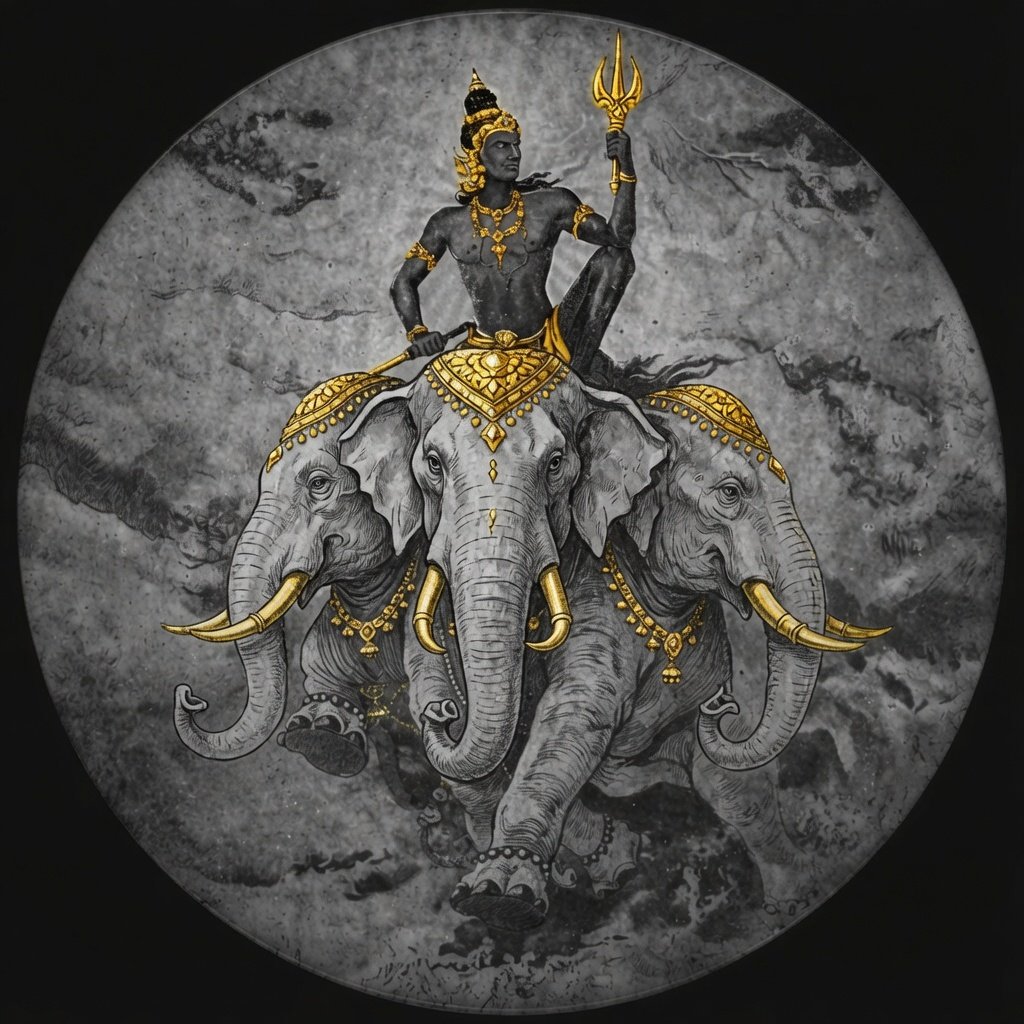
To him winning everything: winning the stakes, winning the sun; to him winning in every way, winning men, winning fields; to him winning horses, winning cattle, winning waters; to Indra, worthy of the sacrifice, bring his beloved soma.
1/ My three-volume history places the Indian subcontinent at the centre of world civilisation. On the question of continuity, it is the most impressive case on earth, and the one Western scholarship has most consistently underestimated.
2/ At Bhimbetka's 30,000-year-old paintings, a dancing deity with bangles and trident immediately recalls the dancing Shiva of today, as Michael Wood observed, and as I cite in my own work. A 14,000-year-old yoni stone near Allahabad was recognised on sight by local villagers. This demonstrates continuity. Therefore the seal is a middle chapter in the whole story.
3/ The argument that Indian sacred symbols require a Elamite or steppe source was constructed in the 19th century by Max Muller, who never visited India. He later called his 1,500 BC date for the Rig Veda 'merely hypothetical.' Subsequent historians copied the original date and ignored the retraction. Voltaire said 'everything has come to us from the banks of the Ganges.' He was wrong about most things but right about this.
The Occidental hatred for India is because India refuses to move Hinduism to a museum. Everything else is a direct consequence of that. 1500 years of continued battering and what did they achieve? Chips at the edge. Substantial chips but still chips. If one looks at the achievement of Islam and christian expansion and evangelism, India is the only entity which stands out of a sore thumb. How can they even ignore that?
I first got it as a hunch. Then I thought about it a lot. Now, I would like to state it:
AI and tech leapfrogging by a few nations, is poised to cause colonization 2.0 - an era where other nations are digitally and strategically subordinated using the tech.
Normalization of colonization by western tech bros, including Elon, too points to what they gonna do.
Hinduism itself.
A billion people taught to find meaning in unity and bhakti. Imagine a billion people taught to find meaning in excellence instead.
Shed the defeatist myth that we are trapped in Kali Yuga. We aren't. It’s an excuse that rationalizes weakness as wisdom and passivity as destiny. Burn it.
Nobody is coming to liberate us, only we can do it.
The Vedic civilization wanted to conquer the world. Somewhere we forgot. We must trade the paralysis of endless abstraction and detachment for the pursuit of tangible perfection.
Stop debating the universe, start conquering it through obsessive excellence and raw beauty!
Fewer Upanishadic lectures.
More Rigvedic Samhitic fire.
@BegulaCryptoCat@Indo__Aryan I can get wet with memories of Mauryans till Marathas while escaping with byzantine war chants... Do we need more as proof ?
@arya_amsha@JoeAgneya will tell how Christianity borrows equally more from India, specifically from the banyan of Buddha's dhamma via manichaean n direct borrowings...
The English abandoning India was lack of will. India, with its socially isolated castes, had plenty of room for an English ruling caste to blend in and rule without issues. Their failure was in treating the local princes like white men and allowing their sons to study in England.