Why the fvck don’t you quit social media ??? izzat ban ju
Aiven fer… 🙄🙄🙄 just for views
By the way Gurpreet jee ‘foda’ hjje ve otthe ae 😊 k koi nva ban gya ?
CONG EXPOSED.
Here's the unfiltered audio. Does the Congress has a problem with Bharat's national song?
The audio picks up this line:
"OUR VERSION OF VANDE MATARAM"
How bizarre. Vande Mataram is the song of We The People, A full throated ode to our one and only motherland.
HOW CAN ANYONE CLAIM EXCLUSIVE OWNERSHIP OVER VANDE MATARAM?
DOES THE CONGRESS WORSHIP SOME OTHER MOTHER INDIA?
Que por qué fui adicto a la fiesta y al alcohol durante años? Por chicas como esta. De hecho el vídeo es de Lloret de Mar y yo iba a ese tipo de fiestas (de grupos de teenagers holandeses) medio infiltrado. Terminé haciéndome colega de un italiano que los llevaba de paseo
Winds in Punjab are changing💯 Core sikh voters who were ANTI BJP/Modi in 2014/17/19/22/24 are so fed up with AAP,they are openly talking about giving BJP a chance. @BJP4India@BJP4Punjab should capitalise. 18% voteshare in 2024. Candidate selection is 🔑@AmitShah@narendramodi
@blinkitcares@letsblinkit@albinder@deepigoyal
Ordered roughly 20 items worth ~3k. All from same store.
7-8 items were missing in order & had to be re delivered twice.
Advice : Send a physical paper receipt.
Sometimes people order for their elder parents in a different city
Your fridge runs 24 hours a day. Solar panels only work while the sun’s out. That mismatch is the entire reason this plant exists, and the fix is just hot salt.
The Dunhuang plant in China’s Gobi Desert uses 12,000 mirrors aimed at a single tower about as tall as an 80-story building. All that focused sunlight heats a mix of salts (the same stuff in fertilizer) to 565°C, hot enough to glow red. That liquid salt gets pumped into giant insulated tanks. The tanks are so well insulated they only lose about 1°C per day. When the city needs electricity at 2am, the hot salt boils water into steam, the steam spins a turbine, and you get power. Same basic process as a coal plant. Just no coal.
Here’s what makes this different from regular solar: the storage lasts 11 hours. Sun goes down, plant keeps running all night. The big batteries that cities plug into their power grids right now? Those typically hold about 4 hours of electricity. Building batteries that last 11 hours is possible, but the cost balloons fast. A German energy storage study found that storing energy in hot salt costs roughly 33x less than storing it in the lithium-ion batteries we use today.
China has built 27 of these plants so far, enough to power roughly a million homes. They doubled that number in 2025 alone. Another 3,000 megawatts (enough for about 2 million more homes) are under construction right now, with 4,000 more in the planning stage. Beijing wants 15,000 megawatts by 2030.
The US tried this same technology once. Ivanpah, out in the Mojave Desert. Cost $2.2 billion. But they skipped the storage part entirely, so it could only make power while the sun was shining. It needed natural gas every morning just to start up. It’s now slated to shut down in 2026, thirteen years early, because regular solar panels got so cheap they made the whole project obsolete. China took the same idea, added the one part America left out, and is now building dozens of them.
One more thing worth knowing. The salt is made from basic industrial chemicals. No lithium mining. No cobalt. No rare earth metals. And it lasts 30 years of daily use before the tanks need work.
China’s solar power plant in Dunhuang uses around 12,000 mirrors to focus sunlight onto a central tower, heating molten salt to extreme temperatures.
That heat is stored and used to generate electricity on demand, including after sunset.
List of 40 most important topics of Science & Technology for UPSC Prelims 2026.
Do prioritise these topics to maximumise score in S&T.
P.S. This list is exclusively prepared on the basis of S&T and Current affairs lectures taken by me in past 1 year
#UPSC#Science#Technology
UPSC GS-III alert 🚨🚨🙋🏾♂️
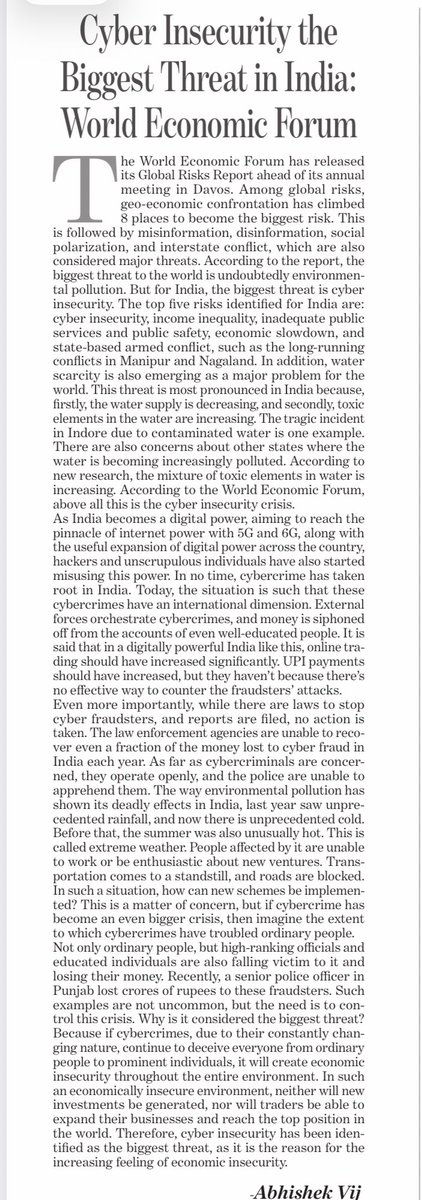
Cyber insecurity has moved from a technical issue to a core national security challenge for India.
➤ Cyber insecurity has emerged as India’s most serious non-traditional security threat amid rapid digitalisation.
➤ Inadequate cyber infrastructure and low awareness have increased risks to banking, governance, and critical systems.
➤ Cybercrime now impacts economic stability, public trust, and internal security rather than just data privacy.
➤ Strengthening cyber capacity, institutions, and coordination is essential to safeguard India’s digital growth.
Why UPSC aspirants should NOT miss this 🚨🚨
This editorial lays out the five critical reforms India must undertake now to sustain high growth over the next two decades, making it essential for GS-III Economy and Essay.
➤ India must prioritise urban reforms, clean air, and climate-resilient infrastructure to support future growth.
➤ Manufacturing depth, clean energy transition, and technological self-reliance are key to global competitiveness.
➤ Trade facilitation, customs reform, and integration into global value chains are necessary to boost exports.
➤ Lowering the cost of capital and ensuring macroeconomic stability will determine India’s long-term growth trajectory.
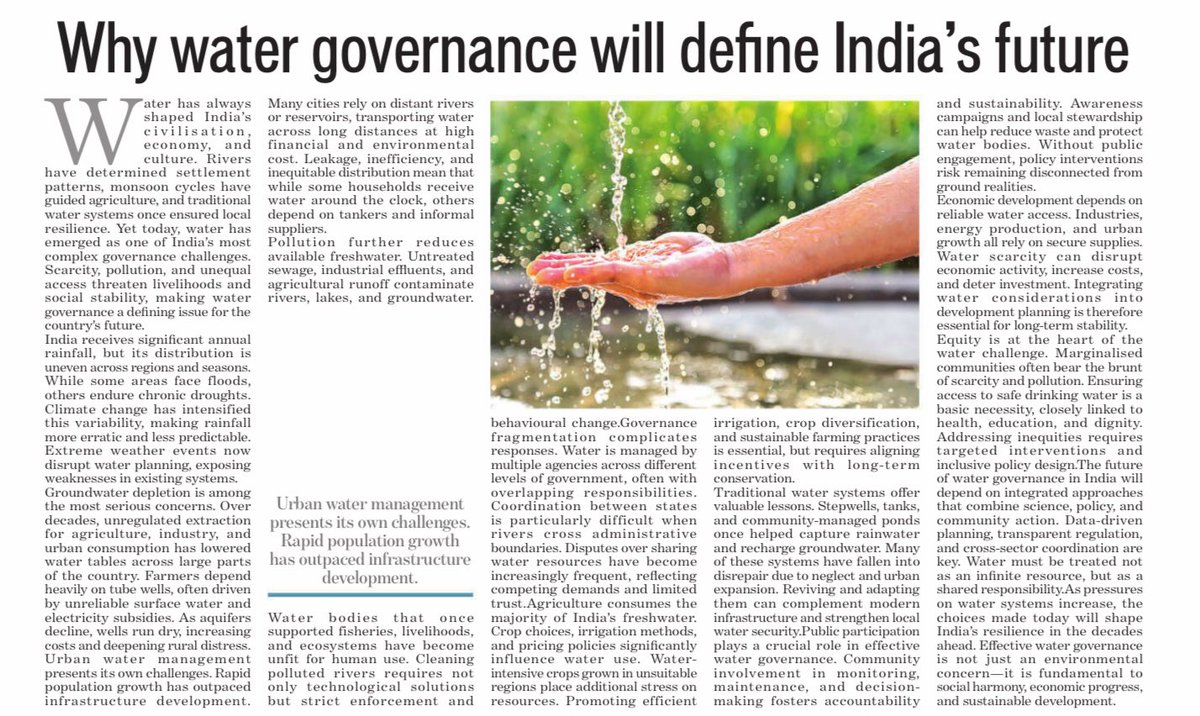
🚨 Why UPSC aspirants should NOT ignore this article 🤯🚨
This is not just about water — it is about India’s survival, economy, federalism, climate resilience, and governance capacity. Questions from this theme can appear in Prelims, GS-II, GS-III, Essay, and even Ethics case studies.
Save this.
Save this — UPSC loves turning such lines into tricky Prelims statements.
Rare Earth Elements may sound “rare”, but they are power minerals behind EVs, missiles, chips, and green energy. Global powers are racing to control mines, processing, and supply chains because whoever controls REEs controls future technology and strategic leverage.
Read every line. One missed fact = one lost mark.