In 1204, a Japanese poet wrote in his diary that the sky turned blood red for 3 nights.
800 years later, scientists drilled into buried trees and confirmed: he was witnessing a catastrophic solar storm that would have fried every satellite on Earth today.
Hedera has a fixed transaction cost priced in dollars, not tokens
Unlike most blockchains that quote their gas fee is in tokens, @hedera has a set gas fee costing $0.0001. The set price is crucial during a busy market, with gas fees staying constant for users.
$HBAR isn’t moving on hype today.
Network txs just printed a monthly high (~593k on Sept 3).
WISeKey is now a @hedera Council strategic partner.
40+ banks can custody, stake, tokenize, and deploy contracts on Hedera via Taurus.
Mastercard partnership is live.
Price: ~$0.081. Week: +~9%.
Watch usage, not just the chart.
$HBAR #Hedera
NFA
Hedera daily transactions hit monthly high.
September 3 saw the @Hedera L1 blockchain process some 593,000 unique transactions - the highest it has seen in over a month.
At time of writing, spot HBAR ETFs have seen only one single day of net outflows, a possible indicator of investor conviction.
🚨BREAKING: According to public reports, over 100 banks globally are experimenting with hedera-hashgraph:native as a public settlement layer as SWIFT is building its own Blockchain / DLT on the same tech stack “HashSphere”
Swift started testing Hedera for cross-border transactions and ISO 20022 earlier this year
The Swift trials have moved past a stage where banks are now testing Hedera implementation through Taurus and other regulated partners
🎥 Swift’s Alisa DiCaprio at HederaCon
Bitcoin is the most centralized asset ever, marketed as “decentralized.”
If you understand how the Bitcoin blockchain actually works, it becomes obvious that it is not immutable or untouchable. The code can be changed, and the chain can be controlled through coordination.
For those who don’t know, Bitcoin runs on a single public blockchain, and control of that chain comes from who produces the blocks.
Today, block production is dominated by only 4 mining pools: Foundry USA (30%), AntPool (18%), ViaBTC (11%), and F2Pool (10%). Together, the top pools routinely control over 65% of total hash power, and the top 5 over 75%.
Officially, these pools are “separate” on paper, but they all work together. They share the exact same private funding, have same aligned incentives, and overlapping miners. This creates a de facto centralization where a single group influences block production, censors transactions, or pushes protocol changes at will.
In reality, fewer than 10 people control most of Bitcoin through the top mining pools and core developers. Revealed from the Epstein files, Israel also funded much of this early development, covering over 60% of the core developers’ salaries. “Decentralized” is purely marketing.
Stablecoins give this same cabal another lever over Bitcoin. They want prices up? Easy. They print unbacked Tether or USDC out of thin air and inject it into exchanges they control or influence, like FTX (before it collapsed), Binance, Bitfinex, Coinbase, and others. They want prices down? Just pretend to burn the coins, trigger panic, and the market enters a bear phase. These mechanisms make Bitcoin’s price highly manipulable despite its “free market” image.
When a small group produces most of the blocks, transaction censorship, reordering, and enforced protocol changes are no longer hypothetical.
Bitcoin is marketed as pseudo-anonymous and seizure-resistant, yet governments have seized millions of dollars in BTC with ease. Do you ever wonder how?
The 2021 Colonial Pipeline ransomware payment was traced and recovered almost immediately by the FBI, which they later admitted they got access to the wallet’s private key (Very sus!). Similar seizures occurred with Silk Road, the Bitfinex hack funds, and multiple darknet and ransomware cases. This level of enforcement is incompatible with claims of true privacy or sovereignty. They clearly have backdoor access.
Bitcoin functions like a Trojan horse. It was hyped as a financial miracle, sold to the masses, and accepted without skepticism.
In reality, it is a speculative gambling chip, heavily surveilled and quietly managed by insiders. Strip away the mythology and it is no more valuable than a digital beanie baby with better marketing.
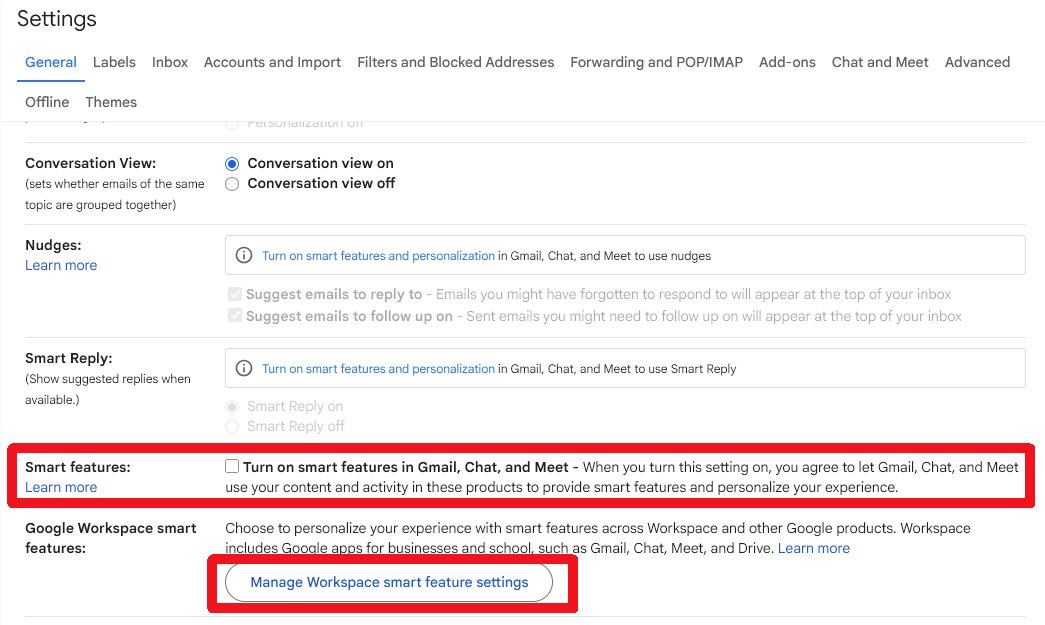
IMPORTANT message for everyone using Gmail.
You have been automatically OPTED IN to allow Gmail to access all your private messages & attachments to train AI models.
You have to manually turn off Smart Features in the Setting menu in TWO locations.
Retweet so every is aware.
The updated Silver-to-S&P 500 ratio chart increasingly suggests the early stages of a major cycle where silver outperforms U.S. equities.
While many investors have been conditioned to expect the opposite, this chart highlights just how early we might be in a broader trend of capital rotating into hard assets.
China is now restricting exports to retaliate in trade negotiations. Rare earth metals are used in basically all of our technology.
The raw ores are not rare, despite the name. But 90% of the refineries and smelters are in China. Even if the raw ore is available in other countries, it needs to be shipped to China to be turned into the type of metal that can be used by manufacturers.
The US govt is trying to correct this strategic error by subsidizing the construction of refineries and smelters for rare earth metals. But most of those projects are still years away from production.
Why China’s Rare Earth Dominance Is No Accident—and Why the U.S. Faces a 15-Year Climb to Catch Up
In the global race for technological supremacy, the battlefield is not just in silicon chips or AI algorithms—it’s buried deep in the earth, in the form of obscure-sounding elements like neodymium, dysprosium, and terbium. These rare earth elements (REEs) are the lifeblood of modern defense systems, electric vehicles, wind turbines, and advanced electronics. And right now, China doesn’t just dominate the rare earth market—it owns the entire chessboard.
The Illusion of a Mining Problem
It’s tempting to think of rare earths as a simple resource extraction issue. After all, the U.S. has rare earth deposits. So do Australia, Canada, and Brazil. But this isn’t about digging rocks out of the ground. It’s about what happens next: the processing, separation, metallization, and magnet fabrication—a complex, capital-intensive, and expertise-driven industrial chain that China has spent decades mastering.
China controls over 85% of global rare earth refining capacity. But more critically, it has a near-monopoly on the specialized machinery—solvent extraction trains, reduction furnaces, spin casters—and the technical workforce needed to operate them. The U.S. can’t simply buy this equipment anymore. Beijing has blocked exports of key processing technologies, turning the machinery itself into a geopolitical weapon.
The Machinery and Expertise Bottleneck
This is the real choke point. Western companies now face the daunting task of reverse-engineering or reinventing entire classes of industrial equipment. That’s not just a procurement challenge—it’s a multi-year R&D slog involving corrosive chemicals, high-temperature metallurgy, and environmental hazards. And even if the machines are built, who will run them? The U.S. lacks the institutional knowledge and trained workforce that China has cultivated since the 1980s.
This is why even the most optimistic projections suggest it will take 10 to 15 years for the U.S. to build a fully independent, end-to-end rare earth supply chain. That’s assuming sustained political will, massive public-private investment, and a bit of luck.
The Strategic Cost of Complacency
For too long, the West outsourced its rare earth needs to China under the illusion of market efficiency. But rare earths are not just commodities—they are strategic enablers. Every F-35 fighter jet, every hypersonic missile, every next-gen radar system depends on components made with rare earth magnets. So do the motors in Teslas and the generators in offshore wind farms.
China understands this. Its dominance is not accidental—it’s the result of deliberate industrial policy, subsidies, environmental trade-offs, and long-term strategic planning. The U.S., by contrast, is playing catch-up in a game it didn’t realize it was losing.
The Path Forward: Painful but Necessary
The U.S. is finally waking up. The Department of Defense is investing hundreds of millions into companies like MP Materials to build vertically integrated mine-to-magnet operations. The Department of Energy is funding next-gen separation technologies that could leapfrog the current solvent-based systems. And allied nations like Australia and Canada are stepping up to form a “friend-shored” supply chain.
But let’s be clear: this is not a one-election-cycle problem. It’s a decade-plus industrial transformation. It will require trial and error, environmental compromises, and a new generation of metallurgists, chemists, and engineers. It will also require the political courage to treat rare earths not as a niche issue, but as a national security imperative.
Conclusion
China’s stranglehold on rare earths is not just about minerals—it’s about systems control. The U.S. can’t mine its way out of this. It must build, train, and innovate its way back into the game. That will take time—perhaps 15 years or more. But the cost of inaction is far greater: a future where the technologies that define power are built on foundations the U.S. no longer controls.
1/2