Observation: I've seen many Product Designers reposition themselves as Design Engineers.
This is fine, but for these roles, you usually need:
(Especially working across product)
- To be able to hit the front-end technical requirements equal to that of product engineers.
- Engineering is a big bulk of your work, whilst still being able to design. Not just ship work, but understand the details of how code works and how it fits together within a product.
I would take a deep look into JDs before applying, as each company has a different meaning of what a Design Engineer is.
Otherwise, just own it that you're a Product Designer who ships.
Design in the wilderness
There was a time 10 or so years ago when we got really focused on human centered design. I think it's time to retrieve that earnestness. When we were designing web sites we could perfectly architect every touchpoint.
Then apps, with their algorithms, where we did our best to provide users a map but they ultimately chose their own journeys.
Now, they are in the wilderness, and we can't possibly craft every potential experience or interaction they will encounter. So we have to think differently.
I'm increasingly seeing experience design merge with service design. In the former, we shaped the thing itself. In the latter, we shape the inputs, improve the connections, make it easy to pass data out and make it legible and true when it's received, reduce inefficiencies, improve predictability, always focused on the humans in the center.
I actually don't see agents as our new users. They are intermediary software, like RNA. It's important they are successful in their task, but I'm not willing to sacrifice the importance that the ultimate persona in the matrix is the human.
So in this context, whether you're working on interfaces, or agentic workflows, or model behavior, we're all working in service of the people trying to derive value, efficiency, and meaning out of the things we are creating.
Because honestly, technology sometimes feels like a pretty meaningless industry to work in. Staying centered on what people need, and how I can make their lives easier and better is what drives my engagement and my ambition
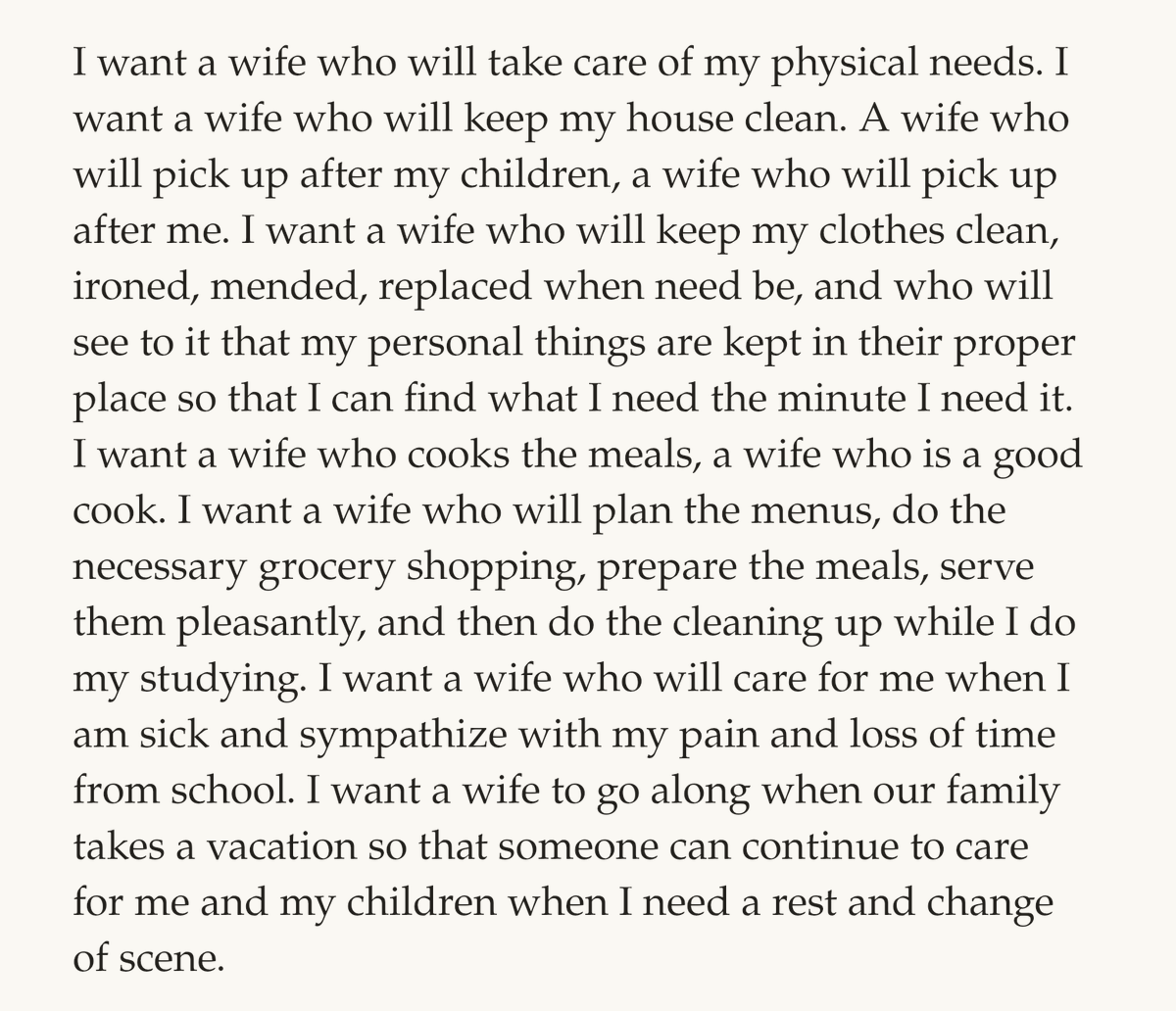
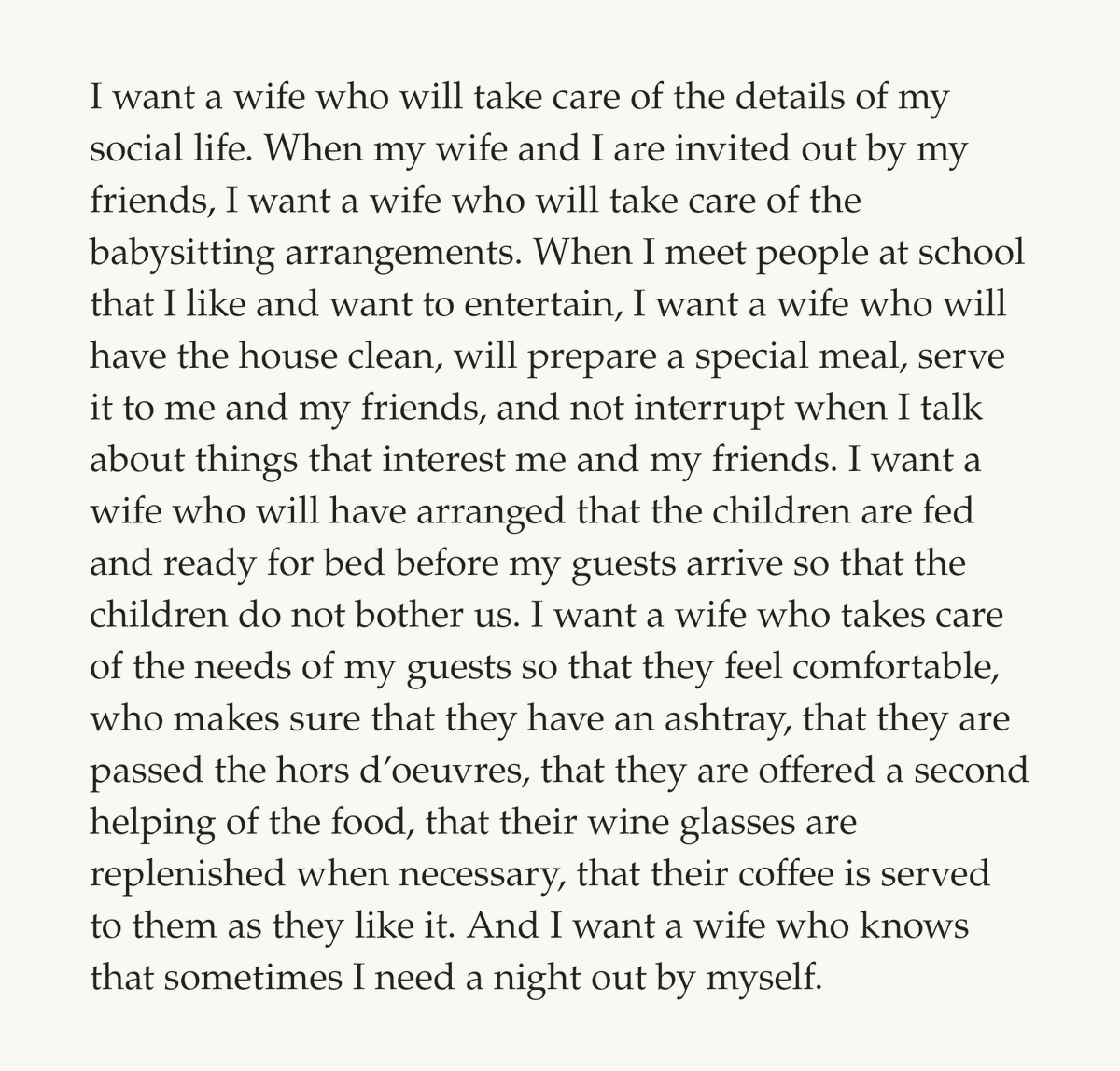
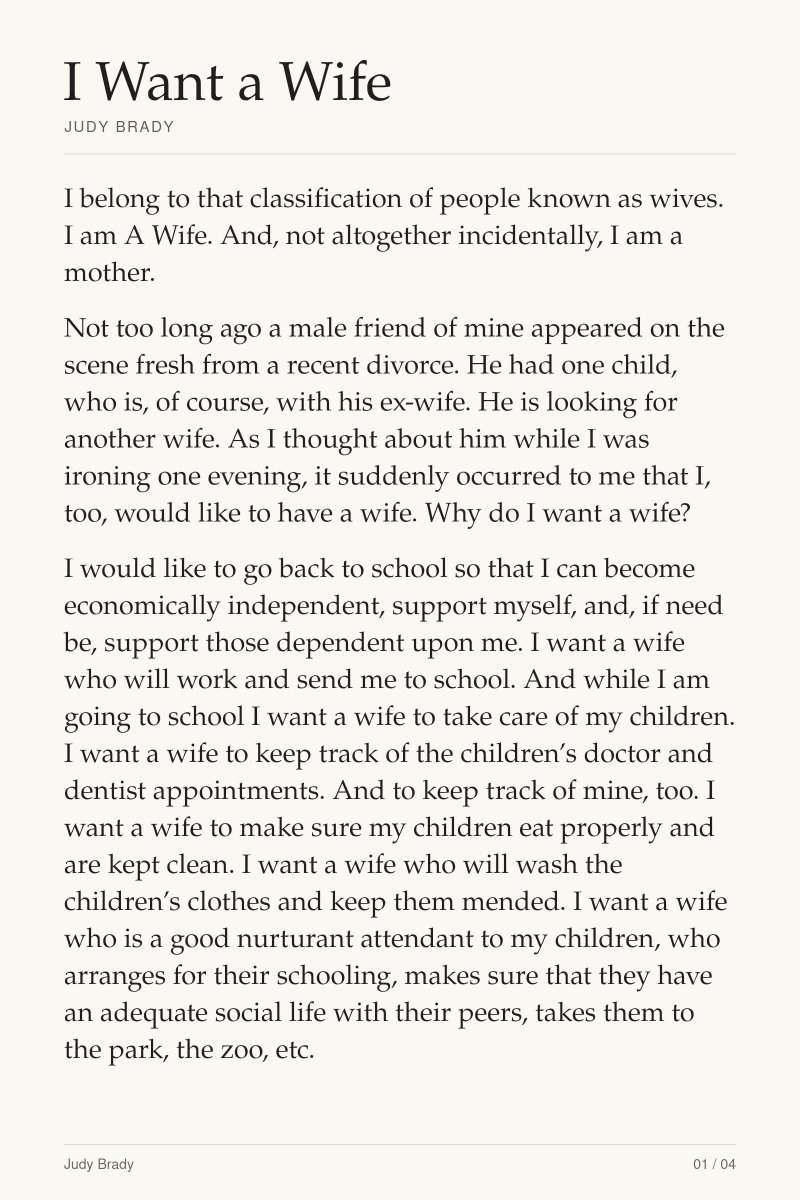
there’s this vintage short essay 'i want a wife' by judy brady, a tired 1970's housewife who asks for a wife of her own to offload tedious tasks to
and it is also inadvertently one of the best product roadmaps i've seen for personal ai assistants/ home robotics