1/ We work closely with the @NimbleNavis team and are excited by the upcoming launch of HourGlass -- a convertible bond market for web3. HourGlass is a Buttonwood ecosystem product that gives DAOs an additional way to raise capital.
20/
In our next threads we will explore:
• the dangers of margin lending
• why double-token debt is non-callable • how double-token debts can link together large pools of creditors & debtors in a permissionless environment
19/
As we can see, almost all of DeFi today is single-token debt, since debtors are still bound by idiosyncratic vaults and borrowing positions.
Remember, to tokenize means to make something both transferable AND fungible.
1/ ButtonZero Part 1: Zero-token, single-token, double-token debt
Implosions of #Celsius & #3AC make it clear that web3 needs alternatives to margin leverage.
ButtonZero’s approach involves what we call double-token debt. Let us explain using the history of debt innovation🧵:
1/ Coming July 1: ButtonZero
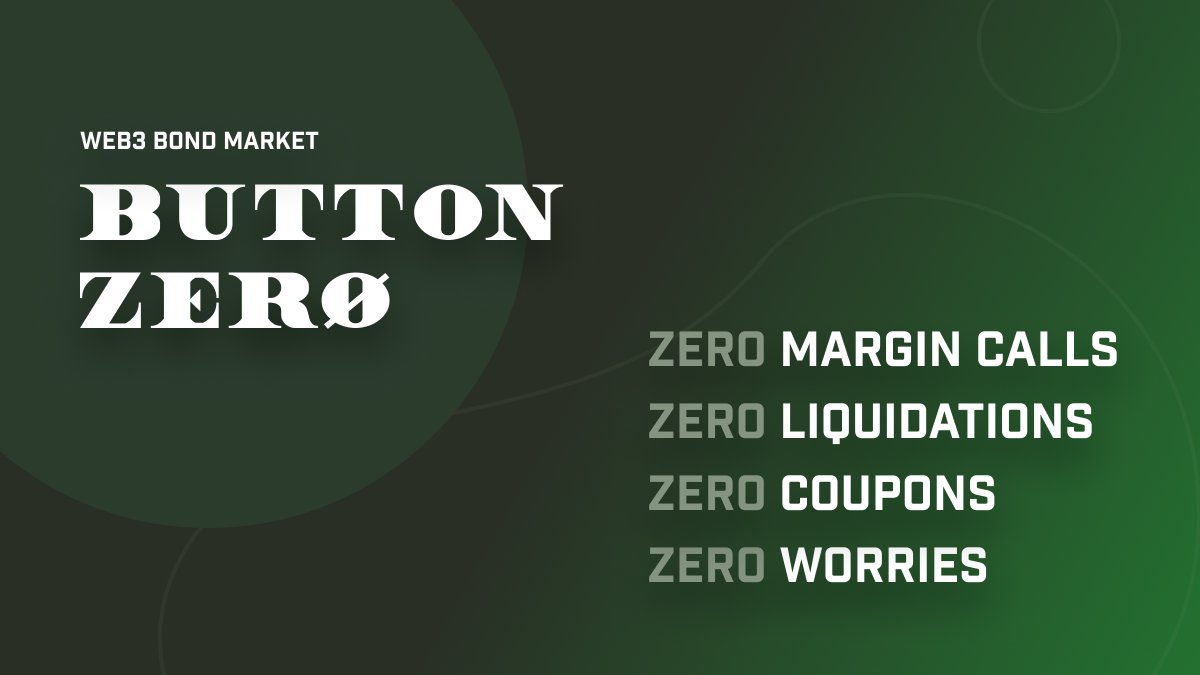
Looking for leverage without liquidation risk? Our web3 bond market will be live on Ethereum next week!
Unlike everything else in DeFi, ButtonZero creates non-callable debt meaning:
Zero Margin Calls
-Zero Liquidations
-Zero Coupons
-Zero Worries
He tells us his biggest regret is not being open-minded enough to buy SHIB.
And that he read a lot of Nietzsche as a kid.
We're unsure if he's an All-Might fan--sorry to my boys over at @NimbleNavis
Thrilled to share that Kevin Yi has joined us to build UX and design. He was researching non-callable debt, one thing led to another, and he joined the team in May.
Give him a follow! He's at @yissey_eth (warning: lots of waifu content)
cc: @ButtonDeFi@mrinconcruz
1/3
REMINDER: Today is the day!
At 1:30 PM PT, the first ever Stabilizing Conversations episode will feature our beloved Manny (@mrinconcruz), Publius (@isthispublius) and the special host Asfi (@WagmiLabsInk).
Q: How does the borrowing process work?
A: Borrowers can initiate a loan by tranching their collateral, and then selling their safe tranches (A and/or B tranche tokens) to lenders for cash.
1/ The best in-game ecosystems that will succeed in the future will focus on ensuring that in-game assets have real-world value.
The best way to achieve interoperability in this sense is by integrating #communityeconomics and #blockchain
Excited to announce that @m__fisher is joining the PRL team!
We would have announced this on Friday, his official start date, but people tend to get confused on April Fool’s day.
Welcome aboard to the future of France, ser
Today (1st of April) is the maturity date of our first cycle! (our alpha phase)
Even though there was a negative supply movement on AMPL since the bond configuration date, A-tranche token holders were able to gain more than %20 interest rate on 3 months! Congrats everyone! 🥳
Any central bank digital currency that is not open, permissionless, and private – like cash – is simply a surveillance tool. I am proud to have @SenTedCruz lead the Senate companion of my CBDC legislation. 👇
Q: How does the lending process work?
A: Lenders deposit USDT into the system in return for A or B-tranche tokens. Since these tranche tokens trade at a discount, the lender can expect to earn fixed-rate interest on their deposited capital.
Q: What are A, B, and Z-tranche tokens?
A: In a 20/30/50 bond:
A-tranche represents the safest 20%,
B-tranche represents the middle 30%,
Z-tranche represents the top 50% of the collaterals value.
The user can now sell some of these tranches to change their risk profile.