To koniec przeglądarki Arc 😢 🤬
Twórcy Arc Browser ogłosili, że 22 grudnia zostaje wycofany - nie będzie działał po tej dacie. Firma rozwija nową przeglądarkę Dia, gdzie zaleca migrację. Spoiler alert - jest znacznie uboższa i jak dla mnie po prostu dużo gorsza.
Na X ludzie wzywają The Browser Company do wypuszczenia jej na open source, ale szanse praktycznie zerowe (zostali jakiś czas temu przejęci przez Atlassian).
Arc ma m. in.:
- pionowe karty i spaces - to akurat już wdrożył nawet Chrome 😅
- osobne przestrzenie na foldery (z zagnieżdżaniem folderów!) z zakładkami
- osobne profile (osobne logowania, cookies, rozszerzenia), które nie muszą być sztywno powiązane z przestrzeniami
i to wszystko w JEDNYM oknie
- no i stoi na Chromium - bez niego ciężary z rozszerzeniami
Testuję alternatywy:
▶ Zen - najczęściej polecany na X, open source i najlepszy pod kątem prywatności. Tyle że działa na silniku Gecko (Firefox), więc przez rozszerzenia odpada
▶ Dia - import z Arca out of the box. Ale w profilach nie ma osobnych spaces, a foldery po imporcie się spłaszczają, także na dzień dobry dostałem w głównym space kilkadziesiąt folderów bez możliwości ich schowania 😭
▶ Brave, Chrome, Edge, Vivaldi, Opera - działają na zasadzie „profil = osobne okno” albo mają workspace’y, które współdzielą sesje. Tego, co miał Arc, czyli space’a na osobnym profilu w jednym oknie, praktycznie nie ma.
▶ Phi Browser: powiedzmy, że najbliżej Arca ze wszystkiego, co testowałem. Chromium, każdy Space na osobnym profilu, reguły URL jak Air Traffic Control. Tylko, że zespół i zarząd mocno powiązani z Chinami, a amerykański adres to wynajęta skrzynka w punkcie PostNet. No mam wątpliwości.
Także wciąż szukam. Jak korzystasz z Arca, napisz, na co się przesiądziesz...
*moja nadzieja - że aktualnie reverse-engineering i puszczenie w open-source odpowiednika Arca przez jakiś kumaty zespół jest dużo bardziej możliwe, niż jeszcze 2 lata temu
Jensen closed his GTC Berlin 2026 keynote with this Hermes Agent demo as the finale.
He introduced it by saying the way to build an agent is to ask an agent to build it for you, so he installed and set up a customized Hermes in one prompt.
Then he used Hermes, running on @nvidia RTX Spark, to create a simulated training environment for the @huggingface Microduck. Hermes planned an obstacle course with Nemotron and had GPT-6 Astra build it using FreeCAD, Omniverse libraries, Blender, Newton, and Isaac Lab. Hermes trained thousands of simulated ducks on that course until the validated policy was ready to run on the real robot in the physical world.
At Nous, we believe open source is a practical tool as much as a philosophical ideal. It gives users the ability to build powerful, complex workflows chaining numerous local+cloud models, devices, and tools themselves instead of waiting for a company to enable them.
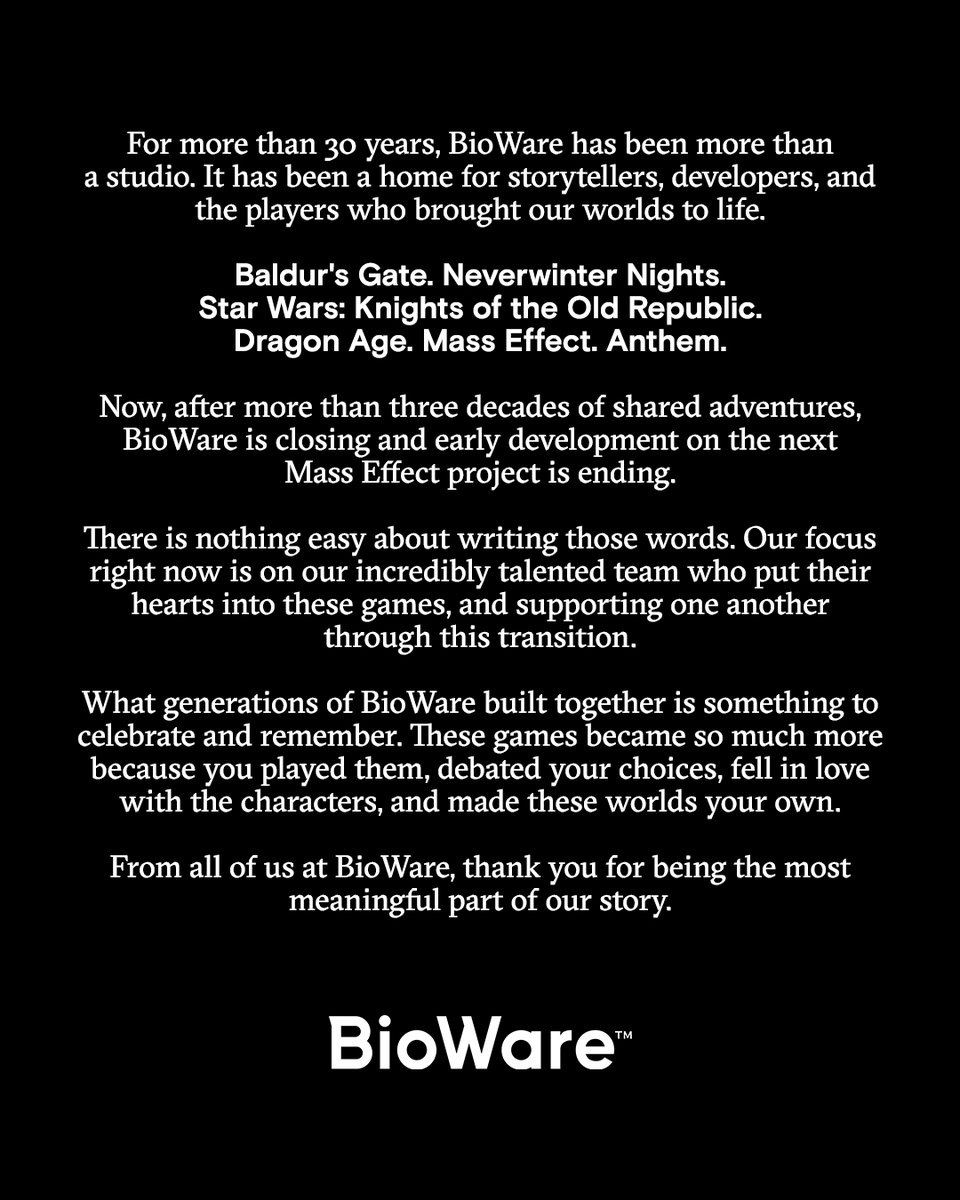
A purported BioWare developer has leaked a trailer for the cancelled ME 5 on Reddit.
The footage, reportedly titled "MASS EFFECT UNIVERSE," appears to suggest the project was further along in development.
Its authenticity remains unverified.
#MassEffect
We've decided to sunset Arc on December 22, 2026.
That's not an easy sentence to write. We spent years building Arc and celebrating each and every release along the way: we have so much pride and love for what we made alongside the Arc community.
Our priority is to deliver best-in-class security for our members. Keeping a browser secure takes constant, dedicated work that is only increasing in the age of AI. Dia was built from the ground up to meet today’s security standards, so that's where our engineering and security teams will focus moving forward.
We've worked to make switching to @diabrowser as easy as possible for Arc members. Here's how:
· Your passwords, bookmarks, extensions and history come over to Dia seamlessly.
· Spaces, Folders, and Tab Groups are in Dia and import over with your data intact.
· Dia now surpasses Arc benchmarks in stability, speed, and security.
· The browser features you use in Arc are free in Dia, and the AI is optional.
Thank you for using Arc, for pushing us to make it better, and for building alongside us. The team that made Arc is the same team behind Dia, and some of our most ambitious work is just ahead. We'd love for you to be there with us when it lands.
<rant on>Chłop jednak zagrał w 199 meczach Championship, 63 Premier League i 11 Ligi Mistrzów. 4 mistrzostwa Anglii, wygrana Liga Mistrzów - i to nie tylko z perspektywy ławki. Trochę szkoda opisywać go przez pryzmat wpiszczonego gola w towarzyskim meczu - jakkolwiek śmieszny by on nie był 😀<rant off>
A poza tym to super przykład, oby takich więcej.
Super przykład. No i teraz jak ten cały ej aj jest w stanie rozwiązać x problemów w skali roku i przyspieszyć x procesów, to można się bardziej skupić na tym, co najtrudniejsze, czyli na biznesie 😀
Natomiast to, co widzę ze swojej perspektywy, to wiele osób potrzebuje czasu, żeby mentalnie inaczej podejść do pracy. Rozwiązywanie podobnych, powtarzalnych problemów po czasie staje się wygodne, a tu nagle pojawia się wiele czasu na proaktywne / koncepcyjne działanie.
AI Futbolu: S1E1
Zapraszam na nowatorski format "cztery czatboty AI siedzą w studio i gadają o piłce".
Dziś na tapecie tematy o kadrze: Szwecja, Rumunia, przyszłość Urbana.
Jeśli jakaś telewizja sportowa jest zainteresowana oszczędnościami na wynagrodzeniach dla "ekspertów"...
Wyciek danych z Fakturowni
Wczoraj wieczorem pojawił się komunikat o włamaniu do Fakturowni, który miał miejsce przedwczoraj (28.09). Także dzisiejszy słoneczny poranek spędzam na wysyłaniu informacji i procedur klientom, rotowaniu tokenów, haseł użytkowników i weryfikacji numerów kont.
Masz Fakturownię?
Koniecznie zapoznaj się z info nt. tego,
- jakie dane wyciekły,
- co teraz trzeba zrobić,
- co może się dziać i na co zwracać szczególną uwagę:
https://t.co/Qu6S8nxbjH
https://t.co/e9vpZ4sapX
https://t.co/ZpzDjkh5j3
Nie masz Fakturowni?
I tak zapoznaj się z tymi informacjami: https://t.co/Qu6S8nxbjH. Z Fakturowni korzysta kilkaset tysięcy firm (w tym biur księgowych), w związku z czym i Ty/Twoja firma możecie być narażeni na próby oszustw.
@sadek No ale swoje przeżyli, już im tego i tak nikt im nie zabierze. Ja tam bym oglądał nawet transmisję z imprezy w ogródku Kloppa, o której wspominał ostatnio 😅 Jakoś jego mi w tym najbardziej szkoda.
Ależ comeback modeli anthropica, kto by się spodziewał - na pewno nie ja 😅 Tandem Opus + Sonnet 5.5 działa bardzo obiecująco.
Czekam na:
- nowe Haiku 5.5, które rzuci rękawicę Lunie w kategorii "'mały, ale wariat"
- jutrzejsze openai devday - może znowu przechylą szalę (niestety wątpię)
The constant decel messaging in Europe is insufferable as an adult, but its effect on kids is worse. As a parent, it's your obligation to counterprogram this nonsense. Show them robots, rockets, and wonders of AI. Show them cathedrals and moon landings. Instill hope in progress.