Le chemin est clair pour la France :
1- Rien ne sera fait d’ici à l’élection, on va assister à la course à la saucisse pendant 7 mois avec des promesses délirantes.
2- Probable accident de crédit à la suite des résultats de celle-ci ou après les législatives anticipées avec des taux > 6%. Inévitable sans majorité parlementaire.
3- Une demande d’aide à la BCE pour calmer la surchauffe des taux via les mécanismes dont elle dispose en contrepartie d’une cure d’austérité qui fera couiner dans les chaumières (retraite et fonction publique passeront à la casserole en premier, le reste suivra).
4- Une décennie à ramer, ponctué de bordel partout, avant d’espérer un retour à la normale et au calme. Soit à peu près le temps qu’on mit les Italiens, Portugais et Espagnols qui sont passés par là avant nous.
C’est le scénario qui se dessine. Et c’est grave. Qu’on refuse d’anticiper cela est absolument révoltant.
The strongest section of Kemi Badenoch's speech so far:
"To those who say “unite the right”... we are not uniting with THAT. I don’t want to live in a country run by people who threaten journalists, call veterans traitors and debate whether my mixed-race children are English.
"I don’t want to explain to my son, when we’re watching our brilliant England team play football, that some people don’t think our black players are English.
"I remember back in the day when Ian Wright and John Barnes were playing - nobody was questioning whether they were English. We certainly didn’t have sitting MPs questioning whether they were English.
"We must not let these people take us backwards. That is not the country we are. I don’t know whether you’ve noticed, but I am black. I am British. I’m proud of my country, I’m proud of our history."
I love this framing ... I wish I'd thought of it, even if I think I would have chickened out on putting this way, even if it had occurred to me. IOW:
Task-specific agents are like husbands: They do what you ask around the house *if* you ask, and they'll get stuff done only when you make a tidy and legible list for them.
The next generation of agents need to be more like wives: Ingest user's entire professional and personal life and do all the essential invisible labor, including thinking of ways to help that weren't explicitly requested
Silicon Valley keeps building me a husband when what I really want is a wife lol
I don't want an agent that only does one-off, random tasks that are nice but not life-changing: booking flights, making dinner reservations, or buying tickets
I want an AI wife who knows what’s on the family calendar, remembers there’s a birthday party Saturday and we haven’t bought a gift then sends me options, realizes we’re almost out of diapers and buys them, knows which bills are coming up, remembers someone needs a dentist appointment and books it, figures out what the hell we’re eating all week and what we need from the grocery store, and generally keeps track of the 47 things that need to happen before anyone else even realizes they need to happen.
So, who's building me an AI wife that carries the mental load instead of an AI husband that waits for me to give it a chore??
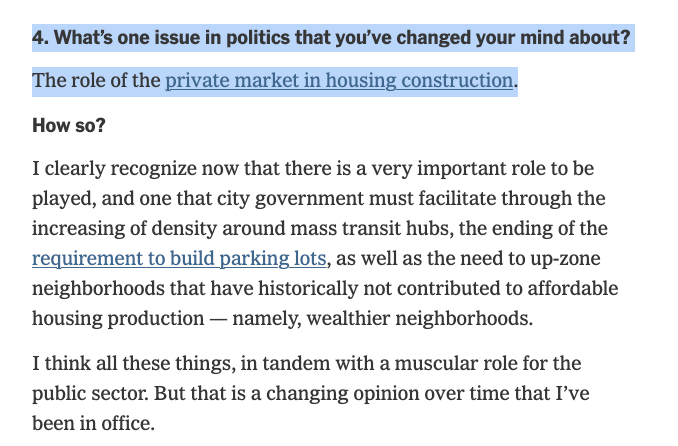
The New York TImes: What’s one issue in politics that you’ve changed your mind about?
Zohran Mamdani: The role of the private market in housing construction.
Parfois qq1 rappelle que tous nos débats tournent autour d’un indicateur, 5% du PIB, qui n’a aucun sens.
Si l’on s’en tient au budget de l’Etat (hors Sécu et Coll locales) c’est 460 Mrds de dépenses pour 325 de recettes. Un trou de 135 Mrds!
Qui peut croire que c’est soutenable ?
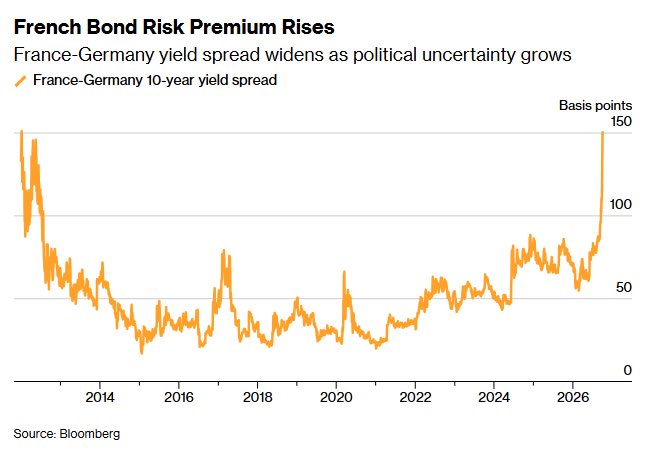
The pitiful level of public debate in France about the debt situation next to the scale of the bond-market attack on France last week is just staggering
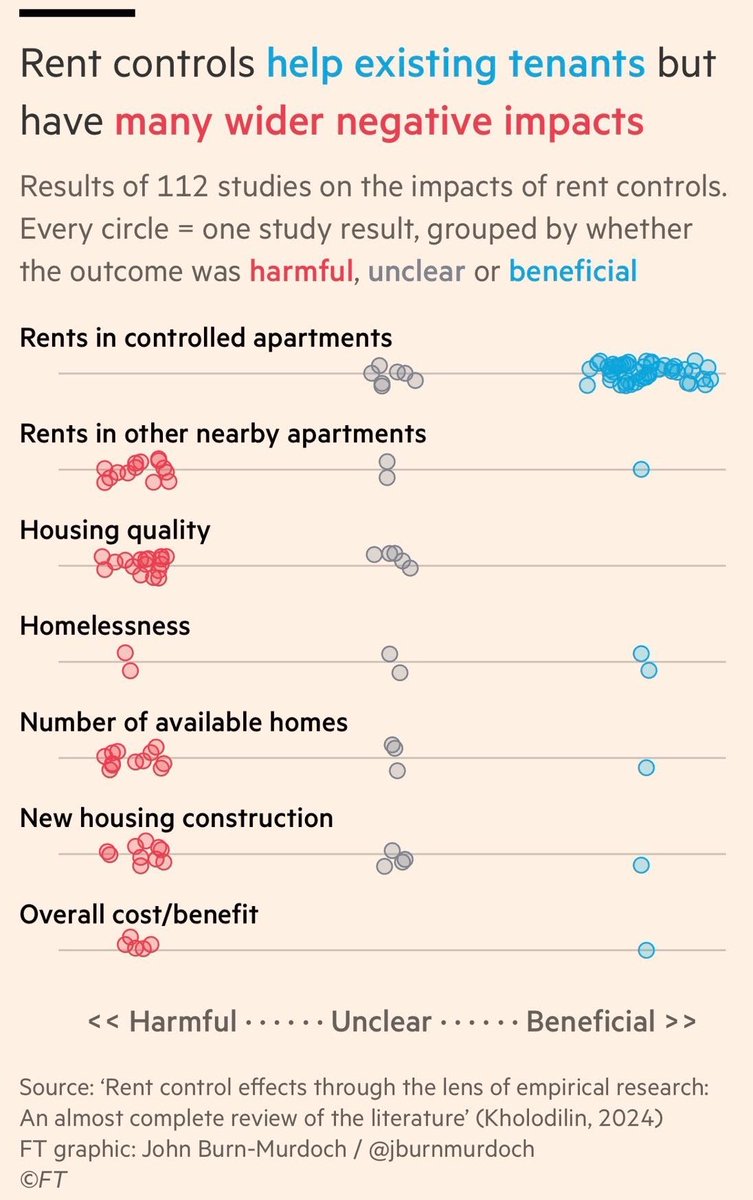
What’s the evidence on rent control?
I charted the findings from 112 studies:
Great for rent-controlled tenants ✅
But:
Pushes up rents for other people ❌
Pushes down new housing construction ❌
Pushes down building quality ❌
Me escribe un amigo sobre el gráfico del @ft describiendo el resultado de 112 estudios sobre las leyes de control de alquileres, , apuntando al impacto de las leyes de control de alquileres sobre la movilidad social:
"Los de rojo son los chavales de mi pueblo que tienen que quedarse allí porque en Madrid no se construyen casas y en las que hay se tiene que quedar Maricarmen. No entiendo cómo esto puede ser progresista."
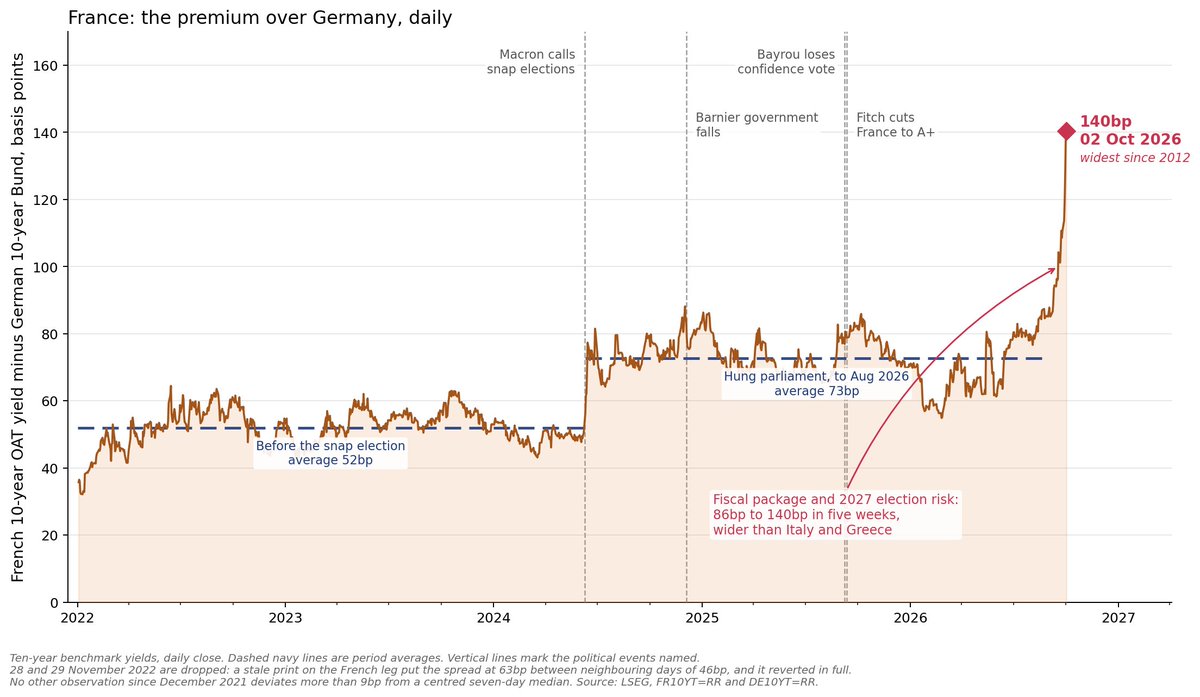
Why France, why now? Over the last couple of years, the French political class has been signaling to the bond market that its pensioners/boomers are the de facto senior claimants on the French Treasury's revenue. And that's not what bond investors wanted to hear, especially now that they're being asked to absorb a much larger share of issuance than a couple of years ago.
https://t.co/6xMTlWWxt9
Sure, saving everyone aboard Flight FZ1073 was nice. But Mehdi Hasan getting absolutely pulverized by the internet in response is still far and away the best part of this whole thing
Nous y sommes. La fête qui dure depuis 50 ans est finie. Dans 6 mois, nos débats sur la retraite à 62 ans ou les franchises sur les médicaments seront préhistoriques. Après des décennies de déni, la France est en train de prendre le mur. La réalité s’impose toujours.
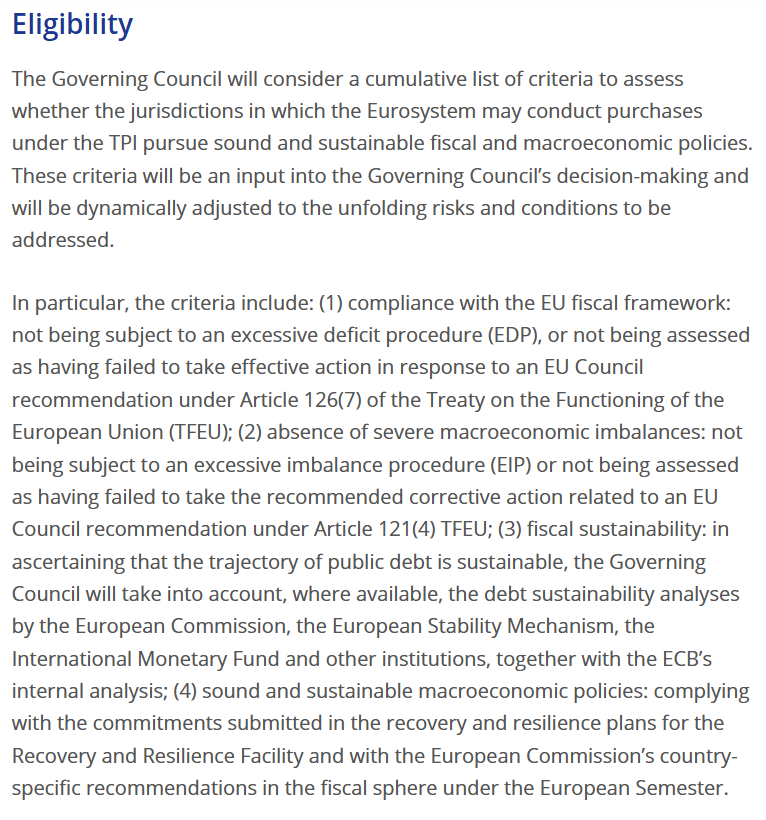
Le spread has reached today 150 basis points. The question on everyone's mind is: can the ECB intervene? And if so, can it activate TPI? My personal view is that it cannot. This question and the situation we have reached was the central question motivating "Crisis Cycle" , my Princeton University Press book, with @masuch_klaus and @JohnHCochrane.
The purpose of TPI is to be used "in jurisdictions experiencing a deterioration in financing conditions not warranted by country-specific fundamentals." The French problem is a deterioration in country-specific fundamentals: 5.4% deficit in 2026, debt increasing towards 122%, the undoing of the pension reform.
The ECB's text says TPI purchases end when tensions "are due to country fundamentals." So you cannot start when you are in the ending conditions.
Also, the 3rd test of TPI says: is the debt trajectory sustainable? Lagarde has said (see Klaus' tweet below) it is "not on path to be brought back under control". I think Lagarde is answering clearly the question on the 3rd test.
On paper, France passes two tests ("Compliance with EU fiscal framework? "The Commission said in June yes; And "severe macro imbalances" as given by an open excessive imbalance procedure, again ok on paper).
If France needs the ECB, there is a route: an ESM program, like the ones during the Euro crisis, requiring reforms (basically getting the pensions in order will suffice), plus the OMT which allow the ECB to act when a country is subject to a program.
If the ECB calls this current situation a liquidity problem, we will have an open route to monetary bailouts.
Link to the TPI press release (the only existing public document): https://t.co/NCAD1SBtch
A lot of intellectual puzzles disappear if you model all 'endowments' – reliable incomes or wealth or property that people receive – as being possessions or rights in the eyes of the public.
There is a tendency to see only classic common law property rights as actual, genuine property. In a sense, this is true. But I think to reify this distinction too much, we are applying our own moral distinctions to the situation artificially, in a way that doesn't predict people's behaviour.
I think it's easier to understand people's behaviour if we see quite a few more things as morally like 'property' in the eyes of those affected: government payments – disability benefits, pensions, housing benefits, in-kind benefits like social housing, and valuable states of affairs that people have a stake in and care a lot about and have historically managed to keep fairly stable, like the character of their neighbourhood.
All that's really going on here is the endowment effect. In general, people prefer to hold onto something versus getting a new thing of an equal value.
My contention is that extent of the experienced endowment effect is largely driven by different dimensions of social trust. For example, developing countries find it very difficult to expropriate property in service of public goods, and they do it very seldom. The most developed countries can take property easily. (Compare building a metro in Delhi versus building it in France: in France the promoters will demolish freely; in Delhi they will build it over roads and rights of way they already own.)
Drawing this out, an implication of my contention is that the paradigm feature of state & social development is being able to change endowments. The more people a government can, with public consent, make worse off, in service of a social end, the more developed it is.
This is why I say that the recent inability of the Labour government to justify either raising taxes (making taxpayers worse off) or cutting benefits (making recipients worse off) in service of the nation's wellbeing (producing public goods), is an indicator of Britain's falling development level. Same for the US. https://t.co/1O4OF37q4Z
Just so you understand the magnitude of the selloff today:
🇺🇸 US 10yr just broke 5.34%, 24 year high
🇫🇷 French 30yr broke 5.5%, 24 year high
🇬🇧 UK 30yr broke 6%, 28 year high
The government bond market is melting down and it's giving us strong warning signs.
Unbearably French story
Teacher arrested for violence against police officer in student protest. So far so good...
The catch is that she has been on sick leave... for several years!
And now she's brawling with the cops, miraculous stuff
https://t.co/nkdUEAE8Et