VP @friedkingroup. Former Principal @EY_Tax. Recovering Law Professor. Bylines: @nytimes, @wsj, @washingtonpost, and @slate | @Forbes Contributor. Views mine.
As Congress decides the form of tax reform, I wade into the trillion dollar question of retroactivity. My latest for the @washingtonpost. Perspective | Congress — and Biden — can raise taxes retroactively if they want to https://t.co/GfEOmwONWN
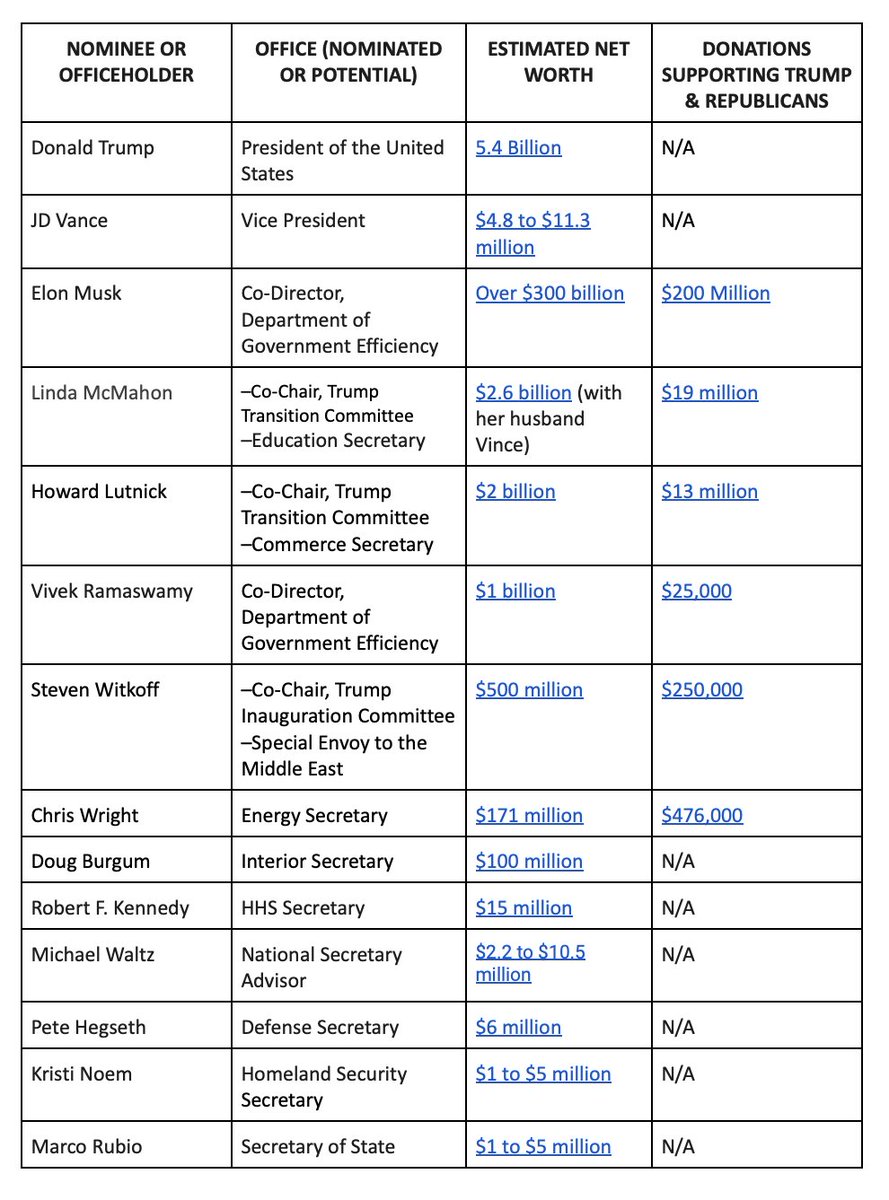
BREAKING: Trump's wealthy cabinet nominees and transition officials are worth a combined $313 BILLION.
That's 616x higher than the mean wealth of the typical American household.
This is how you build a system that only works for the wealthy and their corporations.
This is just lazy. Kamala raised $1b (billion with a B). This $175m is a drop in the bucket. I thought I was reading
@DougJBalloon Trump’s Victory Is a Major Win for @elonmusk Musk and Big-Money Politics - The New York Times https://t.co/hBOhF7feS4
New revenue estimates of President-elect Trump's universal baseline tariff. At 10%, it raises $2 trillion over 10 years; at 20%, it raises $3.3 trillion. That is well short offsetting the $4.2 trillion revenue loss of TCJA permanence. https://t.co/UYk49iEZnr
I’m not sure why editorial boards should be endorsing candidates.
If newspapers are supposed to report the news in an unbiased way, then they shouldn’t be endorsing candidates. Endorsing gives the appearance that the paper is reporting more favorably for one candidate.
My mom just told me she cancelled her subscription to The Washington Post. She reads every one of my stories. It was a heartbreaking call.
I understand why she did it, but I asked her to reconsider. To anyone who has cancelled or is thinking about cancelling, here’s what I said:
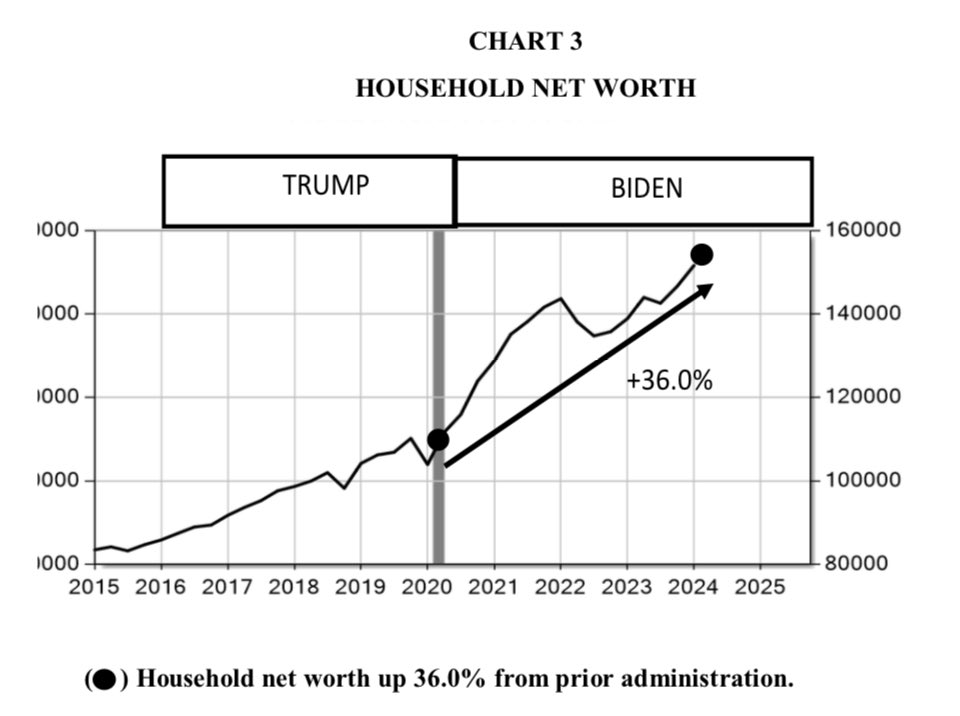
GARZARELLI CAPITAL: “.. Removing the effects of the pandemic from the data, the economy is far superior under the current administration than the preceding one. This can be seen in employment, consumer net worth, real #GDP per capita, and corporate profits.” 🇺🇸
@nicholas_bagley@WilliamBaude So, you look at many code sections that deal with taxation. Very few have a savings clause that says the Secretary (of the Treasury) shall by regulations prescribe. Does that mean that most of the regulations are not delegated? Or is there is a tacit understanding Treasury acts?
@DanielJHemel And this was a balance to not cripple corporations while ensuring earnings were not put to use to grow the company. And why have no companies paid more is really an enforcement question only the IRS could answer.
So how is this different than the accumulated earnings tax? There already exists a regime designed for this exact problem. Congress has decided unnecessarily retained earnings will be deemed to be subject to dividend taxation.
Lukewarm take on Moore: Progressive tax policy wonks should start thinking through the mechanics of a shareholder-level tax on the undistributed earnings of C corporations. 1/
@DanielJHemel I’m not commenting on any specific corporation. But when Congress thought about your specific issue, they enacted the accumulated earnings tax to prevent corporations from retaining earnings that were not “reasonable needs" of that particular corporation.
@ZLiscow@elonmusk I’m just pointing out that looking at a group of taxpayers who own publicly traded securities and trying to retrofit a tax code to deal with them at the expense of the general principles of taxation is not a sustainable tax policy.
The thing about these types of proposals is just the way they ignore like how this would actually work. Here are some major hurdles that were not addressed. What happens when the stock goes down? Have we essentially created mark to market taxation? 1/
This week's #EditorsPick is now outside of the paywall ⬇️
Perspective: Edward Fox of @UMichLaw and @ZLiscow of @YaleLawSch propose a tax on billionaires that would apply to borrowing against assets and explain how it relates to other #WealthTax proposals. https://t.co/BFZEarTQ5j
@ZLiscow@elonmusk This is way too complicated for Twitter. But I wanted to point out that these types of targets proposal to deal with what is perceived as a finite problem will ultimately create an unworkable tax code with tremendous second order economic impacts.
Not sure why @ZLiscow isn’t really saying that borrowing for rich people is just income. And if you repay it is just a loss. Because that rule makes more sense than trying to thread the needle on taxing @elonmusk because he borrows against Tesla stock.