*A thread of social psychology resources for the #Covid_19 crisis (mostly #OpenAccess)*
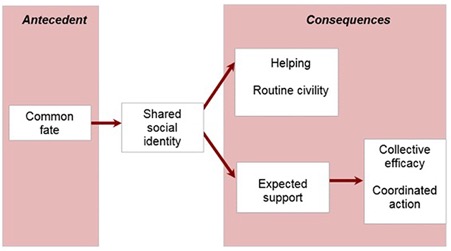
1/9 Facilitating Collective Psychosocial Resilience in the Public in Emergencies: Twelve Recommendations Based on the Social Identity Approach
https://t.co/98VAKD2F7r
"Psychology should move from selective allyship to empowered actions to tackle global crises"
My fantastic colleagues, Maja Kutlaca, Helena Radke, and I wanted to express our frustration with our psychology associations for their selective allyship:
https://t.co/eHN5vPXpnw
98 months since we lost 72 loved ones in the Grenfell fire.
As work starts next month to dismantle the Tower, we ask you to continue to keep Grenfell in your hearts and minds until some form of Justice comes 💚
Why do people riot? The reasons are not random according to @ProfJohnDrury who argues there are several psychological and behavioural factors that lead to riots in an article for @ConversationUK.
@SussexUni
Read more: https://t.co/ZZeeWmaW1q
🌟Evaluation of psychology-based training for improving interoperability in the emergency services: A comparison of online and in-person delivery methods.
📢Available open access!
🔗https://t.co/eWcFdgTItC
👥@ProfJohnDrury@DrRichardAmlot@alexanderhaslam & Dr Holly Carter
Prof. Boden was the toughest teacher I ever had. She also spent an inordinate amount of time talking through my essays and those of my fellow Masters student colleagues, 1-on-1. She cared. She demanded. She led by example. She will be sorely missed.
Examining the 2024 UK summer riots reveals complex dynamics beyond mere protests, involving multiple parties with diverse motives 🗺️📚
https://t.co/ss4hLaabsM
With @glastonbury festival happening this weekend, crowd psychologist @ProfJohnDrury explains that preparation is key to preventing bottlenecks and crowd crushes at festival events.
@guardian@SussexUni
Read more: https://t.co/WHwsgxhV2y