20 NotebookLM Prompts
To Learn Faster, Think Deeper & Research Smarter
01. Instant Summary
Turn long documents into digestible insights.
👉 Prompt:
“Summarize this source into the 10 most important ideas, key arguments, and practical takeaways in plain English.”
02. Beginner Explanation
Make complex topics easy to understand.
👉 Prompt:
“Explain this material as if I am a complete beginner. Use simple analogies, step-by-step logic, and avoid jargon.”
03. Deep Dive Breakdown
Understand the topic layer by layer.
👉 Prompt:
“Break this source into core concepts, hidden assumptions, expert-level nuances, and what most readers usually miss.”
04. Compare Sources
Spot agreements and contradictions.
👉 Prompt:
“Compare all uploaded sources. Show where they agree, where they conflict, and what unique insights each source contributes.”
05. Study Notes Builder
Create clean notes instantly.
👉 Prompt:
“Turn this content into structured study notes with headings, bullet points, definitions, and memorable examples.”
06. Flashcards Generator
Convert information into active recall.
👉 Prompt:
“Generate 25 high-quality flashcards from this material with question on front and concise answer on back.”
07. Quiz Me
Test your understanding.
👉 Prompt:
“Create a progressive quiz from easy to difficult based only on this source. Wait for my answers and grade me.”
08. Memory Hooks
Make information stick.
👉 Prompt:
“Create mnemonics, analogies, and memory anchors that help me retain the most important parts of this content.”
09. Timeline Extraction
Organize events chronologically.
👉 Prompt:
“Extract every important event, milestone, or development from these sources and arrange them into a clean timeline.”
10. Key Quotes Finder
Find the strongest supporting evidence.
👉 Prompt:
“Pull out the most impactful quotes, data points, and evidence from these sources that I can cite in writing or presentations.”
11. Research Gaps
See what’s missing.
👉 Prompt:
“Identify unanswered questions, weak arguments, missing evidence, and research gaps across these materials.”
12. Debate Both Sides
Sharpen critical thinking.
👉 Prompt:
“Present the strongest arguments for and against the main thesis of these sources as if two experts were debating.”
13. Turn Into Framework
Extract repeatable systems.
👉 Prompt:
“Convert the ideas in these sources into a practical framework, checklist, or repeatable system I can apply.”
14. Content Repurposing
Turn research into publishable content.
👉 Prompt:
“Use these sources to generate a LinkedIn post, article outline, tweet thread, and newsletter idea.”
15. Expert Interview Mode
Ask the notebook questions.
👉 Prompt:
“Act as the world’s top expert on these uploaded materials. I will ask questions answer only from the sources.”
16. Executive Briefing
Condense for busy decision making.
👉 Prompt:
“Create a 5-minute executive briefing with only the most strategic insights, implications, and action points.”
17. Lesson Plan Creator
Transform notes into a curriculum.
👉 Prompt:
“Turn this notebook into a 7-day learning plan with daily lessons, exercises, and checkpoints.”
18. Idea Generator
Use sources for new thinking.
👉 Prompt:
“Generate 20 original ideas, opportunities, or applications inspired by the uploaded materials.”
19. Simplify for Teaching
Prepare to explain to others.
👉 Prompt:
“Rewrite the key ideas from these sources into a teaching script that I can explain to someone in 5 minutes.”
20. Action Plan
Move from knowledge to execution.
👉 Prompt:
“Based on everything in these sources, create a practical action plan with first steps, priorities, and deadlines.”
❤️ Like
🔁 Retweet
🔖 Bookmark
Follow @sonalshukla3377 for more such posts
Dünyanın en büyük kütüphanesi, önde gelen üniversitelerden 300 terabaytlık araştırma makalesi, ders notu ve makale içeriyor. Bağlantı ilk yorumda.
https://t.co/aBwlytJUkg
PhD Skills for Claude Code:
@fcakyon (1300+ citations, 7 patents) shares his battle-tested PhD Skills for Claude Code.
github repo link in reply below:
Makalemi tezimi yazdım ama şablon dergiye uygun mu tezim üniversite formatına uygun mu devri bitti.
Makaleni yazdın, dergiye göndereceksin ama şablon uymuyor. Ya da tezini bitirdin, üniversitenin formatına uyarlaman gerekiyor. Saatlerce kenar boşluğu, font, başlık stili derdinden kurtulma vakti.
Claude for Word eklentisi tam bunu çözüyor. Word'ün kenar çubuğunda açılıyor, dergi şablonunu veriyorsun, makaleni ona uyarlıyor. Değişiklikleri tracked changes olarak gösteriyor, biçimlendirme bozulmuyor. Beğenmediğini reddediyorsun, beğendiğini kabul ediyorsun.
Nasıl mı yaptım? 👇
Introduction to systematic review and meta-analysis
Download the paper for free by clicking the link below.
Follow Silvi on LinkedIn for free resources on systematic reviews and meta-analysis.
https://t.co/qEvMcITY3f
"We are a speck of dust born from a trillion suns... and that is exactly what makes us free."
Experience the gentle fade of existence. By witnessing the birth of galaxies and the fragility of our own Pale Blue Dot, the "Wayfarer" finds peace in their insignificance. When you face the infinite, you realize you are not alone; you are part of the very light that formed you.
https://t.co/ScndVLNGMf
#asongfor #music #asongforradio #giftasong #giftidea #HansZimmerStyle #Interstellar #PaleBlueDot #SpaceAmbient #Minimalism #SpiritualMusic #Universe #Genesis #CosmicPerspective #CinematicScore
Systematic review asks: What works?
Scoping review asks: What exists?
Many researchers confuse the two!
---------------------------------------
Learn in more detail in this accredited course:
🔗 https://t.co/6FSSgwm0M3
----------------------------------------
Here's when a scoping review makes sense:
— You're exploring an emerging area
— You want to identify what research methods people are using
— You need to clarify how a concept is being defined
— You want to spot where the research gaps are
Stick with systematic reviews when:
— You have a focused question
— You need to inform policy or practice decisions
— You want to compare interventions
— Critical appraisal matters for your question
---
1/6
@AndrewBolis Notebooklm might be a very powerful ally if you use it well. You can use search engines like https://t.co/fGfeag9pOz to find relevant articles to supply to Notebooklm.
Notebooklm might be a very powerful ally if you use it well. You can use search engines like https://t.co/fGfeag9pOz to find relevant articles to supply to Notebooklm.
Most people upload a file and hope AI “figures it out.”
It won’t … unless you build a system around it.
NotebookLM uses Gemini’s large context window.
It turns scattered files into a connected, cited research brain.
Here’s the workflow power users follow:
[ 🔖 bookmark this post for later ]
✨ Gemini Flash
• Core engine powering NotebookLM.
• Fast, accurate synthesis across large sets of sources.
Sample prompt:
“Highlight the main key insights across these docs.”
✨ Gemini Pro (Plus Tier)
• Used for deeper reasoning and context handling.
• Best for complex briefs and enterprise workflows.
Sample prompt:
“Draft a polished briefing using these internal docs, with cited evidence.”
1️⃣ Add Sources
• Import PDFs, Docs, transcripts, and webpages.
• Structure, tables, and images stay intact.
2️⃣ Source-Based Chat
• Respond only using your uploaded content.
• Ideal for reviews, validation, and checks.
3️⃣ Structured Study Guides
• Generates summaries, timelines, and briefs.
• Helpful for organizing large material sets.
4️⃣ Visual Topic Mapping
• Creates visuals to show relationships between topics.
• Useful for comparing topics or themes.
5️⃣ Audio Overview
• Converts notebooks into spoken recaps.
• Great for reviewing long content on the go.
6️⃣ Video Summaries
• Creates short narrated videos with slides.
• Perfect for updates or training.
7️⃣ Deep Research
• Find credible references for your topic.
• Expands research with relevant material.
8️⃣ Structured Data Tables
• Extracts key data points into organized, sortable rows.
• Turns messy, unstructured info into clean, exportable data.
9️⃣ Collaborative Notebooks
• Share notebooks with teams or clients.
• Structure and citations stay intact.
Copy-Paste These Power Prompts:
► Summarize Content
“Create a 500-word thematic summary with citations.”
► Compare Sources
“Show key points across these documents and note conflicts.”
► Identify Decisions
“List main decisions and attach each one to its source.”
► Generate a Brief
“Assemble a brief that organizes the material into: Background → Core Points → Recommendations.”
► Create Script for Audio/Video
“Write a two-host script and test weak claims.”
Workflows You Can Build:
Research Review:
➟ Add papers into a notebook
➟ Produce a briefing from all sources
➟ Use chat for targeted questions
➟ Create audio for on-the-go review
Shared Knowledge Base:
➟ Add all project documents
➟ Build an onboarding study guide
➟ Share the notebook with your team
➟ Auto-update when new files are added
Content Analysis & Creation:
➟ Add competitor material
➟ Generate a comparison summary
➟ Build a mind map of themes
➟ Export slides for presentations
Build the system once and turn raw files into insights fast.
Save this guide and test it on your next deep-work task.
📌 Learn 30 free AI tools in 30 days: https://t.co/7MJCwAPtaQ
👉 Follow me @AndrewBolis for more and 🔄 Repost this to help others use AI
Claude Code for Academics
"A gentle introduction in how to use Claude Code for Academics."
presentation slides and github repo from Alessandro Spina
link in reply
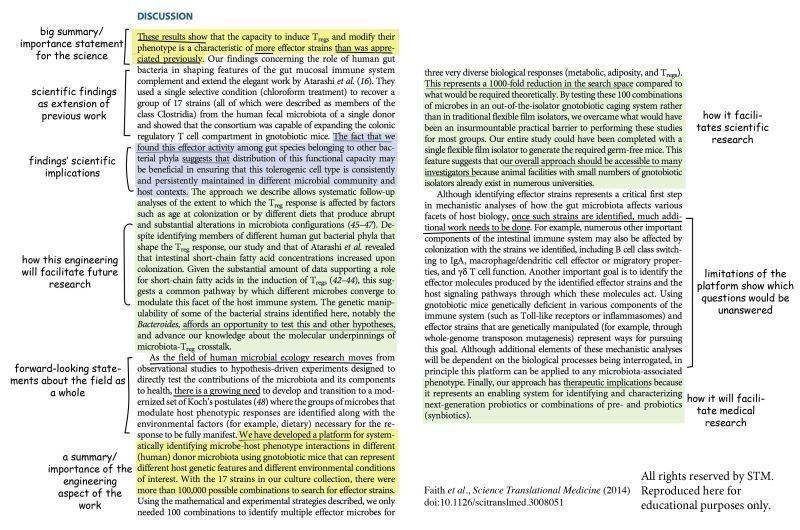
#1 critical writing section most students struggle with: Discussion
Follow this template (𝘸𝘪𝘵𝘩 𝘦𝘹𝘢𝘮𝘱𝘭𝘦𝘴) to make your life easier
— Start with a Big Summary/ Importance Statement:
"𝘖𝘶𝘳 𝘳𝘦𝘴𝘶𝘭𝘵𝘴 𝘥𝘦𝘮𝘰𝘯𝘴𝘵𝘳𝘢𝘵𝘦 𝘢 𝘯𝘰𝘷𝘦𝘭 𝘮𝘦𝘤𝘩𝘢𝘯𝘪𝘴𝘮 𝘣𝘺 𝘸𝘩𝘪𝘤𝘩 𝘟 𝘪𝘯𝘧𝘭𝘶𝘦𝘯𝘤𝘦𝘴 𝘠, 𝘰𝘧𝘧𝘦𝘳𝘪𝘯𝘨 𝘯𝘦𝘸 𝘪𝘯𝘴𝘪𝘨𝘩𝘵𝘴 𝘪𝘯𝘵𝘰 𝘡."
— Link Findings to Previous Work:
"𝘜𝘯𝘭𝘪𝘬𝘦 𝘱𝘳𝘦𝘷𝘪𝘰𝘶𝘴 𝘴𝘵𝘶𝘥𝘪𝘦𝘴 𝘵𝘩𝘢𝘵 𝘴𝘶𝘨𝘨𝘦𝘴𝘵𝘦𝘥 𝘈, 𝘰𝘶𝘳 𝘧𝘪𝘯𝘥𝘪𝘯𝘨𝘴 𝘪𝘯𝘥𝘪𝘤𝘢𝘵𝘦 𝘉, 𝘩𝘪𝘨𝘩𝘭𝘪𝘨𝘩𝘵𝘪𝘯𝘨 𝘵𝘩𝘦 𝘳𝘰𝘭𝘦 𝘰𝘧 𝘊."
— Discuss the Scientific Implications:
"𝘛𝘩𝘦𝘴𝘦 𝘧𝘪𝘯𝘥𝘪𝘯𝘨𝘴 𝘴𝘶𝘨𝘨𝘦𝘴𝘵 𝘵𝘩𝘢𝘵 𝘮𝘢𝘪𝘯𝘵𝘢𝘪𝘯𝘪𝘯𝘨 𝘋 𝘤𝘰𝘶𝘭𝘥 𝘣𝘦 𝘤𝘳𝘶𝘤𝘪𝘢𝘭 𝘧𝘰𝘳 𝘌, 𝘱𝘳𝘰𝘷𝘪𝘥𝘪𝘯𝘨 𝘢 𝘯𝘦𝘸 𝘱𝘦𝘳𝘴𝘱𝘦𝘤𝘵𝘪𝘷𝘦 𝘰𝘯 𝘍."
Want to know how AI can help with your manuscript Discussion?
📌 check my pinned post!
-----------------------
Useful find? Pass it on!
🔄 𝐑𝐞𝐩𝐨𝐬𝐭
👋 I’m @RaziaAliani
Click my name + follow + 🔔
I post about AI in research & analysis
(& 𝘤𝘰𝘯𝘥𝘶𝘤𝘵 𝘵𝘳𝘢𝘪𝘯𝘪𝘯𝘨𝘴 ��𝘯 𝘵𝘩𝘦𝘮)
Want FREE tips on using AI in research?
↳ Join 16K+ researchers:
🔗 in bio
I found a way to read a research paper the way academics actually read them.
A friend of mine at Cambridge showed me her Claude workflow.
I thought she was just fast. Then I watched her pull apart a methodology section in twenty minutes that her seminar group had spent a week discussing without fully understanding.
Here's exactly what she did:
First: she didn't ask Claude to summarise the paper.
That's what everyone does. They paste in a paper and ask for a summary. They get a clean paragraph. They feel like they've read it. They move on.
That's not reading. That's skimming with extra steps.
She did something completely different.
She read the paper herself first. All of it. Without Claude.
Then she asked:
"Based on the methodology and results sections alone, what can and cannot be legitimately concluded from this study? Now read the abstract and tell me where the authors overreach."
She wasn't asking Claude to read the paper for her.
She was using it to test whether the paper was actually saying what it claimed to be saying.
The gap between those two things is where most students get lost. They read what the authors claim and treat it as what the authors found. An experienced academic never does that. She learned not to in twenty minutes.
But the next part is what I keep thinking about.
She asked:
"What did this study not measure that would have significantly strengthened or weakened the central claim? What is the authors' methodology quietly assuming without ever stating it?"
Most students read a methodology section to understand what the researchers did.
She read it to find what they didn't do and what they hoped nobody would notice.
Those are completely different acts of reading. One produces a student who can describe a study. The other produces a researcher who can evaluate one.
Her seminar group spent a week on the same paper and never reached that question.
Then she did something most students never think to do.
She tested the paper against itself.
"If I tried to replicate this study with a different population in a different context, what would most likely change about the results? What does that tell me about how far the authors' conclusions actually travel?"
Most published claims are presented as general. Most are actually specific.
That question finds the line between the two every time. Once you see it you cannot read a paper without looking for it. It changes what you take from every study you ever read after that.
Then she mapped the paper's place in the conversation.
She asked:
"What debate is this paper entering? Who wrote the work this paper is responding to and what would those authors say back? Where does this paper sit in the argument that was already happening before it was written?"
She stopped reading papers as standalone objects that day.
Every paper is a reply to something. Most students never find out what. She found out in five minutes and it changed the way the paper meant something entirely.
A paper you understand in isolation is information.
A paper you understand inside its conversation is knowledge.
Then she ran the final check.
Before closing the paper she asked:
"What is the single most important citation missing from this paper that every serious researcher in this field would consider essential? What conversation is this author not in that they should be?"
She found a foundational paper the authors had never cited.
Not because they were careless. Because they came from a slightly different tradition and had a blind spot they weren't aware of. That blind spot explained a gap in their argument she hadn't been able to name until that moment.
She walked into the seminar and named it.
Her supervisor stopped the discussion and asked her to explain how she'd found it.
She told him she'd asked the right questions of the paper instead of just reading it.
He told her that was exactly what twenty years in academia teaches you to do.
She'd been doing it for three weeks.
Here is the actual workflow. Five questions. In order.
Question one: what can and cannot be legitimately concluded from the methodology and results alone? Where does the abstract overreach?
Question two: what did this study not measure that would have changed what it found? What is the methodology quietly assuming it never defends?
Question three: if you replicated this with a different population or context, what changes? How far do the conclusions actually travel?
Question four: what debate is this paper entering? Who is it responding to and what would those people say back?
Question five: what is the most important paper missing from the bibliography? What conversation is this author not in?
Most students spend three years at university reading papers from the outside.
Those five questions put you on the inside in twenty minutes.
Claude didn't read the paper for her.
It taught her the questions that experienced academics ask automatically after years in a field.
She just learned them earlier.
The papers didn't change.
The questions did.
Most students finish a paper feeling like they've understood it.
She finished a paper knowing exactly what it proved, what it didn't prove, where it sat in the field, and what it was quietly hoping nobody would ask.
That is not a faster way to read.
It's a completely different thing to do with a paper.
And almost nobody teaches it directly.
Websites where learning is 100% free with certificate after completion includes;
https://t.co/pie8244VlW
https://t.co/6xZmTy57Fe
https://t.co/l9TdIhSOeE
https://t.co/6qujup4Mt0
https://t.co/z0VSuTeT55




![AndrewBolis's tweet photo. Most people upload a file and hope AI “figures it out.”
It won’t … unless you build a system around it.
NotebookLM uses Gemini’s large context window.
It turns scattered files into a connected, cited research brain.
Here’s the workflow power users follow:
[ 🔖 bookmark this post for later ]
✨ Gemini Flash
• Core engine powering NotebookLM.
• Fast, accurate synthesis across large sets of sources.
Sample prompt:
“Highlight the main key insights across these docs.”
✨ Gemini Pro (Plus Tier)
• Used for deeper reasoning and context handling.
• Best for complex briefs and enterprise workflows.
Sample prompt:
“Draft a polished briefing using these internal docs, with cited evidence.”
1️⃣ Add Sources
• Import PDFs, Docs, transcripts, and webpages.
• Structure, tables, and images stay intact.
2️⃣ Source-Based Chat
• Respond only using your uploaded content.
• Ideal for reviews, validation, and checks.
3️⃣ Structured Study Guides
• Generates summaries, timelines, and briefs.
• Helpful for organizing large material sets.
4️⃣ Visual Topic Mapping
• Creates visuals to show relationships between topics.
• Useful for comparing topics or themes.
5️⃣ Audio Overview
• Converts notebooks into spoken recaps.
• Great for reviewing long content on the go.
6️⃣ Video Summaries
• Creates short narrated videos with slides.
• Perfect for updates or training.
7️⃣ Deep Research
• Find credible references for your topic.
• Expands research with relevant material.
8️⃣ Structured Data Tables
• Extracts key data points into organized, sortable rows.
• Turns messy, unstructured info into clean, exportable data.
9️⃣ Collaborative Notebooks
• Share notebooks with teams or clients.
• Structure and citations stay intact.
Copy-Paste These Power Prompts:
► Summarize Content
“Create a 500-word thematic summary with citations.”
► Compare Sources
“Show key points across these documents and note conflicts.”
► Identify Decisions
“List main decisions and attach each one to its source.”
► Generate a Brief
“Assemble a brief that organizes the material into: Background → Core Points → Recommendations.”
► Create Script for Audio/Video
“Write a two-host script and test weak claims.”
Workflows You Can Build:
Research Review:
➟ Add papers into a notebook
➟ Produce a briefing from all sources
➟ Use chat for targeted questions
➟ Create audio for on-the-go review
Shared Knowledge Base:
➟ Add all project documents
➟ Build an onboarding study guide
➟ Share the notebook with your team
➟ Auto-update when new files are added
Content Analysis & Creation:
➟ Add competitor material
➟ Generate a comparison summary
➟ Build a mind map of themes
➟ Export slides for presentations
Build the system once and turn raw files into insights fast.
Save this guide and test it on your next deep-work task.
📌 Learn 30 free AI tools in 30 days: https://t.co/7MJCwAPtaQ
👉 Follow me @AndrewBolis for more and 🔄 Repost this to help others use AI](https://pbs.twimg.com/media/HELASV5aIAA3zcU.jpg)
![KirkDBorne's tweet photo. [Download 585-page PDF eBook]
Game Theory: https://t.co/8NySL3GFmu
—————
#GameTheory #Gamification #Mathematics #Statistics #Probability https://t.co/OgBrQ0EitZ](https://pbs.twimg.com/media/HEJXSntbkAAB_eK.jpg)