Despite Three Years of Tinubu's Food Emergency, Nigeria hungriest ranking index declined to among the worst nations globally.
In celebrating his supposed successful three years in office, President Bola Ahmed Tinubu listed some achievements in the agricultural sector, firstly, his declaration of emergency on food security in July 2023, followed by the acquisition of 2,000 tractors and 9,000 farming implements, stated as Nigeria's largest agricultural mechanisation programme.
Yet the outcome of this has been the opposite. Nigeria's hunger index has worsened significantly. Nigeria's hunger index ranking was 103rd out of 123 countries surveyed in 2022/2023, and this figure had since worsened to 115th out of 123 countries surveyed in 2025/2026. Consequently, Nigeria is now classified among the world's most hungry or food-insecure nations in the world, with the World Bank forecasting that 33 million Nigerians could experience severe hunger.
In fact, Nigeria has the highest number of hungry people in the world.
I have always maintained that Nigeria have no reason to be seen among the hungriest nations in the world when we have fast, uncultivated land in the north, which is our greatest asset today.
We must transparently invest in Agricultural production, which will guarantee food security, but create huge employment.
A new Nigeria is POssible. -PO
@PeterObi He was VERY CLEAR this time:
• Sanitize all governance system
• Block All Wastage
• Fight Insecurity to stand still
• Fix Education
• Healthcare & HDI
• Catalyze MSMEs
• Combat corruption
• Agriculture focused Consumption to Production.
HE DID WELL IN ALL IN ANAMBRA! 🔥
Peter Obi's Anambra tenure (2006-2014) saw him leave ~₦75bn in savings/investments ($156M foreign, local bonds), per his claims and bank records—verified by DMO as Nigeria's least indebted state. He avoided new loans, unlike many governors who amassed debts (e.g., Lagos left ₦192bn debt). Ranks top in frugality per awards and fiscal stability reports, though successor disputed cash amounts and noted minor pre-existing debt (~₦3bn domestic).
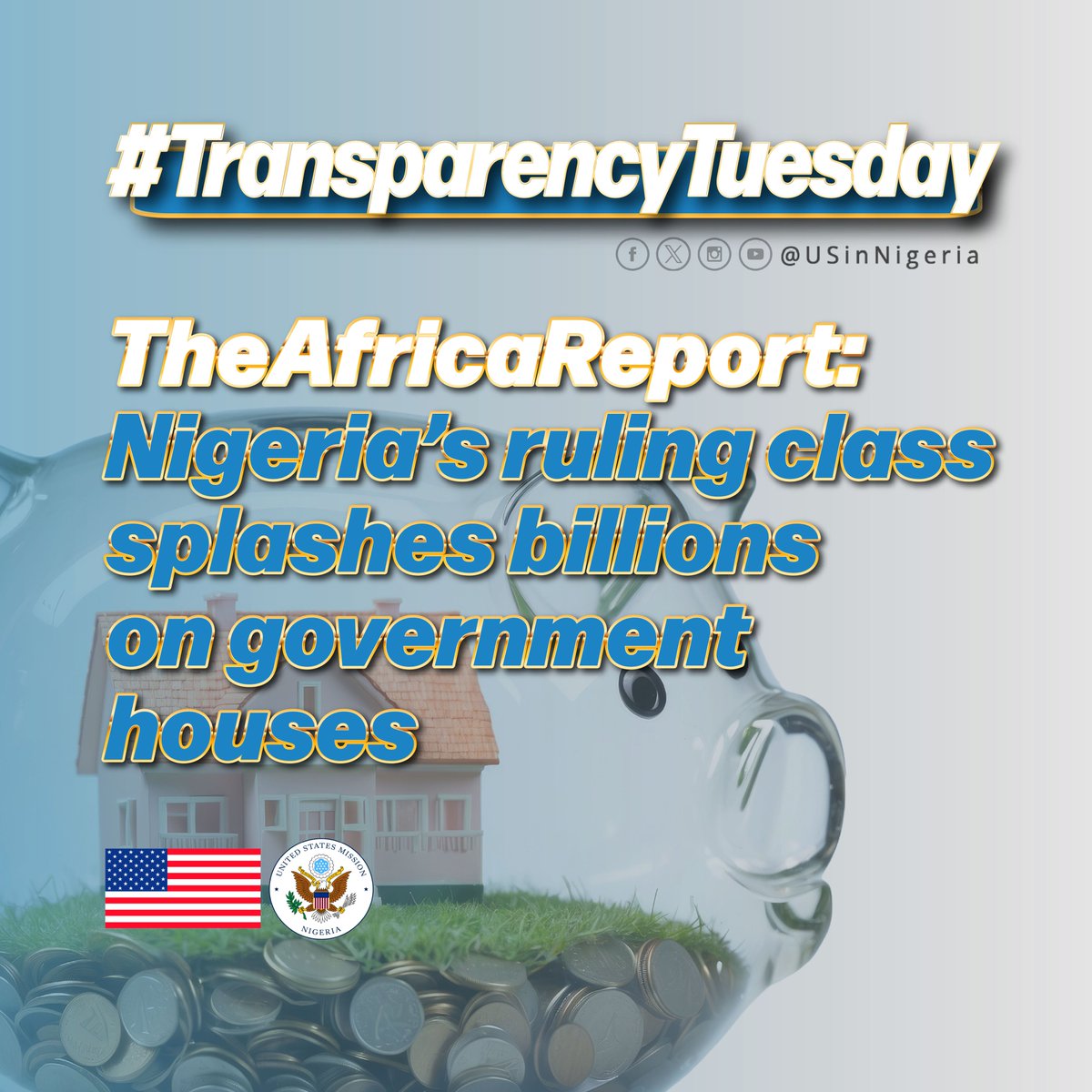
While Nigerians are urged to endure economic hardship "like labor pains," some governors are splurging billions on new government houses, @TheAfricaReport reveals » https://t.co/9qehFrvkVE
@BudgITng warns that "instead of funding schools, clinics, or agriculture, leaders prioritize buildings they barely use."
@cislacnigeria adds: "There is more money, little accountability, and no priority."
Such alleged lack of fiscal responsibility fuels inequality and erodes public trust.
#TransparencyTuesday