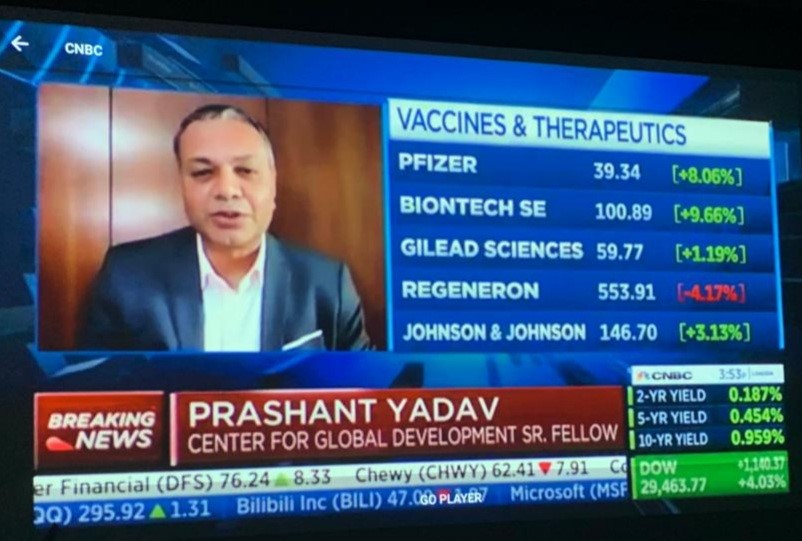
Pfizer/BioNTech's COVID-19 vaccine results are an encouraging development. Many more steps before ready to ship (e.g. establish manufacturing consistency). Logistics readiness is also much ⬆️ than before. My views @SquawkCNBC this morning. cc @TinglongDai
https://t.co/0HsV81Vv0D
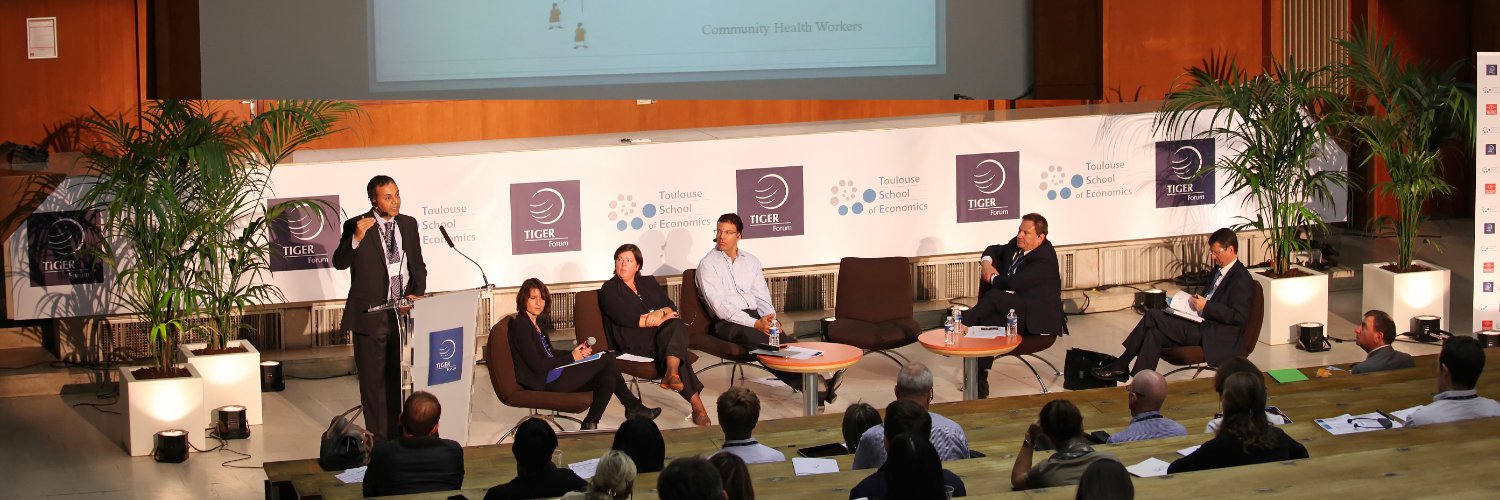
At #AfricaCEOForum in Kigali, I was excited to lead a discussion on how tech, entrepreneurship, capital, logistics, digital infrastructure, public-sector momentum, and private-sector interest are reshaping healthcare in Africa.
A big thank you to an exceptional panel:
Françoise LOMBARD — CEO, @Proparco
Mohammed Akoojee — CEO-Africa, @DP_World
Dr. Solomon Zewdu — CEO, The End Fund
Caitlin Burton — CEO- Africa, @zipline
Neel Andhee-Shah — President- Africa Cluster, @AstraZeneca
Kanwulia Okafor — Director-Industry Services, @GSMA@CFR_org
#ACF2026 #Africa #CEO #Healthcare #pharma #technology #logistics #partnerships #NTD
U.S. dependence on China for essential medicines is structural—and the United States faces a growing risk that Beijing will deliberately withhold essential pharmaceutical inputs as a tool of economic or political coercion, as China has done with rare-earth critical minerals, warns a new CFR report.
Nearly 700 medicines approved for use in the United States depend on at least one chemical produced solely in China, the nonprofit U.S. Pharmacopeia estimates.
The report outlines three major choke points in the U.S. pharmaceutical supply chain and provides a policy framework for addressing each: the reliance on China for raw materials and upstream supplies, the erosion of biopharmaceutical manufacturing and clinical trial capacity from the United States to China, and the emerging U.S. dependence on China for research and development of sensitive biotechnology.
“For its economic and national security, the United States must respond with a package of coordinated measures built around these three archetypes of supply chain dependence,” the report says.
"The question is not whether to act, but if the United States will manage to do so before a crisis makes the cost of decades of inaction unavoidable."
Read the report by experts @TomBollyky, @RushDoshi, @OliviaWKosloff, @profyadav, and Elena Every below: https://t.co/tlDTkrSVo0
🚨Thrilled to share our new @CFR_China report with CFR Global Health's @TomBollyky, @profyadav, @OliviaWKosloff, & Elena Every: "The Pharma Choke Point."
The US is dependent on Chinese production for essential medicines, creating a "rare earths" problem in this sector. Seven hundred medicines approved for use in the United States depend on at least one chemical produced solely in China.
For the last year, our study group of pharma and biotech specialists, China scholars, and industrial policy experts came together to:
1⃣ Use commercial data to map the dependencies
2⃣ Devise a typology of three unique "archetypes" of these dependencies
3⃣ Craft solutions to address these dependencies
A few key points follow below:
➡️China's Leverage is real — Beijing doesn't need a wartime crisis to exploit it. It can slow shipments, delay licenses, or reroute flows through "peacetime weaponization." That's the playbook it has already run on rare earths.
➡️Current dependence is structural — It's the product of decades of Chinese state investment and Western pursuit of the low-cost solution. China controls the raw/starting materials for 94% of US amoxicillin, 74% of heparin, and 70% of acetaminophen. It's dominating preclinical work in biotech. And diversifying downstream offers no real protection from upstream dependence.
➡️Archetype 1: Upstream Dependence — Roughly 700 medicines Americans depend on at least one chemical made only in China, including antibiotics, blood thinners, ER drugs. Solutions include:
- building a strategic reserve of critical medicines
- building "allied scale" to create diversified production
- mix various long-term supply and demand interventions to change economic viability for KSMs, APIs, and other upstream inputs (more in the report)
➡️Archetype 2: Competitive Displacement of U.S. Biomanufacturing and Clinical Trial Capacity — For innovative biologics—medicines made from living cells—such as monoclonal antibodies, the risk is not a single upstream choke point but competitive displacement across every stage of the value chain: discovery, clinical development, contract manufacturing, and market access. The U.S. is losing a critical capability: now, WuXi alone handles nearly half of US clients' development programs. China alone is more than half of all late-stage monoclonal antibody programs. Lock-in deepens at every stage. Solutions include:
- accelerating first-in-human clinical trials in the United States
- funding and incentivizing the adoption of advanced biologics manufacturing technologies (e.g., low-cost capital from the USG)
- building contract research alternatives in allied countries like South Korea
- bolstering the U.S. biomanufacturing workforce
- creating a system to secure artificial intelligence (AI)–ready biodata and digital chemistry, manufacturing, and controls.
➡️Archetype 3: Dependence on PRC Infrastructure — Here, the vulnerability is not disruption in the supply of an existing product, but Chinese control over the research-and-development (R&D) infrastructure underlying future pharmaceutical innovation. Growing reliance on China for DNA synthesis is just one example. Solutions include:
- improving DNA supply chain security
- enhancing transparency and disclosing provenance
- increasing federal investment in next-generation DNA synthesis technologies
- and bolstering allied cooperation on standard-setting and procurement to encourage the adoption of these technologies.
➡️Key Takeaway: China has both the tools and demonstrated willingness to weaponize U.S. pharmaceutical dependence: the structural conditions enabling it run through nearly every tier of the pharmaceutical supply. The question is not whether to act, but if the United States will manage to do so before a crisis makes the cost of decades of inaction unavoidable.
I am so grateful to Tom, Prashant, Elena, Olivia, Chloe, Ben, Aarya, CFR's publications team, and so many others who made this possible. It was tremendously educational to work together on this project.
The US pharmaceutical supply chain faces a threat similar to the rare-earths challenge already posed by China’s exploitation of its dominance of those critical minerals. Today, @CFR_org released a major policy report, The Pharma Choke Point: How to Reduce U.S. Dependence on Chinese Pharmaceutical and Biotechnology Supply Chains. Co-authored with my colleagues @TomBollyky, @RushDoshi, @OliviaWKosloff, and Elena Every, it is the product of a year-long effort, in collaboration with some of the top scholars and policy experts, to identify the scope and implications of U.S. pharma+biotech dependence on China and policies to reduce it.
https://t.co/dIms3Qxr4d
#pharma #biotech #supplychain #resilience #China
SCIENCE, SUPPLY CHAINS, GEOECONOMICS, AND POLICY INCENTIVES
The Pharma Choke Point: How to Reduce U.S. Dependence on Chinese Pharmaceutical and Biotechnology Supply Chains
Important new study from @TomBollyky, @RushDoshi, @profyadav & @OliviaWKosloff
https://t.co/gyXNs1OSxH
CFR just released a new report assessing the risks of China weaponizing pharmaceutical supply chains as it has critical minerals: not in "a military conflict, public health emergency, or natural disaster," but rather by withholding "essential pharmaceutical inputs as a tool of economic or political coercion." @TomBollyky@RushDoshi@profyadav Full report can be accessed here: https://t.co/CoJ8xKQR2o
Incredible on-the-ground reporting by @declanwalsh, w/ powerful photography by @ArletteBashizi. Another sobering reminder of what we keep saying again and again —health security & preparedness are fundamentally health systems building issues. International agencies and medical countermeasure development matter, but they are only a small part of the solution. fast TAT lab networks, trust, workforce, logistics, primary care, and resilient local systems are the frontline. #Ebola #Mongbwalu #healthsystems #labs
https://t.co/seZ1FOk4rK
Logistics always finds a way, incl truck caravans across continents 👇, when demand is high & the market can absorb the cost. Logistics challenges arise when customers can’t pay for it.
https://t.co/8KQDRYQnvQ
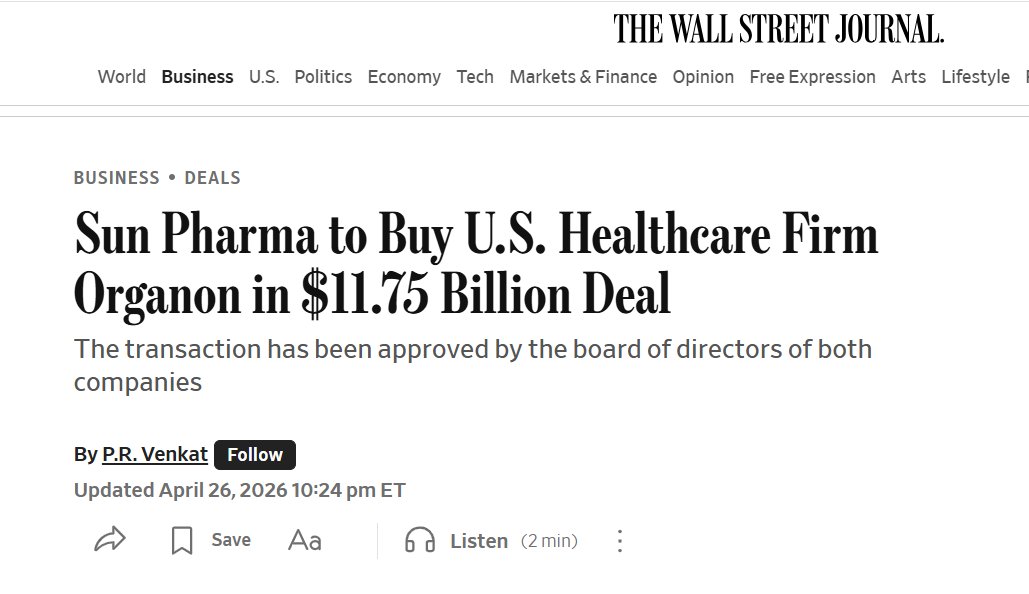
With Nexplanon, NuvaRing, Follistim, and many other products Organon (spun out of Merck) is a very significant player in women’s health. Hoping Sun Pharma and Dr. Sanghvi’s team preserve that focus, build on it further, and expand the portfolio's distribution + market reach.
https://t.co/QEVziQg90N
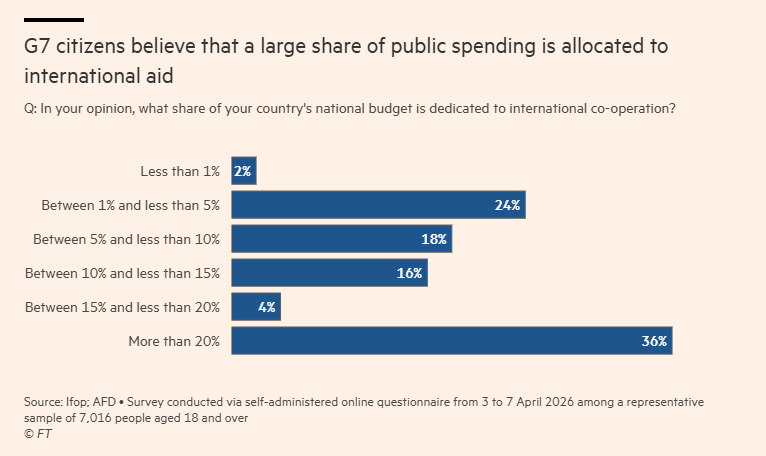
Because international aid-related stuff is so visible in the media, many people in high-income countries think foreign aid takes up 20% of GDP (when it’s actually <0.3% in most cases). Maybe the messaging from advocacy groups should be more about how the aid sector achieves so much with so little. @davidpilling@FT
https://t.co/DKPck5OJqy
The Gulf region is a critical pharma flow hub, if we include API ocean vessel shipments via the Suez Canal and bi-directional air cargo through Gulf airlines. Disruptions can linger, and while global effects may seem muted, markets with tighter working capital credit and liquidity will feel the impact. @PeterSullivan4@axios reports on this. Thanks for including my takes on this. @CFR_org
https://t.co/aggTUtZptj
Short-term liquidity and FX are critical for keeping the supply chains for fuel, LNG, food, fertilizer, and pharmaceuticals running. Great initiative @GeorgeElombi@afreximbank@AfreximResearch@AfreximTrin
https://t.co/wYeHlux7vV
I joined the Morning Drive on @MiraBusinessFM, the UAE’s business talk radio station, to discuss how GCC airport and port closures linked to the Iran war are impacting pharmaceutical and medical supply chains.
@CFR_org
https://t.co/VTMRKt2yCA
As the America First Global Health agenda continues to shift the health landscape, donors should embrace multilane procurement channels that could provide transparency, improving competition and supply reliability. https://t.co/dUwqaMTLe3
The Gulf Cooperation Council (GCC) region serves as a pharmaceutical transit hub, with 80% of imports relying on GCC airspace and the Strait of Hormuz. Read how the Iran War threatens these essential supply chains. https://t.co/bJfkUF1WiU
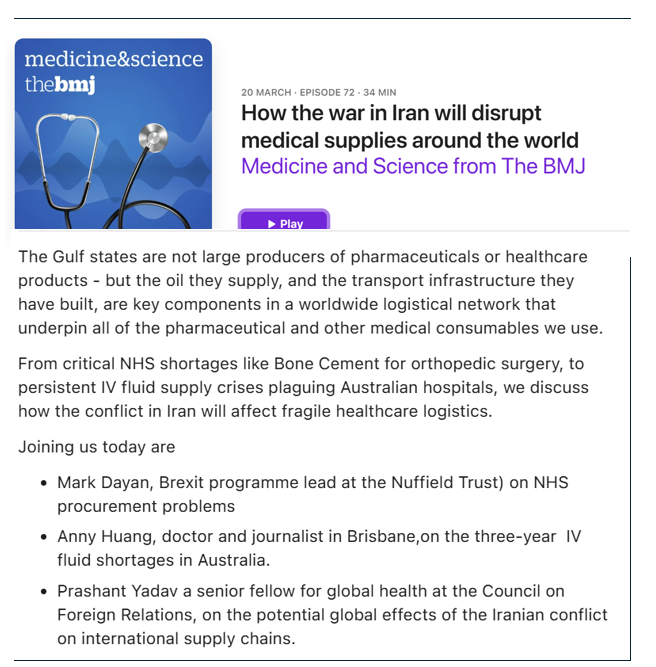
I joined the Medicine and Science podcast by the BMJ (@bmj_latest) to discuss the potential impact of the Iran war on pharmaceutical and medical device supply chains. #Iran#war#pharmaceutical#supplychain@CFR_org
https://t.co/1qSm4gSPSl
This morning, I joined Tommy Tucker on his morning radio show on @WWLAMFM in the New Orleans and greater Gulf Coast region to discuss the potential impacts of the Iran war on pharmaceutical and medical device supply chains.
@CFR_org#Iran#war#pharma#SupplyChain#helium
https://t.co/hLIJkOQXP3