Beginning with #csharp 7.3, tuple types support the == and != operators. These operators work by comparing each member of the left argument to each member of the right argument in order. These comparisons will stop evaluating members as soon as one pair is not equal.
#programming
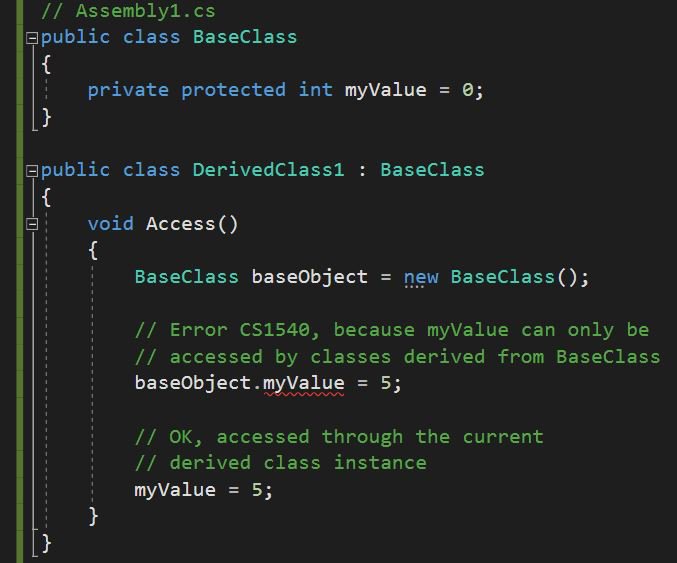
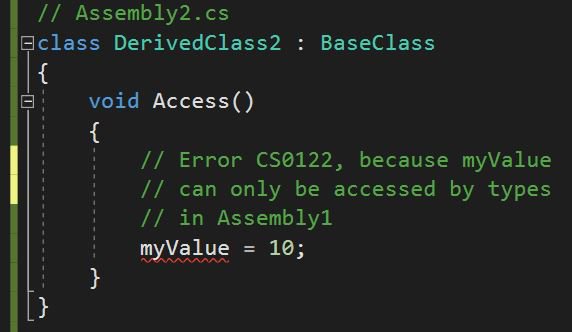
C# 7.2 introduced new compound access modifier: private protected. A private protected member is accessible by types derived from the containing class, but only within its containing assembly.
#programming#csharp#dotNET#code#visualstudio#dotNET
You can add keyword-like descriptive declarations, called attributes, to annotate programming elements. Attributes allow you to place extra descriptive info into metadata that can be extracted using reflection.
#programming#csharp#Dotnet#VisualStudio#code#coding#development
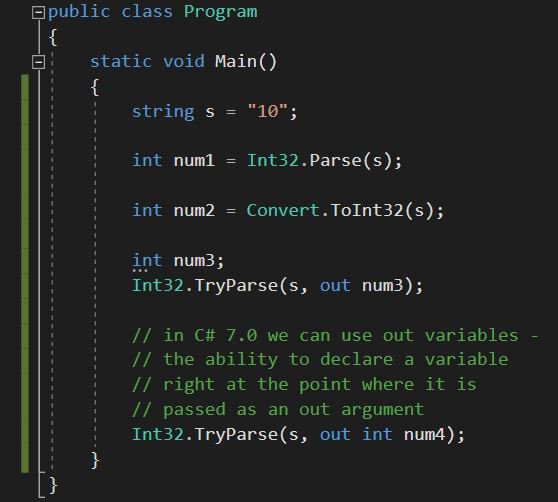
3 ways to convert string to integer:
Int32.Parse - if you expect the input to be valid integer
Convert.ToInt32 - returns 0 if the input string is null
Int32.TryParse - allows for more control when the input is invalid
#programming#Csharp#Dotnet#code#coding#VisualStudio
New features in Entity Framework Core 2.2 Preview 2:
- Spatial extensions for SQL Server and in-memory
- New EF Core provider for Cosmos DB
- Collections of owned entities
- Query tags
#csharp#programming#EntityFramework#Dotnet#code https://t.co/TD3HieNuwq
IEnumerable<T> exposes the enumerator, which supports a simple iteration over a collection of a specified type.
The following example demonstrates how to implement the IEnumerable<T> interface on custom MyList<T> class.