25 years ago, on October 22, 2001, Grand Theft Auto III was released.
This is the team that made it. (I'm second from the right)
Here's what I remember about making it.
For most of development, GTA3 was in a sorry state. It crashed frequently, the frame rate was terrible and the map was full of holes. Only in the last six months did everything come together.
For the longest time, it looked like the frame rate was going to be 20 fps. Only in the final months did we manage to hit 30.
In 1999, DMA Design, based in Dundee, Scotland, was going through some changes. The company had recently been bought by Take-Two Interactive, and a satellite office had opened in Edinburgh.
Space Station Silicon Valley for the N64 had been finished in 1998, but there was no new project lined up. Leslie Benzies and Aaron Garbut started working on GTA3. Unprompted.
Meanwhile, the original GTA1 and GTA2 team had started work on GTA2.5, set in Miami. It was called 2.5 because it used the 2.5D (isometric) perspective.
In March 2000, the Dundee office was closed and GTA2.5 was cancelled. Take-Two/Rockstar gave GTA3 the green light.
Everything was written from scratch. Only two people worked on both GTA2 and GTA3, and no code or art from GTA2 was reused.
The way we worked was organic. People would come up with ideas for missions and we'd just try them. If they were fun, they were in. The story was secondary. In fact, the opening plot involving Catalina trying to kill Claude was added well into development.
Leslie Benzies (the producer) plastered a wall in the boardroom with Post-it notes. They were yellow, green and pink, representing missions, contacts and locations.
Missions were moved around all the time, often handed from one contact to another. Only once the voice acting was recorded were these things set in stone.
You sometimes come across locations on the map that are more detailed than you'd expect. Chances are there used to be a mission contact there that got moved elsewhere.
Working on GTA3 was a lot of fun. Every day there was something new going in. A new mission, radio station, car, pedestrian, building or whatever. The game was growing at an incredible rate.
Other than the multiplayer mode we did some work on, I can’t remember a lot of wastage.
Although everybody worked hard, I don't remember many people doing crazy hours. On the rare occasions I was in over the weekend, there were usually only one or two others. Even during crunch time, most people left the office around 9 or 10 in the evening.
I always thought it was better to work eight focused hours than spend your life in the office.
Although we liked the game, it wasn't at all clear that it would be a hit.
GTA3 had a disappointing showing at E3 in May 2001. Most people weren't interested, and those who were thought it was too violent.
It had an OK launch, but sales never tapered off.
Our office was in Leith, Edinburgh. It was a fairly run-down neighbourhood at the time. Just a couple of years before we arrived, J.K. Rowling had been writing the first Harry Potter in that very same neighbourhood.
The thing I remember most is the camaraderie. In a small team, everybody relies on each other and everybody has a lot of input. Most of us were young and had only recently moved to Edinburgh. We went to the pub together.
It felt like a group of friends who happened to be working on a project together.
https://t.co/xQtBdCwPA6
https://t.co/L3xzGq7FuS
https://t.co/tb6kcz6hIt
https://t.co/smBKvRcX2J
https://t.co/PntXiQydMz
Old American wilderness meets modern American suburbs. Two neighbors in crisis whose lives collide…
The first storyline from the world of American Caper concludes next month Nov 11 with the double sized season finale of the comic book series from Absurd Ventures and @DarkHorseComics.
Liquid Swords is closing. Samson did far better on consoles, but it wasn’t enough to save the studio. I’m proud of our team and what we built.
We’re discussing continued support for Samson. We make mistakes, we learn, we rise, we move on.
I never give up. More soon. #LiquidSwords #Samson
Jun Maeda (the creative mind behind Clannad, Charlotte, Angel Beats, Heaven Burns Red, and much more) is currently hospitalized after being diagnosed with pharyngeal cancer
Instead of pursuing active treatment, he plans to pursue palliative care in order to conserve his strength to devote himself to his creative work as "he felt there was little time remaining in which he would be able to continue creating"
I directed the Shrek 2 game, which launched in 2004. 22 years later, Microsoft is launching a remaster. Expect to see lots more of this kind of thing, now that huge companies own these IPs and have new AI powers. Hopefully to the benefit of players.
https://t.co/mF4GbXJwYE
Jak II was released 23 years ago today! 💙
Thank you to everyone who experienced this PS2 adventure that introduced Dark Jak, the Morph Gun, and more to the series.
Max Payne 3 is one of the best games ever made. Absolutely insane statement from Dan Houser. Plot, storytelling, themes, atmosphere, music, game design, etc. It was a game that fired on all cylinders & couldn't be more right or successful in my eyes!
“Much of the room wants it to be 2016 again.”
Yes, Tim, because 2016 was one of the last great years of traditional AAA gaming. Titanfall 2, Battlefield 1, DOOM, Dark Souls 3, Dishonored 2, Deus Ex: Mankind Divided, XCOM 2, and Uncharted 4 all came out that year
Back then, games were still largely products first, services second. Publishers competed to sell you a great game, not monetize every waking hour of your life with battle passes, rotating storefronts, daily chores, and an endless treadmill of artificial engagement
Games were allowed to have their own identities. Titanfall 2 didn’t need to be Fortnite. Battlefield didn’t need to be an extraction shooter. DOOM didn’t need a five-year seasonal roadmap. They were designed around distinct gameplay experiences rather than whatever monetization model executives like you are salivating over
And the technology was already good enough to deliver incredible visuals without development budgets spiraling into the hundreds of millions. Games could be ambitious without needing to become permanent revenue-generating platforms to justify their existence
Now we have an industry spending more money, taking longer, and producing fewer AAA games, while desperately chasing the same handful of commercially successful formulas. We’ve reached diminishing returns in graphical fidelity while sacrificing experimentation and creative diversity
And here comes Tim Sweeney, the man who ruined gaming with one of the biggest live-service platforms, lecturing people about how they need to move on from 2016
People aren’t asking you to bring back 2016’s technology, Tim. They’re asking for an industry that remembers how to make art instead of endless AI generated engagement slop
The fact that someone in your position apparently can’t tell the difference is a pretty good illustration of how we ended up here
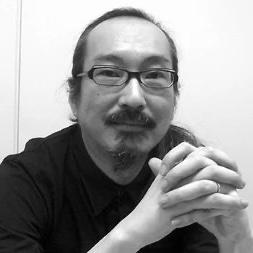
Remembering Satoshi Kon (1963–2010) on his birthday.
In just four feature films, he gave us PERFECT BLUE (1997), MILLENNIUM ACTRESS (2001), TOKYO GODFATHERS (2003) and PAPRIKA (2006). He blurred dreams, memories and reality in ways that still feel unlike anything else in cinema, influencing filmmakers like Christopher Nolan and Darren Aronofsky.
Gone far too soon at 46. His films remain timeless.
Intelligence must draw on memory. The mind must not simply compile data — as an algorithm now does more quickly than we can — but recall lived experiences, which contain depths of meaning that only the human soul can recognize, and connect more deeply with the goodness of these experiences. Everything that is good begins “with the Spirit” and thus possesses a breath, a dynamism and a sense of communion that, once experienced, are engraved upon the heart. https://t.co/Ij21tkb3qT