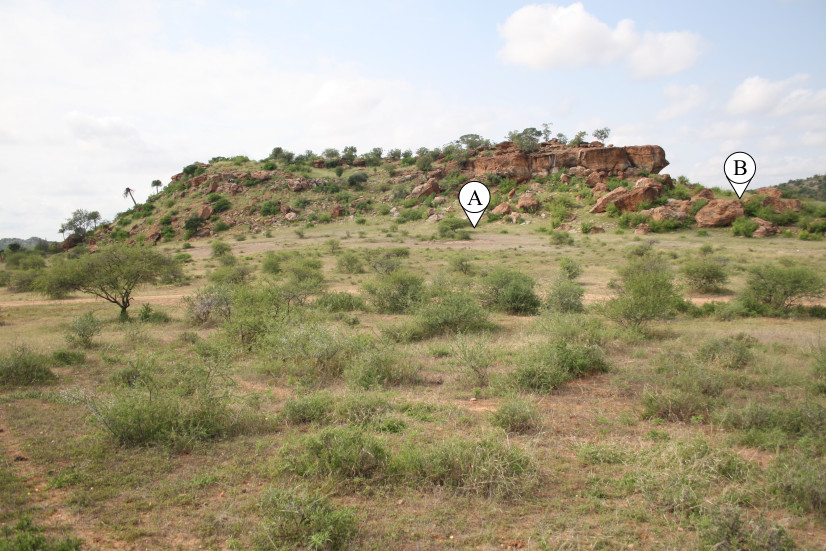
A paper linked to our work now in print: Social Landscapes of Euphorbia Kop: A K2 Farmer Settlement with a Forager Presence in Southern Africa https://t.co/UFqtoSlSQr
Also present were students from the Universities of Mpumalanga, Pretoria and Oxford. The aim of the presentations were to update those who our research pertained to about progress and findings, and share the results of our work.
On the 7th of July, while in the field, the HARP team presented their research to stakeholders in the Mapungubwe region. This included staff from the Mapungubwe National Park, the Polokwane Museum and the Venetia Limpopo Nature Reserve.
https://t.co/xXmTEBW9co
This work is also part of @justine_vh51 MA project in which we will look at ways of engaging the public through mobile archaeology displays, tactile features and language boundaries. @PASTEvolve#universityofmpumalanga@UPTuks@MapungubweNP
A sneak peak at our #travellingmuseum. For our outreach programme, we've created an initiative that involves this lovely drawer system which is filled with all kinds of amazing #artefacts from various periods in time.
The lower drawers are older than the upper ones (stratigraphy much?) and we also have one draw dedicated to an amazing replication and experimental study on stone scrapers. We can't wait to show everyone our amazing little museum that could and bring heritage to people.
#newresearch 📢 @Tim4sman with his co-authors Trent Seiler, @AntoineRossouw and Ceri Ashley published their findings on a site called Euphorbia Kop where evidence suggests #huntergatherers lived in a #agropastoralist homestead. Read their research here ➡️ https://t.co/utifsDPWQx
We’ve returned from our first excavation season for 2022 and will upload a full report, but for now enjoy a birds-eye view of the site and excavations:
https://t.co/GJX6iyF6ic
I love this image of #littlemuck. It was taken at about 80m up on our second last day on site. The site is wedged into the north side of the sandstone ridge. Left of the row of trees are various rock carvings. Such an incredible site and a privilege to work there @MapungubweNP
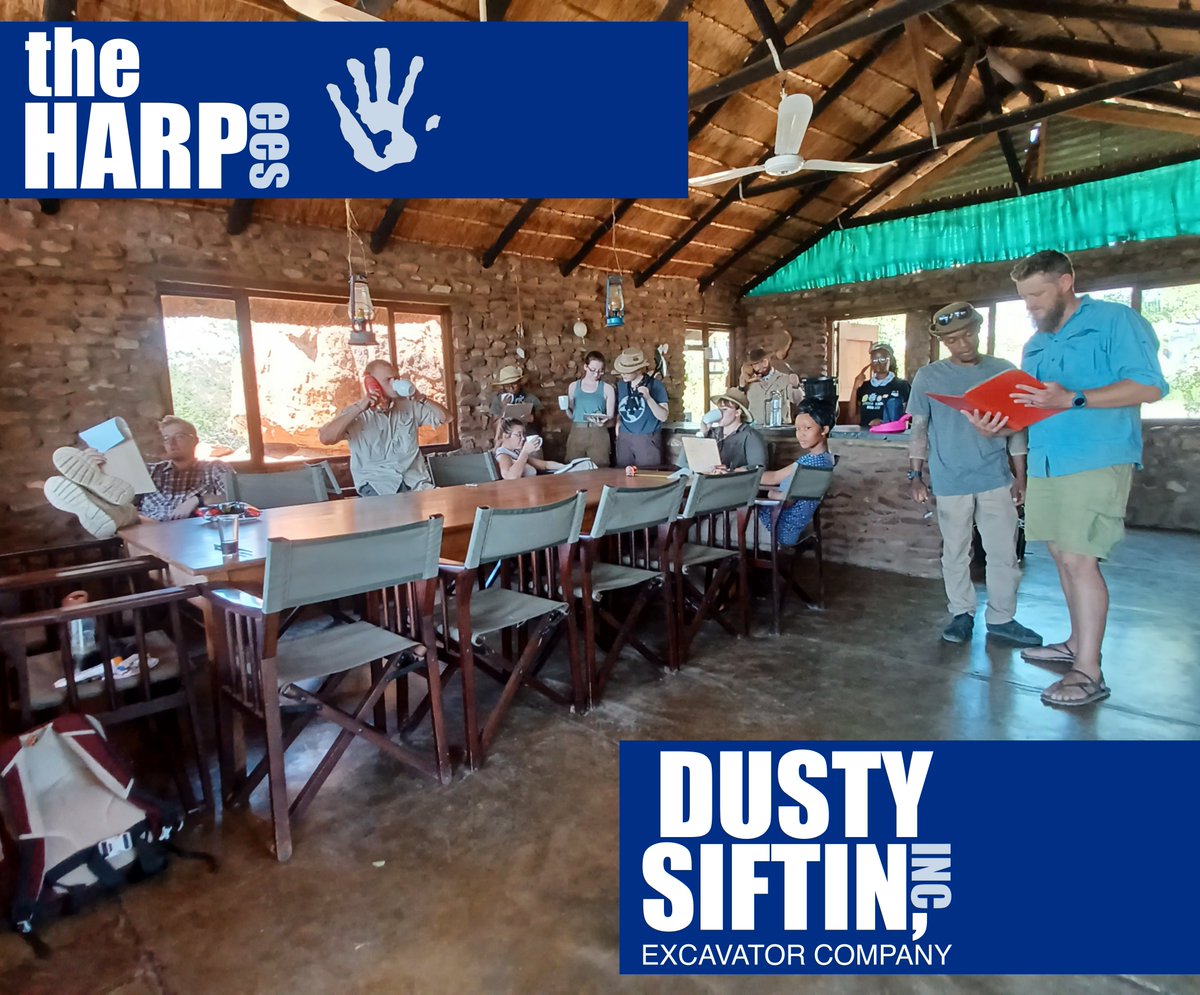
The end of another season of excavations. As always, we create #badalbumcovers as our team photos. This season, it was all about #theoffice, and our very own Dusty Siftin Excavator Company. We had a great trip and look forward to sharing the results of our work.
#TeamHARP can almost hear the hornbills calling, the distant lion's roar, an elephant crashing through the trees, and of course, the clang of our trowels, because in three days we head back to the field! https://t.co/c93pDJPlTB
Her aim is to better understand social, economic, and spatial relations between foragers and farmers, and to contribute to our understanding of the role foragers played at the terminal stages of the local Stone Age sequence.
#meettheteam: Meet Chanté Barnard (she's the one reaching into the trench). Chanté is a Master student at the University of Pretoria and the Laboratory Technician for HARP. Archaeology has always been a passion of hers that might have originated from one too many Indy films.
She is excited to continue with, and expand, on her current research, exploring shifts that occurred at both Little Muck and Leokwe Hill; an Iron Age site that may include forager spaces and Stone Age remains.
Check out our new website. It is a simple place but will be home to our news feeds, articles, academic works and more. Come have a look if you'd like to read something interesting or get a better idea of what we are getting up to: https://t.co/8wrTMMsr15
Why not join our WhatsApp community? The HARP News group is open to all but only Admins can post. It will allow #TeamHARP to share links to articles, Instagram (occasionally) or YouTube content etc, post images and updates directly to your phones and share interesting finds.
Also, we will promote our work and student research, and host QnA sessions or live chats from site or while doing work. Sharing content will be limited; we don't want to bombard people with messages at all and just post really interesting and exciting news clips.
Tim's research interests include forager-farmer interactions, forager economies, trade dynamics, landscape archaeology, and rock art. He is on Azania: Archaeological Research in Africa's editorial board and recently completed a book titled Foragers in the middle Limpopo Valley.
We are starting a #meettheteam series. First up, Dr Tim Forssman, project leader. Tim is based at the University of Mpumalanga in Cultural and Heritage Studies. Previously, he worked at the University of Pretoria, where he also spent two years as a postdoctoral reader.
Tim is a current recipient of the @NRF_News African Origins Platform Grant, which will fund his research into forager technologies, innovations, and indigenous knowledge systems during the rise of the Mapungubwe state.