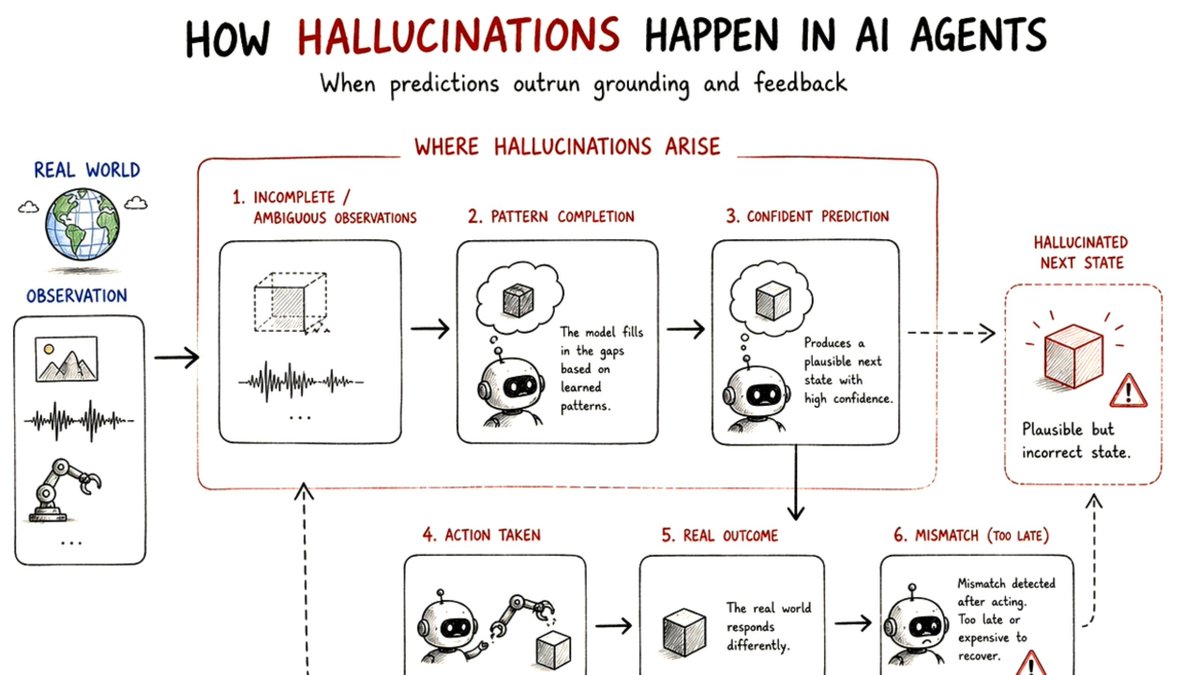
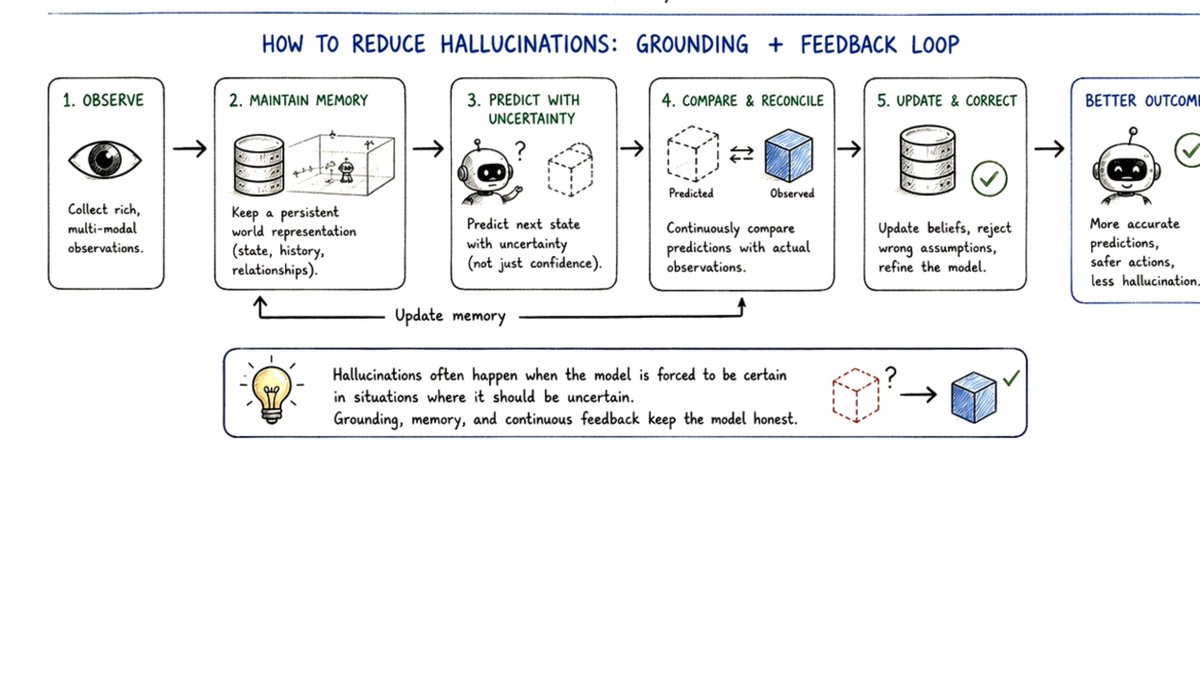
I was researching how hallucinations for agents in real environment simulation can be reduced, especially for world models.
The problem majorly isn't that models hallucinate. It's because it's not grounded enough to know when they should be uncertain.
A world model shouldn't just predict the next state because it has seen similar patterns before. It should constantly reconcile what it predicts with what it actually observes, update its internal state, and be able to reject its own assumptions when new evidence contradicts them.
I also think memory plays a bigger role than we often give it credit for. A persistent representation of the environment, coupled with uncertainty estimation and continuous feedback, can significantly reduce the tendency to generate plausible but incorrect states.
GPT-live (next-generation voice) launches today in ChatGPT.
it feels magical and 'real'.
i have always preferred typing to talking to an AI, now i think that's going to shift.
One of the things I enjoy most while working on world models and researching better ways for robots to understand the real world is talking with people who are building these systems.
Hy3 from Tencent isn't a world model, but I found it interesting because of what the team chose to improve. Instead of focusing only on benchmark scores, they spent time making the model more reliable in real tasks, especially during long interactions where models often lose context or make mistakes.
That shift says a lot about where AI is heading, and it's one of the reasons I wanted to break down the research in this video.
🚀Hy3 is here.
295B MoE. Best in its size class. Rivals trillion-scale flagships.
Reliable and affordable for most agentic usecases.
Apache 2.0. Friendly for commercial use.
FREE API for 2 weeks → https://t.co/EyURKwTdgi
🤗 https://t.co/twqJpqb2SL
📖 https://t.co/4uEkIU1cW4