Every time you type your password into your bank, Apple, or Google, you see that little lock icon in your browser. 🔒
That lock is the only reason you know you are talking to the real company, and not an imposter stealing your money.
And today, that entire system almost collapsed because of an unbelievable corporate blunder.
I copied this below to send on email to elderly family... sorry - don't know the original person who put it up....
BUT👉 Forget the technical jargon. Here is what actually happens:
The second the patch drops, hackers will use AI to reverse-engineer the fix in seconds and unleash automated exploits worldwide within 15 minutes.
This is not just a problem for developers.
When e-commerce sites, apps, and platforms collapse, your leaked home address, passwords, and credit card numbers flood the dark web.
⚔️ The brutal reality today:
Engineering teams deploying patches in minutes vs. Oblivious companies gutted before lunchtime.
🛡 3 things you must do to protect yourself right now:
1. Turn on Two-Factor Authentication (2FA) across all critical accounts.
2. Stop password reuse immediately.
3. Beware of fake "emergency password reset" phishing emails flooding inboxes today.
Cyber warfare changes forever this morning.
Bookmark and share this to keep your team and family safe.
If you think the fact that antivenom is still made by injecting horses with scorpion venom, costs $39M a gallon, about $500 a drop, and scorpions sting 1M+ people a year and kill 3,000+ is crazy... wait until you learn that ALL vaccines are still tested for bacterial toxins using horseshoe crabs’ blue blood, processed into a reagent valued at $60K a gallon. Over 1M horseshoe crabs were bled in the U.S. in 2024, with an estimated 185,000 dying from the process.
Reducing this animal suffering is moral imperative.
Watching journalists cover a BS flying Tesla car instead of the deaths of women and children in Ukraine because Starlink was slowed down is disgusting.
It's absolutely disgusting.
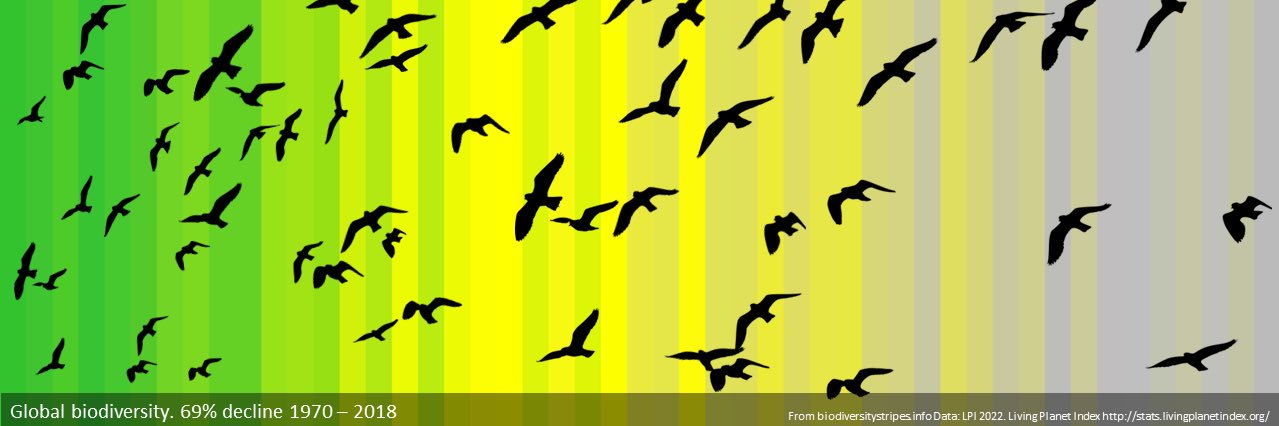
Speak to any hard-bitten older farmer around me in Somerset, or anywhere in Britain, and they will tell you that they grew up among fields teeming with corncrakes, grass snakes, hares, hedges full of yellowhammers and other songbirds, car windscreens splattered with bugs after the shortest summer drive, nearly all now gone. 98% of wildflowers, gone. Huge shoals of herring, cod, and other fish in the sea, a distant memory. Across almost every indicator, the losses during just one human lifetime have been catastrophic. The data is all there, as are the anecdotes. Britain is among the most nature-depleted countries on earth.
In any good AI future we will need the arts & humanities. Good or bad, AI art/music/literature will never be *our* art/music/literature, and we'll need people to understand and curate and continue our traditions.
Volodymyr Zelenskyy has endured what few leaders could imagine. Betrayal by friends, hesitation from allies, endless political games, and the daily destruction of his country. Yet he refuses to surrender.
War has changed him. His face carries years of exhaustion, sleepless nights, and the unbearable responsibility for millions of lives. He is not a Hollywood hero. He is a man who chose to stay when leaving would have been easier.
He never asked the world for sympathy. He asked for weapons to defend his people. While politicians debate and the world grows tired, he continues fighting for Ukraine's survival.
I have never admired a public figure as deeply as I admire this man. Not because he is flawless, but because he has shown extraordinary courage when it mattered most.
Presidents come and go. Ukrainians will decide their own future. But history will remember the man who stood with his nation when everything was at stake.
**Stay strong, President Zelenskyy. You have not abandoned Ukraine, and Ukraine has not surrendered.** 🇺🇦
I have loved this platform for many years and been resilient through recent ups and downs. But THIS will make any further participation impossible: #goingdark
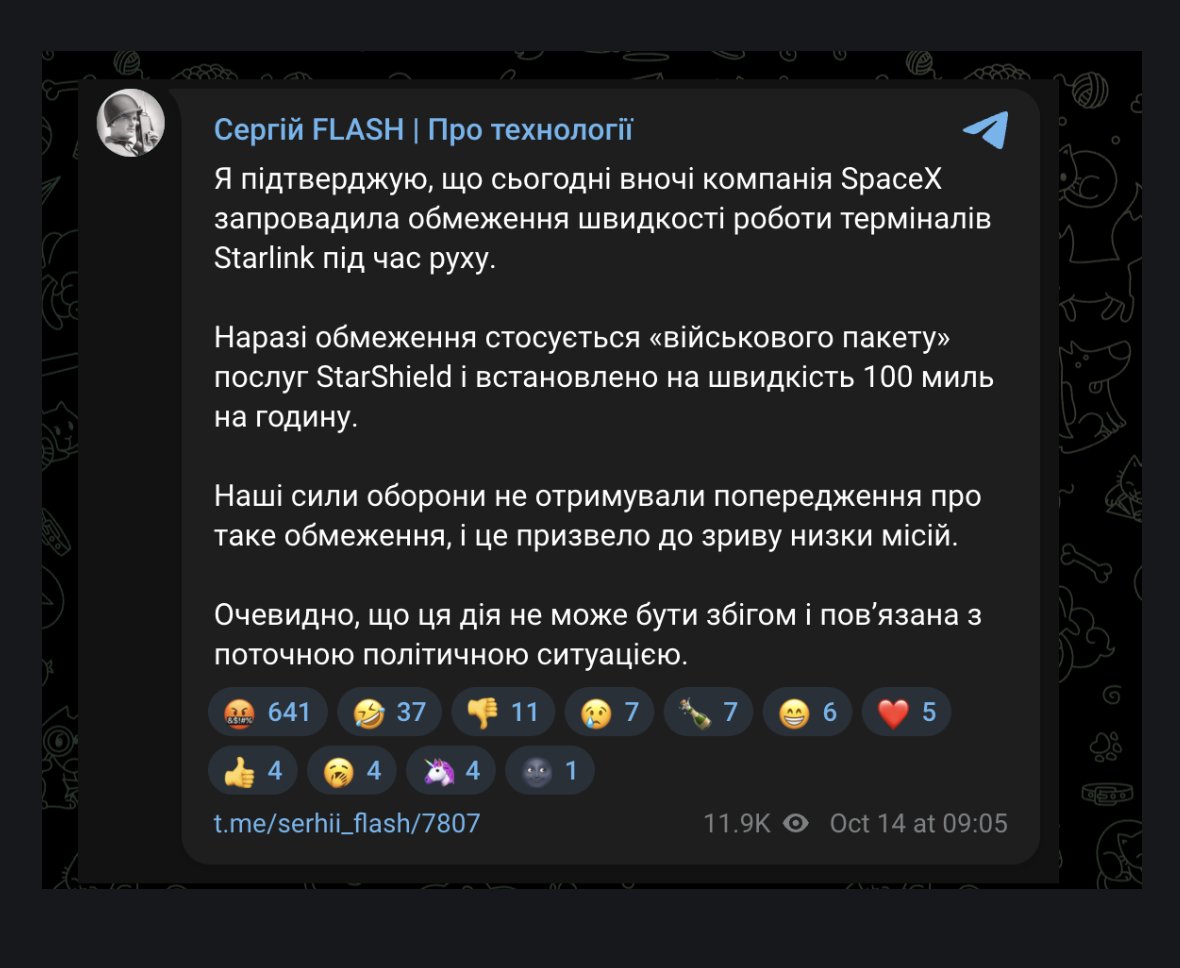
Presidential advisor Serhiy Beskrestnov confirms Elon Musk's SpaceX is deliberately crippling Ukrainian Starlink terminals:
"I can confirm that tonight SpaceX has implemented a speed limit on Starlink terminals while in motion.
The limit currently applies to the StarShield “military package” and is set at 100 mph.
Our defense forces were not given notice of this limit, and this has resulted in the disruption of a number of missions.
It is clear that this action cannot be a coincidence and is related to the current political situation."
‘Shocking and sobering’: UK bird populations fall to lowest level on record
Nearly half of species are in decline, with farmland birds and seabirds the worst hit, conservation bodies say 🐦
https://t.co/Hz8cARf2VC
Eight years after Denmark merged 239 councils into 66, places that lost their town hall had 26% fewer children and 35% lower house prices.
In 2027 Denmark folded 271 municipalities into 98, merging 239 of them into 66 larger ones. The basic idea (which makes every finance ministry happy), is that bigger councils spread fixed costs over more people, they cut duplicated jobs and deliver the same services via economies of scale. Earlier Danish research backed that up, finding administrative costs per head fell after the mergers.
But each new municipality kept only one town hall. Every other former council lost its administrative heart, and a bunch of economists wanted to know what happened to the places left behind.
They used Danish registry data covering every resident and every firm from 1996 to 2015, mapped onto 8,530 small neighbourhoods of at least 150 households each. They then compared the 2,187 neighbourhoods whose municipality lost its town hall with neighbourhoods in municipalities the reform left untouched. Because the untouched ones skew urban (Copenhagen, Aarhus, Odense), the authors built a weighted blend of them that tracked the losing areas closely before 2007, so the comparison is like for like.
The first domino is obvious. Neighbourhoods that lost their town hall shed about three full-time admin staff each, roughly a third of what they had, and the drop never reversed.
Then the losses spread to services nobody had voted to cut. School staffing fell by 17% on average across the nine years after the reform, and public-sector jobs overall by 21%. Private-sector jobs followed, down 16%, as the local economy lost the steady trade that a council and its staff bring.
People responded the way you'd expect. Each affected neighbourhood lost about three more working-age residents than it gained every year, around 0.7% of its population. The number of children fell 13%, which tells you young families were among the first to go. Those who stayed travelled 10% further to work, and their wages rose by just 1%, barely compensating for the extra time on the road. House prices fell 15% on average.
By 2015 the gap had widened. Against comparable untouched areas, public employment was down 38%, school staffing 36%, private jobs 24%, children 26% and house prices 35%.
The results hold when the comparison group changes. Comparing losing municipalities with neighbours that kept their town hall, or with the second-largest partner in the same merger, still shows clear damage, and so does using the number of council seats to predict which places lost out.
The geography is uneven tho. Neighbourhoods near Denmark's four biggest cities saw residents drift into those cities. Further out, people moved to whichever town had kept the town hall, and those winners added public-sector jobs. So a reform meant partly to slow urbanisation ended up feeding big cities in some places and building up regional hubs in others.
link to full article: https://t.co/8655XXeTR3
Tower Hamlets Council refused the Brick Lane data centre unanimously. Nine resident groups opposed it. The council and the mayor asked for housing instead.
The government approved it anyway, through ministerial recovery, with the letter signed on behalf of Angela Rayner. The scheme offers 44 homes, six of them for social rent, and a data centre built around high-frequency trading.
Rayner's partner, Sam Tarry, has been senior adviser since May at NorthPoint Strategy, a lobby firm whose sectors include AI, crypto and energy.
Its chair is Tory peer Lord Wharton. Its crypto council lists Andreessen Horowitz among its clients. NorthPoint says Tarry helps clients "shape policy agendas".
The minister who decides where data centres go shares a household with the adviser to the industry that needs them. 🧵
https://t.co/8wQ4ciwlW9
A lot of people in AI world come from a Bayesian intellectual tradition. As a result they tend to be very good model-based thinkers. Yet I often find that while they hedge and use probabilities, they rarely question their own modelling in the first place.
This great paper shows that Bayesian updating can only move belief around within the hypotheses you start with - so no amount of hedging will actually tell you you're wrong about the initial assumptions/world model. https://t.co/giij8YrCJP
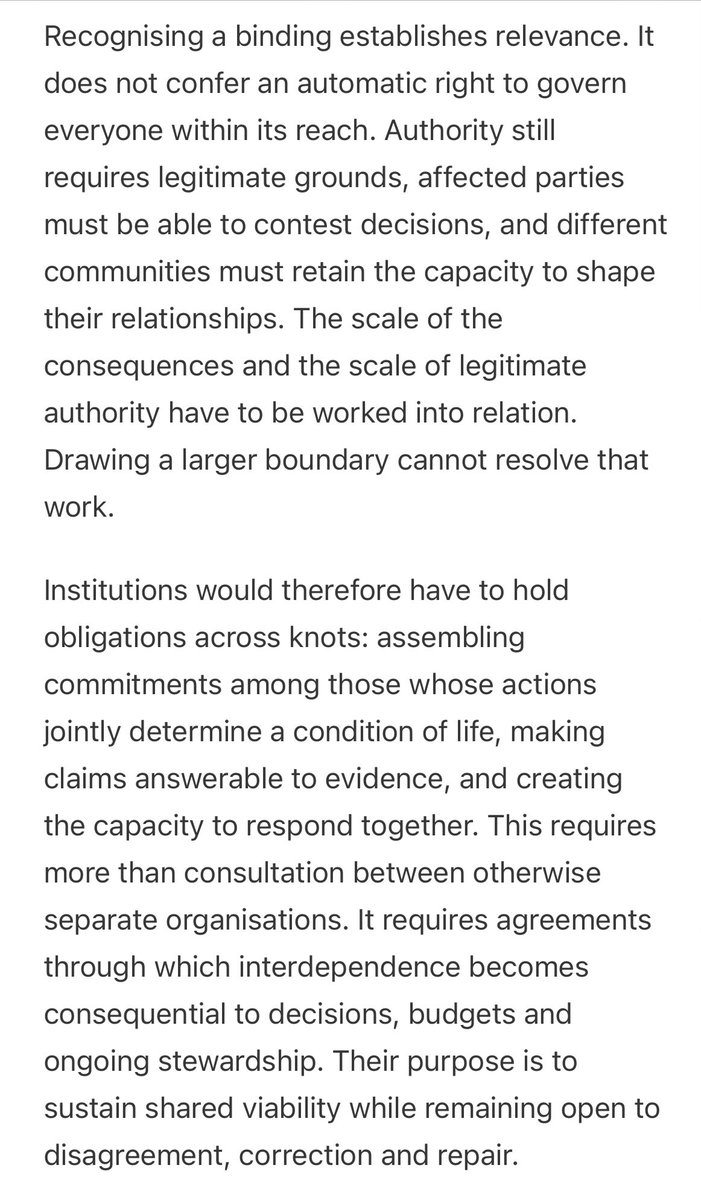
Indy Johar - brilliant as ever - nailing the boundaries of Bioregioning. Capturing the political move of @ExeterCouncil expansion into @eastdevon and why community knowledge must lead devolved stewardship and governance
These are the means of livelihood for families, so if they're destroyed, the families will find it difficult or impossible to survive. But it's not a genocidal act. Apparently. Ahem.