PRIMED Year in Review: Join us as we look back on some of what @PRSmethods consortium members accomplished in 2025 to help improve genetic risk prediction in global populations 1/
Congrats to @Yunfeng_Ruan and colleagues on this work which, incidentally, was part of why she won the @PRSmethods consortium award for "Most Creative Software Package Names" 🎉
Join @PRSmethods investigators on May 13 to discuss integrating Social Determinants of Health (SDoH) and polygenic risk scores
🗓️Event information: https://t.co/bocgrt1HWY
🔖Publication: https://t.co/E3mq9ITdoE
The authors take the mic.
In this upcoming May 13 Journal Club Webinar,
@AJHGNews paper authors @sjcromermd, MD, MS, and David Conti, PhD, unpack what it takes to integrate PRS and SDoH across genetically and socially varied populations—LIVE: https://t.co/Qakzl5N83T
#ASHG
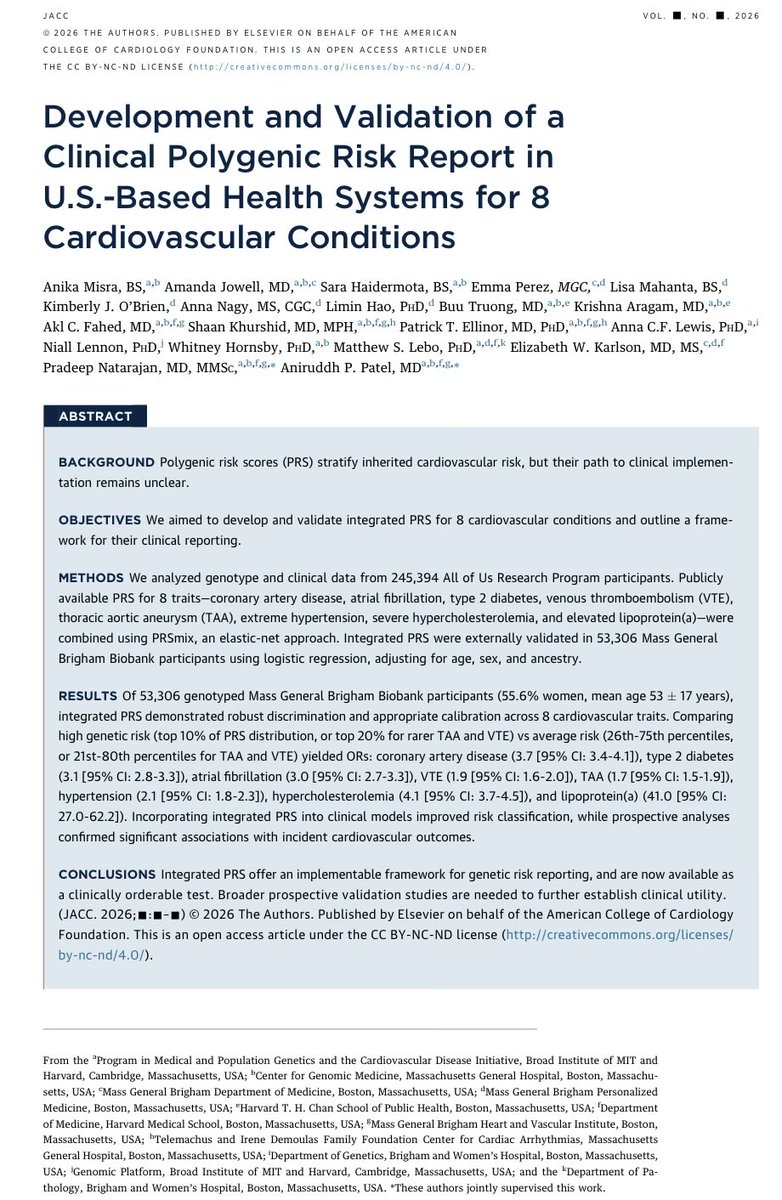
Very excited to share our study spearheaded by A. Misra & @AniruddhPatelMD describing the development & validation of our clinical multi-CVD polygenic risk score test, including how it might inform CVD prevention https://t.co/x6eXahw1Qp @JACCJournals
Any clinician can order this @MassGenBrigham@broadinstitute test today: https://t.co/pivEDisCZR
We used an integrated framework we previously developed and described to maximize performance and score stability, and allow for versioning as genomic interpretation continually improves.
https://t.co/YkPzcgSC8A
https://t.co/hezzuwNTvZ
The score was optimized in the nationwide @NIH@AllofUsResearch Program to enhance generalizability across communities, with validation in the @MassGenBrigham Biobank
@amandajowell@buutrg@aklfahed@shaan_khurshid@patrick_ellinor@nialljlennon@HornsbyWhitney@EWkarlson
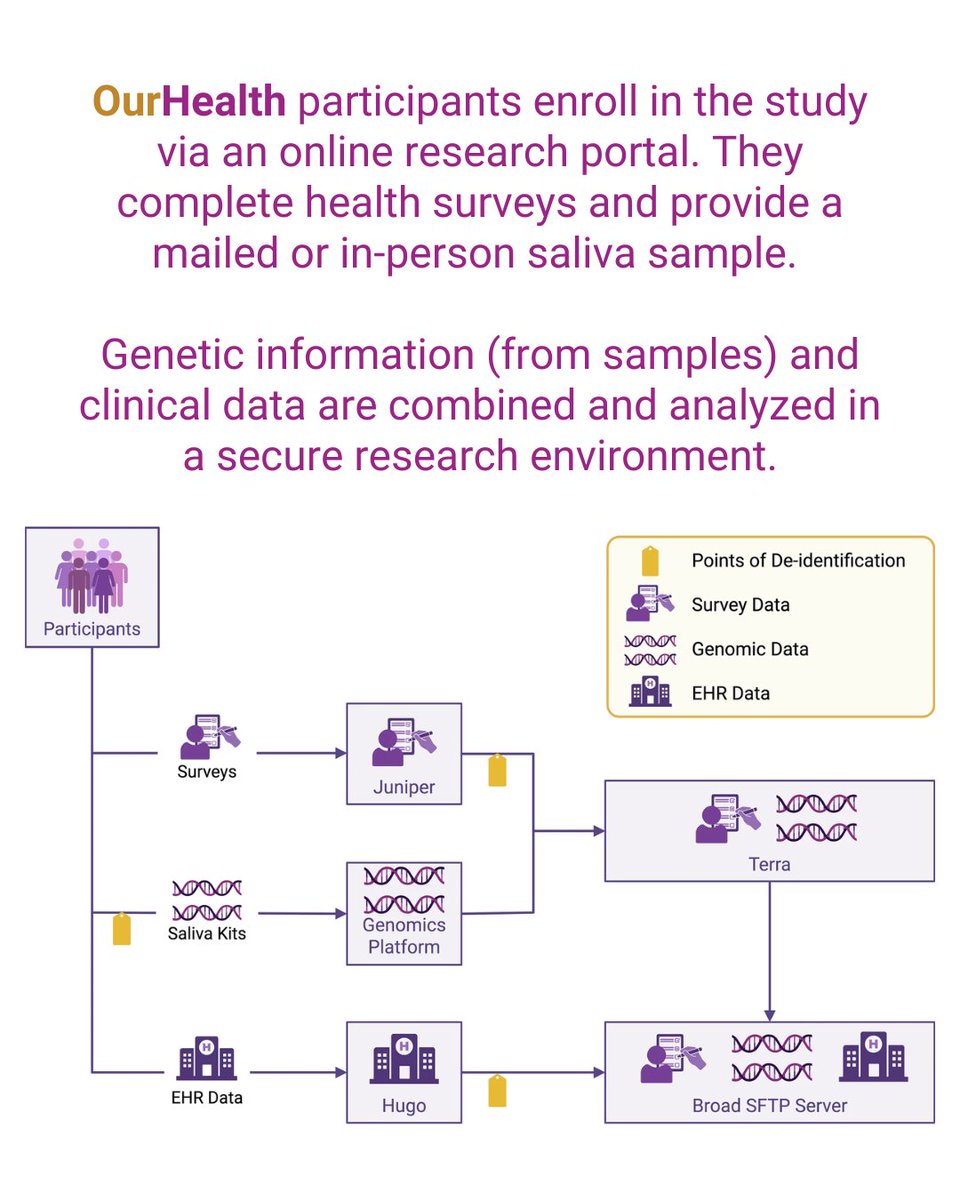
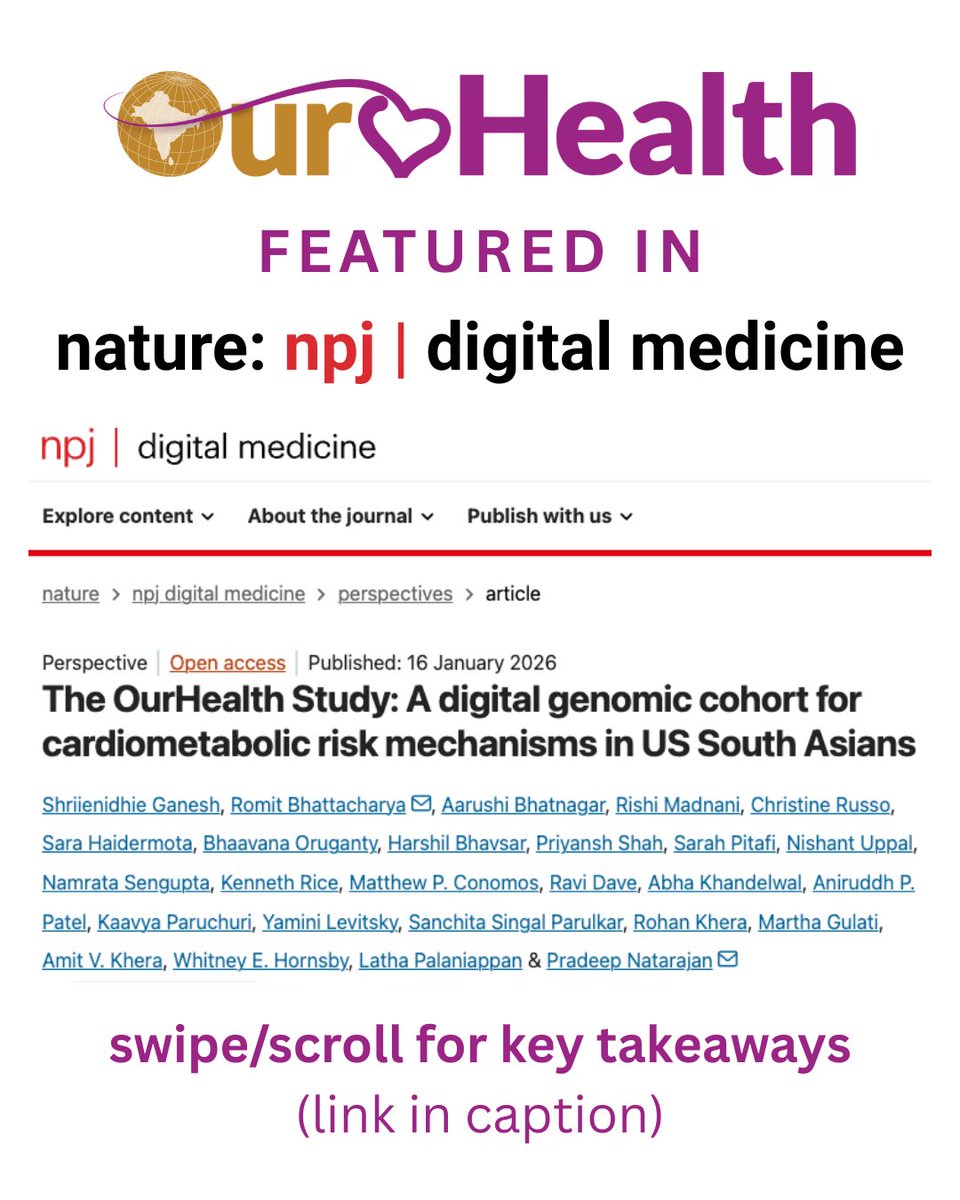
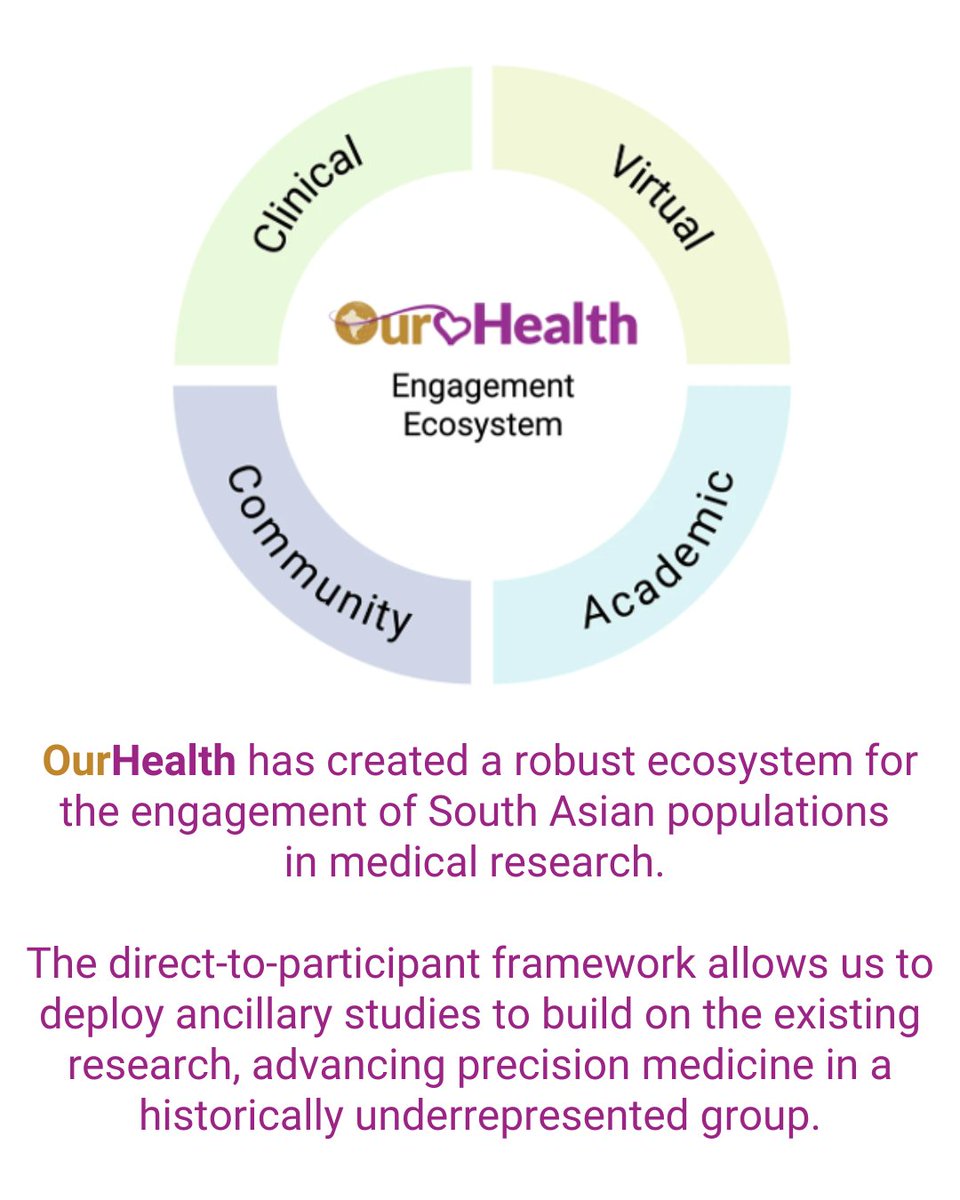
👀🧬🫀ICYMI - updated data release from the @ourhealthstudy of cardiovascular disease in South Asians now available on @useAnVIL!
https://t.co/JgzbjzBdkO
1/
Funding for BGE sequencing and analyses are provided through the NIH-funded @PRSmethods consortium
For more information and how to apply for access, visit https://t.co/VxAMB8lHd3
3/
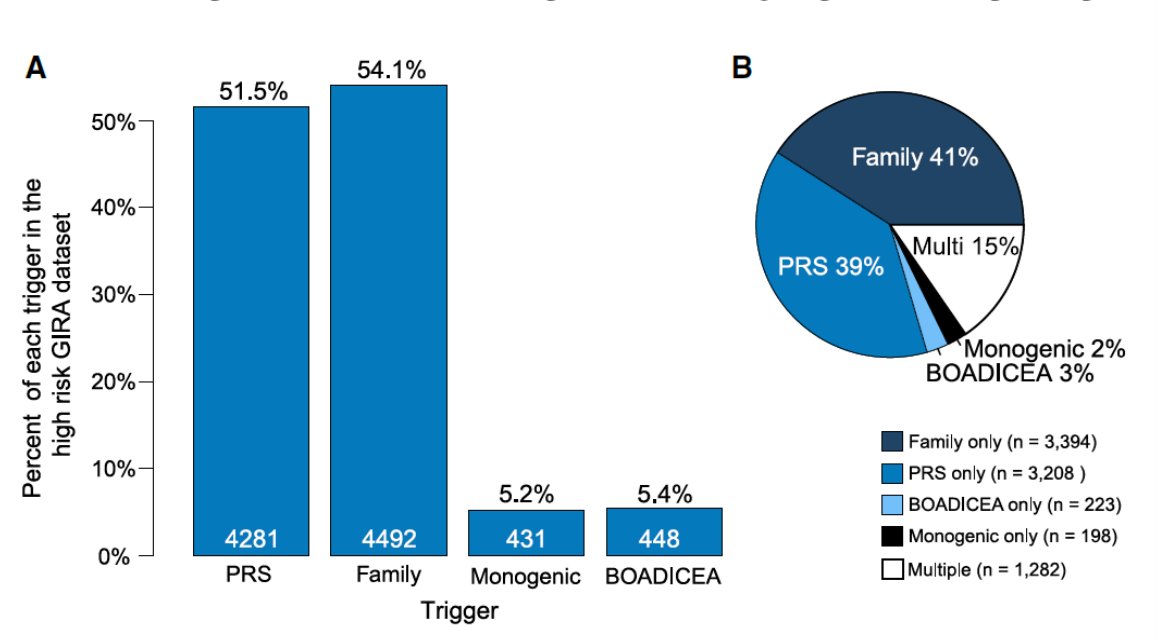
eMERGE returned PRS/Fam Hx/Mono results to n=23,840, 35% hi-risk for ≥1 of 11 diseases. Note: 1) high burden of genetic risk for common disease; 2) large-scale genomic risk assessment is feasible; 3) equity challenges must be addressed for implementation https://t.co/7S1HhVB5hM
🎉🧬👀 New work out from Cromer et al. in the @PRSmethods consortium Social Determinants of Health Working Group, on how to model social and structural determinants of health jointly with genetic risk
🧬 New Review from Cromer et al!
📄 Incorporating polygenic risk scores and social determinants of health across populations: Considerations and best practices in research
#PRS#SDoH
https://t.co/LmWqHWBAA8
The @PRSmethods consortium - in 5 years, going from "Can we predict disease genetically" to "Can we predict disease in a way that's accurate, equitable, and clinically useful across diverse populations?"
Find out more at https://t.co/YRdua0JwZW
The call for #DNADay26 essays is out! Open to students in grades 9-12 📝🧬
Pro tip for genetics professionals: the contest is also often looking for judges...
The #DNADay26 Essay Contest is HERE! 🧬This year’s challenge: Analyze a genetic treatment or therapy developed or widely used in recent years. Teachers—help your students share their ideas with the world! Submit by March 4 👉 https://t.co/2BjQ0ImSOd #ASHG
Follow us for more highlights throughout the year and see our running lists of publications and research highlights
https://t.co/wmc7KTi5Gl
https://t.co/YRdua0JwZW
end/
PRIMED Year in Review: Join us as we look back on some of what @PRSmethods consortium members accomplished in 2025 to help improve genetic risk prediction in global populations 1/
November also saw the first data release of genetic and phenotypic data from the @ourhealthstudy , with blended genome-exome sequencing funded by PRIMED,
https://t.co/VxAMB8lHd3 6/
Funding for BGE sequencing and analyses are provided through the NIH-funded PRIMED Consortium @PRSmethods
For more information and how to apply for access, visit https://t.co/VxAMB8lHd3
3/
The release includes self-reported basic demographics, anthropometric traits, cardiometabolic outcomes, and Blended Genome-Exome sequencing data on 621 study participants.
2/