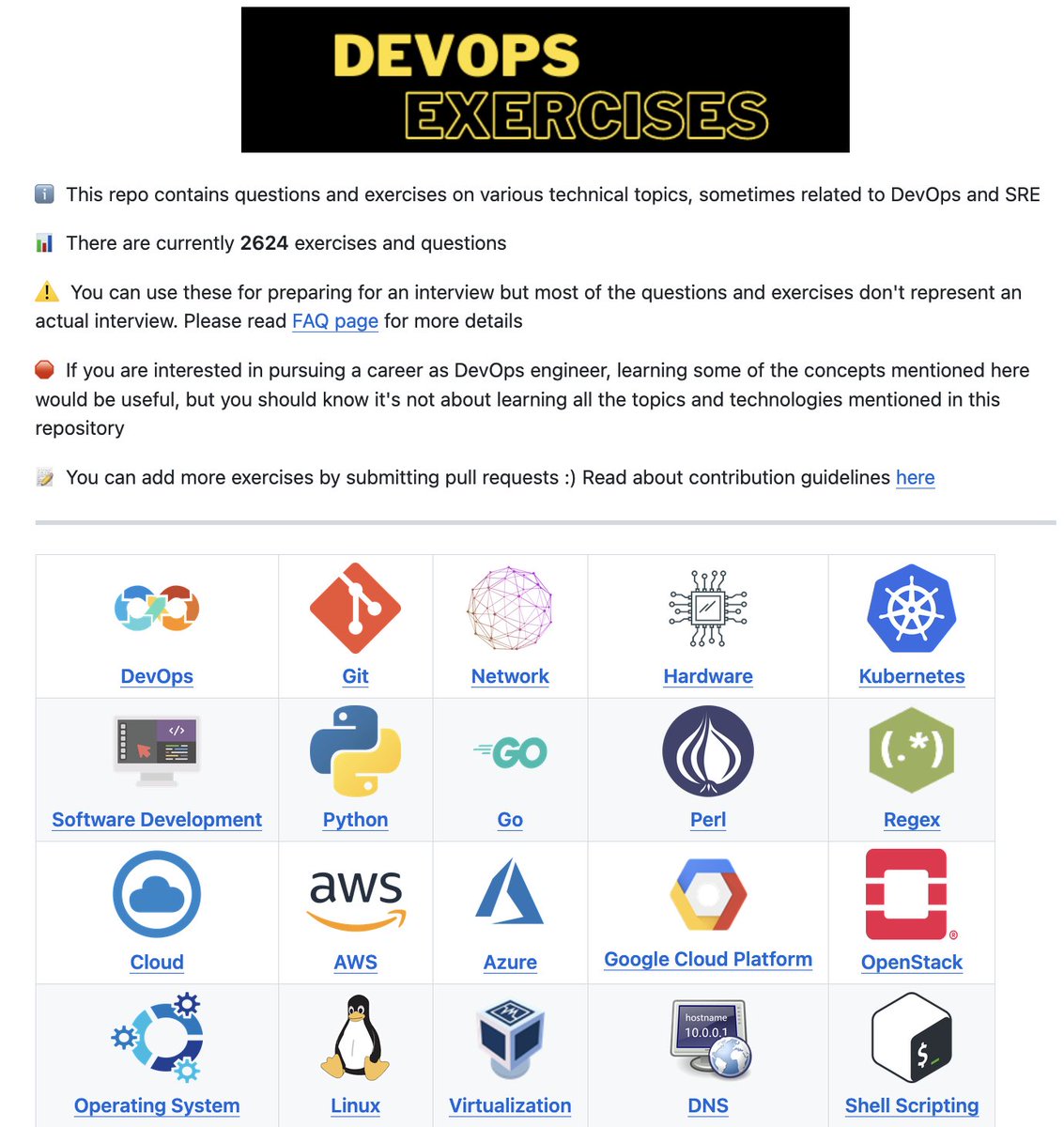
This repo is a gold mine for DevOps engineers 🤯
If you're preparing for a DevOps interview, this single repo can replace half the courses you'd normally pay for.
It covers:
→ Linux, Networking, and Git fundamentals
→ Kubernetes, Docker, and Terraform
→ AWS, Azure, and GCP → Ansible, Prometheus, and OpenStack
→ SQL, NoSQL, and system design
→ Real interview-style questions with actual written answers, not just topics to Google
Bookmark it and actually go through it before your next interview.
Repo: https://t.co/ulbnupaMKk
You don't need a Kubernetes cluster to get good at Kubernetes 😎
Found a repo with 50 hands-on Kubernetes labs you can run directly in your browser:
→ kubectl instead of just reading docs
→ Pods, Deployments, StatefulSets, DaemonSets
→ HPA, scheduling, taints & tolerations
→ RBAC, Secrets, namespaces & quotas
→ Services, Ingress & real troubleshooting
You get a real Kubernetes environment in the browser, with labs built around actually doing the work.
Just open a lab and start breaking things.
Repo: https://t.co/0C4dEqYONg
I'm a Principal engineer & I passed system design rounds of Amazon, Atlassian, Walmart, Saleforce, and Deliveroo.
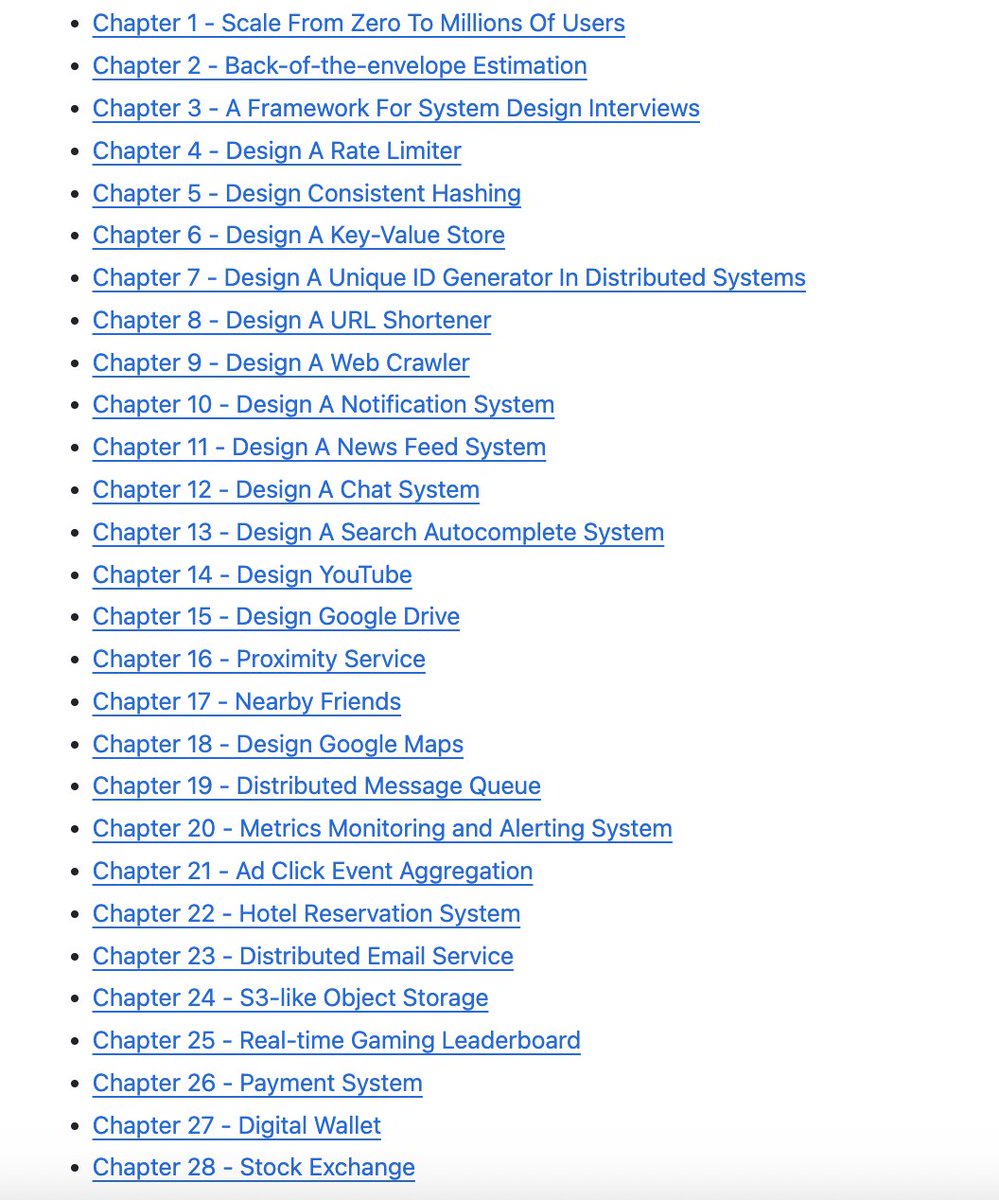
Trust me, learning system is not hard. Start from these fundamental concepts:
1) Load Balancing: https://t.co/3jKCLiI6vl
2) CDN: https://t.co/dxzCmm9gAf
3) Caching: https://t.co/pRgn0FTPp2
4) Cache Invalidation: https://t.co/QrfRjJ57gd
5) Rate Limiting: https://t.co/LE5ECM2tGt
6) API Gateway: https://t.co/DgU8cBDUVr
7) CAP Theorem: https://t.co/a8WydnAIxd
8) Sharding: https://t.co/XQLU6eDriD
9) Replication: https://t.co/KuDkFH0fjx
10) Partitioning: https://t.co/3WXKeZLbLa
11) Queues: https://t.co/JchEoCcFmF
12) Microservices: https://t.co/aAQfM6AWMq
13) Microservices Vs Monoliths: https://t.co/bTaIIWkPU3
14) Fault Tolerance: https://t.co/qXNBoyOqYT
15) Database Scaling: https://t.co/D2lvPm1wkB
16) Service Discovery: https://t.co/z2DpwbJBVI
17) Consistency models: https://t.co/K2r3nMcCQu
18) Eventual Consistency: https://t.co/SWiz4ckIKR
19) Distributed Transactions: https://t.co/xqL7BTJxXn
20) Leader Election: https://t.co/ApNaYSnSFj
21) Horizontal vs Vertical Scaling: https://t.co/IFuEmzMfob
22) Back of the Envelope Estimation: https://t.co/7ntEmtVggQ
23) Idempotency, Data Latency & Finale: https://t.co/fNArLx4MrW
Let me know what you'd like me to cover, would love to help :)
@rickysharma_08@TajinderBagga Yeh jhatu bate india me hoti hai
Bangladesh/Pakistan me jinda jala dete hai
Tab tum jaise gardan jameen me ghused lete ho
You are praying for your own genocide
Congratulations 🎉🎉🎉
LLM quantization techniques I'd learn if I had to fit a 70B model on a single GPU:
(bookmark this)
A 70B model in FP16 needs 140GB for weights alone. At 4-bit, that drops to 35GB, which fits on one card.
But naive rounding fails on large models. Roughly 0.1% of hidden dimensions carry values up to 20x larger than anything else in the tensor, and they wreck the quantization grid for everything else.
Each of these 5 methods handles those outliers at a different point:
1. RTN: ignores them. Rounds every weight to the nearest grid level with no calibration data. Cheapest option, weakest at low bit widths.
2. GPTQ: repairs after rounding. Quantizes a layer column by column and adjusts the remaining weights to absorb the error before moving on.
3. AWQ: protects before rounding. Finds the ~1% of weight channels that matter most and scales them up so they survive quantization. Everything still ends up in plain INT4.
4. LLM. int8(): isolates at inference. Outlier dimensions run in FP16, the other 99.9% run in INT8, and the results are merged.
5. QAT: solves it during training. The model is fine-tuned with rounding baked into every forward pass, so it adapts to the damage before quantization is actually applied.
All five produce the same artifact, a model at a fraction of its trained precision. They differ only in where the outlier problem gets addressed.
The visual below nicely summarise these techniques.
There's a really good paper that provides a comprehensive study of LLM quantization techniques: https://t.co/AqYE8FXspZ
---
That said, quantization shrinks a model, but fine-tuning is how it gets adapted to a specific use case in the first place.
I wrote a full breakdown on fine-tuning LLMs with RL in 2026, including how to skip manual reward engineering with automatic LLM-graded rewards.
The article is quoted below!
Day 6/30 of Inference Engineering
Part 3: CUDA Graphs - Memory Management, Capture Safety & Graph Updates (FINAL)
- why stable memory addresses matter during CUDA Graph capture and replay, and how data can still change between replays
- what can and cannot be safely captured, including synchronization, CPU-side logic, and capture-incompatible operations
- how existing CUDA Graphs can adapt when parts of the workload need to change
- how individual node parameters can be updated and how cudaGraphExecUpdate() handles compatible graph-level changes
- what happens with incompatible topology changes and when a graph needs to be re-instantiated
to watch on youtube, the link is shared below
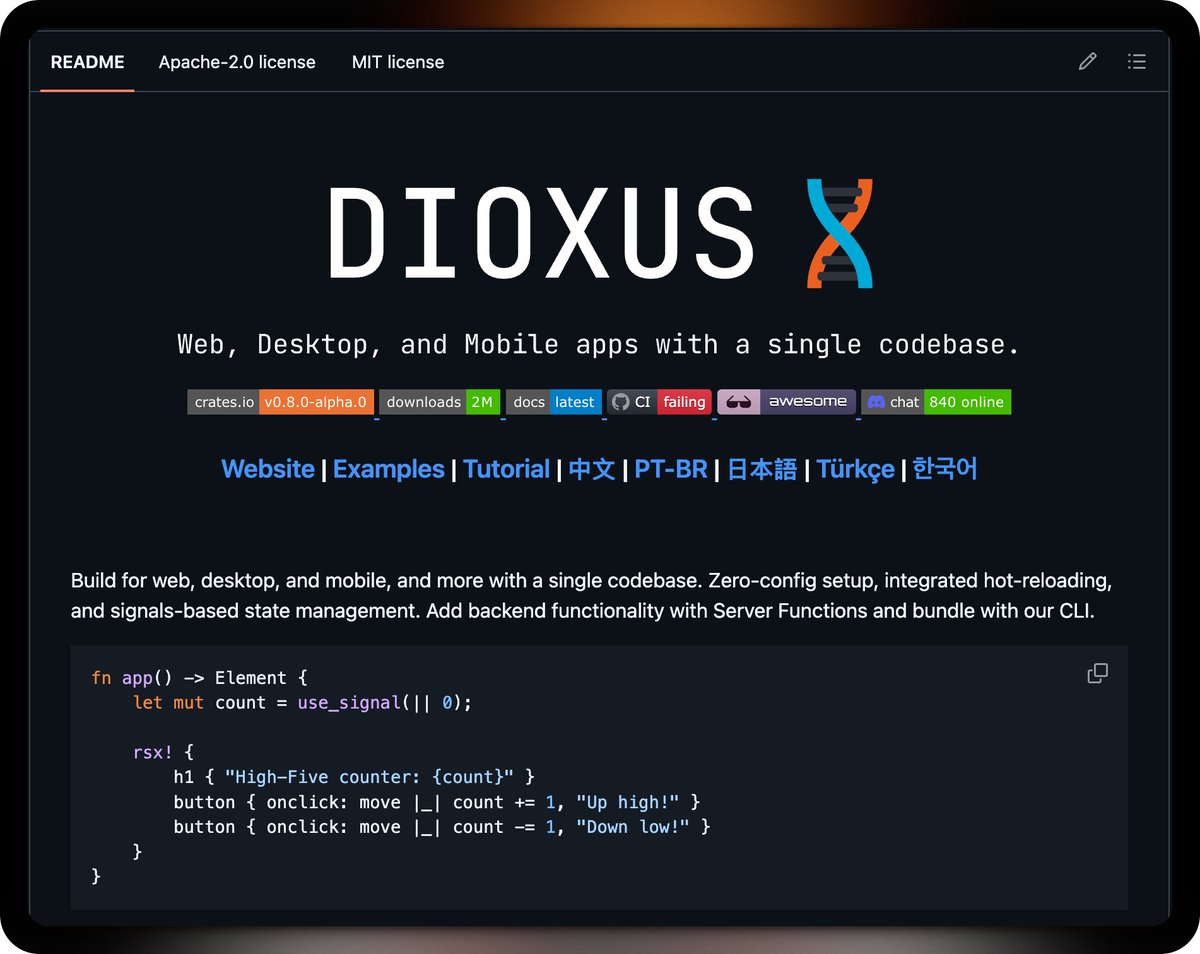
Dioxus is a Rust framework for building cross-platform apps with instant hot-reloading and signals-based state management.
- Build for web, desktop, mobile, and server from a single codebase
- Signals-based state management combining ideas from React, Solid, and Svelte