A story on how we at @clarisights solved complex expression evaluation having multi-node dependencies in a real-time interactive query.
https://t.co/a338HHYlZd
PARLE INDUSTRIES IT COMPANY STOCK HITS UPPER CIRCUIT AFTER MODI-MELONI ‘MELODY’ VIDEO GOES VIRAL
Social media users rushed to buy Parle Industries stock due to name similarity
Company has NO connection with Melody toffees or Parle Products
I completely disagree with the last paragraph that @ShekharGupta has written. The onus of saving Indian secularism does not lie on the Indian Hindu alone. Secondly, this form of Indian secularism needs to die as it is an insult of the concept of secularism. As a secularist I find the Indian version of secularism an embarrassment.
The Indian Muslim is as much required to stand up for secular values as much as a Hindu. To use the bogey of partition will no longer work. The Muslims cashed that cheque once in 1947.
I want brutal secularism in India. And the biggest roadblock in achieving that goal is now the Indian Muslim community.
The dignity, the grace, the style. UN awarded policies, Durga Puja awarded by UNESCO, a growing economy, harmonious society, huge boost to tourism and the arts, freedom of speech and right to protest. She inherited a broken system and built a modern Bengal. @MamataOfficial.
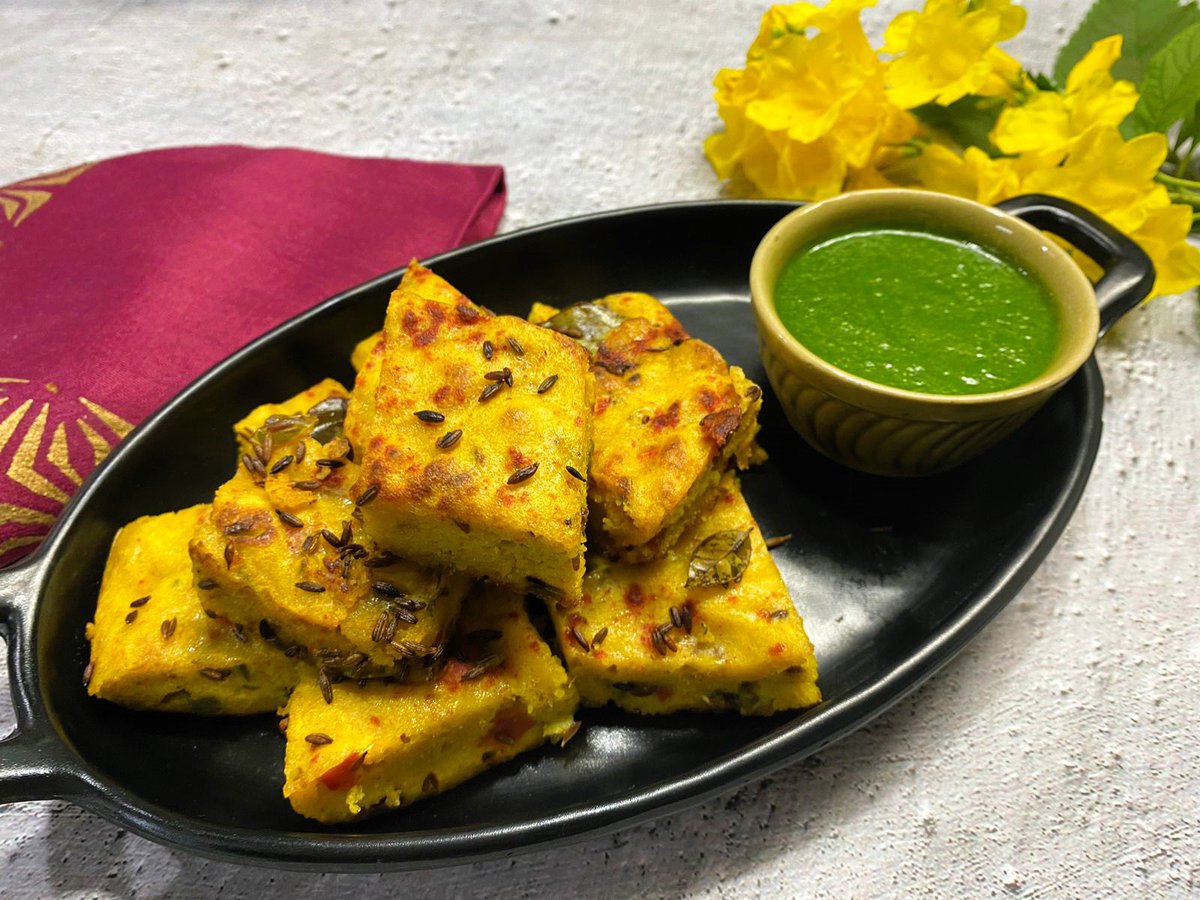
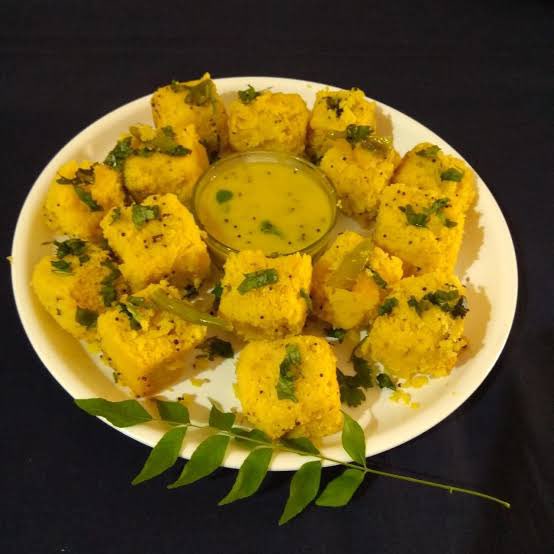
Let me educate non Gujaratis on X. 😜 All these are not dhoklas.
1. Dhokla 2. Nylon Khaman 3. Vati Dal Na Khaman 4. Idada
So from today whenever you call everything dhokla, remember this post. By the way we have few more such varieties to confuse you more. 🤣
The Gujarat Cricket Association funded and built the stadium, not from your pocket. So stop crying like you lost something.
If you want one, go beg your own state’s cricket association instead of barking here.
The West poured $50 billion into fast breeder nuclear reactors and abandoned every single one. India poured $900 million and just achieved criticality on the first commercially viable one outside Russia.
The US spent $15 billion. Gave up. Japan spent $12 billion. Their Monju prototype had one sodium fire in 1995 and never recovered. The UK spent $8 billion. Germany spent $6 billion. France, Italy, all walked away. Six of the richest nations on Earth concluded this technology was too hard and too expensive to pursue.
India started building in 2004 with an initial budget of $420 million. Twenty-two years, a dozen missed deadlines, and a cost doubling later, the Prototype Fast Breeder Reactor at Kalpakkam just sustained a controlled fission chain reaction. The reactor is now alive.
The reason India never quit is a constraint most people have never thought about. India has only 1-2% of the world's uranium reserves. For a country of 1.4 billion people trying to build energy independence, that's a death sentence if you're running conventional nuclear.
But India has 25% of the world's thorium. The single largest national reserve on Earth.
The problem: you can't just burn thorium the way you burn uranium. A physicist named Homi Bhabha designed a three-stage nuclear program in the 1950s specifically to solve this. Stage 1: burn natural uranium in heavy water reactors, collect plutonium as a byproduct. Stage 2: feed that plutonium into fast breeder reactors, where it breeds MORE plutonium AND converts thorium into fissile uranium-233. Stage 3: burn thorium directly at scale.
India just entered Stage 2. Seventy years after Bhabha drew it up on paper.
The math on the thorium endgame is wild. At current energy consumption rates, India's thorium reserves could power the country for over 700 years. Most nuclear nations are playing a uranium game with maybe 80-100 years of runway. India is playing a completely different game with a 7x longer fuel supply.
The West quit because uranium stayed cheap and sodium coolant is terrifying. It catches fire on contact with air. It explodes on contact with water. Russia's BN-600 had 27 sodium leaks and 14 sodium fires between 1980 and 1997. And Russia kept going anyway because Russia doesn't quit nuclear projects. India watched all of that and kept going too.
When you have 1% of the uranium but 25% of the thorium, the engineering difficulty stops being a reason to quit. It becomes the price of admission to a 700-year energy supply that nobody else can access.
Supply chain attacks like the currently breaking axios, litellm and xz are only going to be more commonplace in the vibecoding world.
The entire premise of vibecoding is “I don’t need to understand the code” happens to also be the entire premise of a supply chain attack.
In India if you love your culture, your country you are labelled as bhakt or agent of some party.
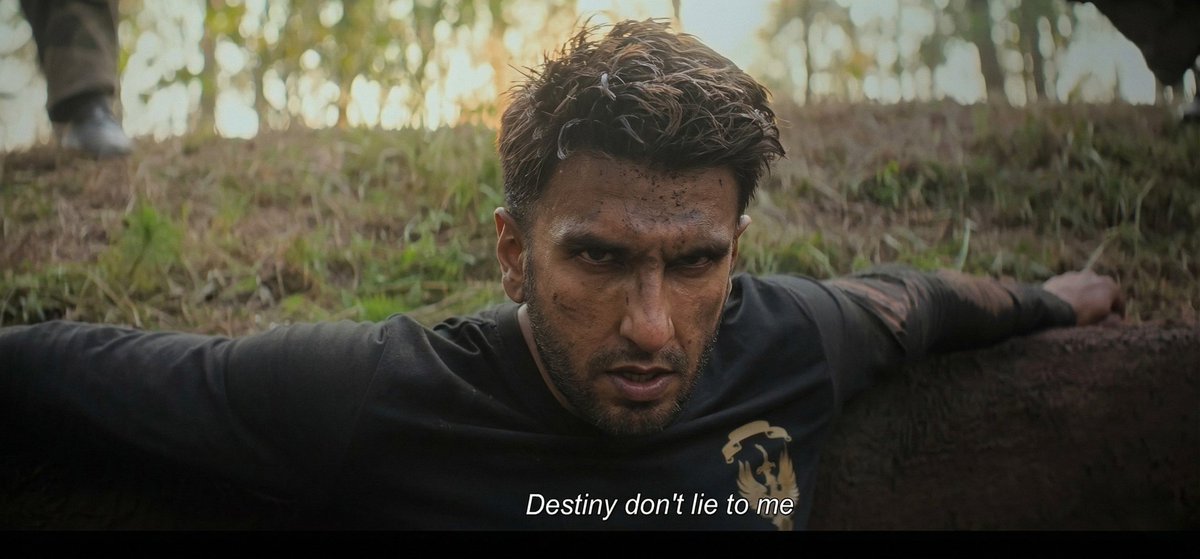
I have watched #Dhurandhar2 two times & it nowhere insulted any religion be it Sikh, hindu or muslims
It showed terrorism & reality of Pakistan. If you can't criticize terrorism then you need to rethink about your mindset 🙏
Now that @AdityaDharFilms has EXPLODED a ATOMIC BOMB right under the film industry, what is shocking is the loud silence from the rest of the film industry .
I don’t know whether this is because the #Dhurandhar2 ‘s devastating explosion has hurled everyone else in the film industry so far into OUTER SPACE that their applause cannot reach here due to the long distances , OR whether they’re huddled in denial, whispering to each other , “It’s just propaganda… it will go away soon ,” so that they can crawl back and resume making their same old repetitive films.
OR are they just paralysed by the film’s sheer brilliance , realising that whatever they’ve been making or planning to make , now simply cannot measure up?
But isn’t it extremely unwise to ignore a DINOSAUR like #Dhurandhar2 staring you in the face and BREATHING FIRE into your eyes with its BOX OFFICE ROAR shaking the very ground beneath their feet , how can anyone be so foolish enough to look away?
My sincere advice to all my colleagues in the film industry is to please take #Dhurandhar2 deadly seriously and study it like a ultra fresh course in filmmaking and educate yourselves OR risk being buried forever in the graveyard of pre March 19th 2026 cinema.🙏
6 YEARS: FROM COVID TO IRAN
TIME FOR SOME PAINFUL TRUTHS 🚨
Six turbulent years from Covid to the Ladakh standoff to Ukraine war to Trump’s tariff offensive to the current Iran war have exposed a hard truth. India remains dangerously dependent on the world for things a serious power should control at home.
Energy first, since that’s on everyone’s mind right now. India imports about 85% of its crude oil and roughly 50% of its natural gas. We depend heavily on overseas supply chains for critical minerals like lithium, cobalt and nickel that will power the next generation of batteries and energy systems. Any disruption anywhere from the Strait of Hormuz to sanctions on major producers immediately ripples through LPG prices, electricity costs and inflation. The current LPG anxiety during the Iran war is just the latest reminder of how exposed we are.
Defence is worse. Despite decades of rhetoric about indigenisation, India still imports roughly 45 to 50% of its major weapons systems, making it one of the world’s largest arms importers, if not the largest. During the Ladakh standoff with China (which is still on) the country had to rush through emergency purchases of munitions, drones, artillery shells and winter gear because either we don’t make those items or domestic capacity could not surge quickly enough. A country facing two nuclear adversaries should never have to scramble for weapons in the middle of a military standoff.
Pharmaceuticals reveal another uncomfortable truth. India is known as the pharmacy of the world, yet around 70% of our active pharmaceutical ingredients come from outside, including China. During Covid this vulnerability became obvious as India scrambled for oxygen, PPE kits, ventilators and key medical inputs.
Technology dependence is the most alarming of all. More than 90% of advanced semiconductors are imported, most high end AI chips and servers are foreign made, and critical digital hardware depends almost entirely on global supply chains. In an era where AI will define both economic power and military capability, this is a profound strategic vulnerability.
Add fertiliser precursors, rare earths, electronics components, solar modules and specialised machine tools and the list becomes even longer. Each time the world experiences a shock (Ukraine, Iran, Azerbaijan, Covid) whether it is a pandemic, sanctions on Russia, a war in West Asia or rising great power tensions India is forced into code red emergency management mode.
The uncomfortable reality is that true strategic autonomy requires historically painful decisions. Building domestic capacity in energy, weapons, pharmaceuticals, semiconductors and AI will demand huge investment, long term industrial policy, and years of political risk. It may mean accepting higher costs and slower returns in the short term in order to build resilience for the long term.
But India’s election to election political cycle rewards short term thinking. No government wants to take decisions that may, beyond a point, take a decade to pay off. The decisions these crises compel from a country like India will mean a total dismantlement of our politics as we know it today. It will mean a generation of turning the country on its head.
Yet the alternative is worse. As things stand India remains structurally vulnerable. A country that has to scramble every time the world shakes cannot claim true strategic autonomy.
From COVID to Iran, the last six years have made that painfully clear.
This also has an Ancient India connection :)) Centuries before the Babylonians standardized their system, the Rig Veda (the oldest Vedic text) explicitly described the circle using the number 360.
In Rig Veda 1.164.48, the Rishi Dirghatamas describes a Wheel of Time (Kala-Chakra) placed in the sky.
The verse says: "12 are its fellies... It has 3 axles... It has 360 spokes that are firmly fixed."
This is 1 of the earliest recorded instances of a human civilization explicitly dividing a full circular cycle (the year) into exactly 360 parts.
Let's say due to some issue, India declares war on Pakistan and Pak declares war on India.
A Pakistani ship was participating in some exercise with Iran a week ago. This ship is now called by Pakistan to attack India. Indian Navy sinks this ship in international waters off Iran's coast 7 days after it left Iran.
Will all Indians now telling "India should have saved the Iranian ship" also say "Iran should have saved the Pakistani ship on a war mission against India"?
Or say "India should have given warning to Iran and Pakistan before sinking the ship"?
It doesn't work like that in a war. India can't give warnings before hitting, Iran can't give intel or save the Pakistani ship. Or it will go against India.
What's happening I see is so many Indian minds are gullible to propaganda targeting their emotional sides and kind hearts.
This is why so many feel somehow India is responsible for an Iranian ship that left an Indian port days ago during a declared war against the US.
Saving anyone's warship, providing intel to Iran or the US, trying to stop the US or Iran in international waters all can be construed as an act of war by that party while they are at war.
India cannot and should not be involving itself in it. Only if the incident had happened in Indian waters or while the ship was still in the Indian event, India can even be questioned.
We call it pseudoscience when it is in Sanskrit.
We call it cutting edge when it is in Latin.
Rename Sushruta to Dr. Simon Rutherford, publish it from Oxford, & suddenly it becomes revolutionary. Same idea....Different accent....Instant applause.
Funny how evidence changes value depending on the passport attached to it.
Dear @narendramodi, a billion Indians nominate @sanjeevsanyal and the Kaundinya team for this year's Padma honours, for proving ancient India's maritime prowess by sailing a ship built to 5th century specification.
Some advance towards greatness; others return to it. We do both.
Liberal’ ideology is not liberal but it is Authoritarianism…
She pulled one pin, everything fell
Whoever she is , it’s the best 2 and a half minutes I have spent recently
🚨⚡️ Who is leading Venezuela now?
Vice President Delcy Rodríguez — the same official who, two years ago, hid behind a door and jokingly surprised Russia’s Foreign Minister Sergey Lavrov.