A Tamil Brahmin Indian girl the world and the people of India forgot.
Every English speaking Jesuit educated Indian know the story of Florence Nightingale but history has no record of Padmavathi Iyer.
In the year 1917, a Tamil Indian girl was born in a middle-class family in Rangoon, Burma, where her father had gone for a living. He named her Sivaramakrishna Iyer Padmavathi.
At a time when women were traditionally confined to the kitchen/illiterate, the middle-class girl did MBBS from Rangoon Medical College.
When the Japanese invaded Burma, they briefly returned to their traditional home in Coimbatore.
In 1949, she went to London to do an FRCP, then unimaginable for a Female Indian doctor. She was selected to study further at Johns Hopkins University, US, where she trained under the legendary cardiologist Helen Taussig.
Thereafter, she moved to Harvard University, where she trained under the Father of Cardiology- Paul Dudley White.
When a glorious cardiology career awaited her in the US, she was firm in returning to India & serving Indians. She joined Lady Hardinge Medical College in 1953, to become India's First Lady Cardiologist.
S.I.Padmavathi started India's first Cathlab & exclusive Cardiac Clinic. Started India's first DM Cardiology course. She founded the All India Heart Foundation (AIHF) in 1962, to serve the poor & needy. She joined Maulana Azad Medical College in 1967, by which time her fame had spread. The Indian Govt under Indira Gandhi honoured her with the Padma Bhushan, that year.
She was the cardiologist & administrator of 3 great colleges at the same time- MAMC, G.B.Pant Hospital & Lok Nayak Hospital. She retired as Director, of MAMC in 1978.
She set up the National Heart Institute (NIH) in 1981, in Delhi. At age 90, Padmavathi became a fellow of The European Society of Cardiology in 2007.
Till age 95, (the year 2015), Padmavathi worked 12 hours a day, five days a week, to serve poor and needy Indians, with state-of-the-art Cardiac Care. She retired from active practice, that year. The Government of India bestowed India's second highest Civilian Award, the Padma Vibushan on S.I.Padmavathi in 1992.
Both Padmavathi and her sister Janaki(neurologist) remained single and started the Janaki-Padmavathi trust, pouring in their entire earnings to start a trust to provide poor people with money for life-saving Heart Surgeries.
After dedicating her entire life to serving the poor in the field of Cardiology, S.I.Padmavathi passed away in 2020, at age 103 from Corona.
Imagine the steely resolve, vision, brilliance and sheer determination of this iron- lady to shatter the glass ceiling in achieving all these, serving poor Indians with quality cardiac care, and finally giving away all her wealth to her fellow citizens.
Here is an inspiring story of the first female cardiologist of India 🙏
Astrophysicist and Nobel laureate Subrahmanyan Chandrasekhar used to travel 80 kilometers every week from the Yerkes Observatory to the University of Chicago, where he taught a course attended by only two students. When asked why he spent his time this way, the professor replied that they were very good students.
In 1957, Lee Tsung-Dao and Yang Chen-Ning were awarded the Nobel Prize in Physics. The course taught by Subrahmanyan Chandrasekhar became the only course in history where all its attendees received a Nobel Prize.
Bengaluru’s new science center-gallery is a truly unique exhibition of science. With interactive and innovative exhibits around a theme (Carbon), the place is a must-visit for people of all ages and backgrounds. @SciGalleryBlr https://t.co/SqydmS56GL
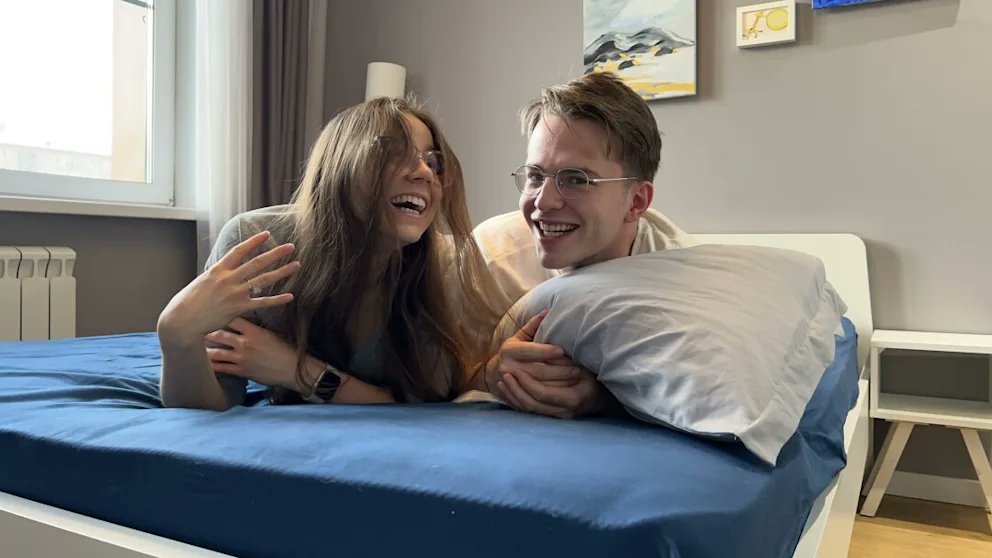
Meet Aleksandr Zhadan.
This 23-year-old developer from Russia used OpenAI to talk to 5,240 women on Tinder and automated dates with 100+ of them.
Now he is getting married to Karina, the best date found by his algorithm.
Here's the wildest Valentine's story you'll ever hear:🧵
Across India, there’s a new kind of tourism that’s seeing a boom- astrotourism. Amateur astronomers, citizens building telescopes, hobbyists, and private companies are organizing dark sky tourism with nightly sky watching and fun daytime experiences. https://t.co/aycmKXAuV3
Only in India! There’s a temple to the constitution in Thiruvananthapuram where you can worship an open copy of the document in a glass case, & get Vibhuti applied to your forehead as well! #IndependenceDay
Part 1 of 2
Today is 1st July, 2023.
Today is National Doctors’ Day.
This is going to be long.
And painful.
But hopeful nonetheless.
So please, stay with me.
I received this wedding card last week from a man who was admitted to my intensive care unit, exactly a year ago. He came in bleeding from all orifices. His skin had large patches of blood clots and his nose and mouth were filled with bright red clots.
His platelet counts were below 10,000 and his hemoglobin was not going above 6 g/L even after multiple transfusions. He did not have dengue fever, malaria, or leptospirosis. He did not have a life threatening bacterial or fungal infection. He did not have a blood cancer – all common causes for a severely depressed platelet count and anemia.
But what he had was something terrible. A terrifying condition called, Kasabach-Merritt syndrome (https://t.co/YBgsJwywC9) – when a large highly active tumor, so large and highly aggressive that large proportion of body’s blood flowed through it and it consumed all the cells. The bleeding and clotting disorder results from platelets and red cells and other clotting factors being used up within the tumor. And it did so, without any breaks. Even after we transfused packets after packets of fresh platelets and red blood cells to him, the counts refused to improve.
The tumor was inside his liver. A large hepatocellular carcinoma, an aggressive liver cancer, as big as 12 cm, was relentlessly trying to kill the man by exsanguinating him. There was no hope. He was not going to make it. We had never seen such a thing with liver cancers. The bleeding was so severe that brain failure was to set in soon and he would go away in a coma. The large liver tumor could not be removed because he would lose a large portion of his chronically damaged liver and go into liver failure and die. He could not be offered a liver transplant because the tumor was so aggressive that it would come back in the new liver.
I tell his wife and daughter to say their last goodbyes, so that I could shift him for palliation either at home or at a nearby hospice care. But there was a complicated heartbreaking situation which I was not expecting. His daughter was getting married in a year. In 12 months. And this was the first wedding in the family and he was the man of the hour. Without him, there would be only a physical wedding, without anyone’s minds being there. Bodies lines up for a beautiful function, without their minds. It was going to be terrible.
But there was no hope. It was impossible for us to do anything for the man with a 12cm liver cancer which was bleeding him out. Surgery would kill him instantly.
They wanted me to speak with him first, and help him realize that he was going to die but we were going to make it dignified and comfortable for him. I wanted to run away. I did sign up for this, but it was still so difficult for me every time. Every experience like this stressed me out so much that I was sure my patients would outlive me one day. There was no place I could scream and cry my heart out. Doctors could not cry. Not in public. Even if we were humans.
I approach the man and tell him factually, but caringly, making him understand that he was not going to be lonely in death. But then something happened that I would never forget.
He started crying like a baby in front of me. And I am not talking tears-rolling kind of cry, but a fully grown man was wailing in front of me, hooked onto platelets and red cells and plasma bags, because he was not ready to say goodbye to his family, especially when he spent a large portion of it working hard, to get his daughter a good future and a marriage.
He had to be there. He was an average man. He has done fine for himself and his family. But getting his daughter a beautiful future – that would be his moment. The liver tumor which no one expected was going to deprave him off it. He would not die in peace. And he asked, by repeatedly squeezing my hand, to please not let him go. I go back to the wife and daughter and tell them that he was not ready to go. And so, I was not ready to let him go and I needed one night to think about it.
That night, I lost my sleep. I ate lesser than the day before and my mind was wandering even during the time I played with my children. But I found a solution which could keep him alive or kill him instantly. I focussed on the REAL PROBLEM. It was that large hell-hole of a tumor. So, we take it out of the equation, in a manner that would cause the least harm to the patient – “Primum non nocere.”
And there was something in our armamentarium for that. But I had to convince the doctor who was doing it, to do it for me. For the patient. It was a procedure called SBRT or stereotactic body radiation therapy, where a focussed beam of low dose radiation was targeted at a tumor that would melt it ever so gently. But this was a 12 cm tumor and as it melted, it could take the liver and other organs along with it, because the inflammation from the dying tumor would be devastating.
But I did convince him - because according to my brilliant radiation oncologist, “it was do or die or just die.” And after a high-risk consent, an SBRT – single session on the large tumor was done. And it opened Pandora’s Box.
The inflammation hit him so bad that he went into shock in a days’ time. Medications after medications were pushed in to preserve his life. Doctors and nurses from every corner pitched in. Critical care specialists, Nephrologists, Interventional radiology, Gastroenterologists, and me. We kept him on the ventilator to protect his brain and lungs until we could help him tide over the systemic inflammation. And then came the multidrug resistant bacteria which the infectious diseases guys blasted away with a powerful antibiotic cocktail.
After a week, his vitals stabilized, his platelets started improving without transfusions and he woke up on the ventilator. In three days, he was out of the ventilator and in another couple of days, he was in the room and a week later, he went home.
But did we really kill the tumor and not kill the man? A repeat CT imaging couple months later showed that his tumor had melted away to oblivion (see picture in Part 2). The SBRT worked. This was the first time anyone was doing this in Hepatology practice and we presented this as a unique report during the DRILLS MEETING at ILBS Institute, Delhi last year. The out of the box thinking worked. I kept following my patient for the next few months for a tumor recurrence, which thankfully did not come. He was better and he started working. And after a whole year, a few weeks back, he came in to my OPD along with his daughter and wife, and handed me this wedding invitation. His daughter will be married this month.
And he will be there to see her off, physically and mentally.
I kept the wedding card in my personal box of things for me to look back when I get old.
Before he left, he asks me jokingly – “Will I be able to see my grandchildren?” I smile at him and tell him, “I do not know if I will be there on this chair tomorrow. But if such a day comes and we must fight it again, and if I am alive, I will see you in the ring.”
Today is 1st July, 2023. Today is National Doctors’ Day.
This is going to be long. And painful. But hopeful nonetheless.
So please, stay with me.
In this experiment Dr Rob Thompson from the University of Reading shows how long it takes a cup of water to soak into parched ground. This is why heavy rainfall after a drought can be really dangerous & might lead to flash flooding
https://t.co/qeqALYxRzx
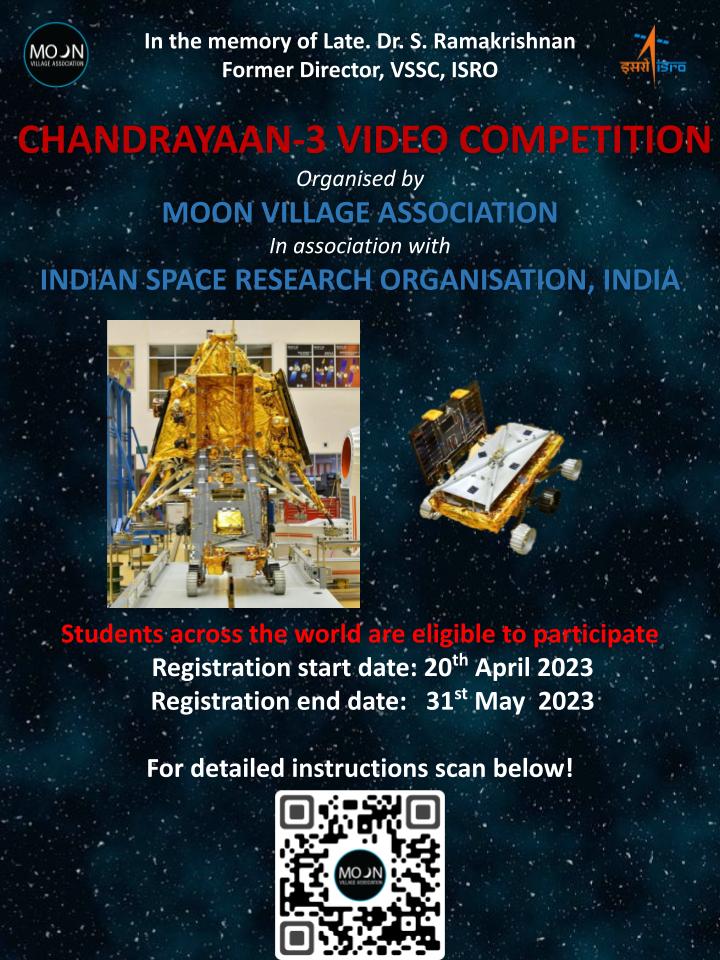
ISRO collaborates with Moon Village Association for the outreach of Chandrayaan-3 Mission
https://t.co/wfit5BYcxB
Global Chandrayaan-3 Video Competition
is announced. Children aged 13-21 can submit a 2-3 minutes video on the topic by May 31, 2023
https://t.co/CtN9OAq8XK
A thread here for those who don't understand why the China protests over the weekend protests are so shockingly rare.
Surveillance. In. China. Is. Extreme. Think you could evade Chinese police? Let's walk through it:
1/12
Seeing way too many folks advocating
teaching "finance" & "compounding" over "lifeskills" to kids.
Stating it is a must to survive as adults.
I hail from a financially literate family &
here is why this is a bad thought process to implement.
An honest 🧵
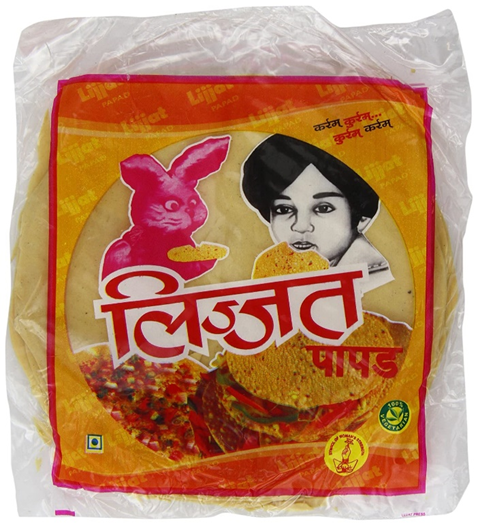
Was eating Lijjat Papad at home and just thought of delving deeper into the company -
From Rs 80 to Rs 1600 Cr – This is the Inspirational story of Lijjat Papad, an Indian women's worker cooperative that makes Papad
A story that is driven by 45000 women today!
Do RT :)
@RailwaySeva Bed linen is not provided in 07192 train A1 coach. The explanation given by TTE is that some trains don't provide Bed linen. Why do you have to charge more money if that's the case? PNR no: 4544869245
@KTRTRS A patient collapsed near international departure @RGIAHyd but no AED kit or defib with an emergency crash cart for code blue. Ambulance took 30min to reach the spot. No CPR trained personnel. 2 docs and I took turns giving CPR. Pls look into this with high priority.