I'm delighted to share that Physical Superintelligence PBC (PSI), which I co-founded with @matthew_pines and @AKlokus, has raised a $58M seed round to build the world's most advanced research lab for discovering and commercializing transformative physics breakthroughs at scale with AI, safely, verifiably, and for broad public benefit.
@framer I want to like your product but the AI fails so often that I've been forced to shovel good money after bad each time I run out of credits. There has to be a better way. Feeling locked in to an unreliable service after so much time invested
For my first post, I’m sharing a letter @NVIDIA signed on why open models matter.
AI will transform every industry, power every company, and be built by every country.
Open models strengthen safety and cybersecurity, accelerate innovation and diffusion, and enable sovereignty.
The world needs both frontier closed models and frontier open models.
https://t.co/AUKzoQ5Ikb
@undefinedKi@undefinedKi how does this work with a harness like Hermes? I’ve set up Obsidian and Karpathy wiki, but it doesn’t function like a true RAG.
Introducing Hyperagents: an AI system that not only improves at solving tasks, but also improves how it improves itself.
The Darwin Gödel Machine (DGM) demonstrated that open-ended self-improvement is possible by iteratively generating and evaluating improved agents, yet it relies on a key assumption: that improvements in task performance (e.g., coding ability) translate into improvements in the self-improvement process itself. This alignment holds in coding, where both evaluation and modification are expressed in the same domain, but breaks down more generally. As a result, prior systems remain constrained by fixed, handcrafted meta-level procedures that do not themselves evolve.
We introduce Hyperagents – self-referential agents that can modify both their task-solving behavior and the process that generates future improvements. This enables what we call metacognitive self-modification: learning not just to perform better, but to improve at improving.
We instantiate this framework as DGM-Hyperagents (DGM-H), an extension of the DGM in which both task-solving behavior and the self-improvement procedure are editable and subject to evolution. Across diverse domains (coding, paper review, robotics reward design, and Olympiad-level math solution grading), hyperagents enable continuous performance improvements over time and outperform baselines without self-improvement or open-ended exploration, as well as prior self-improving systems (including DGM). DGM-H also improves the process by which new agents are generated (e.g. persistent memory, performance tracking), and these meta-level improvements transfer across domains and accumulate across runs.
This work was done during my internship at Meta (@AIatMeta), in collaboration with Bingchen Zhao (@BingchenZhao), Wannan Yang (@winnieyangwn), Jakob Foerster (@j_foerst), Jeff Clune (@jeffclune), Minqi Jiang (@MinqiJiang), Sam Devlin (@smdvln), and Tatiana Shavrina (@rybolos).
i'm actually insane for sharing this but here we go...
i built the complete AI Image Generation System:
- 6-module course covering Gemini, Midjourney, GPT and Seedream 4.0
- blueprints to craft perfect prompts and start making money
- 20 JSON templates for Nano Banana
- 15 Midjourney SREF styles
- access to Composition AI - a model trained on elite techniques to generates perfect prompts (and images) for you
i'm taking this down in 24 hours because honestly this should be paid content
reply "IMAGE" + retweet for access (must be following so i can send the dm)
By far the most beautiful launch I’ve seen to date.
This is one of thousands of photos I captured across 7 cameras. I can’t wait to share more with you!
@OptimistFields
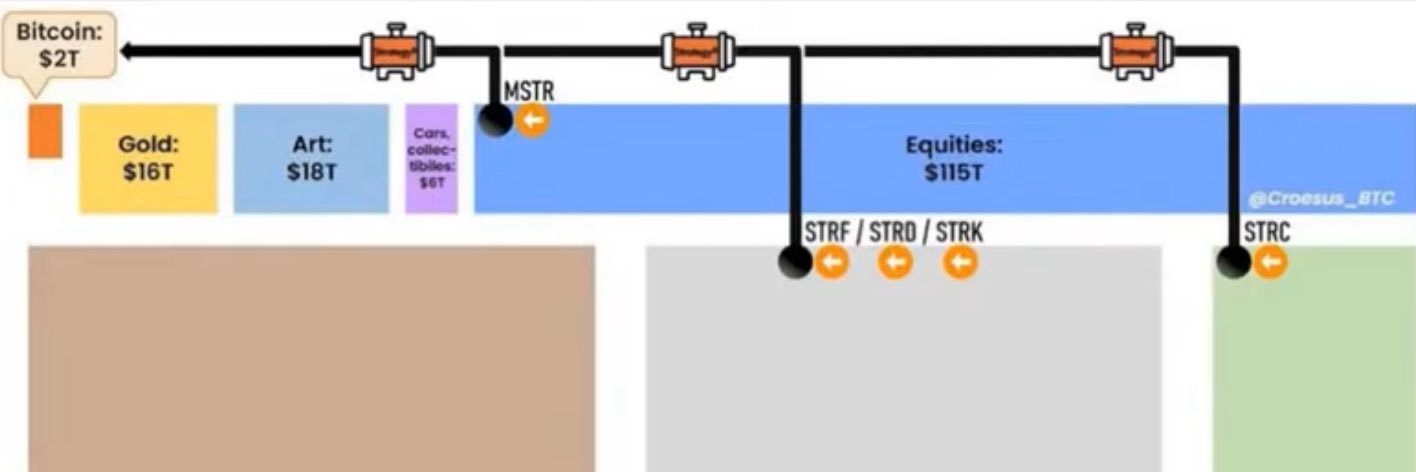
You said ‘…one day, will we all walk into banks to ask for bitcoin?’
Why wait? What if an army of bitcoiners starts calling banks today to demand it. “I want my BTC!”
Massive public demand will incentivize banks and pump bags.
Prove me wrong.