"As long as the world remains divided into competitive nation states and market capitalism with its ruthless need to accumulate and make profit, the COP process is reduced to corporate greenwashing."
https://t.co/syyg36FEY7
Any “ism”, whether it is scientism or spiritualism, that attempts to explain away life and the mind is destined to fail in comprehending reality, whatever that reality may be.
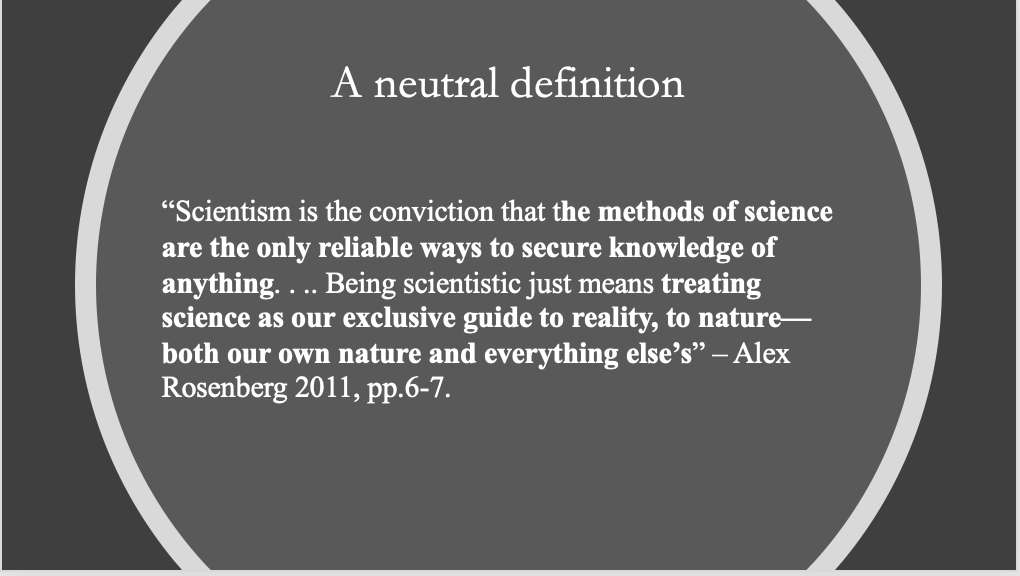
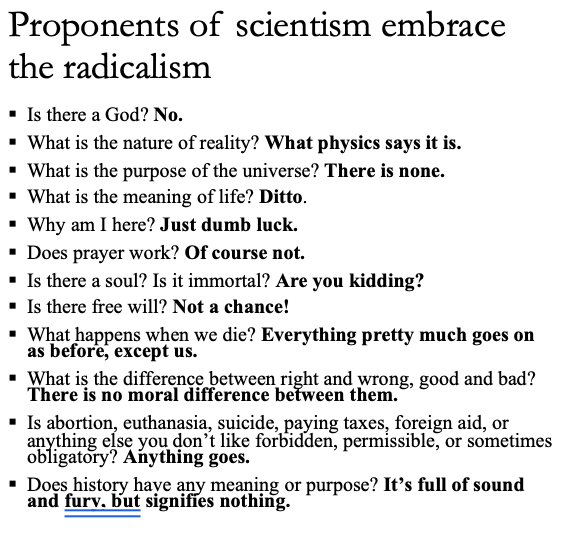
The students were massively unimpressed with scientism, or at least Alex Rosenberg's characterisation of it and its implications. Only one student found it remotely plausible.
Here I repond to Dr. Aftab's complaints about my critique of physical and chemical "treatments" of the brain for mental "illness".
https://t.co/Ba7UitlGms
This year, #8billion of us will use up the entire amount of #renewable natural resources the Earth can provide, and then an additional 80% above that,
Download our crisis point report here for a deeper analysis of our population growth.👇
https://t.co/SqKfJHQ7rk
One strong possibility is because the US is the ultimate “individual responsibility” country. Every person for themselves, weaker social safety nets.
So, far more people slip through the cracks and find themselves in situations that make obesity, violence and drugs more likely.
𝗦𝗰𝗶𝗲𝗻𝗰𝗲 𝗻𝗲𝗲𝗱𝘀 𝗶𝗻𝘁𝗲𝗿𝗮𝗰𝘁𝗶𝗼𝗻𝘀 𝗮𝗻𝗱 𝗻𝗲𝘄 𝗳𝗼𝗿𝗺𝘀 𝗼𝗳 𝗰𝗮𝘂𝘀𝗮𝗹 𝘁𝗵𝗶𝗻𝗸𝗶𝗻𝗴
In Dialectical Systems:
"Why western science and philosophy cannot deal with the relations between parts and wholes" by Alicia Juarero (new book!
https://t.co/RLdWlO7sRK
If however we understand thought as immanent within, rather than sitting behind, our interactive conversational lives, we can recover the psychiatric understanding that disturbances of relating truly do constitute disturbances of thought itself.
@Philip_Goff Supposing a definition is incomplete and vague, as it is in the linguistic domain. Proposing a definition can be complete with a clear course of action.
Similar to the difference b/w having a complete blueprint for building a car vs merely saying assemble the engine and chassis
"The mind-body problem can therefore not even be formulated. The problem cannot be solved, because there is no clear way to state it. Unless someone proposes a definite concept of body, we cannot ask whether some phenomena exceed its bounds."
Noam Chomsky
How did the rise of capitalism affect human welfare? Did it make poverty better or worse? Where did progress come from?
We have a new study that explores these questions, looking at 500 years of data. It's a troubling but also inspiring story... 🧵 https://t.co/5VeqzmZNkX
Knowing oneself and understanding oneself are not the same. Understanding oneself presumes self-knowledge about our conditioning. That requires us to incorporate genetics, environment/social, and above all, the role of chance that shaped the causal events creating the self.
@RBReich Closing the income inequality is just a temporary solution in the long run. The ONLY permanent solution is to shift away from the consumerist economic model.
@0CorruptGovs@RBReich The utopian model suggested above requires reformation from within the individual. Not from outside, as in the case with authoritarianism.
The tough task would be to convince the privileged that their greed for comfort reflects a contentless life, devoid of core human values.
@0CorruptGovs@RBReich Towards a less consumerist economic model?
Let's admit that humans crave material possession. So any economic model that harshly restricts consumption will be utopian (the best case) or authoritarian (the worst case).