Ledger is investigating reports of loss of funds from users in South East Asia who purchased products from a reseller named CryptoBillis. As a precaution, and pending the results of our investigation, we have asked CryptoBilis to pause all sales and shipments of Ledger devices. We recommend Ledger users who purchased from this reseller in the last 90 days to not initiate set up if you have not done so yet. If you have set up your Ledger device, consider moving assets to a new Ledger signer (with new seed). We will continue to inform customers of updates as the investigation progresses.
Reach out to Ledger customer support through official channels with any questions: https://t.co/4p918UH8yb
Good Morning Everyone ❤️🩹
Crypto security shouldn’t depend on users remembering a dozen small precautions every time they send money.
One wrong character, the wrong network, or an address copied from the wrong place can turn a simple payment into an expensive mistake.
But there’s another issue that often gets overlooked: reusing the same receiving address can make it easier to connect separate payments on a public blockchain.
That’s where Send to Name from @Americanfort_io offers an interesting approach.
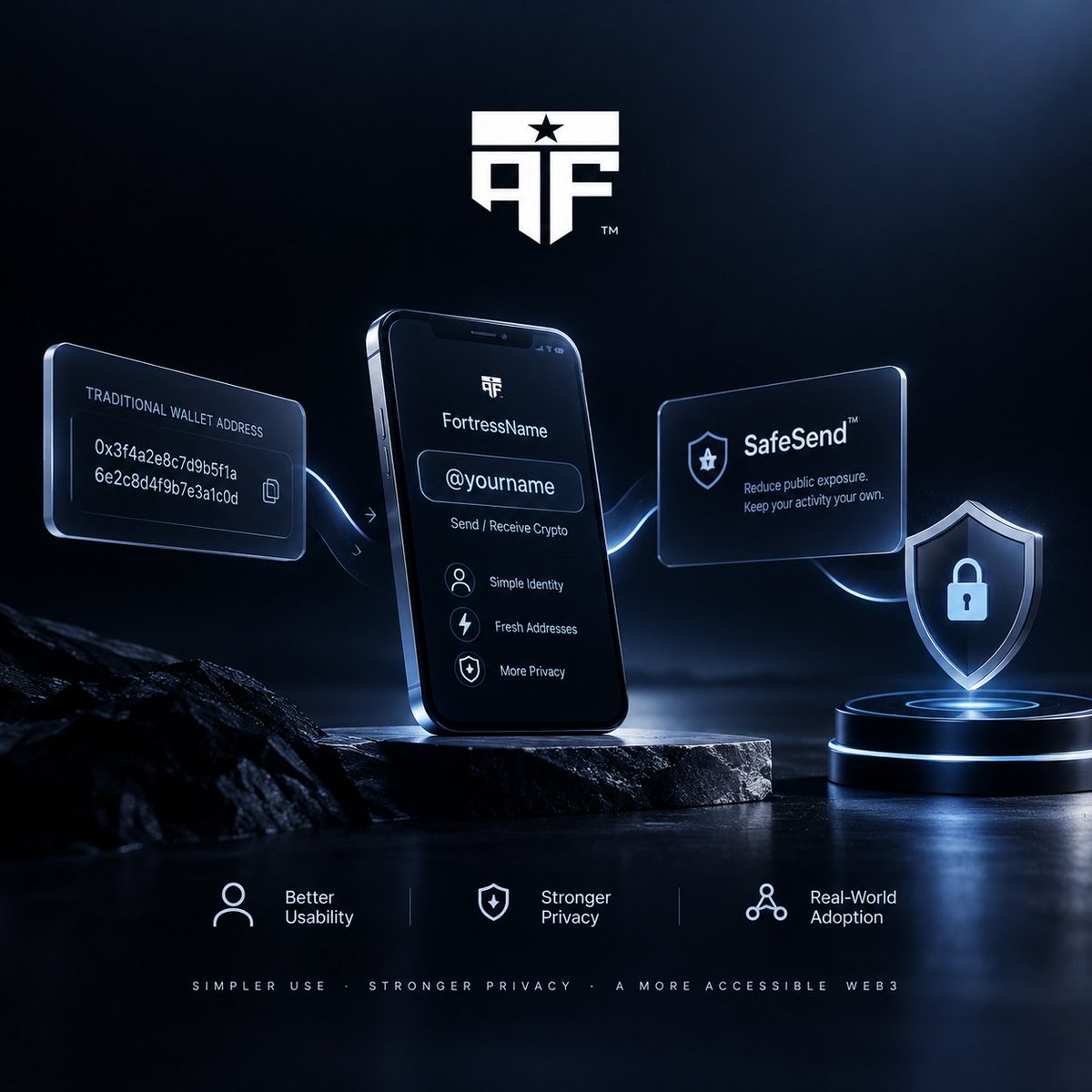
Instead of making users copy and verify long wallet addresses, they can send through a readable name. Behind that simpler interaction, the system generates a fresh, one-time address for the payment.
The important distinction is that the name gives users an easier way to identify the recipient, while the receiving address doesn’t have to remain the same across payments.
Settlement still happens on the blockchain. What changes is how the user initiates the transaction and how payment destinations can be separated.
I think that’s an important direction for wallet design.
We shouldn’t expect every user to become an expert in address management just to transact safely.
The better approach is to reduce unnecessary decisions before a mistake happens.
Good security doesn’t only protect users when something goes wrong. It helps make the wrong action less likely in the first place.
@Americanfort_io
Partner · NFA · DYOR
GM CT and Happy weekend
I’ve been sick for almost a week now, and nobody has reached out to ask why I haven’t been active.
Am back, thank God for quick recovery.
Touch grass today.
good morning X family 🖤🤍
Happy New Week my frends✨
One thing I think Sleepagotchi needs to get right is the difference between rewarding activity and building a lasting habit.
NFT bonuses and in game rewards can bring people in. But the more interesting challenge is giving users a reason to keep coming back when there s no event or leaderboard to chase.
That s where the wellness side matters.
If Sleepagotchi can connect gamification with real value in people s daily routines rewards become the entry point not the whole product.
That s the kind of long term growth I d like to see.
@sleepagotchi
what would your dream voicy look like?
give voicy your own creative twist and bring a fresh design to life
- top artworks can earn genesis nft wl spots
- 10 lucky participants will receive wof codes
join the discord to register: https://t.co/rbwn8UFJWz
only 72 hours to participate
Good Morning family 🌞
One thing that could determine the future of Web3 is how easily people can actually use it.
Blockchain technology has made digital transactions possible without traditional intermediaries. But long wallet addresses, address mistakes, and publicly visible transaction histories still create challenges for everyday users.
This is where @Americanfort_io is taking an interesting approach.
Its Send-to-Name™ concept aims to replace complicated wallet addresses with a simple, reusable identity. Through FortressName, users can share a familiar name, while supported integrations can resolve payments to fresh receiving addresses.
SafeSend™ adds another layer to this vision by aiming to reduce the public exposure of transaction activity without relying on pooled funds.
But here's the bigger question
Can privacy infrastructure become simple enough for ordinary users while remaining practical for wallets, developers, and institutions?
That depends on more than innovative cryptography. It also requires reliable integrations, a smooth user experience, independently verifiable security, and clear communication about which features are actually available.
@Americanfort_io is working toward this combination of usability and privacy. Its real progress will depend on how well these ideas perform in practice and how widely the ecosystem adopts them.
Because in Web3, building advanced technology is only half the challenge.
The real breakthrough comes when people can use that technology without needing to understand every technical detail behind it.