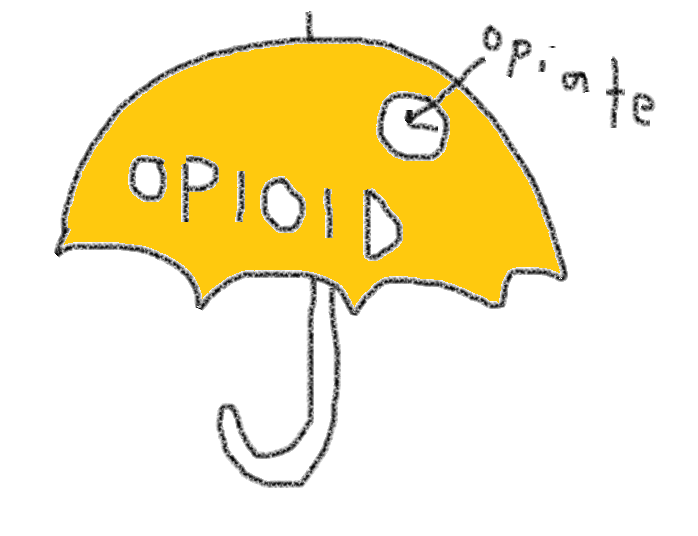
@ssfarouk Opioid is the inclusive umbrella term for drugs that bind the opioid receptor (including synthetics like fentanyl and dilaudid). Opiates are the opium poppy derived subset (incl morphine, codeine). If you say "opioid" you'll always be correct. #NephMadness
On Hamilton's birthday, listen to some Hamilton, check out @ptrckprry corpus package #Rstats. https://t.co/PlerfHK0PG containing Federalist Papers - a case of disputed authorship. Apropos, cool data set for a #tidytuesday? #textanalysis
@jacobeisenstein@arthur_spirling @_LeslieHuang @dramyhliu Very helpful. I've never considered Dirichlet posterior mean of log rate (instead of posterior mean of rate), but this seems like the way to go! does this get used elsewhere? e.g. for naive Bayes text classification?
The Federalist Papers, a case of disputed authorship, is a fun starting point to think about what preprocessing might shed the most light on authorship. Ready to use in @ptrckprry R "corpus" package. https://t.co/AgHuTGn2tZ
@opencpu@_lionelhenry@romain_francois@thomasp85 I almost never use `sizeof(type_t)`. Most of the time I use the pattern `type_t *x = malloc(sizeof(*x));` this also saves you if you later change type_t to something else. Also handy for allocating a arrays: `type_t *x = calloc(n, sizeof(*x));`
`lme4` takes 12.4 hours; our method takes 1 minute
"Fitting a deeply-nested hierarchical model to a large book review dataset using a moment-based estimator"
Ningshan Zhang, @KyleSchmaus, and @ptrckprry
https://t.co/CW1L0L4LfL
Available now in `mbest` package on CRAN.
@opencpu@hadleywickham docs for the type inference are here: https://t.co/FvNXQV3Xqi ; eventually I'll move `read_ndjson` to a different package; need a data.frame that supports nested data.frames first: https://t.co/KALFFJX624
Politicians are more boring than they used to be, right? NOPE!
#MPSA2018 ppr w @ptrckprry models "interestingness" of UK backbench MPs post-1935 by looking at how distinctive their word use is: https://t.co/MYqTfd93TS. Average boringness is constant! BUT.. (1/n)
@mcrowder65@getify Every time I see the argument that higher-order functional programming is "easier to understand" than a for loop I think of Gustafson's Generaliztion-Specialization paradox
@ma_salmon @romain_francois@kevin_ushey Not sure if this helps, but I managed to get "Årup" in a DESCRIPTION: https://t.co/caW7NWlGvo source is at https://t.co/hHmXHKqTAI
A framework for the economic study of the technological elements of machine-learning-driven artificial intelligence, from @MattTaddy https://t.co/SFCjN6QnSW
@karlrohe variable = "average flight delay in minutes"; key = (airline,day,airport); having explicit key makes easier to link variables with common keys (e.g. variable2 = "rain inches"; key = (day,airport))
@karlrohe I prefer instead to think of a "variable" as a map between "keys" and "values"; the "type" of the variable is the set of possible values, the "frame" of the variable is the set of possible keys