🎉 Excited to share that our work on intrinsic dimensionality of reasoning has been accepted to #ICML2026 as a ✨spotlight✨ (top 2.2%)!
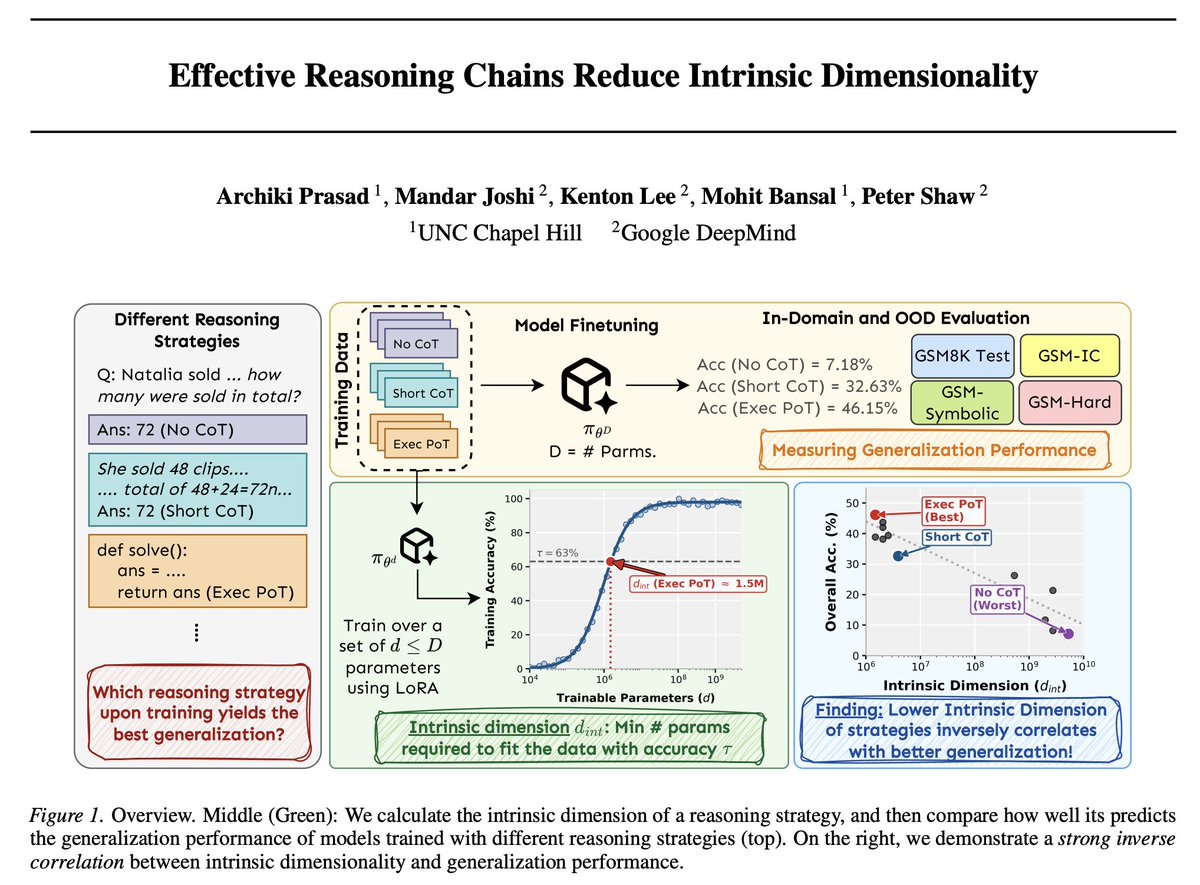
We analyze the effectiveness of teaching a model how to reason via the lens of intrinsic dimensionality (the minimum effective capacity a model needs to solve the task) and find that effective reasoning chains are inherently compressive!
Across Gemma-3 1B and 4B, lower intrinsic dimensionality strongly predicts not only in-distribution accuracy (GSM8K), but also robustness on OOD benchmarks (GSM-Hard, GSM-Symbolic, GSM-IC) -- outperforming reasoning length, token perplexity, and KL divergence.
Stay tuned for more results and exciting updates in the camera-ready! 🚀
I will be presenting this paper at ICLR next week! 🇧🇷
Come chat about Kolmogorov complexity, the MDL principle, and what this all means for training better models! 🧵
Excited to share a new paper that aims to narrow the conceptual gap between the idealized notion of Kolmogorov complexity and practical complexity measures for neural networks.
Excited to share a new paper that aims to narrow the conceptual gap between the idealized notion of Kolmogorov complexity and practical complexity measures for neural networks.
Aside from the paper, I’m also interested in work related to LLM post-training (RL, evals, tools, agents) and ML applications in science (particularly biology).
In the limit, what's important is our ability to adapt.
What is a good recipe for teaching agents to adapt on-the-fly?
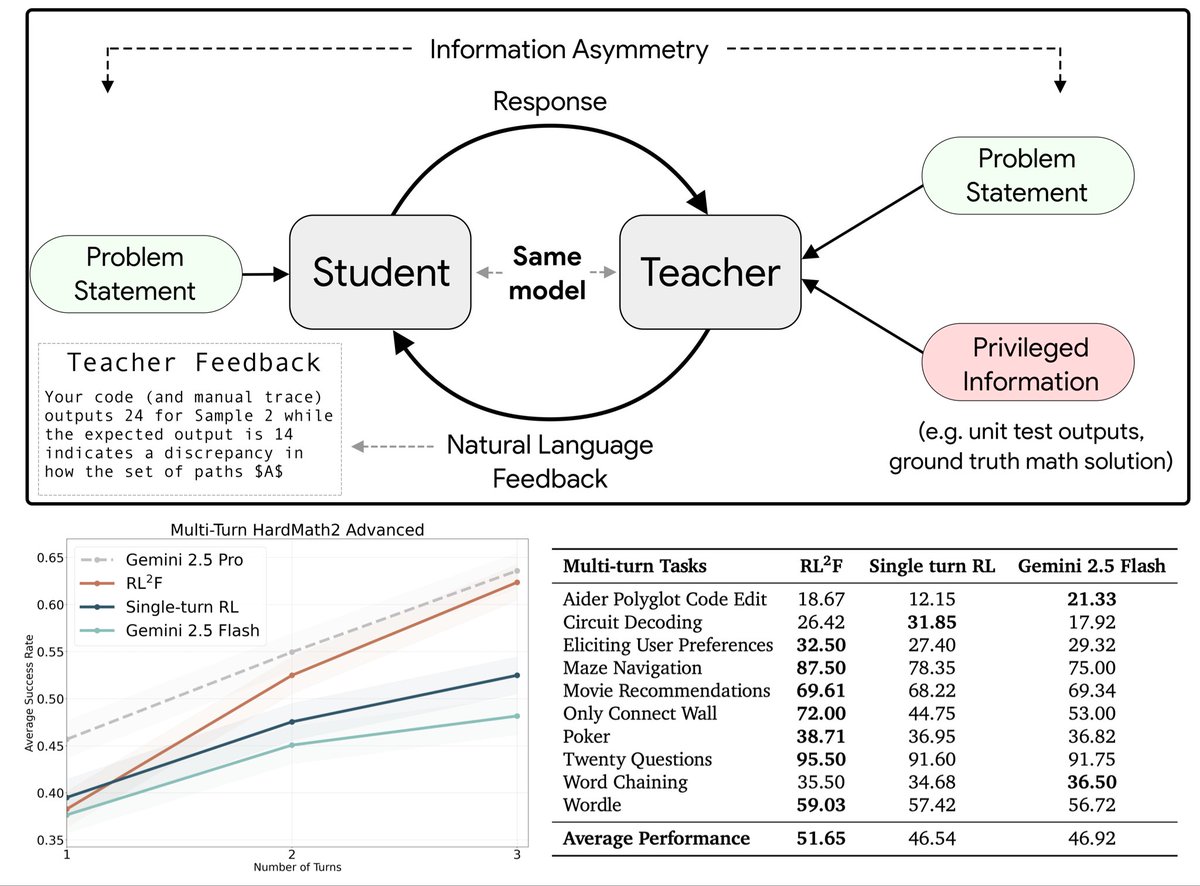
We introduce two meta-learning for LLMs papers written with @JonnyCoook at @GoogleDeepMind.
This is research from last year we can finally share 🧵👇
🚨 I’m on the 2026 Research Scientist Job Market!
I am a PhD student at UNC Chapel Hill (advised by @mohitban47) and recipient of the Apple Scholars in AI/ML PhD Fellowship. My research centers around:
🔸Reasoning & RL/Post-Training: Evaluating and interpreting the reasoning process, and improving post-training and alignment through self-generated and reward-based signals (Intrinsic Dim., ReCEVAL, ScPO, LASeR).
🔸Agents & Planning: Designing adaptive agent frameworks to that use extra test-time compute & reasoning upon failure (ADaPT, System-1.x, PRInTS).
🔸Reward & Skill Discovery in Code: Leveraging execution signals to build reliable rewards, automate debugging, and discover abstractions in code (UTGen, ReGAL).
Prev (Research Intern): Google DeepMind, Meta FAIR, Allen Institute for AI (AI2), and Adobe Research.
Feel free to reach out via DM or email if you’re interested, have leads, or would like to connect!
🌐 https://t.co/17h5KwDZHA
📧 [email protected]
#NLP #AI #JobSearch
Good reasoning strategies make a task more compressible.
I found this to be an elegant and intuitive perspective on why effective reasoning leads to better generalization, and was a lot of fun working with @ArchikiPrasad and team on this!
🚨Excited to share our new work viewing reasoning strategies as teaching tools: for fixed target model, which CoT strategies best support learning and generalization?
✨Our answer is intrinsic dimensionality (minimum effective capacity a model needs to solve the task).
Somewhat counterintuitively, adding CoT – which requires generating longer and more structured outputs – can reduce learning complexity. Good reasoning compresses the task, i.e., it reduces the degrees of freedom the model needs to map inputs to correct solutions.
🧵⬇️ (1/5)
This is absolutely shameful. Agents of a federal agency unnecessarily escalating, and then executing a defenseless citizen whose offense appears to be using his cell phone camera. Every person regardless of political affiliation should be denouncing this.
@fchollet This view is often used to motivate symbolic representations, but DL models can in theory also learn optimal compression if we move past parameter counting as a description length measure: https://t.co/0z8wSTrRMN
But either way, hard to optimize.
Excited to share a new paper that aims to narrow the conceptual gap between the idealized notion of Kolmogorov complexity and practical complexity measures for neural networks.
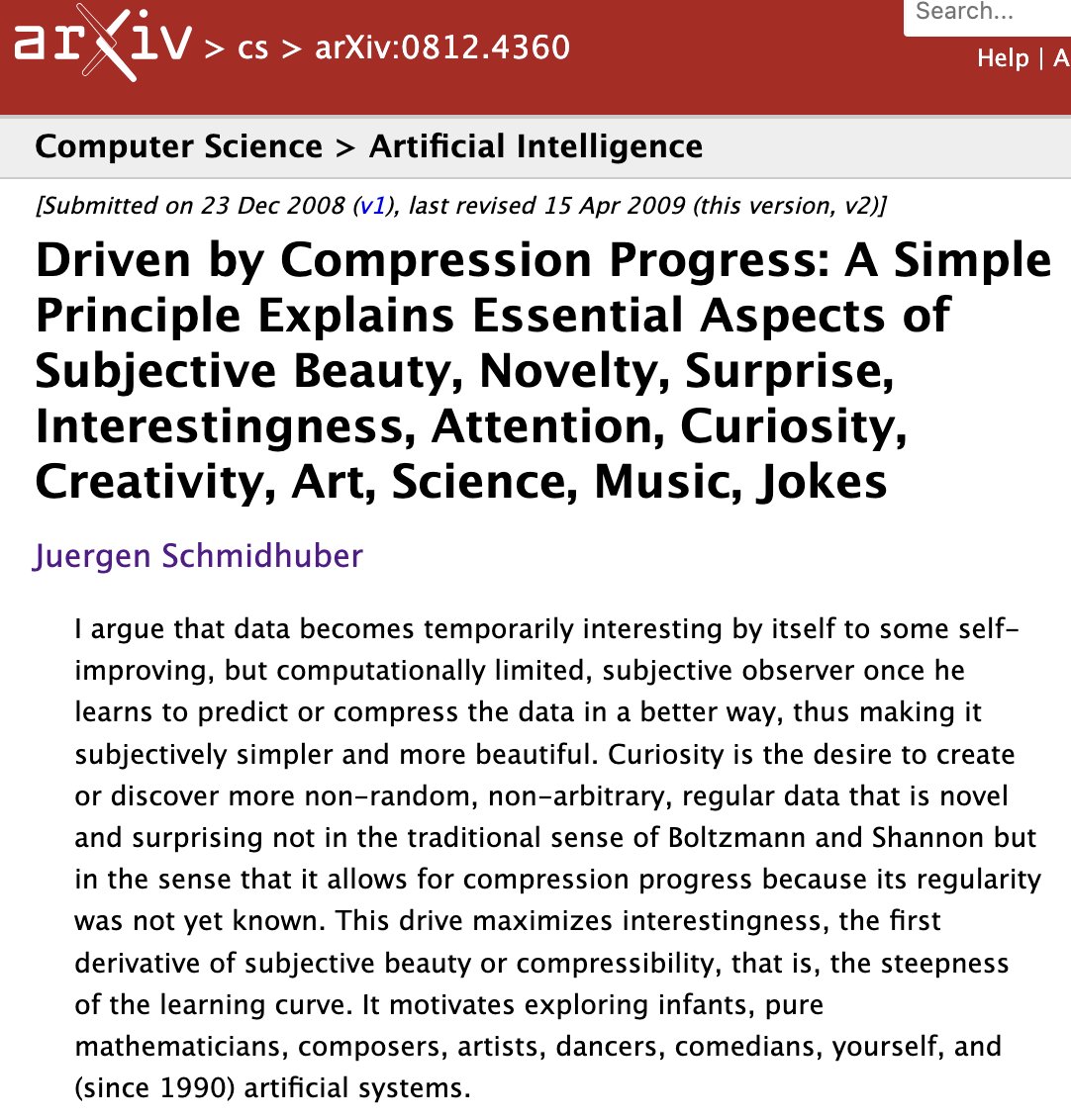
Good time to plug our recent paper connecting the notion of Kolmogorov complexity to Transformers, inspired by the work of Schmidhuber and many others... 🧵
Our new Gemini 2.5 Computer Use model can navigate browsers just like you do. 🌐
It builds on Gemini’s visual understanding and reasoning capabilities to power agents that can click, scroll and type for you online - setting a new standard on multiple benchmarks, with faster speed.