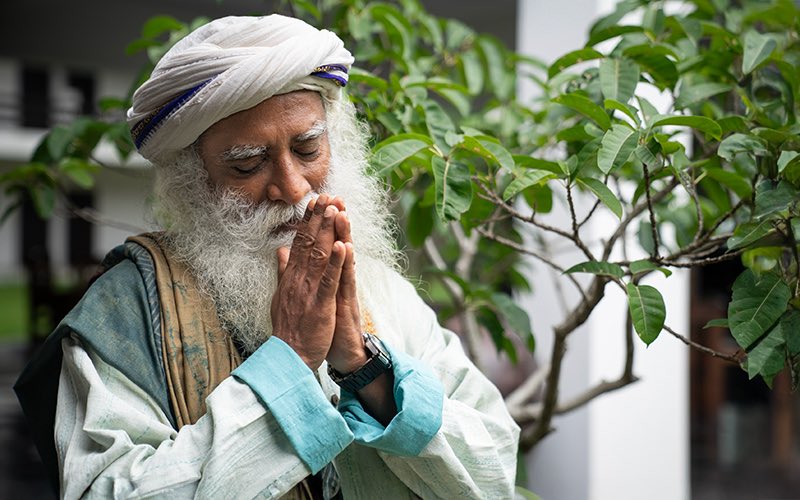
If bad luck was a person, It was Krishna.
Born in a prison cell.
With chains.
Cold walls.
And fear.
The West writes self-help books after one breakup and a weekend depression.
Krishna was born with a death warrant.
His own uncle wanted him dead.
He never drank his mother's milk.
Hours after birth,
his father carried him across a mad river at midnight.
Rain above.
Death behind.
Darkness ahead.
No burning bush.
No sea parting.
No miracle announcing salvation.
No therapist with scented candles.
Just survival.
Born a prince.
Raised a cowherd.
Before he could speak,
they sent Putana.
Then Shakatasura.
Trinavarta.
Kaliya.
One after another.
As if destiny hated him personally.
And he still smiled.
People today collapse over an unfollow.
He lost everything early.
His parents.
His childhood.
His home.
And Radha.
Ah, Radha.
The part Bollywood never understands.
His closest friend Sudama lived in poverty.
Krishna could not protect everyone he loved.
Shishupala insulted him publicly.
Again and again.
Before assembled kings.
Krishna listened calmly.
Then came Jarasandha.
17 invasions.
Mathura burned again and again.
Then came the greatest tragedy.
The Mahabharata.
Krishna tried to stop it.
He went himself.
He sat before Duryodhana.
Pleaded for peace.
Just 5 villages.
Duryodhana refused.
And humanity walked into hell smiling.
18 days later, rivers carried blood.
1.66 billion dead.
Think about that.
An entire civilisation collapsing into dust.
And Krishna carried that silence.
No lamentation carved into scripture.
No prophet demanding heaven explain itself.
Just silence.
Then Gandhari cursed him.
A grieving mother blamed him for everything.
Krishna accepted it.
That is spiritual strength.
Then came the final collapse.
His own clan destroyed itself.
Drunk. Violent. Mad.
The Yadavas killed each other.
His own son died in that chaos.
Krishna watched.
Because some endings cannot be stopped.
Then Dwarka sank.
His city.
His dream.
His life's work.
Gone beneath the waves.
And finally...
The man who was greatest strategist.
The man kings feared.
The man sages worshipped.
Died alone in a forest.
One arrow.
A hunter's mistake.
No throne.
No army.
No grand farewell.
No Resurrection.
Just silence beneath the trees.
And yet...
He is called the complete being.
Not because life was kind.
But because pain never poisoned him.
That is Krishna's greatness.
Not miracles.
Not powers.
Not mythology.
Life gave him suffering.
He gave life wisdom.
Life gave him betrayal.
He gave humanity the Gita.
Life gave him war.
He gave the world detachment.
And in the middle of chaos,
he left us one terrifying truth:
"You control your actions.
Never the outcome."
Krishna did not teach escapism.
He taught endurance.
He did not teach positivity.
He taught responsibility.
He taught how to stand inside hell,
without becoming hell yourself.
That is why he still smiles.
And maybe...
That is why Bharat still survives.
Raavana was never just a devotee of Lord Shiva to me. He was a craftsman too.
The Shiv Tandav Stotram is built with such precision that even a single misplaced or mispronounced consonant can disrupt its rhythm.
And that’s what fascinates me most. It isn’t merely a hymn named after the Tandav. It is the Tandav.
The full version is live on YouTube. Go watch it.
Om Namah Shivay 🙏
Starting tomorrow, Supreme court of India is on a six-week summer vacation and will be operating at just 19% of its capacity. There are 53 million cases pending in Indian courts - 93,143 of them are pending in the Supreme Court.
A judge can go on a vacation, a judiciary cannot.
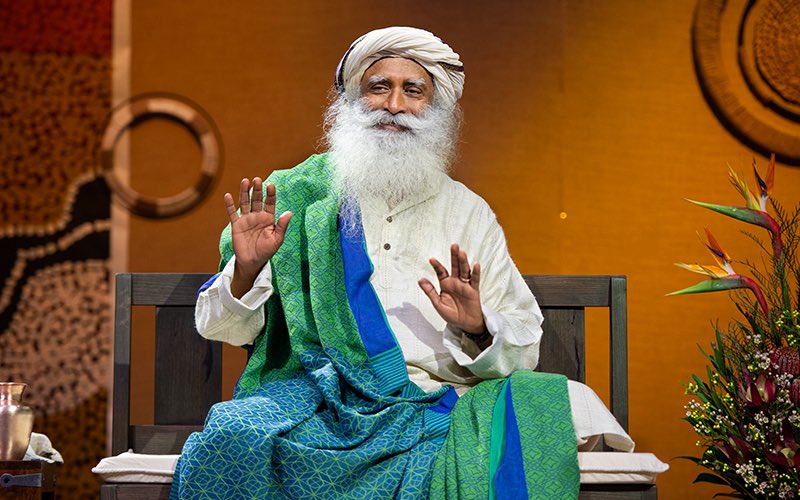
There is no such thing as a "practicing Hindu" because there is no single practice. You can worship Shiva, a cow, a snake, or a bamboo and be a Hindu. If you don't worship anything, you can still be a Hindu. "Hindu" is simply a geographical identity. Anyone who is born in this land is a Hindu. If you believe "anyone can believe whatever they want," you are Hindu.
#SadhguruWisdom
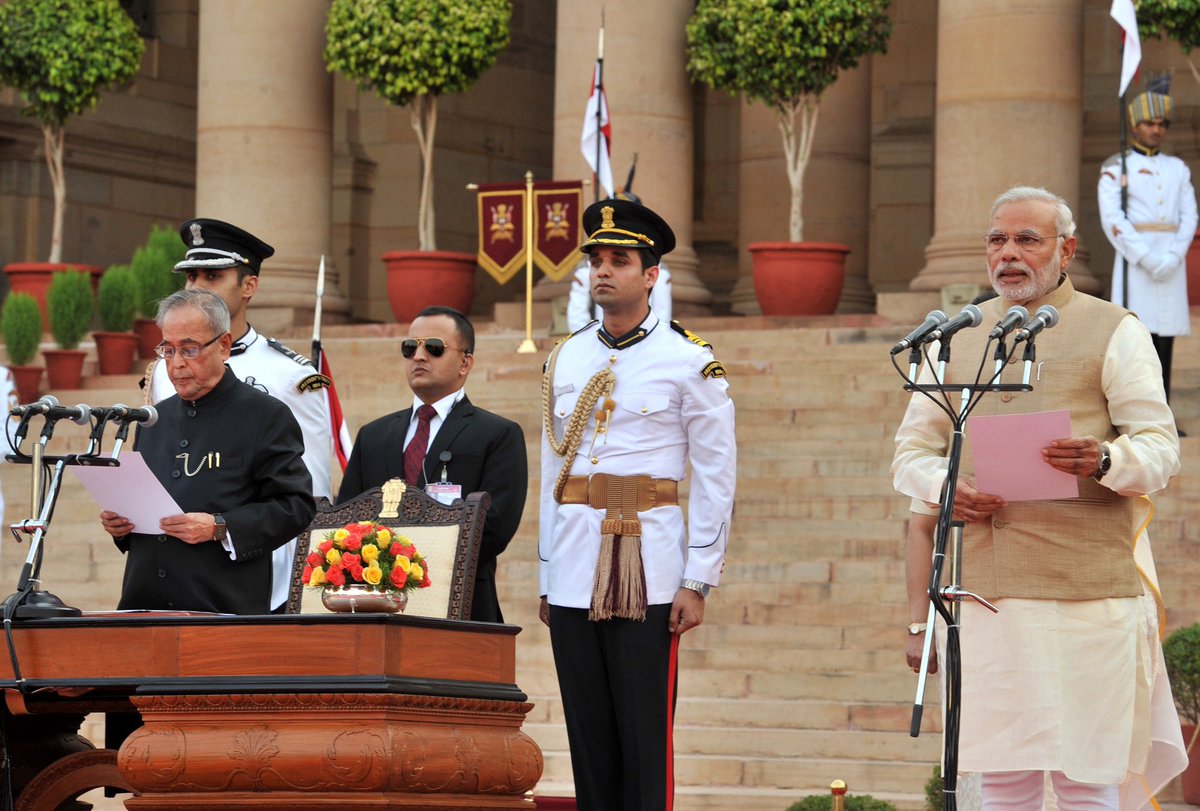
Today marks a historic milestone as our Hon PM Thiru @narendramodi avl completes 12 glorious years since taking charge as our country’s Prime Minister in 2014.
These 12 years have been a golden era of corruption-free, inclusive, and development-oriented good governance, dedicated to eradicating poverty and empowering the marginalised.
The past decade has seen monumental reforms in our laws and governance frameworks, always ensuring that the interests and welfare of the people of India are put first.
With a zero-tolerance policy against terrorism and modernised defence systems, our Hon PM has ensured that India’s borders remain safe and the nation remains completely secure from within.
India’s global stature has grown immensely, and we have emerged as a reliable global partner, always extending a humanitarian hand to help other countries in times of distress and natural calamities.
Wishing our Hon PM many more glorious years of dedicated service to our great nation as we continue our march towards a strong and self-reliant India.
This is the story of a young female botanist from Calcutta who sat in a cramped, poorly ventilated university lab with a few test tubes of coconut water & old plant dust to achieve a world-1st biological miracle: growing a completely whole, functioning plant from just a single male pollen grain. She discovered the technique of 'haploid plant generation' in 1964, cutting down the time needed to create new, disease-resistant crops from decades to a single week only to have her university erase her archival memory, & the history books entirely forget her face.
She is Dr. Sipra/Shipra Guha Mukherjee, the ghost matriarch of biotech who learned how to clone life from a single speck of plant dust while the rest of the world was still waiting for nature to take its course.
In the early 1960s, the world was facing a massive, terrifying crisis: a rapidly booming human population paired with stagnant, disease-vulnerable agricultural yields. Global scientists were desperate to breed new varieties of crops that could survive droughts and resist pests. But traditional plant breeding was trapped behind a massive, agonizing biological wall.When we breed plants normally, we are dealing with diploid genetics, 2 sets of chromosomes mixing randomly from the male & female parts.
It took plant scientists up to 10-15 long generations of tedious back-crossing & pure luck to get a stable, uniform crop variety. It was a massive bottleneck that was costing millions of dollars & decades of human life.The holy grail of botany was to grow a plant directly from a haploid cell, a single reproductive cell with only 1 set of chromosomes (like sperm/pollen).
If we could grow a plant from a pollen grain, we could instantly see & modify its exact genetic traits w/o any hidden, messy recessive genes. But the entire Western scientific establishment claimed it was a biological impossibility.
A pollen grain was engineered by nature to fertilize an egg, not to grow into a tree on its own. In 1964, a brilliant, hyper-focused young Indian researcher named Dr. Sipra Guha Mukherjee was working in the botany department at the University of Delhi. She had no high tech genomic sequencing machines, no automated climate-controlled growth chambers, & virtually no research funding.
Operating in complete, claustrophobic silo inside a crowded lab, Sipra designed a beautifully elegant, radical experiment.
She took the young anthers (the male reproductive organs containing pollen) of the Datura plant, thoroughly sterilized them, & placed them into simple glass culture feed the isolated cells, she mixed a crude, homemade nutrient soup consisting of basic chemical salts and raw, local coconut water (which she knew contained natural plant hormones).
Every single day, she sat over her microscope in the quiet lab, monitoring the tubes. On a stormy morning in 1964, she looked through the lens & gasped. The male pollen grains inside the anthers had not just stayed alive; they had actively mutated & split.
Out of the tiny, microscopic dust of a single pollen grain, beautiful, bright green embryonic structures were physically growing. Sipra had achieved a world 1st: Anther Culture & Haploid Plant Production.
Sipra had unlocked the absolute holy grail of modern agricultural biotechnology. By creating a method to grow whole plants from single pollen grains, she allowed scientists to produce perfectly uniform, stable, homozygous crop varieties in a matter of days instead of 15 yrs.
It was a massive conceptual explosion that completely revolutionized global crop genetics, forming the exact foundation for how modern, high-yielding, disease-resistant grains are engineered today. She quickly prepared the manuscript detailing this historic breakthrough. But institutional patriarchy immediately slammed down on her.
While her scientific partnership with Maheshwari resulted in a legendary, internationally cited co-authorship, her real struggle was navigating the rigid patriarchal framework of mid-century Indian academia.
In her own personal memoir published by the Indian Academy of Sciences, Sipra openly recalled the explicit resistance she faced as a female scientist:
"Even scientists like P. Maheshwari and B. M. Johri thought it improper to appoint a woman scientist as a faculty member in the department. With this bias in place, no woman scientist could rise above a certain level and thus we felt mentally inferior to male scientists.
Sipra, an introverted, humble woman who cared only about the raw science, did not fight the corporate/academic media machine. She quietly stepped back into the shadows of her lab, letting others take the global stage.
Despite her discovery systematically changing the face of global plant biotechnology, Sipra was treated like an absolute ghost inside her own country.She went on to help found the School of Life Sciences at JNU in Delhi, working relentlessly for decades to train a new generation of Indian biotechnologists. Yet, because she refused to play political games/loudly advertise her own genius, her name was completely omitted from national school & college textbooks.
When she passed away in 2007, neither the Indian govt nor the universities she built established a single archive, museum/memorial in her honor. Her monumental notes & original lab diaries were left gathering dust in a private residential house, completely uncelebrated by the millions of people who eat food engineered via the very techniques she discovered in a glass tube of coconut water.
The next time we see a massive, lush green field of high-yielding, disease-resistant crops feeding millions of citizens, remember that quiet lab in Delhi; for India's ultimate invisible matriarch proved that we do not need a foreign empire/massive budgets to rewrite the laws of nature, we can cultivate an entire agricultural revolution from a single grain of dust.
August 17, 1909: Veer Savarkar waited outside Pentonville Prison in England to collect the body of a 25-year-old man, who had not been handed over by the British government after his hanging.
This body belonged to the great revolutionary, Madan Lal Dhingra, the son of a wealthy and prosperous family, sent to England to study by his father, a civil surgeon employed by the British government.
But the flame of revolution was such that Madan Lal, along with Veer Savarkar, decided to teach a lesson to Curzon Wyllie, a British army officer who had returned to England in 1901 after committing atrocities in India.
On July 1, 1909, Madan Lal Dhingra shot Curzon Wyllie at a meeting held at the Imperial Institute in England. The British government arrested him and hanged him on August 17, 1909.
Madan Lal was so courageous and fearless that when he was tried in court, he clearly stated, "The British government has no right to prosecute me... I don't respect the laws of the British government that is killing millions of innocent patriots in India and bringing 100 million pounds from India to England every year. Therefore, I will not even give my explanation in this court. Do whatever you want..."
And when he was being taken away after being sentenced to death, he thanked the judge and said, "Thank you for giving me the opportunity to sacrifice my life for my motherland."
And you know what, there is Curzon Road in most of the cities having cantonment established by the British and the name exists till date.
All these roads should be renamed as Madan Lal Dhingra Marg including the one at British Consulate in every city in India
Huge Respect and Salute To Both Madan Lal Dhingra and Veer Savarkar
Jai Hind 🇮🇳 🙏 🫡🫡🫡
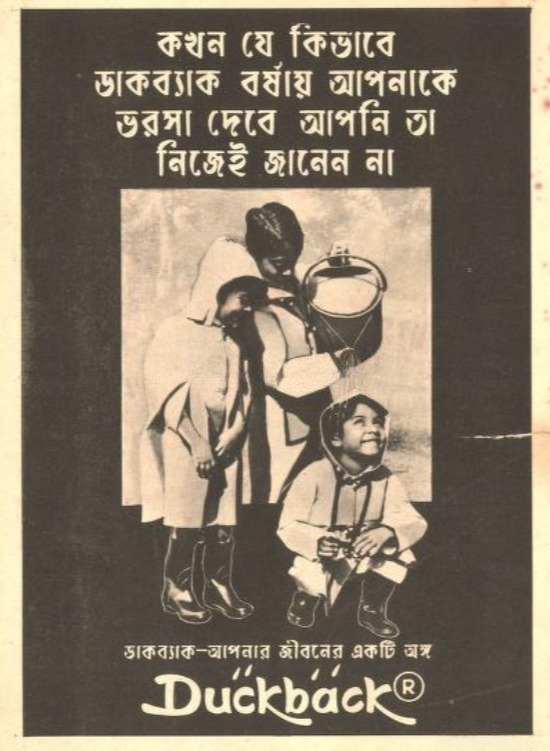
The name sounds like an elite British country club brand, designed for lords hunting in the Scottish mist. But the truth is far more fierce. It was born in the suffocating, dripping darkness of a British prison cell, baptized in the fury of the Indian monsoon, & built by a family that refused to let an empire monopolize the sky.
In the early 1910s, a brilliant 20 something Indian nationalist named Surendra Mohan Bose returned to Bengal. He was not an ordinary youth; he had traveled across the oceans, earning degrees in chemistry from Stanford & Berkeley. But instead of taking a lucrative job under the British Raj, he joined the underground Swadeshi movement.
The British state quickly branded him a rebel. He was thrown into the bleak, damp cells of Hamirpur Jail. As the relentless monsoon battered the iron bars of his cell, Surendra watched a heartbreaking sight. Indian soldiers & postmen, forced to serve the colonial machine, were marching through torrential downpours with absolutely no protection. They were shivering, drenched to the bone, & coughing up blood from pneumonia. The British imported high-grade waterproof trench coats exclusively for European officers. To the Raj, Indian lives were cheaper than a yard of treated canvas. They had colonized the land, & now, they had monopolized the clouds.
Behind those prison bars, listening to the thunder rattle his cell, Surendra swore a silent, burning oath: He would weaponize the rain. When he was finally released, Surendra did not have capital/a factory/blueprints. All he had was a chemist's brain & a fierce rage. In 1920, inside a cramped, suffocating outhouse on Nazar Ali Lane in South Calcutta, he huddled with his 3 brothers: Ajit, Jogendra, & Bishnupada.
Their mission? To fuse raw rubber to cotton fabric to repel water.
In the 1920s, working with raw rubber in the tropical heat of Bengal was a nightmare. The rubber would melt into a sticky, foul-smelling glue in July & crack like brittle glass in December. Day after day, the brothers inhaled toxic chemical fumes, blind-testing formulas on a makeshift boiling stove. Neighboring businesses mocked them. "The British have massive mills in Manchester," they sneered. "How can 4 Bengali boys in a shed stop the monsoon?"
The brothers did not reply. They just stoked the fire.
Finally, they perfected a secret, grueling vulcanization technique. They realized that if treated properly, water would roll off a human’s back exactly as it does from a duck’s oily feathers. They called it "The Duckback Process." In 1940, they formally incorporated as Bengal Waterproof Limited.
They did not just sell rainwear; they slapped a defiant warning on every single box: "Entirely Indian... Indian capital, Indian labour, Indian materials, & Indian brain."
When the 2nd World War broke out, the British military desperately needed waterproof gear for the jungle warfare in Burma. They looked around & realized the only factory capable of producing indestructible, tropical-grade waterproofs was Bengal Waterproof. The very empire that had jailed Surendra was now forced to beg his family for protection against the rain.
For the next 50 yrs, Duckback became the literal armor of the Indian middle class. You could not navigate an Indian life w/o the distinct, heavy, comforting smell of a Duckback product.
If your family went on a vacation on a steam-engine train, your mattress & pillows were rolled into a massive, rugged canvas Duckback Railway Holdall, strapped tight with thick leather belts. If a family member had a burning fever, a blue rubber Duckback ice-bag was placed on their forehead. & every June, millions of Indian children were packed off to school in heavy, dark-blue/Khaki Duckback raincoats with matching hoods. We walked to school looking like a marching army of shiny black beetles, completely impervious to the cloudbursts, smelling of industrial rubber and freedom.
But as the 1990s bled into the 2000s, a silent tragedy struck. The Indian economy opened up. Cheap, feather-light, neon-colored nylon windbreakers & disposable plastic umbrellas from China flooded the streets. To a new generation, Duckback’s heavy, indestructible rubber looked archaic, clunky, & old-fashioned. The company slid into severe financial crisis, choked by debts. The pioneering Bose family eventually lost control of the empire they had built from a prison cell.
Most iconic brands would have died there, buried in the graveyard of corporate history. But a brand born in a jail cell does not surrender to the passage of time.
Duckback underwent a quiet, brilliant metamorphosis. They realized that while civilians wanted flimsy, colorful plastics, the protectors of the nation needed something that could survive hell.
Today, reborn as Duckback India, the company has retreated from the flashy mall storefronts & gone deep into the shadows where it all began, the defense forces. Step into the high-altitude bases of Siachen/the secret naval docks of Vizag, & you will find Duckback. They are the ones manufacturing the pressurized G-suits for Indian Air Force fighter pilots, specialized submarine escape suits, & heavy-duty inflatable tactical boats for Navy commandos. They went back to the barracks to protect the soldiers Surendra Mohan Bose wept for a 100 yrs ago.
Duckback did not survive because of foreign investment/Western machinery. It survived because 4 brothers were willing to inhale toxic fumes in a Calcutta shed, challenge the technological monopoly of the British Empire, & teach a colonized nation how to walk through a storm with their heads held high.
The next time the sky turns the color of bruised iron & the power cuts out, listen closely to the rhythm of the raindrops hitting our window; for somewhere in the static of the storm, the phantom click of a vintage Duckback button is fastening itself, reminding us that long before we learned to run from the rain, an empire tried to drown us & we simply learned how to float.
1987. A room in New Delhi is thick with the smell of old files & cold tea. The United States has just delivered a stinging slap to the face of the Indian Republic. They have officially refused to sell India the 'Cray X-MP' Supercomputer, the most powerful machine on Earth, claiming that India would use it for nuclear weapons.
The American officials mockingly suggest that India does not even have the electricity to keep such a machine running. In the middle of this national humiliation, a young, soft-spoken engineer named Vijay Bhatkar is asked by then Prime Minister Rajiv Gandhi: "Can we build our own?" Bhatkar does not hesitate. He looks at the No of the West & says: "We will not just build it; we will build it faster than you can ship it."
The Americans did not just stop at refusing the sale; they actively lobbied other nations to ensure India remained digitally blind. They believed that w/o their Logic Gates, India would remain a 3rd world backwater.
Bhatkar realized he could not replicate the Single-Processor behemoth of the Cray. Instead, he turned to Parallel Processing. He decided to stitch together 1000s of low-cost, off-the-shelf microprocessors. It was like building a giant's brain out of the neurons of ants.
In 1991, while the West was still celebrating its monopoly, Bhatkar unveiled the PARAM 8000. It was not just a computer; it was a Gigaflop monster.
To prove the PARAM was real, Bhatkar ran a standard global benchmark test. The results were sent to an international conference in Zurich. The PARAM 8000 was ranked as the 2nd most powerful supercomputer in the world, behind only the American machines. But there was a twist: the PARAM cost a fraction of the Cray, performed better in tropical heat, & was built in just 3 years.
When the PARAM 8000 was 1st turned on, the team did not have a high-tech cooling system like the Americans. They used industrial-grade desert coolers & adjusted the airflow manually. It was the ultimate Jugaad that defeated the most sophisticated tech embargo in history.
A major US newspaper ran a story with the headline: "Denied supercomputer, Angry India does it!" The ghost of the Native Engineer had officially entered the silicon temple. Vijay Bhatkar’s history is the story of how India became the IT Capital of the world.
Bhatkar founded the Centre for Development of Advanced Computing (C-DAC). He did not just build a machine; he built an ecosystem. Every software engineer in India today stands on the shoulders of the man who proved we did not need the West's permission to compute. Bhatkar was the 1 who realized that if computers only spoke English, 90% of India would be left behind. He led the development of GIST (Graphics & Intelligence Based Script Technology), allowing computers to work in Indian languages. He gave the Machine a local tongue.
Today, Bhatkar is a Padma Bhushan awardee, but he lives a life of deep spirituality & simplicity. He vanished from the corporate headlines to become a philosopher of the digital age.
The West thought they could freeze India’s future by withholding a single machine. They forgot that the Indian mind does not need a 'Cray' to think; it only needs a 'No' to ignite. Forget building a supercomputer; Bhatkar built a mirror, & for the 1st time, the West had to look into it & see that the primitive colony had become the master of the code.
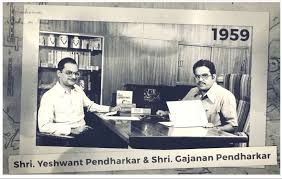
The name sounds British, but it is actually a purely Indian acronym. In 1952, a 55 yr old grocery store owner from Nagpur named Keshav Vishnu Pendharkar decided to shut down his shop, pack up his family of 10 children, & move to Bombay. He wanted to create a chemical-free, swadeshi alternative to the foreign cosmetic brands that were ruling post-independence India.
He started his business in a tiny, cramped godown in Parel, Bombay. He named his company after his father: Vishnu Industrial Chemical Company. V-I-C-C-O. There was no British Lord or foreign laboratory. It was just a middle-aged Marathi man & his sons working out of a shed with a dream to revive ancient texts.
Keshav Pendharkar’s brother-in-law held a basic degree in Ayurveda. Together, they huddled over ancient scripts & formulated a tooth-cleaning powder made from 20 rare herbs & barks (including Babool, Bakul, & Neem).They called it Vajradanti.
In the 1950s, urban Indians were rapidly switching to chemical, white, sweet-tasting toothpastes imported by MNCs like Colgate. When the Pendharkers tried to sell a brown, astringent Ayurvedic powder, shopkeepers laughed them out of their stores. Keshav & his sons refused to surrender. They literally walked the streets of Bombay, going door to door to hand out samples, educating people on how chemical foam was destroying their gums, & manually building their empire 1 household at a time.
In 1971, Keshav passed away, & his son, Gajanan Pendharkar, took over. Gajanan looked at the skincare market & saw it was utterly dominated by colonial-legacy snow creams like Afghan Snow, Pond's, & Nivea. All of them were stark white. Gajanan decided to launch a face cream containing Turmeric (Haldi) & Sandalwood oil. When the product launched, shopkeepers panicked. They screamed, "Baap re! If women put this on their faces, it will turn them yellow!" Nobody wanted to buy a yellow cream because the world had been conditioned to believe that beauty products had to be white.
The Pendharkars weaponized the traditional Indian wedding ritual of Haldi-Chandan. They sent salesmen into the markets armed with handheld mirrors. The salesmen would manually apply the cream onto the shopkeepers' faces right then & there to prove it absorbed completely into a vanishing base, leaving a glow w/o any yellow stains. If you remember the iconic jingle: "Vicco Turmeric, Nahi Cosmetic, Vicco Turmeric Ayurvedic Cream"... you should know that those words were not just a clever marketing tagline. They were a battle cry born from a massive legal warfare.
In 1975, the Central Excise Department of India dropped a bombshell on Vicco. They insisted on classifying Vicco Turmeric & Vajradanti as "Cosmetics." If classified as cosmetics, the govt could levy a crippling 105% luxury tax on the products, which would have priced Vicco completely out of the market & forced them into bankruptcy. The Pendharkars refused to pay. They argued that their products were manufactured under a formal Drug License & were Ayurvedic Medicines (Drugs), which attracted significantly lower taxes.
This was not a minor dispute; it turned into a historic, grueling 25 yr legal battle. The case climbed all the way up to the Supreme Court of India. While battling global giants in the market, the family spent their resources fighting their own govt in courtrooms for ~3 decades. Finally, in the 2000s, the Supreme Court ruled in favor of Vicco, legally decreeing that their products were indeed medicinal, cementing the truth of their tagline forever.
How did a homegrown brand from a Parel godown become globally famous? Through sheer marketing brilliance before the internet existed. In the 1980s, South Asian immigrants abroad were obsessed with watching Bollywood movies on rented VHS video cassettes. Gajanan Pendharkar realized this & started buying ad space directly inside the video cassettes distributed globally.
Long before foreign networks recognized Indian brands, families in the US, UK, & Middle East were singing along to the Vajradanti jingle before their favorite movie started.
Despite controlling a multi-million dollar empire, the house had only 1 giant mega-kitchen. Every single meal was cooked in massive industrial-sized pots, & the entire family sat on the floor together to eat. Gajanan believed that if the family broke bread separately, the business would fracture into pieces.
In the early decades, the sons & grandsons who worked for Vicco did not get individual corporate salaries/luxury allowances. The company took care of all household expenses centrally. If a family member needed a car/a dress/a medical trip, it was cleared by the family elders, ensuring that personal greed could never overtake the company's mission.
Vicco did not survive because it was backed by British capital/Western tech. It survived because an Indian family was willing to go door to door with brown tooth powder, rub yellow cream onto skeptical faces, & spend 25 yrs in court defending the scientific validity of Ayurveda. The name might sound like a colonial legacy, but the blood inside the tube is Sampoorna Swadeshi.
MUST READ Unbelievable & SHOCKING INFORMATION.
DD Podhigai telecast an interview with Mr P M Nair, (retired IAS officer, who was the Secretary to Dr. Abdul Kalam Sir when he was the President.)
I summarise the points he spoke in a voice choked with emotion.
Mr Nair authored a book titled "Kalam Effect"
1. Dr Kalam used to receive costly gifts whenever he went abroad as it is customary for many nations to give gifts to the visiting Heads of State.
Refusing the gift would become an insult to the nation and an embarrassment for India.
So, he received them and on his return, Dr Kalam asked the gifts to be photographed and then catalogued and handed over to the archives.
Afterwards, he never even looked at them. He did not take even a pencil from the gifts received when he left Rashtrapathi Bhavan.
2. In 2002, the year Dr Kalam took over, the Ramadan month came in July-August.
It was a regular practice for the President to host an iftar party.
Dr Kalam asked Mr Nair why he should host a party to people who are already well fed and asked him to find out how much would be the cost.
Mr Nair told it would cost around Rs. 22 lakhs.
Dr Kalam asked him to donate that amount to a few selected orphanages in the form of food, dresses and blankets.
The selection of orphanages was left to a team in Rashtrapathi Bhavan and Dr Kalam had no role in it.
After the selection was made, Dr Kalam asked Mr Nair to come inside his room and gave him a cheque for Rs 1 lakh.
He said that he was giving some amount from his personal savings and this should not be informed to anyone.
Mr Nair was so shocked that he said "Sir, I will go outside and tell everyone . People should know that here is a man who not only donated what he should have spent but he is giving his own money also".
Dr Kalam though he was a devout Muslim did not have Iftar parties in the years in which he was the President.
3. Dr Kalam did not like "Yes Sir" type of people.
Once when the Chief Justice of India had come and on some point Dr Kalam expressed his view and asked Mr Nair,
"Do you agree?" Mr Nair said "
No Sir, I do not agree with you".
The Chief Justice was shocked and could not believe his ears.
It was impossible for a civil servant to disagree with the President and that too so openly.
Mr Nair told him that the President would question him afterwards why he disagreed and if the reason was logical 99% he would change his mind.
4. Dr Kalam invited 50 of his relatives to come to Delhi and they all stayed in Rashtrapathi Bhavan.
He organised a bus for them to go around the city which was paid for by him.
No official car was used. All their stay and food was calculated as per the instructions of Dr Kalam and the bill came to Rs 2 lakhs which he paid.
In the history of this country no one has done it.
Now, wait for the climax, Dr Kalam's elder brother stayed with him in his room for the entire one week as Dr Kalam wanted his brother to stay with him.
When they left, Dr Kalam wanted to pay rent for that room also.
Imagine the President of a country paying rent for the room in which he is staying.
This was any way not agreed to by the staff who thought the honesty was getting too much to handle!!!.
5. When Kalam Sir was to leave Rashtrapathi Bhavan at the end of his tenure, every staff member went and met him and paid their respects.
Mr Nair went to him alone as his wife had fractured her leg and was confined to bed. Dr Kalam asked why his wife did not come. He replied that she was in bed due to an accident.
Next day, Mr.Nair saw lot of policemen around his house and asked what had happened.
They said that the President of India was coming to visit him in his house. He came and met his wife and chatted for some time.
Mr Nair says that no president of any country would visit a civil servant's house and that too on such a simple pretext.
I thought I should give the details as many of you may not have seen the telecast and so it may be useful.
The younger brother of APJ Abdul Kalam runs an umbrella repairing shop.
When Mr. Nair met him during Kalam’s funeral, he touched his feet, in token of respect for both Mr. Nair and Brother.
Such information should be widely shared on social media as mainstream media will not show this because it doesn't carry the so-called GB TRP
The property left behind by Dr.A.P.J.Abdul Kalam was estimated.
_
He owned
6 pants(2 DRDO uniforms)
4 shirts(2 DRDO uniforms)
3 suits (1 western, 2 Indian)
2500 books
1 flat (which he has donated)
1 Padmashri
1 Padmabhushan
1 Bharat Ratna
16 doctorates
1 website
1 twitter account
1 email id
He didn't have any TV, AC, car, jewellery, shares, land or bank balance.
He had even donated the last 8 years' pension towards the development of his village.
He was a real patriot and true Indian
India will for ever be grateful to you, sir.
Before the world knew the power of Big Pharma, a journalist in a tiny lab in Bombay created a substance so potent it triggered a trade war with London. It was a yellow grease that did not just soothe headaches but funded a movement, bypassed British blockades, & became 1 of the few Indian products to make the Empire's own medicine look like scented water.
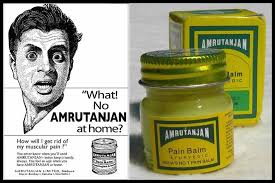
Unlike other brands started by chemists, Amrutanjan was founded by Kasinadhuni/Kasinathuni Nageswara Rao, a man who was primarily a journalist & a freedom fighter. In the late 1800s, the pain balm market in India was a British monopoly. If your head throbbed, you bought imported ointments. Rao saw this as a tax on pain. He retreated into a lab & perfected a formula that was significantly more potent than anything coming out of London.
The British tried to push their own balms like Vicks/early menthol rubs as sophisticated & odorless. They attempted to smear Amrutanjan as primitive because of its overpowering scent. Rao leaned into the scent. He realized that in a country where literacy was low, a brand could not just be a name, it had to be an experience.
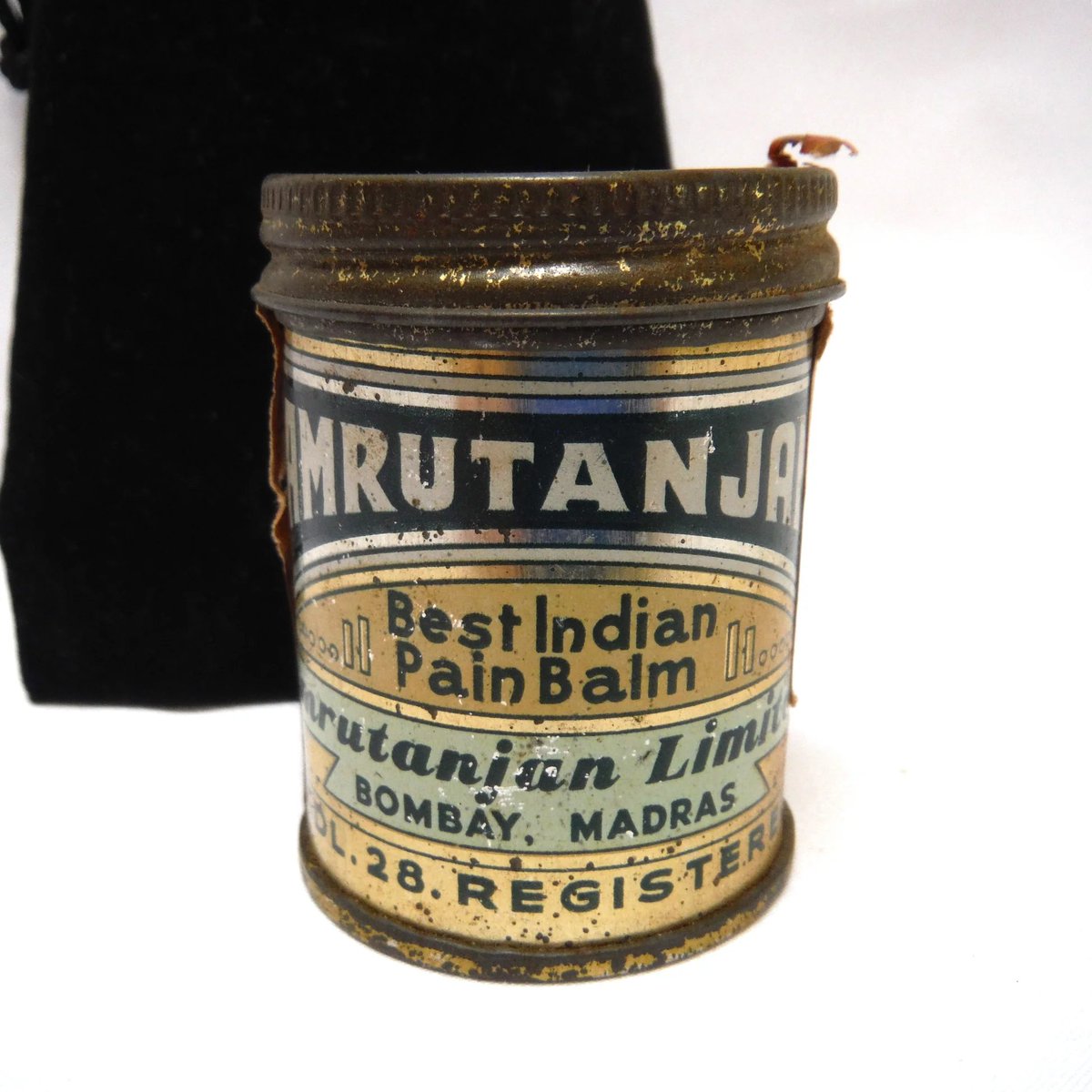
He distributed free samples at music concerts (Sabhas) & religious festivals. By the time the British tried to patent the market for pain relief, the entire Indian public had already associated the smell of camphor & menthol with trust. The British balms felt alien & weak compared to the sensory explosion of the yellow tin.
The smell of Amrutanjan... that piercing, camphor-heavy aroma became the literal scent of the freedom struggle. If you walked into a room & it smelled of Amrutanjan, it was a silent signal: A patriot is present. It was a scent the British police could not arrest, yet it was everywhere.
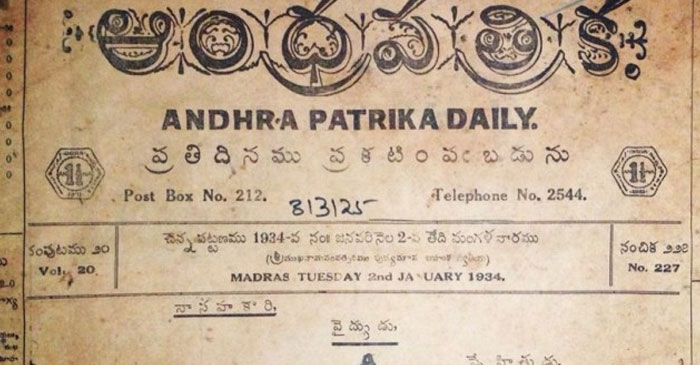
The British had a Patent Medicine Tax that made imported drugs expensive. However, by classifying Amrutanjan as an Ayurvedic Proprietary Medicine, Rao managed to navigate a complex legal gray area. He essentially used the British legal system against itself. By proving his ingredients were ancient yet his manufacturing was modern, he avoided the crippling taxes that applied to purely Western drugs, while maintaining a price point (initially 10 annas) that made British imports look like daylight robbery Rao fought back not just in the market, but in the press. He used the profits from the balm to fund Andhra Patrika, 1 of the most influential anti-British newspapers.
The British were literally paying for their own downfall. Every time a British officer’s wife bought a jar of Amrutanjan for a migraine (because it worked better than the London balms), she was inadvertently funding the printing of revolutionary literature that called for the end of the Raj.
By the 1930s, this Indian yellow grease was being exported to Indian diaspora & locals in South Africa & Ceylon. It became a global symbol of Eastern Wisdom defeating Western Chemistry. It was 1 of those few occasions, an Indian OTC (Over the Counter) product achieved cult status internationally w/o a single pound of British investment.
In fact, the yellow tin became so iconic that it did not need a label in the villages. The color & the smell were the brand. It was a biological Swadeshi. While others were fighting with words, Rao was fighting with molecular relief.
In 1971, amidst the mud & blood of refugee camps, 1 man defied the entire medical world. While doctors begged for IV drips that did not exist, Dilip Mahalanabis mixed salt & sugar in plastic drums & told the dying to drink. He was a ghost who used the physics of the human gut to defeat Cholera. He never patented his formula, choosing to save millions instead of making millions. He died in 2022, an unrecognized giant who gave the world its most successful medicine for the price of a pinch of salt.
Born in 1934 in West Bengal, Dilip Mahalanabis was a pediatrician by training. He was a researcher at the Johns Hopkins University International Centre for Medical Research & Training in Calcutta. He spent his early career in the Silo of elite academic research, studying how fluids move through the human body. Despite his elite training, he was a man of the people. He did not want to stay in a comfortable air-conditioned hospital while a crisis was brewing.
During the 1971 Bangladesh Liberation War, millions of refugees poured into West Bengal. A cholera epidemic broke out in the camps. People were dying in heaps. There were not enough IV fluids/needles/trained doctors. The conventional medical wisdom said: "Only IV drips can save a cholera patient."
Dr. Mahalanabis knew the physics of S.N. De’s discovery. He knew that if he could get the concentration of salt & sugar exactly right, the gut would pump the water back into the body. He prepared the Oral Rehydration Solution (ORS) in massive drums, using untrained volunteers to distribute it to dying refugees.
The mortality rate dropped from 30% to 3%. He proved that a 5 paise solution was more effective than a 50 rupees IV bag. He never patented ORS. He believed that something so fundamental to human survival should belong to the world. Because there was no money/corporate patent attached to his name, the world used his work but forgot his face.
For decades, he lived quietly in Calcutta. He was a global consultant for the WHO, helping eliminate cholera in dozens of countries, yet in his own neighborhood, he was just the retired doctor from down the street.
He died in 2022. It was only after his death that many of his relatives & neighbors realized he was the man The Lancet described as the creator of the most important medical advance in the 20th century.
We finally awarded him our 2nd highest civilian honor, Padma Vibhushan, but it came after he passed away. He lived & died a Ghost.
In Barra village of Kanpur district of Uttar Pradesh, the bride's family was surprised by the demands of the groom's family!!
☆The groom's demands are being discussed all over the city.
☆These demands are not about dowry but about the method of solemnization of marriage and improper traditions!!
The demands are as follows:-
1- There will be no pre-wedding shoots.
2- The bride will wear a saree instead of a lehenga in the wedding.
3- Instead of absurd obscene deafening music in the marriage lawn, light instrumental music will play.
4- Only the bride and groom will be on the stage at the time of the garland.
5- Those who lift the bride or groom at the time of the garland will be expelled from the marriage.
6- After Panditji started the marriage process, no one will stop him, no one will interrupt him.
7- The cameraman will take pictures of the rounds etc. from a distance, not by interrupting Panditji repeatedly.
Because it is a marriage ceremony being performed in the presence of the gods by invoking them. Not shooting a movie.
8- The bride and groom will not pose directly on the instructions of the cameraman.
9- The marriage ceremony should be held during the day and the farewell should be completed by evening, so that no guest has to worry about the problems caused by eating food from 12 to 1 o'clock in the night, such as insomnia, acidity, etc.
Apart from this, it does not take the guests till midnight to reach their home and there should be no inconvenience.
10- Anyone who asks the newlywed to embrace in front of everyone will be immediately expelled from the marriage.
11- Any kind of meat and liquor will be prohibited in marriage, gods and goddesses are invoked in marriage, seeing meat and liquor, the gods and goddesses get angry and leave without blessing the bride and groom.
The result is that the girl's family has gladly accepted all the demands of the boy..!!
A very beautiful suggestion to improve society..! Exemplary to all..!!
🙏🏻Marriage is a sacred bond. Stay within the limits. 🙏🏻
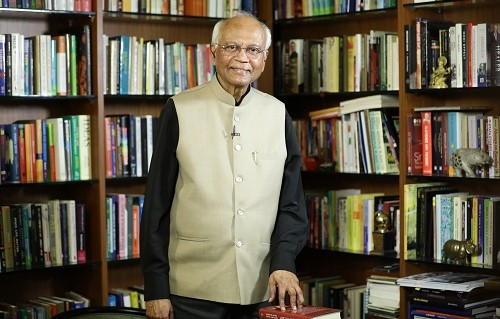
In the 1990s, India was facing a Biological Colonization. If Dr. R.A. Mashelkar had not stepped in, we might have ended up paying a royalty to a US corporation every time we used turmeric on a wound/exported Basmati rice.
In 1997, a Texas-based company called RiceTec was granted a patent by the USPTO (US Patent & Trademark Office) for Basmati Rice lines & grains. They claimed they had invented a superior strain of rice. Mashelkar realized that if this patent stood, Indian farmers would be barred from selling their own rice under the name Basmati in the US. It was a theft of Geographical Intellectual Property.
He did not just shout Injustice. He assembled a team to find Genetic Fingerprints. They proved that the new rice was actually derived from Indian germplasm that had existed for centuries. The USPTO was forced to strike down the majority of the claims.
2 researchers at the University of Mississippi were granted a patent for the use of turmeric in healing wounds. To a Western patent officer, this was a novel invention. To an Indian, it was something their grandmother did every day. Mashelkar produced an ancient Sanskrit text as Prior Art. The USPTO demanded a translation. He provided evidence from the Journal of the Indian Medical Association dating back to 1953 + ancient Ayurvedic texts.
This was the 1st time in history that a patent granted to a US entity was successfully challenged & revoked based on the Traditional Knowledge of a developing country.
Mashelkar also realized that India could not fight 10000 legal battles every yr. He needed a Scalable Solution. Patent officers in the West were not malicious; they were just Data Blind. They could not read Sanskrit/Tamil/Persian. If a discovery was not in an English journal, it did not exist in their system.
He hired 100s of experts (Ayurveda practitioners, IT engineers, & Patent lawyers). They took 500000+ formulations & converted them into a digitized Shloka to Code format. The data was rendered in English, French, German, Japanese, & Spanish.
Today, India has signed agreements with the USPTO, the European Patent Office, & others. Before an officer grants a patent, they run a TKDL Scan. If the herb/method is in the library, the patent is rejected instantly.
A temple is not just a structure of stone and mortar but an outpouring of devotion. A paid government official cannot run it - it takes the heart of a devotee. Encouraging to see the Government’s statement. Must translate into action. -Sg