Pro tip: Never engage with the comedian in a stand up show. Sit two or three rows behind. Having attended a ton of these shows, I can tell you that it almost always never goes well for you. You are mostly drunk in these shows. You’ll end up saying some stupid shit just for laughs. Don’t try to act like a comedian. You’ll become the comedian’s material.
Different parts of India are witnessing soaring temperatures and the challenges that come with it. This heat is harsh on all of us and I urge you all to take as many precautions as possible. Please stay hydrated, keep water with you when stepping out. Offer a glass of water to others. In weather like this, such kindness goes a long way.
Rubio is not India's friend. He is a transactional actor who has demonstrated, repeatedly, that he will abandon any stated principle the moment it becomes inconvenient.
As a Senator, Rubio was one of the most vocal critics of Pakistan. He sponsored legislation to bar Pakistan from receiving US security assistance if it was found to have sponsored terrorism. He voted for it. He built a reputation as someone who understood that Pakistan's military establishment was the primary incubator of terrorism in the Indian subcontinent.
Then he became Secretary of State. And everything changed.
In February 2026, Rubio thanked Pakistan for its "continued partnership in the fight against terrorism." He discussed commercial investment opportunities with Pakistan's Prime Minister. He engaged warmly with the very military establishment he had once sought to sanction. He said US ties to Pakistan would not come "at the expense" of India, a phrase that sounds reassuring until you realize it places Pakistan on equal diplomatic footing with India. For a man who once wanted to cut off Pakistan's military funding, this is not a pivot. It is an erasure.
Dealing with American Govt officials is like dealing with a dementia patient. They forget everything, by design. Amuse them with pleasantries, feed them good food, and send them back. Don't attach any importance to any agreement whatsoever.
Fabulous insights into how India's youth look at international affairs and foreign policy issues. I suspect that perceptions of US which have plummeted from over 80% +ve to 56% in 2025 will fall more in 2026. That's Trumps abiding legacy. Pakistan and China retain their very high -ve perception. Russia retains its favourable perception. UAE and Middle East are seen as crucial. All in all, the young people seem to have a better appreciation and understanding of what is in India's interest than the older generations. https://t.co/EP1WUFZj39
Did you know that the U.S. defaulted on its sovereign obligations in 1971 when it unilaterally reneged on dollar-gold convertibility.
Russia defaulted in 1998 and 2022.
Argentina: 9 times since independence.
Pakistan: required IMF bailouts 23 times.
Greece defaulted in 2012.
And India? Zero defaults. Not even in 1991!
Yet Western investors classify India as "emerging risk" and call U.S. Treasuries the "risk-free rate."
This isn't risk analysis. This is cognitive bias a la Daniel Kahneman's book "Thinking, Fast and Slow". Humans systematically overweight culturally proximate information while underweighting statistical patterns that don't fit our mental models.
Western strategic planners trust Western partners not because the data supports it, but because the cultural markers feel familiar.
Three facts that challenge everything about how we assess partnership risk:
FACT 1: Across 5,000 years of recorded history, India has rarely waged wars of territorial conquest. Not in 3000 BCE when the Indus Valley Civilization had technological superiority. Not in 1000 CE when Indian mathematics and metallurgy exceeded Europe by centuries. Not in 2026 when it possesses nuclear weapons and the world's 4th-largest military. Not in 2047 when it projects to be a top-two economy.
Compare: China (annexed Tibet 1950, 14 territorial disputes, South China Sea expansion). Russia (Georgia 2008, Crimea 2014, Ukraine 2022). Europe (500 years of colonial conquest across three continents). U.S. (military interventions in 20+ countries since 1945).
This pattern is observable strategic behavior anchored in the Arthashastra, Kautilya's 2,300-year-old treatise arguing that short-term territorial expansion undermines the systemic conditions for sustained prosperity. The concept of "mandala" (circle of states) recognizes that each power's long-term interest depends on system equilibrium.
FACT 2: India has never defaulted on debt, treaties, or security guarantees since independence in 1947. The most revealing test: 1991 balance of payments crisis. Reserves fell to $1.2 billion = just three weeks of imports. Default appeared certain. Instead, India implemented painful reforms, honored every obligation. India didn't use political costs as an excuse to default. Commitments were kept.
This behavior isn't accidental. It's anchored in the Sanskrit concept of ṛṇānubandhaḥ, that obligations are metaphysically binding across time. The Mahabharata established 2,000 years ago that rulers who break commitments violate cosmic order and create systemic instability.
Philosophy became institutional architecture: investment-grade credit through multiple crises, $600B forex reserves (6th globally), zero defaults on government securities across 77 years.
FACT 3: During COVID-19, India exported 300 million vaccine doses to 110 countries while its own vaccination was incomplete. 96 countries received doses free through "Vaccine Maitri."
Meanwhile: U.S. ordered 1.2 billion doses for 330 million people (4x population). EU ordered 4.6 billion for 450 million (10x population). Canada ordered 400 million for 38 million people (10x population).
Western nations didn't begin international distribution until domestic targets were substantially met.
The distinction? India's Economic Survey 2020-21 quoted Sanskrit: "āpadā hi prāṇa rakṣā hi dharmasya prathama aṅkuraḥ" (in calamity, protecting life is the first duty). Not Indian life. Life in general.
This aligns with Vasudhaiva Kutumbakam (the world as one family), not as rhetoric but as policy. India supplies 60% of global vaccines and 20% of generic medicines normally, maintained production during its own constraints, built digital public infrastructure (UPI processes more transactions than all nations combined) and offers it open-source to developing countries.
WHY THIS MATTERS NOW:
Every CFO, sovereign wealth fund, and policymaker is asking: "Who can we depend on for the next 50 years?"
Ukraine shattered the illusion that economic integration prevents aggression. COVID exposed single-source dependencies. Taiwan reveals semiconductor concentration risk.
The global economy is re-optimizing from efficiency to trust.
But here's where Kahneman's research becomes critical: most strategic planners are making decisions using "System 1" thinking (fast, intuitive, pattern-matching based on cultural familiarity) rather than "System 2" thinking (slow, analytical, data-driven assessment of long-horizon behavioral patterns).
The result? Systematic mispricing of partnership risk.
Strategic planners face a choice:
- China: manufacturing efficiency + demonstrated willingness to weaponize interdependence (sanctions on South Korea over THAAD, Australia over COVID inquiry, Lithuania over Taiwan, Belt & Road debt traps in 60+ countries)
- Russia: resource access + repeated weaponization (invaded Ukraine despite economic integration, cut gas to freeze European cities)
- U.S.: innovation + extraterritorial enforcement (billions in fines on European banks for transactions legal in Europe, CLOUD Act overrides local privacy laws, "America First" tariffs hit Canada, Mexico, EU alongside rivals)
- India: 5,000-year track record of territorial restraint + zero defaults + systemic thinking during crises +
challenges (infrastructure gaps, bureaucratic complexity, uneven state capacity).
The question isn't perfection. It is: which risk profile aligns with 50-year partnership objectives when analyzed through System 2 rather than System 1 thinking?
THE UNCOMFORTABLE TRUTH:
If India's pattern suggests lower long-duration risk, why is trust in India still "emerging"?
Kahneman would predict exactly this outcome. Three cognitive biases at work:
1. **Availability bias:** We assess risk based on vivid, recent, culturally proximate information. NATO expansion incorporated Poland, Czech Republic, Hungary rapidly because they registered as "European." India's democracy, rule of law, English-language business environment gets discounted because cultural markers differ.
2. **Confirmation bias:** Western institutions have decades of frameworks built around current partnerships. New data contradicting established models gets filtered out rather than integrated.
3. **Status quo bias:** Existing relationships are comfortable. The U.S.-Europe alliance, U.S.-Japan partnership, Five Eyes intelligence sharing operate with established protocols. Structural change requires crisis-level disruption to overcome inertia.
The crisis arrived.
For boards evaluating long-term partnerships—semiconductors, pharmaceuticals, digital infrastructure, maritime security, critical minerals—India presents a risk profile worth systematic, System 2 analysis.
Because of demonstrated behavior across sufficient time horizons to be statistically meaningful.
In an era of fragmentation, weaponized interdependence, and trust deficits, historical patterns become predictive indicators.
Kahneman spent decades showing that intuitive judgments systematically diverge from statistical reality. Strategic partnership assessment is no exception.
The question is: Are we assessing risk based on data, or based on what feels familiar?
In the 21st century, power matters. But trust may matter more.
And trust should be measured by track record, not by cultural proximity.
🚨BREAKING: For the first time, the original Pakistani cypher — cable I-0678, the document that triggered the removal of former Pakistani Prime Minister Imran Khan — is being released in full by Drop Site.
Civilisations don’t survive by negotiating away their security; they survive by decisively defeating the forces that threaten them. Gen Naravane’s push for just settlements with existential adversaries completely misreads history. You cannot negotiate a compromise with a neighbor that wants your destruction. True peace is won on the battlefield, not through concessions.
Might be a good idea to study some more. Western Europe made peace within (ending the civil war within the western civilisation) but fought wars all over the world after WW2 to preserve its dominance. They confronted Russia, fought numerous small wars in Asia, Africa, Latin America. They destabilised countries and ruled over them through proxies using military and economic force to dominate. As long as Europeans remained strong, they were seen as a force. Now they are seen as pushovers because they surrendered their defence to an outside power. India and Pakistan are separate civilisations. You only need to talk to a Pakistani to know that. Read the stuff they write and what they air on their media platforms. He doesn’t identify you as part of his civilisation. Now unless you are ready to surrender and not defeat his intention to overawe you and snatch your territory and undermine your existence, by all means go ahead and start the process of your subjugation. It’s been done throughout the last 1000 years. Why not for another 1000? Bottom line: he wants peace but after getting pieces of your country and cutting you into pieces over time. You want that peace? Be my guest and go for it.
This is a classic example of how folks manipulate broad ignorance about Hinduism in concert with American sensibilities about public access to advance false claims of casteism.
Hindu temples are not touch-and-feel children’s museums. The inner sanctum (garbhagriha) is a highly regulated ritual space, and in most traditions, only trained priests are permitted to enter it.
Yet this exact claim (a person wasn’t or probably wouldn’t be allowed inside the inner sanctum bc of their caste) is constantly made as “evidence” of casteism.
It is not.
Not all priests are Brahmins and not every Brahmin is a priest. Priesthood is defined by training and sustained practice, not birth. These include yogic discipline, scriptural study, and a lifelong commitment to the sacred.
Restricted access to a consecrated ritual space is not the same thing as social exclusion. It’s about the commitment of the role, not entitlement of a member of the public.
A temple is not a museum.
But even in a museum, only qualified curators are permitted to touch the artifacts or exhibits. Sometimes this involves special equipment to preserve the objects. We don’t question that. We don’t think of that as a violation of patrons’ civil rights.
The argument advanced in this tweet reflects a deep ignorance about Hindu temples (no scriptural study) coupled with what appears to be a misplaced and - of her own volition - imagined sense of victimhood (no yogic discipline) about the scenario.
It is untethered from reality.
Let me tell you what would’ve happened in other countries.
First of all mother would’ve been fined for traveling without ticket. There is even high chance that child protection services would’ve been involved for endangering child’s safety.
Only in India jholacchap scums would write poverty romanticism instead of tackling real issues
India providing medical supplies to Iranians suffering from the war gets far less attention than it deserves. The only other major supplier of medical relief has been Russia. European countries, Southeast and East Asian states including China, and OIC members including the so-called “mediator” in the peace talks, are notably absent. Just two out of the eleven BRICS members and zero of the G-7 countries are involved in humanitarian work in a time of crisis.
This news will go largely unreported. Non-Western lives matter little unless they can be used as fodder for performative and narrow political agendas, as was the case with Gaza. Humanitarian assistance from certain countries is downplayed because acknowledgment would reveal the lack humanity that characterizes the behavior of most global actors.
Pakistan is hosting the US-Iran talks right now. And doing everything a serious mediator isn't supposed to be doing. I did some digging on how Norway does it. The contrast is remarkable.
When Norway brokered the Oslo Accords in 1993, the Israeli and Palestinian delegations apparently didn't even know each other were coming. They were housed in the same secluded country estate outside Oslo. Shared breakfast, lunch, dinner. No media knew. The research institute FAFO served as a front. Norway's foreign minister showed up under the guise of discussing "other matters." The entire architecture was designed to do one thing: reduce identity threat.
When you strip away cameras, flags, and audiences, adversaries stop performing for their constituencies. They start problem-solving. This is the "audience effect" in behavioral science. People in observed settings default to positional bargaining. Remove the audience, you unlock integrative bargaining. Norway understands this.
Now look at Islamabad today. Digital billboards across the city branding it "The Islamabad Talks" with Pakistani, American, and Iranian flags side by side. A five-star hotel cleared of guests. Two-day public holiday declared. Streets emptied by security lockdown. Pavements literally being painted. The PM's own X post went viral not for its content, but because it carried a "Draft" tag, suggesting it was scripted by someone else. This is not mediation. This is a state throwing itself a party for being invited to host one.Every billboard, every painted curb, every flag display says: "Look at us." Norway's entire philosophy said: "Don't look at us. Look at each other."
The behavioral mechanism here is what I'd call mediator narcissism vs. mediator invisibility. Norway's model: the facilitator disappears. The Colombian peace process, also launched in Oslo then moved to Havana, followed the same playbook. Secret exploratory phase. Confidentiality rules. Talks held outside the conflict zone. Nothing was agreed until everything was agreed. The mediator's ego was never the variable.
Pakistan's model: the mediator IS the story. The defense minister calls Israel "a curse for humanity" on X while positioning Pakistan as a neutral venue. Iran's delegation arrives carrying portraits of slain schoolchildren as props. #IslamabadTalks trends on X, curated, not organic. When the mediator competes for attention with the mediation, trust collapses. However, one could make an argument that Pakistan isn't the real mediator here. Just a host.
There's an old concept in negotiation design called "the architecture of the table." Who sits where. What's on the walls. Whether there's a door that opens to a garden or a camera. The Norwegians seated adversaries at the same table, in a farmhouse, with no insignia. Pakistan seated adversaries inside a Red Zone, surrounded by billboards celebrating Pakistan.
The Nordic model treats mediation as a craft with a grammar: secrecy, neutrality, long-term commitment, low profile. Norway has institutionalized this over decades from Sri Lanka to Colombia to Venezuela. Pakistan is treating this as a national branding exercise. And branding exercises produce optics. Mediations produce outcomes.
I am still hoping for a peace deal. That will be a good thing for several countries. And if this Pakistan model works, may be there will be a new playbook on mediation.
What a joke! Two intensive high-tech military conflicts in recent years (Ukraine, Iran) have told us the opposite lesson. Indian planners got carried away with the NATO doctrine of short and swift wars when everything tells us that deterrence against capable regional or great powers requires the ability to wage a long attritional campaign. This requires massed firepower (hypersonic missiles and advanced drones being the latest addition to this capability) in an economically sustainable military industrial complex.
The typical Western military doctrine has been utterly exposed in these two battlefields.
First, China does not, in fact, "get 90% of its oil from the Strait of Hormuz." But more saliently, I will say again what I wrote and then told the @FT several weeks ago: After 10 years of dark American warnings about the need to constrain China's global ambitions, we have truly crossed into a bizarro world when the president appears to be begging Beijing for an expeditionary naval deployment.
American national security elites have spent years yakking about China’s global ambitions to literally everyone in every region, including about an expeditionary capability that would challenge American power and, the U.S. claimed, undermine global stability. To now turn on a dime and literally invite a Chinese deployment is nakedly hypocritical but also, in my view, strategic malpractice. It's not hard to presume that U.S. commanders will hardly welcome a direct Chinese security role in a region where the U.S. had tried to minimize and bound China's security role beyond Iran.
And so to flip overnight from demanding that the region reduce technology cooperation, reject Chinese infrastructure, and avoid broadened security cooperation with China is, well, surreal.
By the way, burden sharing is a more than reasonable expectation in alliances—although not usually so with strategic competitors and prospective military adversaries. But (1) "we're the hegemon!" and (2) "over to you guys, because we don't do public goods" don't usually go together.
Get your facts straight Suhasini. It wasn't a simple breaking of fast. Here are the facts.
1. They forcibly hijacked a boat.
2. When boatman refused, they threatened to kill him and dump his body in the river.
3. They spread their food and shot the video with objectionable words.
4. Then afterwards started eating and kept on throwing bones in Ganga.
Which among above isn't a crime? They are charged with BNS sections of abduction and threatening to kill.
Today they were crying in court as they have realised that communal hatred has landed them in big trouble.
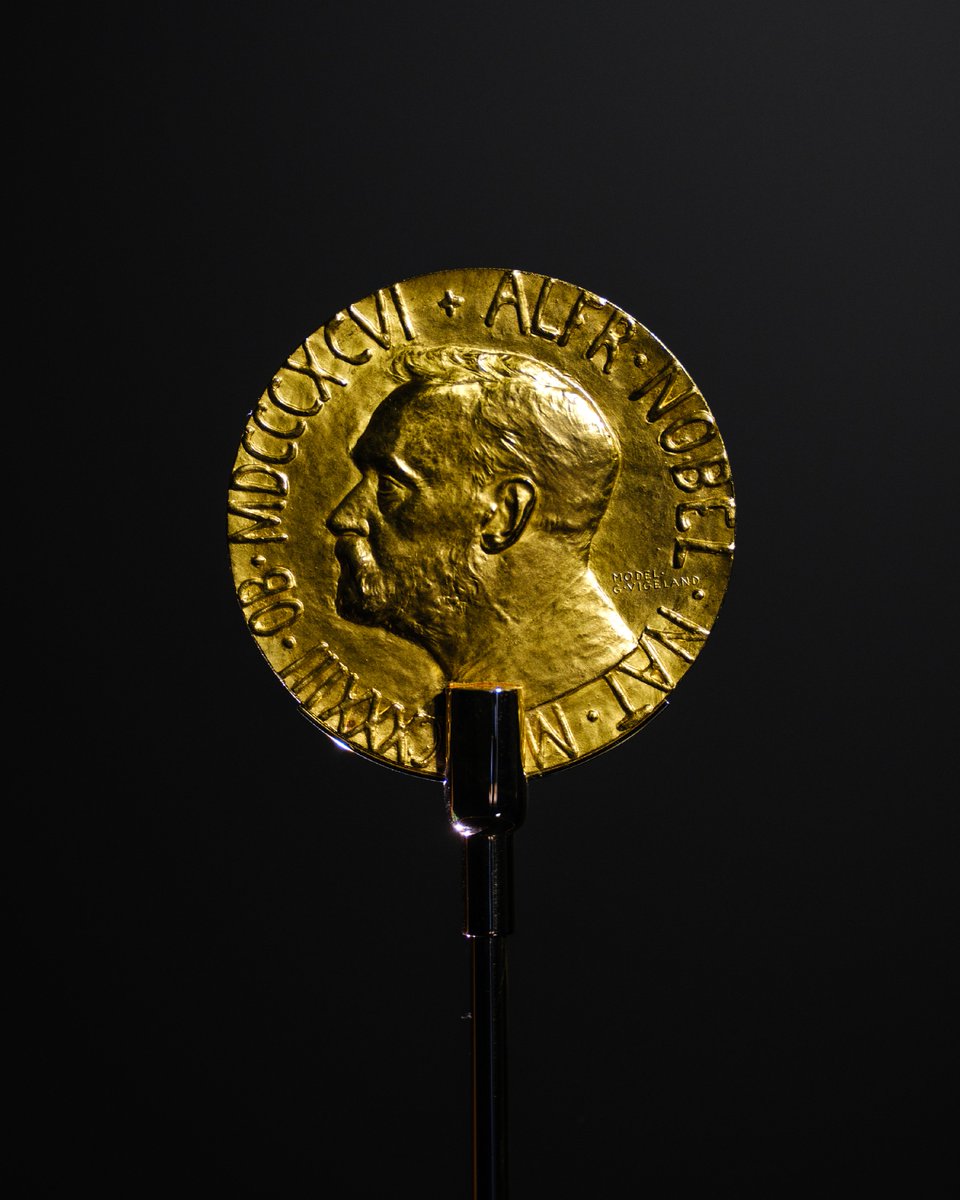
The #NobelPeacePrize medal.
It measures 6.6 cm in diameter, weighs 196 grams and is struck in gold. On its face, a portrait of Alfred Nobel and on its reverse, three naked men holding around each other’s shoulders as a sign of brotherhood. A design unchanged for 120 years.
Did you know that some Nobel Peace Prize medals have been passed on after the award was given? A well‑known case is Dmitry Muratov’s medal, which was auctioned for over USD 100 million to support refugees from the war in Ukraine.
And the medal displayed at the Nobel Peace Center is actually on loan and originally belonged to Christian Lous Lange, Norway’s first Peace Prize laureate.
But one truth remains. As the Norwegian Nobel Committee states: “Once a Nobel Prize is announced, it cannot be revoked, shared, or transferred to others. The decision is final and stands for all time.”
A medal can change owners, but the title of a Nobel Peace Prize laureate cannot.
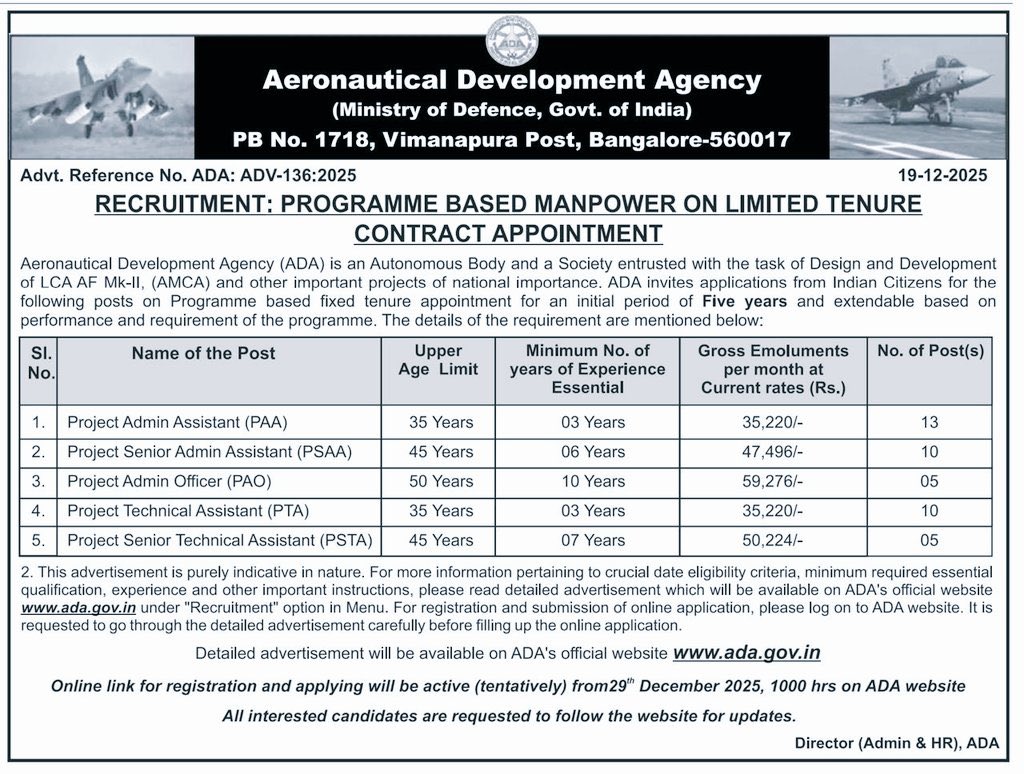
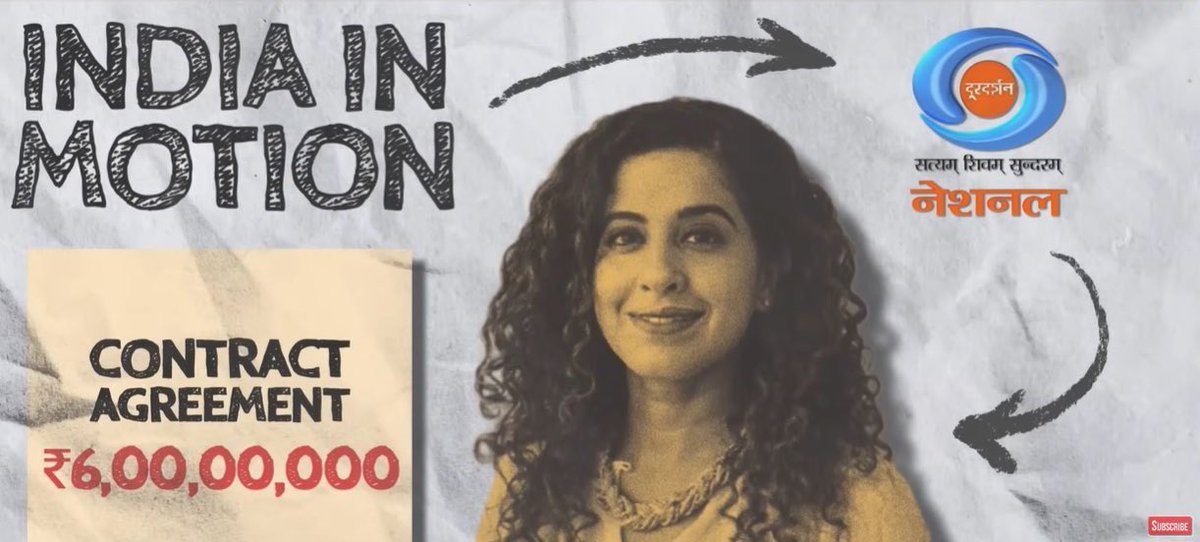
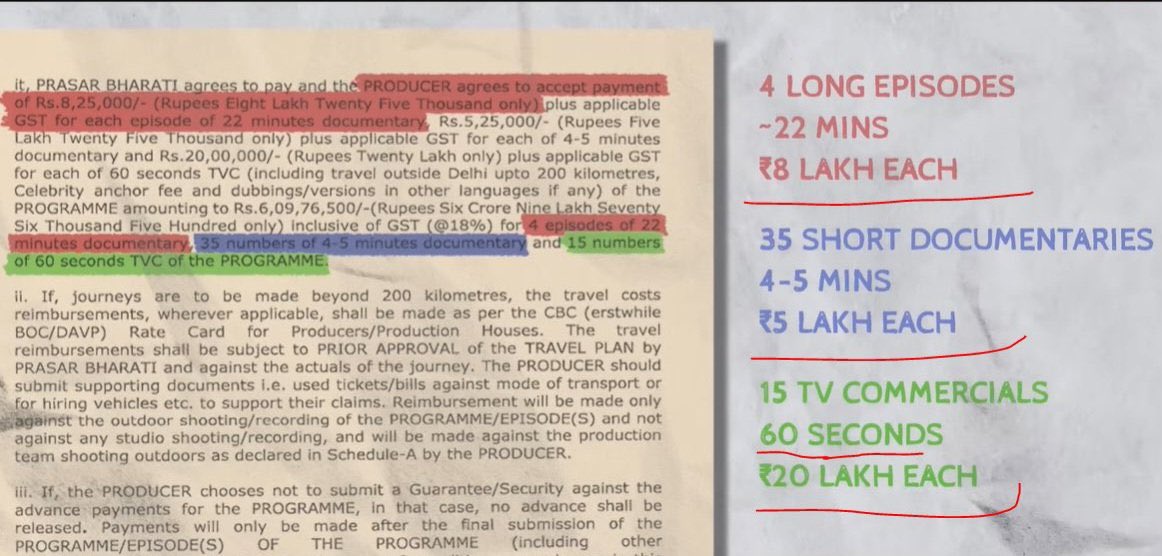
Nothing against Curly Tales (Kamiya Jani) but the Government (I&B and Tourism Ministry) is literally Paying 6,00,00,000 (6 Crores) to Kamiya Jani (Curly Tales) for eating in Vande Bharat and Having Chaat at Ghats in Varanasi and that too gets Aired on Doordarshan a Channel that no one Watches. On the other hand Government’s MoD’s ADA (Aeronautical Development Agency) is hiring Professionals for 5th Generation AMCA (Advanced Medium Combat Aircraft) and 4.5 gen +Tejas Mk2 and the Maximum package offered to the Appointment of Project Admin Officer (PAO) 5 Vacancies with 10 Years of Experience is 59,276 per month that makes 3,55,656 Per Year.
Fun fact: this "American" solar panel factory belonged and was built by Chinese solar giant Trina Solar.
Late last year, just a few days after the factory opened, Trina was forced to sell the facility to Freyr Battery (now rebranded as T1 Energy) after Congress threatened to pass a bill called "American Tax Dollars for American Solar Manufacturing Act" (https://t.co/ixPSSPAL7I) that would kill the factory's business model if it remained under Chinese ownership (src: https://t.co/CCxQTjDgx4).
Now you know how America came to have such an impressively productive "domestic solar" production facility.
A slight correction here.
The Europeans did not know of negative numbers in the 7th century. They did not even know about the Hindu numerals then.
It was the alleged 'father of algebra' who rejected negative numbers while translating the Indian mathematical texts. He was shocked to see both the negative numbers & the 'absurdly' large numbers. He rejected both saying they make no sense.
The Hindu numerals arrived in Europe in the 12th century when Fibonacci introduced them after learning them from an Arab merchant.