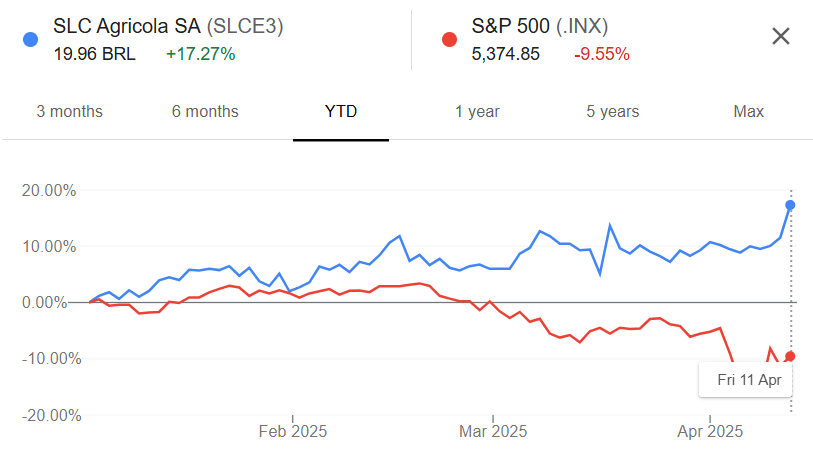
SLC Agrícola ($SLCE3), one of Brazil’s largest soybean and cotton producers, reported quarterly adjusted EBITDA 19% below consensus. The stock rose almost 8% the next day.
I think the reaction made sense. A few weeks’ difference in cotton shipments can move quarterly earnings considerably without changing much about the economics of the crop.
The update on the next season was more encouraging. Planting was within the ideal window, and much of the cotton and soybean production was already hedged.
What interests us most now is the potential to pay down debt as cash comes in from a much larger planted area. Weather and commodity prices will determine how quickly that happens.
We wrote about how we look at SLC and why quarterly results can be misleading for a farming business.
Our latest piece.
https://t.co/21E4NHBn3M
I have long invested in Brazilian commodity companies. I have a constructive view of the sector and believe Brazil is home to some of the best companies in the world in this space.
Many have built competitive advantages that translate into low costs, allowing them to weather downturns and generate substantial cash when commodity prices rise.
But those advantages are not permanent. They can come under attack and erode over time.
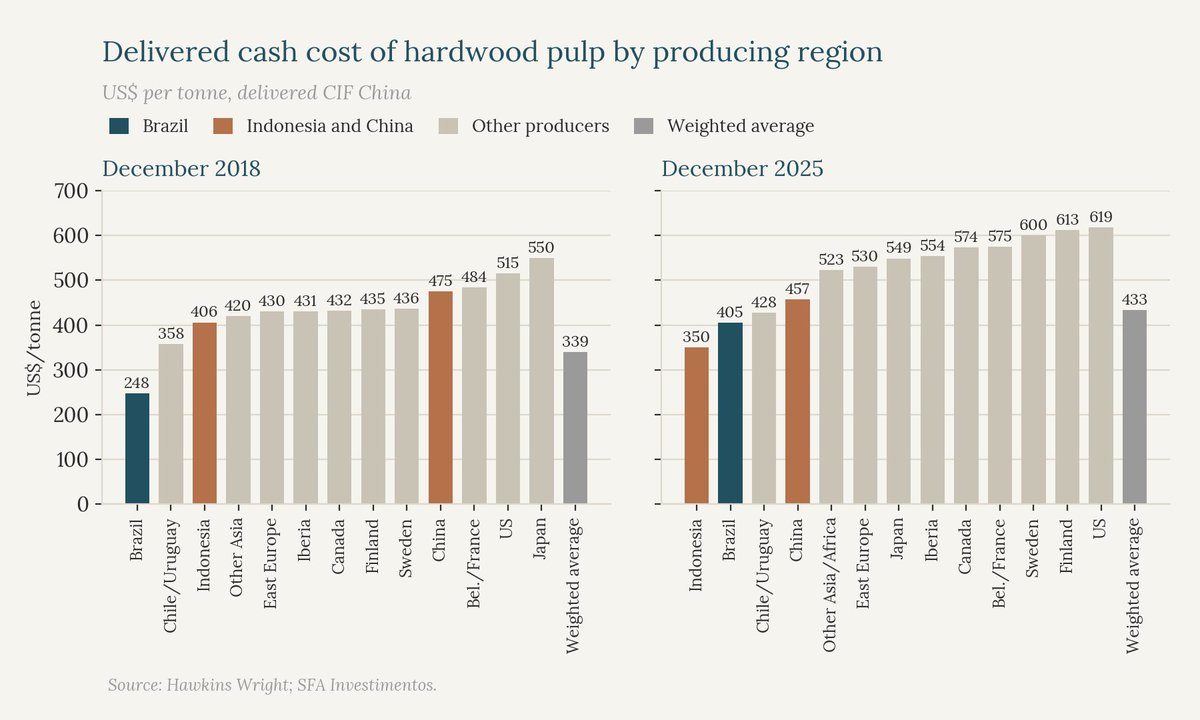
Suzano is an excellent company, but its cost advantage may be undergoing that process. The rise of China and Indonesia in pulp production poses new challenges for the company.
In our latest article, we explain why, despite recognizing the quality of the business, we prefer to stay on the sidelines for now.
Full analysis on our Substack.
https://t.co/jQDdVp4YtK
Junior iron ore miners in Brazil have begun announcing outages due to a rise in freight rates, prompting calls for a supply-driven rally in iron ore prices.
Privately held miner Itaminas announced a collective holiday for its 300 employees, and publicly listed steel and mining company Usiminas announced it suspended operations at its Samambaia mine in Minas Gerais.
The problem: Brazil-China freight rates have nearly doubled since the start of the US-Iran conflict, rising from US$22/ton to US$42/ton.
Full analysis on our Substack.
https://t.co/qpRMAuprA4
Brazil is, at its core, a commodity-producing economy.
Since the 2020 lows, the Bloomberg Commodity Spot Index is up roughly 185%, while Brazilian equities have significantly lagged.
If Brazil can combine a strong commodity cycle with credible fiscal policy, those would be two powerful drivers for a significant re-rating of Brazilian assets.
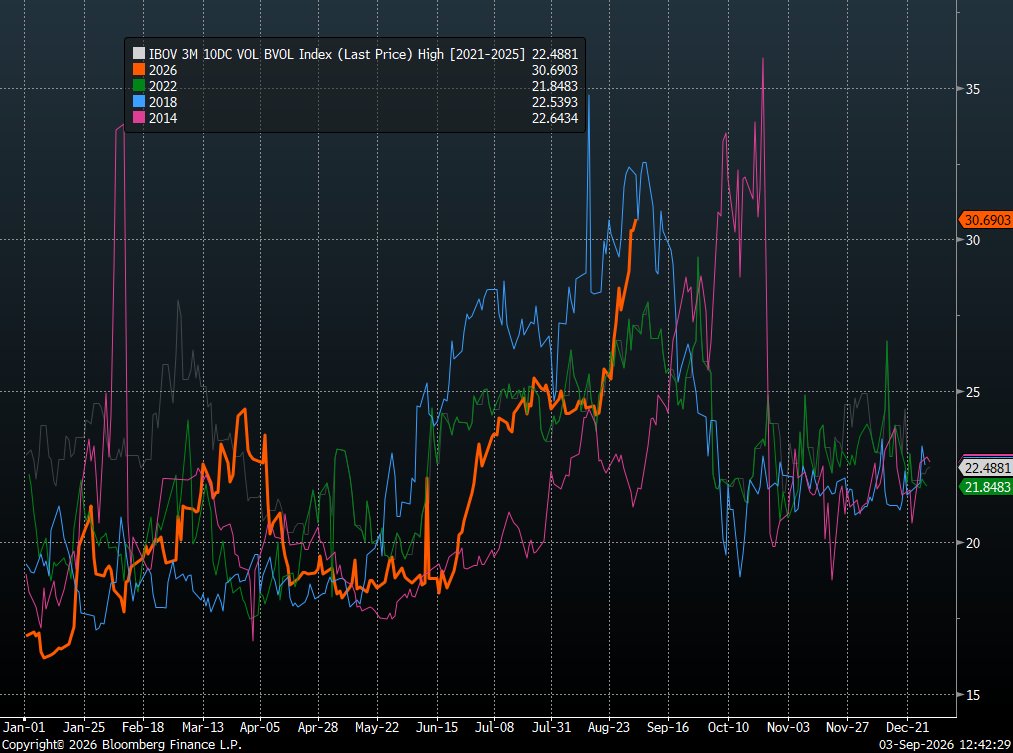
The Ibovespa rallied hard over the past few days. One of the reasons: the market as a whole was deeply underweight Brazil assets. Everyone rushed to buy Ibovespa upside risk at the same time, and implied vol jumped with it.
The vol that was cheap is not cheap anymore.
I remember the last elections, when we saw a similar move. Everyone paying up for options, expecting extreme post-election scenarios. Then the event passed and vol collapsed.
Yesterday's FIPE print spooked the market on Localiza: Brazilian used car prices fell 1.3% MoM in August.
We track this weekly, with proprietary data scraped from the used car inventories of the three listed rental companies. Our series had already caught that drop. More importantly, it shows what came next: prices are recovering.
The chart below shows the used car discount to the equivalent new car. After widening through June and July, it has been narrowing again through August.
5/7
É aí que os dois assuntos da carta se conectam (pod shops e AI). Este trecho resume tudo que foi dito acima e (provavelmente) vai tirar seu sono daqui pra frente:
“Voltando para os temas tecnologia e ciclo de investimentos, o principal trade que funcionou nos últimos 14 anos foi estar long growth (em geral por meio de ações de tech nos EUA) e short em índices ou ações de outros setores. Imaginamos que a exposição dos fundos quantitativos e dos pod shops ao tema seja muito relevante, dado que a performance de ambos os grupos tem sido bastante consistente com o desempenho do setor.
Quando nos perguntam quais os grandes riscos do mercado atualmente, um dos que mais atrapalha nosso sono é essa combinação de um ciclo de produto acelerado e focado em poucas empresas - com o market cap global dominado pelas grandes empresas de tecnologia - em um mercado onde o volume diário não é mais dominado por decisões fundamentalistas, mas sim quantitativas ou impulsionadas por incentivos de aceleração/desaceleração de alavancagem e tomada de risco.
São trilhões de dólares de liquidez controlados por sistemas ou gestores muitas vezes desalinhados ou inexperientes, extremamente sensíveis a qualquer pequena variação de preço, cujos portfólios alavancados ou baseados em algoritmos automatizados de momentum ajudam a alimentar os mesmos temas em uma grande referência circular.
Apenas nos últimos cinco anos, os pod shops levantaram quase $100 bilhões e contrataram cerca de 10 mil pessoas. Foi o segmento de alternativos que cresceu mais rápido e mais contratou gente. Com isso, além da necessidade de alocar mais capital (lembrem-se da alavancagem), tiveram que montar estruturas robustas para treinar potenciais tomadores de decisão de forma acelerada, de forma que esses novos "gestores" pudessem direcionar o capital levantado da melhor forma possível.”
Assim, surgiram diversos especialistas em treinar tomadores de decisão, que usam desde tórmulas emprestadas do baseball a análises estatísticas "pokerianas", passando por psicólogos, Al e afins.
Descobri esses dias e achei irado que a Copag, que é brasileira, é fornecedora oficial de baralhos do World Series of Poker e também top of mind entre os consumidores nos EUA. Consegue ser top of mind desde o baralho Dunga (R$9) aqui no Brasil até os mais caros (~US$10) nos EUA
Esse fds foi assinado o maior contrato na história dos esportes americanos. 10 anos, US$700mn.
Aposto que vc nunca ouviu falar do jogador
Shohei Ohtani, jogador de baseball. Consegue ser um dos melhores arremessadores E rebatedores da atualidade. Vai jogar no LA Dodgers