From the Freedom of Speech (Higher Education) Act 2023: “The governing body of a registered higher education provider must take the steps that, having particular regard to the importance of freedom of speech, are reasonably practicable [for] securing freedom of speech within the law …”
Due to escalating disruptive protests, I have decided to cancel the remainder of these lectures. This is deeply lamentable, but the disruption has undermined the academic nature of this series. Students shouldn't face bullying or harassment when attending academic events.
That's a logic game that turns on a malleable definition of "defeat". If the US and Israel were willing to bomb civilian infrastructure (using the WWII tactics that were used against Germany and Japan), they could easily "defeat" the IRGC by any definition as they control the airspace and the requisite firepower. So when the IRGC survives only because the US and Israel are sparing civilians and civilian infrastructure, it's hard to say Iran has meaningfully defeated its opponents. In any event I would have thought being a great power requires (1) a unified visible civilian leadership (not just a military dictatorship, which is inherently fragile) (2) a strong economy (3) control of its own airspace (4) a functional navy and an airforce and (5) broad support of its citizens. All of these are required even to be a medium power and Iran currently lacks all of them. The fact that Iran has denied its citizens Internet usage and the IRGC threatens to shoot protestors (after killing multiple thousands a few months ago) suggests it doesn't have broad support of its citizens. The IRGC's main remaining power comes from threatening to attack civilian shipping in what the rest of the world accepts as international waters. I don't think such terroristic threats to commit crimes makes them a great power, even if they have massive economic consequences.
He said this: "In one fashion or another, Iran has been at war with the United States and its ally Israel for decades. During the Iraq war in the 2000s, Iran supplied its proxies with IEDs that claimed the lives of many American soldiers. Since the end of that conflict, Tehran has supported an array of proxy armies and paramilitaries throughout the Middle East." Whether or not that can be dismissed as a Fox News talking point, Reno still did not endorse the war.
Reno's 3 March article is not an endorsement of the war. He begins with the strong presumption against violence. He says he does not have information on whether alternatives are feasible. While he agrees with some (not all) of the US aims, he says that probability of success is not clear. He concludes: "The circumstances of American involvement in that region are morally complex. For this reason, it is unwise to issue confident moral judgments about Operation Epic Fury." https://t.co/XensEhX8Ax
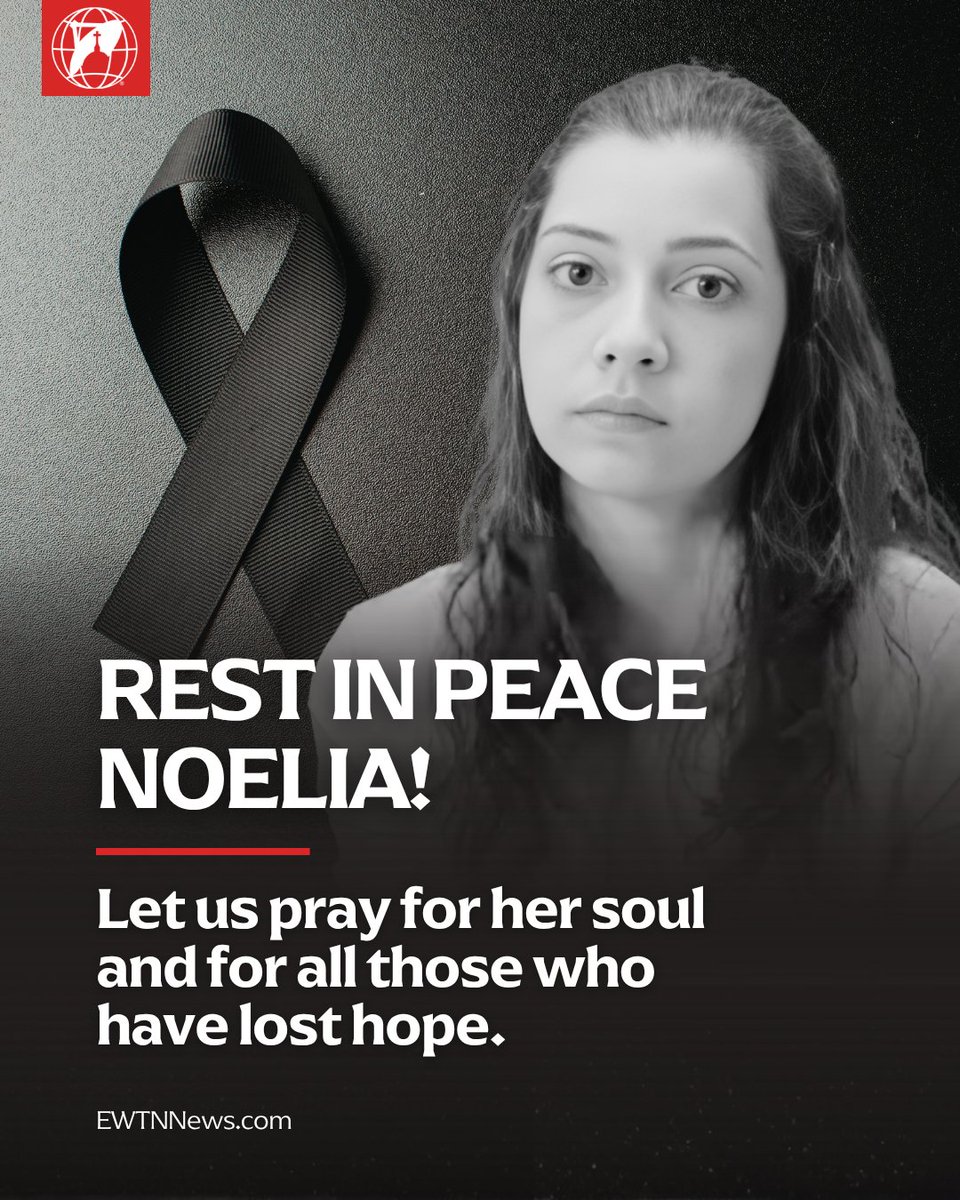
The administration of euthanasia for 25-year-old Noelia Castillo Ramos took place in Spain on March 26 — an event occurring after she faced immense life challenges since childhood and following nearly two years of a legal battle waged by her parents to preserve her life.
According to Spanish law, to request euthanasia, an individual must be of legal age and be both mentally capable and fully conscious at the time of the request; they must also hold Spanish citizenship or have maintained legal residency for more than 12 months and “be suffering from a serious and incurable disease or a serious, chronic, and disabling condition, as certified by the attending physician.”
On March 24 it was reported that the European Court of Human Rights rejected the interim measures requested by Castillo’s family to halt her euthanasia, bringing an end to a legal battle spanning nearly two years.
The following day, an interview with Castillo aired on the Spanish television network Antena 3 in which she described how she feels: “I have no desire to do anything — not to go out, not to eat, not to do anything at all. ... Sleeping is very difficult for me; furthermore, I suffer from back pain as well as leg pain.”
“I have always felt alone, because I have never felt understood; no one has ever empathized with me, and I have always struggled with interpersonal relationships,” she recounted.
“Even before requesting euthanasia, I viewed my world as very dark; I saw a very dark ending ahead of me. I had no goals, no objectives — nothing at all — and I still have no goals, no objectives,” she acknowledged.
Castillo’s life has been full of many challenges. While under the guardianship of public services following her parents’ separation, she was subjected to multiple sexual assaults.
According to Abogados Cristianos (Christian Lawyers) — the organization representing Castillo’s father in his efforts to prevent his daughter’s euthanasia— at that time, the young woman had been officially recognized as having a 67% disability due to mental illness.
In October 2022, she attempted suicide by throwing herself from a balcony, sustaining injuries that left her in a wheelchair; this increased her disability rating to 74% — a fact that, according to the Christian Lawyers organization, “demonstrates that the underlying issue is psychiatric.”
“This is key: The Constitutional Court itself (Ruling STC 94/2023) makes it clear that euthanasia cannot be administered when the source of suffering is a mental illness and that the state has an obligation to protect these individuals from the risk of suicide,” Christian Lawyers emphasized to ACI Prensa, the Spanish-language sister service of EWTN News.
Although reports have circulated claiming she was left paraplegic, Castillo herself refuted this: “I am not bedridden or anything of the sort; I get out of bed. I shower all by myself. As you have seen, I apply my own makeup and manage my own affairs,” she stated.
According to her own testimony, Castillo had been admitted to psychiatric facilities at least twice previously, and during those stays, she made several suicide attempts. She was discharged in June 2023.
In April 2024, she requested euthanasia in accordance with the procedure established by law, and it was approved for August 2024. This marked the beginning of a legal battle waged by her father, supported by the Christian Lawyers organization.
During the proceedings, they succeeded in halting the procedure and securing recognition of the family members’ right to object to the euthanasia request.
Concurrently, Christian Lawyers filed a criminal complaint against the physician and the lawyer who had initially evaluated Castillo’s request in accordance with the protocol.
The organization alleged that, despite agreeing to authorize the euthanasia, the two “feigned disagreement in order to refer the decision to the Guarantees and Evaluation Commission, thereby ‘forcing’ a supposedly higher level of assurance in the decision-making process” — a point noted by the Supreme Court in a ruling.
In September 2025, Christian Lawyers also filed a complaint against seven members of the guarantees commission for conflict of interest as well as against the former Catalan minister of health, Josep María Argimón, for having appointed them.
Subsequently, in January of this year, the Supreme Court upheld the request for euthanasia — a decision that was appealed to the Constitutional Court, which rejected the appeal in February.
The Christian Lawyers organization also took the case to the European Court of Human Rights, which rejected the request for interim measures without ruling on the merits of the case on March 24.
Following this, it was announced that the euthanasia procedure would be carried out on March 26 at 6 p.m. local time. The procedure lasts approximately 15 minutes and involves the use of three chemical substances. Per Castillo’s decision, her parents were not permitted to be present.
According to Christian Lawyers, “this case exposes the failure of the euthanasia law. It facilitates suicide without the individual having received prior mental health treatment.”
Consequently, the legal organization emphasized that “it is imperative to establish protocols mandating an attempt at psychological and psychiatric treatment before authorizing euthanasia. Without treatment, there is no free decision; there is abandonment.”
Finally, they hold the health authorities of the Catalan regional government responsible: “Before offering death, they must ensure that they have offered every alternative for life. In cases of mental illness, they should be investing in the most advanced psychiatric treatments and in recovery.”
https://t.co/8ELXh6CE8O
Scotland The Brave.
At the end of a courageous and well informed debate the Scottish Parliament has defeated the assisted suicide/ euthanasia Bill by by 69 votes to 57 - signalling its belief in the supremacy of the right to life, its concerns for disabled and vulnerable people and its belief in palliative care.
The leader of the SNP, Scottish First Minister John Swinney, Scottish Labour leader Anas Sarwar, and the leader of the Scottish Conservatives, Russell Findlay, all united in their opposition to the proposals. They were joined by Deputy First Minister @_KateForbes
In a demonstration of characteristic Scottish independent thinking this was a major victory for the most vulnerable in our society.
Those attacking UK Parliamentarians for also forensically questioning the dangers of similar UKwide legislation should listen to the voice of Scotland.
No one should have to suffer a painful death and @wesstreeting & @ShabanaMahmood are right that we don’t need dangerous and unsafe laws but must invest in palliative care services to ensure that everyone has dignity at the end of life.
@Tanni_GT@frankcottrell_b@historykev@thelizcarr@NualaLoan@timfarron @RighToLifeUK @CNKAlliance@RachaelMaskell
First vote was 70-56 the other way. It’s becoming really clear that this kind of legislation falls apart under scrutiny.
Time to move forward and confront the huge challenges facing social care, palliative care and the NHS.
Ruth Maguire (SNP), who is stepping down as an MSP due to a cancer diagnosis:
“I find it really hard to put into words the impact that the language of dignity and compassion being used to talk about ending life has had on me—as if somehow wishing to carry on but with help is undignified and burdensome, unfair to people who love me…
“My blood runs cold thinking about sitting in a room in a hospital and having a doctor raise that with me as we weigh up treatment options…
“If it weighs so heavily on me, someone in a position of financial privilege, with a large loving family who are able to care for each other—indeed, someone whose job it’s been for 10 years to have difficult conversations… I want colleagues to see how this all plays out for people who don’t have the privilege that we have.
“And in doing so, let’s have our eyes open to the strain our health and social care systems are under.”
"In keeping with the principles of governance [wilayat al-'amr] and the perpetual necessity of leadership [imamah], the Constitution provides for the establishment of leadership by a faqih possessing the necessary qualifications [jami' al-shara'it.] and recognized as leader by the people (this is in accordance with the hadith "The direction of [public] affairs is in the hands of those who are learned concerning God and are trustworthy in matters pertaining to what He permits and forbids" [Tuhaf al-'uqul, p. 176]). Such leadership will prevent any deviation by the various organs of State from their essential Islamic duties."
The Constitution of Iran begins with a 3000-word preamble that is both a historical narrative of the 1979 Islamic Revolution and a distillation of the key elements of Khomeini's political theology in his book Islamic Government: Governance of the Jurist. A good place to begin for understanding the ideological foundations of the Islamic Republic. Some quotations in the thread below. https://t.co/5IGPyF8prP
"With due attention to the Islamic content of the Iranian Revolution, which has been a movement aimed at the triumph of all the mustad'afun [downtrodden] over the mustakbirun [oppressors], the Constitution provides the necessary basis for ensuring the continuation of the Revolution at home and abroad. In particular, in the development of international relations, the Constitution will strive with other Islamic and popular movements to prepare the way for the formation of a single world community (in accordance with the Qur'anic verse "This your community is a single community, and I am your Lord, so worship Me" [21:92]), and to assure the continuation of the struggle for the liberation of all deprived and oppressed peoples in the world."
"In creating, on the basis of ideological outlook, the political infrastructures and institutions that are the foundation of society, the righteous will assume the responsibility of governing and administering the country (in accordance with the Qur'anic verse "Verily My righteous servants shall inherit the earth" [21:105]). Legislation setting forth regulations for the administration of society will revolve around the Qur'an and the Sunnah. Accordingly, the exercise of meticulous and earnest supervision by just, pious, and committed scholars of Islam (al-fuqaha' al-'udul) is an absolute necessity."
For everyone who values Parliament and the Palace of Westminster, Nicholas Boys Smith's criticism of the hugely expensive restoration proposal is a must read.
A potent piece by @boys_nicholas on cost bloat at the Palace of Westminster. A few key points:
1. The restorers claim that they will reduce running costs of the building from £75m to £30m a year. Even if this is true, the net present value of £45m annual running costs is £1.3bn, which is not a good reason to spend between £11bn and £39bn.
2. The restorers aim at various improvements to insulation and accessibility. These are worthy objectives, but the Palace of Westminster project is *extremely* poor value for money in achieving them. Investing those tens of billions of pounds could do a great deal more for the climate or for accessibility elsewhere. For example, we could give Leeds a complete 50-mile light rail network for a fifth of the lowest possible cost estimate.
3. The improvements that the Palace really needs (e.g. stripping out asbestos) are far, far less extensive than what is being proposed.
https://t.co/oRLRXwXl85
Requiescat in pace Norman Podhoretz. A favourite anecdote comes from Richard John Neuhaus. "Years ago, when over lunch I told my friend Norman Podhoretz that I had decided to become a Catholic, there was a long silence. His expression was one of deep concern, and finally he came out with, 'But what about Bach?'" https://t.co/btCQN3lx3a