FX trader.I am not registered adviser. pls don't trade my view. do your due diligence. Retweet n like is not the endorsement of someone else's view. #FX#Rupee
@sabeer In india corrupt is reverred ..... by either side of political spectrum...reason we as society is corrupt...majority is not doing corruption not because they care for it because they are not in position to do that..
Yes, please come back and
> Eat fake paneer
> Pay full price for ethanol-blended fuel
> Breathe 1000+ AQI air in winters
> Kids will face 70% Reservation
> Get booked under SC/ST act
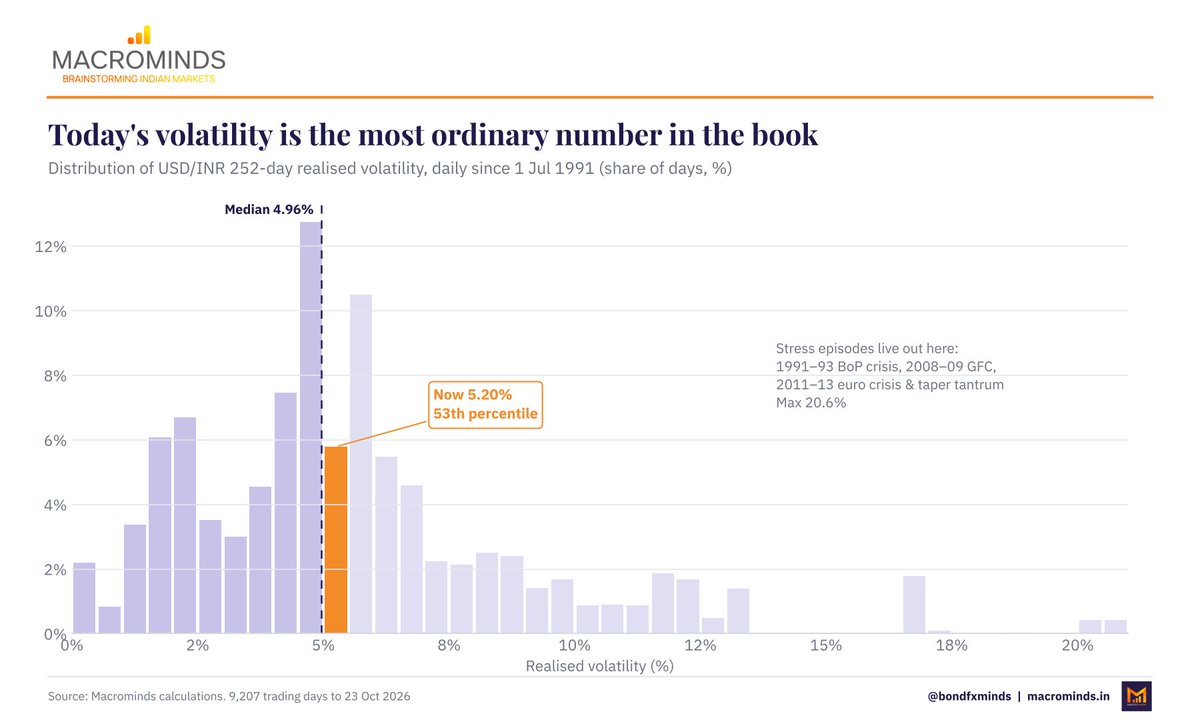
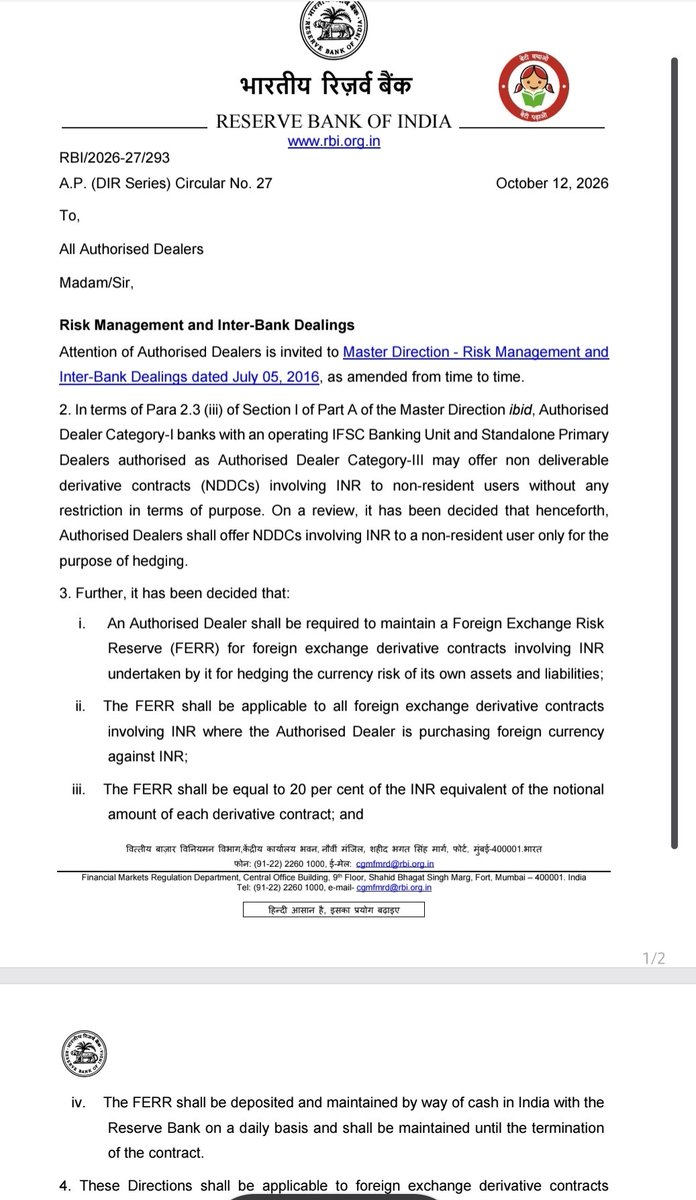
The October MPC said the rupee may be undervalued.
It also said it doesn’t target a level and only curbs excess volatility.
That combination is unusual. Here’s why the market is asking three specific questions: 🧵
Be Alert! 🚨
Thieves and robbers are constantly coming up with new ways to target innocent people, showing no mercy to their victims.
The way this innocent man was brutally robbed is truly shameful.
Strict legal action must be taken against such... Read news
Haha, no I very much mean ~40-50 not ~140-150 for USDINR by 2047. I understand why people may think 145 is likely. It is after all only 2% annual depreciation from here whereas actually 3-4%+ has been the norm by and large.
But you cannot understand the India story unless you understand that the rupee is at a historic pivot. I was early, and I do think that early is wrong in markets, but the basic point is if anything stronger than ever today in a Bayesian sense.
For the first time ever, India will not have to need to import “currency”. In earlier centuries we imported silver and to a lesser extent gold. Now fiat is good enough for domestic use but we need dollars as global reserves.
But within two decades at most, plausibly in one decade or bit more, we won’t need that crutch.
If you study the Indo-Roman trade from two millennia ago or Sino-European trade from half a millennia ago, Asians are making stuff to just monetise their economies. That is, to prevent the inefficiency of barter.
We are at an incredibly powerful inflexion point of Asia FX. India is just the most dramatic major example.
It remains unclear how an appreciation of the INR to 90 (if that happens), would fundamentally alter the current situation. The underlying drivers for FII selling still persist, and these levels may simply offer more favorable exit points for those investors.
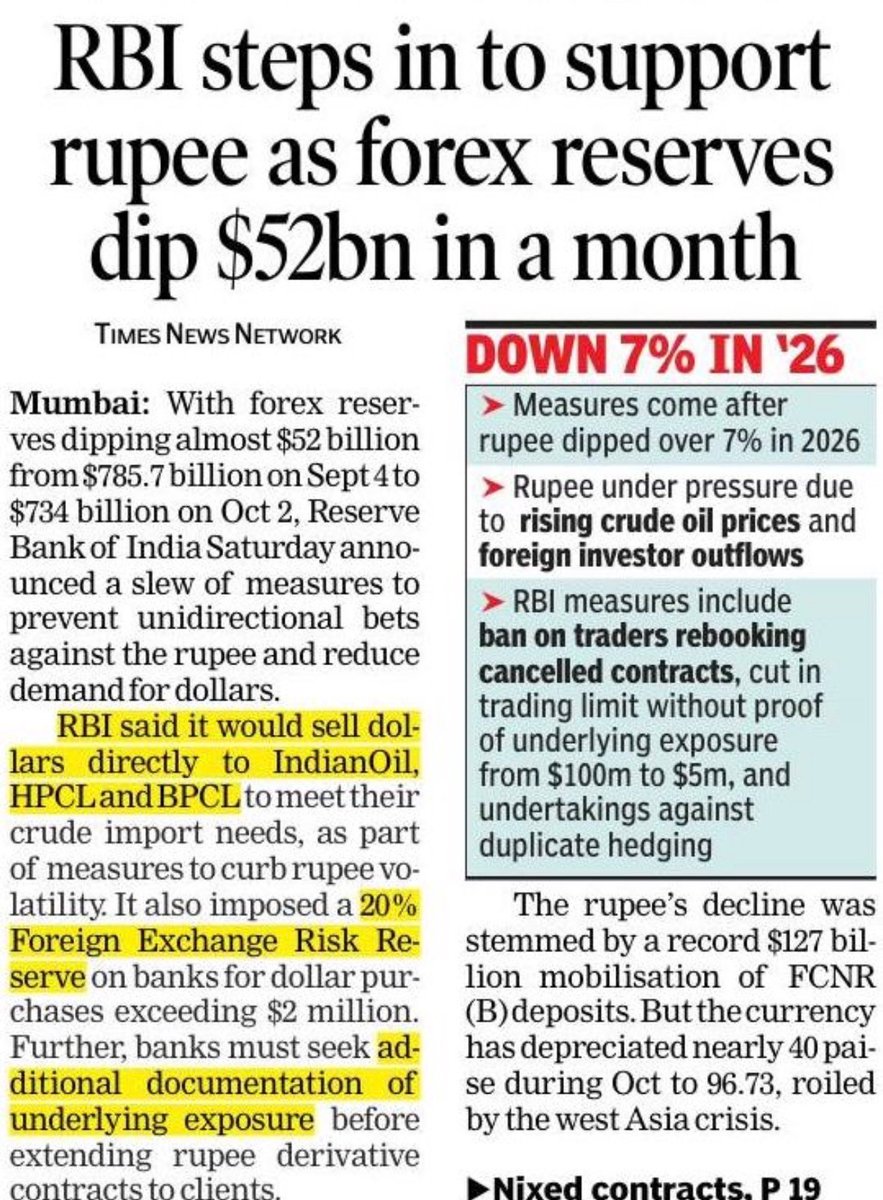
Reserve dip is not all due to rbi selling $ in spot market
1. ~$25-30bn due s/b swap to manage liquidity
2. ~$10bn due to valuation change on UST sell off and dollar appreciation
3. ~$12-15bn due to intervention in spot market
@harshmadhusudan Do you genuinely believe that 11yrs of diligent effort in establishing investor trust to create an open and vibrant market could be undermined simply to appreciate a trade-deficit currency? Will we be able to fund our deficit in future?
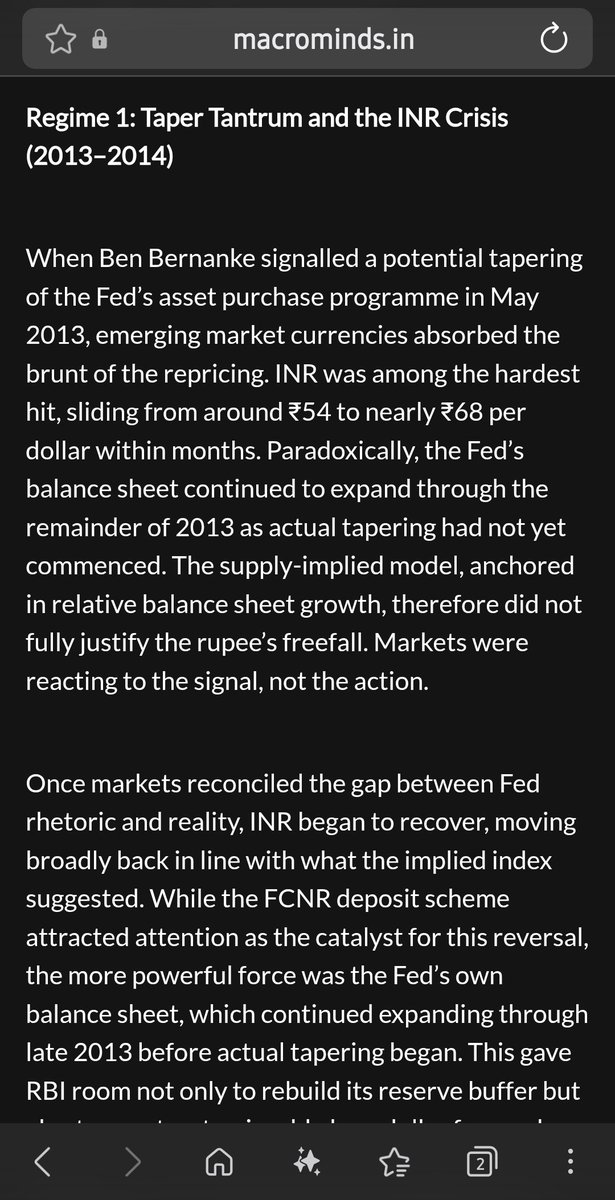
*When Central Banks Print, Currencies Move*
Decoding INR Through the RBI–Fed Balance Sheet Lens
Exchange rates follow money. Over two decades of RBI and Fed balance sheet data, one relationship holds with striking consistency — when RBI prints faster than the Fed, the rupee weakens; when the Fed outprints RBI, appreciation pressure builds. This article constructs an Implied INR framework using that balance sheet ratio, maps it against actual USD/INR from 2009 to 2026, and identifies five distinct intervention regimes — from the 2013 Taper Tantrum to RBI's current record net short forward position of –$136.8 billion. The conclusion is uncomfortable: at its core, India's exchange rate policy is balance sheet policy, and the largest forward sale book in history is a bet that monetary arithmetic can be deferred indefinitely.
https://t.co/xBonQ9IkMz
*When Central Banks Print, Currencies Move*
Decoding INR Through the RBI–Fed Balance Sheet Lens
Exchange rates follow money. Over two decades of RBI and Fed balance sheet data, one relationship holds with striking consistency — when RBI prints faster than the Fed, the rupee weakens; when the Fed outprints RBI, appreciation pressure builds. This article constructs an Implied INR framework using that balance sheet ratio, maps it against actual USD/INR from 2009 to 2026, and identifies five distinct intervention regimes — from the 2013 Taper Tantrum to RBI's current record net short forward position of –$136.8 billion. The conclusion is uncomfortable: at its core, India's exchange rate policy is balance sheet policy, and the largest forward sale book in history is a bet that monetary arithmetic can be deferred indefinitely.
https://t.co/xBonQ9IkMz
99.99% of the people commenting on RBI's "short forward position" don't understand it. It isn't a bet on INR. It isn't a defence operation gone wrong. It's the second leg of the FCNR(B) swap window. 🧵