The story behind this is very interesting. :)
Let me explain.
A while back, people on Reddit started discussing about Jan Aushadhi stores. Someone would post that the adapalene gel there was ₹27 while the branded tube was ₹500. Someone else would check and confirm. Then benzoyl peroxide. Then the salicylic acid face wash at under ₹50.
They gave it a nickname. PM Baddie Banao Yojana.
It was a joke, and it spread because the joke was actually true.
That is how Reddit users in India found out that a government pharmacy sells the same acne actives a dermatologist prescribes, at a tenth of the price.
So, if you look at the facts, Jan Aushadhi has stocked salicylic acid face wash for a while, in 1% and 2%, 60 ml, around ₹47 to ₹50, with a PMBI drug code.
Now why a government would bother with this at all.
The fundamental principle is not about face washes; Jan Aushadhi Kendras stock hundreds of essential medicines at a fraction of branded prices.
Diabetes medication. Blood pressure tablets. Heart drugs. Antibiotics. Painkillers. Cancer medicines. Surgical items.
This is a nationwide generic pharmacy network built for one purpose, which is to let a family manage a chronic illness without going broke.
That is the goal. A retired man buying his monthly BP and sugar medicine for a few hundred rupees instead of a few thousand.
The face wash just happens to be the item that went viral, because it is the one young people on the internet noticed.
Having said that screen treatment is also an important piece to cover.
See, skin treatment in India is almost entirely out of pocket. No insurance covers it. Dermatologists are available only in big cities.
So most of the country never sees one.
Because of this, cheap unregulated combination creams are sold across small towns, over the counter, used for months on end, thinning skin and causing irreversible damage.
Indian dermatologists have been raising alarms about this for years.
So the problem the government is trying to solve is the dangerous ₹40 tube from a chemist who told the customer it would fix everything.
Basically put a regulated, cheap, boring, effective active ingredient into thousands of government stores and you give people a safe option instead.
Now, Salicylic acid is a beta hydroxy acid. Its useful trick is that it dissolves in oil. A pimple is a pore blocked with oil and dead skin. Normal face wash cleans the surface. This gets down into the oil inside the pore and breaks up the plug.
It is one of the most studied acne ingredients there is. 1% and 2% are the standard strengths dermatologists use.
The branded versions of Salicylic acid based face washed cost anything between ₹400 to ₹700. Imported ones cross a thousand.
The government sells it for ₹47.
Governments worldwide have been doing this to control the prices of essential medications.
Bangladesh did something remarkable in 1982. They rewrote their National Drug Policy, threw out heaps of overpriced and useless formulations, and forced the focus onto essential generics.
Prices dropped hard. Their own pharma industry grew out of it and became a real exporter. It is still taught as one of the boldest health decisions any developing country has made.
Thailand went further and just built the factory. Their Government Pharmaceutical Organization manufactures generics directly.
When HIV hit, being able to make antiretrovirals themselves instead of negotiating with foreign pricing saved an enormous number of lives.
Brazil passed a generics law in 1999 and then built Farmácia Popular, a network selling essential medicines at heavily subsidised rates.
Millions of people started taking treatment they had been quietly skipping because of cost. Our Jan Aushadhi Kendras are modeled on the same principle.
New Zealand does not manufacture. It negotiates. PHARMAC buys for the entire country as one buyer and is famously brutal with pharma companies.
As a result, New Zealanders pay a fraction of American prices for identical pills.
So, basically Jan Aushadhi is a network selling the chemicals without the brand premium. Adding skin basics to that network costs almost nothing because the stores already exist.
And acne is not a school kid problem. It follows plenty of people into their thirties, it shows up with PCOS in a lot of women, and untreated it leaves scars that cost tens of thousands to fix later, if you can fix them at all.
If anything, my problem is availability. Kendras are not everywhere and stock is unreliable.
So if you want to be annoyed about something here, be annoyed about that. Much better complaint than government prioritising face washes. :)
Yes, Britain famously transferred wealth to India. When British arrived in India its share of the world economy was 4%. When they left in 1947, they had taken it to 23%, roughly equal to all of Europe combined.
On a serious note.
The Indian railways were financed entirely by bonds sold on the London Stock Exchange. British investors were guaranteed a return of 5% per annum by the colonial government. A guaranteed return, in an era when no other safe investment in Britain offered anything close. And who guaranteed those returns? Indian taxpayers. Indians paid for the construction. Indians paid the guaranteed profits to British shareholders. Indians paid for the equipment, which was manufactured exclusively in Britain and shipped to India at inflated prices. One mile of Indian railway cost twice what the same mile cost to build in Canada or Australia, because the guaranteed return meant there was no incentive to control costs. The more it cost, the more British investors and suppliers earned.
And what were these railways designed to do? Move raw materials from India’s interior to ports. Cotton from the Deccan to Bombay. Jute from Bengal to Calcutta. Coal from Bihar to wherever the Empire needed it. Tea from Assam to London’s drawing rooms. The routes connected mines and plantations to harbors. Not cities to cities. Not people to opportunities. Raw materials to ships. The Indian public’s transportation needs were, as Shashi Tharoor put it, entirely incidental.
Oh, and the railways also moved troops. Very efficiently. So that when Indians protested being looted, the British could deploy soldiers to shoot them. That was the other “infrastructure investment.”
But wait, there is more. Before the railways, India had the world’s finest textile industry. The British smashed the looms, broke the weavers’ thumbs (this is not metaphor, this is documented history), imposed tariffs on Indian cloth, and shipped raw cotton to Manchester to be manufactured into garments that were then sold back to Indians. India went from being the world’s largest textile exporter to an importer of British cloth within a generation.
The Bengal Famine of 1943 killed an estimated 3 million people. Churchill diverted food supplies from Bengal to already well-supplied British troops and European stockpiles. When informed of the famine, his response, on the record, was to ask why Gandhi had not died yet. This is the “infrastructure investor” Musk is defending.
India contributed 2.5 million soldiers to fight in two World Wars on Britain’s behalf.
So let us summarize the colonial “investment” in India. They took a 23% global economy and left it at 4%. They destroyed the world’s finest textile industry. They built railways with Indian money, for Indian resources, generating British profits. They engineered famines that killed millions. They drained an estimated $45 trillion in today’s value over 200 years.
That’s some unprofitable adventure.
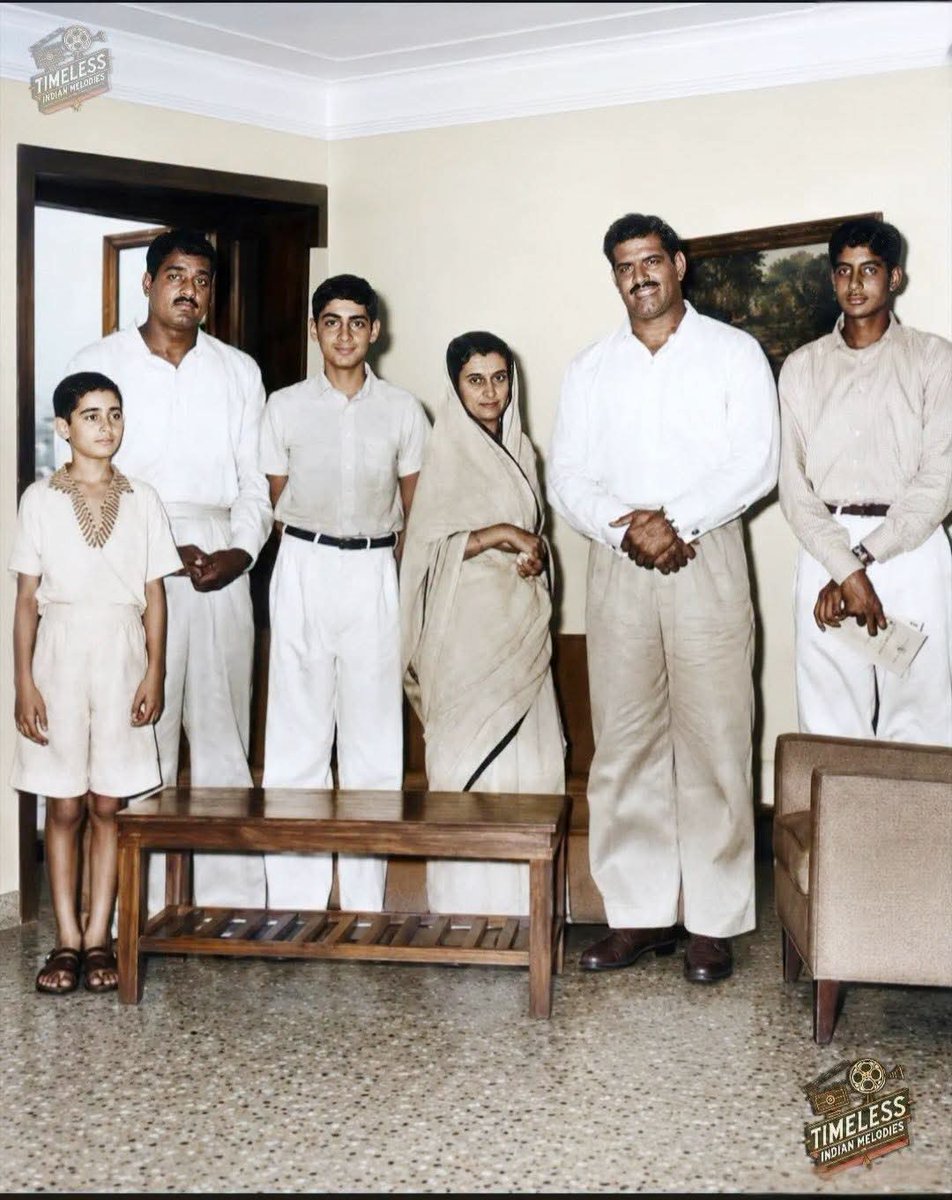
1957.
At first glance, it looks like an ordinary photograph.
Then the names begin to reveal themselves.
Indira Gandhi.
Dara Singh.
Randhawa.
Amitabh Bachchan.
Ajitabh Bachchan.
And suddenly the room feels a lot smaller.
What fascinates me isn’t the celebrity.
It’s the timing.
Amitabh is still years away from his first film.
Indira Gandhi is still years away from becoming Prime Minister.
Dara Singh is famous, yes, but as a wrestler. The cinema icon and television legend still belong to the future.
The Bachchan brothers are here because long before Bollywood entered their lives, the Bachchans and the Nehrus-Gandhis shared a friendship that went back to Harivansh Rai Bachchan and Teji Bachchan.
That’s the detail most people miss.
This isn’t a meeting of famous people.
Not yet.
It’s a gathering of families, friends and familiar faces.
History only arrives later.
Looking at the photograph today feels a bit unfair.
We know how the story ends.
They don’t.
The teenager in the frame has no idea that one day India will call him the Shahenshah.
The woman in the sari has no idea that she will become one of the most powerful political figures of the twentieth century.
And nobody in that room knows that a simple photograph will still be circulating nearly seventy years later.
That’s what I love about old pictures.
They capture people before history gets hold of them.
Before the headlines.
Before the mythology.
Before the world starts introducing them with titles.
(AI aided )
Anecdote: Once during my posting in Vancouver, I visited a radio station for a live talk show. After the show, the owner met me and introduced a middle-aged couple. The man,who introduced himself as a Sarpanch in a Punjab village before coming to Canada, said they weren’t getting Indian passports because of being refugees there. When I enquired the reason for seeking asylum, he said they were being harassed in Punjab. Strangely, he claimed the harassment years after the terrorism was wiped out. Hence they migrated to Canada and got the asylum, he said.He couldn’t give satisfactory answer when I asked for the police case details etc, if any. I further asked why they chose to migrate thousands of miles away when they could have shifted to some other state in India itself. Finally, he almost admitted that they wanted to migrate and no excuse other than concocting the false case of atrocities would have helped them obtain asylum. I said what I had to say to them on their defaming own country making fictitious accusations for selfish interests as it was like abusing own mother. Before leaving from there, I told them clearly that they shouldn’t expect any out-of-turn favour and would get the service as per existing rules only. The message was clear.
JaiHind🇮🇳
> Be me
> Wonder why my new Logitech bluetooth mouse keeps disconnecting from its bluetooth connection
> Use keyboard to go into Settings, turn BT off and then back on and it starts working again
> Think it's something blocking the signal, but it's not
> This happens every five fucking minutes now
> Check battery. Battery is brand new. Replace it anyway
> Every five minutes it dies, I have to go into settings, etc etc
> Finally have enough, look into buying new mouse
> Before purchasing, decide to look up any issues with this BT mouse
> Ask Grok, something that AI is actually very, VERY good for. Turns out Microsoft is entirely to blame
> The fix: you have to go into your Device Manager
> Device Manager is in your Control Panel
> Your Control Panel is a legacy windows interface that Microsoft is desperately trying their best to make you stop using for some fucking reason, they want you to use Settings instead
> But you can't apply this fix without opening your Device Manager
> Go into your Device Manager, open the Bluetooth pulldown, select Intel(R) Wireless Bluetooth(R) and don't get ANY ideas about infringing on Intel's wireless bluetooth trademarks and copyrights because why the fuck else would they inform you of this in the fucking Device Manager
> Right-click, Properties. Select the Power Management tab
> Unclick "Allow this computer to turn off device to save power"
> MS apparently made it so that it turns the device all the way off, they set it to "ON", and they made that the default setting WITHOUT TELLING FUCKING ANYONE
> Begin to understand why everyone fucking hates Windows 11
I'm glad to see many Indians, including media and ministers, waking up to the online infowar on India and Indians being waged by China, Pakistan, and their account farms around the world.
(Long post, you may skip to read just the 7 steps below)
This is in part thanks to Singapore for taking action (for their own good) thus making it news. While also clearly and decisively naming where the infowar on Indians in Singapore was coming from.
This has opened the eyes of many in India. Now people seem to understand that the anti-India sentiment around the world is being instigated by an ongoing state sponsored operation. It is not just organic.
I have been claiming this for years. The hate and racism against Indians in the US, the EU, Africa, and many parts of Asia was not organic but being orchestrated by state funded warfare. It's 101 of communist warfare.
The same goes for much of inter-community hate generated within India. And neighbors/partners of India being made to hate India. They are using psyops on citizens of friendly countries against India to influence their politics and govt's policies to be anti-India.
We saw this in Maldives, Bangladesh, Sri Lanka, Middle East, US, and Nepal. It is not possible for individuals to fight this infowar no matter how much we organize, though we are already doing it. Most people tend to react and it only amplifies their infowar.
7 steps India can take:
1) India needs to first acknowledge this infowar on the country and start an investigation. This is the least that can be done. If Singapore is able to acknowledge and call it "China based" immediately on one interference, why can't India?
2) Once the investigation proves an organized infowar, which even OSint handles are finding and laying out clearly, publicly name the countries doing this against India. Let Indians know. Warn them of consequences.
3) India needs to take the investigation to partner countries and let them know about what's going on via social media. Ask them to take action on these account farms spreading hate against Indians in their countries and creating diplomatic problems with India.
4) Then, most importantly, work with social media platforms, which rely on India's vast userbase, forcing them to take down these account farms *worldwide* for spreading hate against India.
5) Set up a social media & media monitoring and rapid response cell. Run studies on algorithms and kind of narratives being pushed to different demographics in India, and about India to the world by SM cos. Act swiftly to mitigate harmful narratives like Singapore.
6) Again, like Singapore, GoI needs to constantly remind citizens to be mindful of online narrative that instigates hate between communities, countries, and amplifies smaller local issues into some nationwide problems.
7) Lastly, I believe, offense is the best defense. There must be real world consequences for those perpetrating such hate against India and Indians costing India economically (exports and inbound tourism are severely getting affected), intangibly, and in actual Indian lives.
A power like India needs to impose costs on the countries that do this. Everything can start with an acknowledgement of this issue by govt, a reassurance that GoI is working on it, an investigation, a public report naming the adversaries, and based on the report - action as outlined above.
If all this is already being done like some claim, and GoI knows everything and also what to do, just that they don't need to inform the public, then fine. I am only laying out a strategy here. Not claiming I know better.
And I only hope for the best since many, many years - let our people not get killed by hate crimes, let our exports and inbound tourism boom without being hit by psyops, let our relationship with neighbors grow without hate, let there be no riots or protests instigated by social media, and let Indians not be targeted in countries around the world.
1 of the oldest stories in the Markandeya Purana tells of Surya (the Sun), who possessed such blinding, intolerable heat & brilliance that his wife, Sanjna (which translates to twilight/torm cloud), could no longer stand to be near him. She fled to the cooler polar regions, leaving her shadow, Chhaya, in her place.
When Surya discovered the swap, her father, Vishwakarma (the divine architect), stepped in to shave off 1/8th of the Sun’s raw brilliance, restoring equilibrium so the couple could reunite.
For centuries, Western scholars dismissed this as simple campfire folklore. However, modern archaeo-astronomy & ice-core data have completely vindicated the rishis: Recent global analysis of ice cores drilled from Greenland & Antarctica revealed a massive, freak anomaly in the earth's atmosphere: a violent, apocalyptic Coronal Mass Ejection that struck Earth around 7176 BCE. (Reference Paper: https://t.co/79Sz0Tu1Wd)
This event was estimated to be 2 order of magnitude larger than the Carrington Event of 1859. It completely ionized the upper atmosphere, causing the entire sky to blaze with an intense, super-bright luminosity that made the Sun appear blindingly hot even during the day, accompanied by spontaneous, widespread lightning.
The ancient Indians witnessed this terrifying cosmic event, tracked the Sun's eventual return to baseline stability & perfectly preserved the data log of a massive solar max-min cycle inside an unforgettable allegorical story.
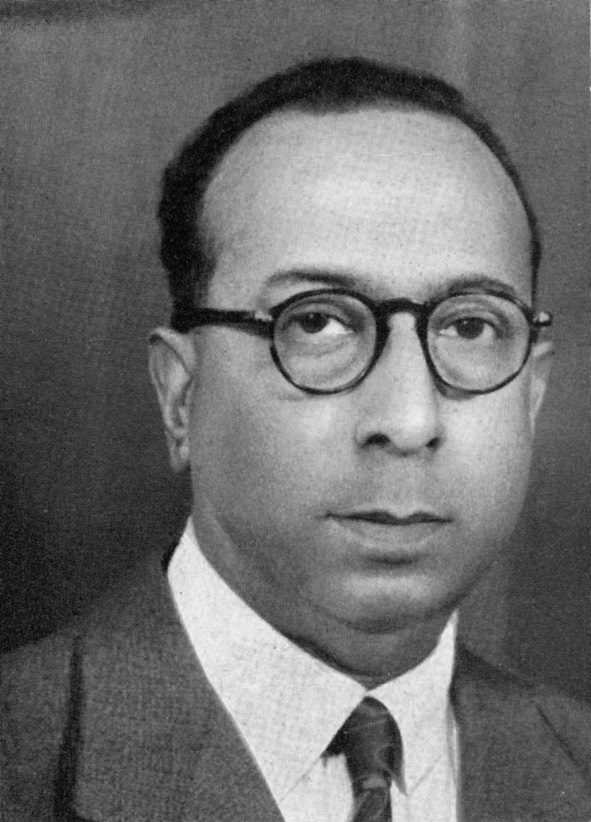
Imagine a man standing on a rooftop in Calcutta at midnight. The city is asleep, but he is awake, watching an invisible pulse of energy bounce off the edge of the world & come back home. He was the 1st Indian to realize that the Void above us is actually a bridge. In 1935, while the British Raj dismissed Indian science as theoretical & primitive, a man in a quiet corner of Calcutta was aiming a radio beam at the heavens like a silver spear. He was not looking for God; he was looking for a mirror in the sky that everyone said did not exist & when he found it, he realized he had discovered the secret Electric Skin of the planet.
Before Sisir Kumar Mitra, the world knew of the Ionosphere, but they thought it was a simple, single layer. Mitra was the 1st to prove the existence of the E-Layer & the complexity of the F-Layer specifically over the tropics. Using a primitive, hand-built radio transmitter, he sent signals upward & timed their return. He discovered that the air 100km above Calcutta was ringing like a bell.
He proved that the Sun does not just give us light; it strips the air of its electrons, creating a celestial mirror. This is why we can hear a radio station from a 1000 KMs away at night. Mitra was the 1st man to map the Radio-Geography of the Indian sky.
In the 1920s, the British were very protective of Broadcasting. They did not want Indians having the power to transmit information wirelessly. Sisir Kumar Mitra did not care. He set up the 1st amateur radio station in India at the University College of Science in Calcutta.
He was essentially a pirate for science. He began broadcasting a call-sign that could be heard across the city, proving that an Indian could master the most advanced tech of the era. The British were furious but could not stop him because he was doing research. He paved the way for All India Radio using a rebel transmitter.
In 1947, he published his magnum opus, The Upper Atmosphere. When the book arrived in the United States & the USSR, the scientists there were stunned. They thought a colonial scientist would only have outdated data. Instead, Mitra’s book was so advanced that it became the "Holy Book of Space Science" for the 1st decade of the Space Age.
When the Soviets launched Sputnik in 1957, the engineers tracking its signal were using the atmospheric models created by a man in a humid room in Calcutta. The 1st satellite in space was talking through a sky that Sisir Kumar Mitra had already mapped.
Near the end of his life, Mitra turned his eyes toward the Moon. He was one of the 1st to mathematically suggest that the Moon might have a plasma envelope/a very thin atmosphere of ions. For decades, this was dismissed. It was not until the Chandrayaan-1 mission & modern probes that the Lunar Ionosphere was confirmed. Mitra was right about the Moon half a century before India actually went there.
Sisir Kumar Mitra was the man who turned the sky into a lab, proving that even under the weight of an Empire, an Indian mind could reach 300 kilometers straight up & touch the edge of space with nothing but a radio wave & a dream.
During the drafting of the Con$titution of India, there were 23 members in the Con$tituent Assembly who had been elected in 1946 on a Mu$lim League ticket, campaigning for the creation of Pakistan.
However,
once they had successfully brought about the creation of Pakistan, they very shrewdly chose not to migrate there.
Subsequently, N€hru and G@ndhi entrusted them with the very responsibility of drafting India's Con$titution—a task to which all of them duly contributed.
These individuals were instrumental in partitioning Punjab in the name of Pakistan; furthermore, in those regions of Punjab where Hindus and Sikhs con$tituted a majority, hundreds of thousands of Hindus and Sikhs were forcibly converted to I$lam following the creation of Pakistan.
The plight of Hindus in that region is marginally better than that of Sikhs, largely because there was a specific, significant reason behind the treatment meted out to the Sikhs—a consequence for which the Sikh community continues to suffer to this day.
It was the Congr€ss party and its Pakistani allies who were primarily responsible for the large-scale massacre of Sikhs during the Partition era.
Dr. Amb€dkar did not oppose these individuals without good reason; indeed, it was precisely because of this opposition that the Congr€ss party sidelined him and instead dedicated itself to the appeasement of this particular faction.
The Congr€ss party's vote bank has historically consisted of a consolidated minority bloc and a fragmented Hindu majority—a dynamic for which the term "secular" was coined to describe an identity that was neither Hindu nor Mu$lim; anyone who occupied this intermediate space was deemed "secular."
Only N€hru and G@ndhi could have pulled off such a feat in India: instead of imprisoning these individuals on charges of treason—as might have been expected—they handed them the direct responsibility of drafting the nation's Con$titution.
Some of these names include:
Subsequently, many of these individuals went on to serve as ministers at both the central and state levels, with some even rising to the position of Chancellor of Aligarh Mu$lim University.
From M@dras:
1. Mohamed Ismail Sahib
2. K.T.M. 1. Ahmed Ibrahim
2. Mahboob Ali Baig Sahib Bahadur
3. B. Pocker Sahib Bahadur (from Mumbai)
4. Abdul Kadar Mohammad Shaikh
5. Abdul Kadir Abdul Aziz Khan (from Assam)
6. Muhammad Saadulla
7. Abdur Rouf (from UP)
8. Begum Qudsia Aijaz Rasul (Nawab of Hardoi)
9. Syed Fazl-ul-Hasan 'Hasrat Mohani' (of AMU)
10. Nawab Ismail Khan (of Meerut), who later became the Chancellor of AMU
11. Z.H. Lari (from Bihar)
12. Hussain Imam (from Gaya)
13. Saiyid Jafar Imam
14. Latifur Rahman
15. Mohammad Tahir
Today, their descendants have emerged as prominent leaders, asserting that their blood, too, has been shed for this country.
My greatest astonishment came when I conducted an exhaustive search online to find their names; I discovered that not a single website belonging to any Hindu-nationalist party or organization had even listed their names on Google.
I had to search painstakingly to unearth these names. We nationalists still have a great deal of work to do at the ideological level.
In this regard, Mu$lims are a thousand times ahead of us, for—despite all their past misdeeds—they have successfully cultivated an image of being great patriots within this country.
The man on Jinnah’s right hand side is his right hand man, Nawab Mohammad Ismail Khan.
A Cambridge grad with aristocratic descent, Khan started off with Congress but quickly segued into separatist politics with Jinnah’s Muslim League.
Man was not a mere member, but a veritable high-priest of Islamic politics second only to Jinnah in influence and authority. When Jinnah temporarily relocated to London in the early 1930s to attend the Round Table Conferences, Ismail Khan essentially took over the sole leadership of the Muslim League in India.
Was also instrumental in reorganizing the League in 1930s and was a key backer of the 1940 Lahore Resolution, where the demand for Pakistan was formally announced.
Died at the age of 73 in 1958 and today lies buried in Delhi, not far from the shrine of Nizamuddin Auliya. Wait a minute...Delhi?
Why Delhi?
Because he died in Meerut.
That’s right, Nawab Mohammad Ismail Khan, one of the founding signatories of the Pakistan Resolution and Jinnah’s closest confidantes...
Never moved to Pakistan. His three sons did. But he didn’t. Despite several invites with incentives of ministerial positions. Why?
He wasn’t alone. TWENTY-SEVEN other champions of the Pakistan Movement not only refused to migrate to the country they armtwisted into creation at the cost of 2 million lives, but even went on to influence our Constitution as members of the Constituent Assembly.
Some call it patriotism, others call it conquest. I lean in favor of the latter, your mileage may vary.
There's a clay tablet with the founding charter of a 12-partner company on it. Twelve merchants pooled 33 pounds of gold to start the firm. The contract has the partner names, the starting capital, the profit split, and the penalty for cashing out early.
The tablet is nearly 4,000 years old. It was found at a site called Kanesh, in central Turkey. Archaeologists have dug up 23,500 of these clay records there, most of them business documents: receipts, loan contracts, shipping orders, lawsuits. The houses they were stored in eventually burned. The fire baked the clay solid and preserved every record.
The merchants came from Assur, in modern-day Iraq. They loaded donkeys with tin and cloth and walked them 1,000 kilometers across mountain passes to Kanesh, roughly the distance from New York to Atlanta. Each donkey carried about 180 pounds and the trip took two to three months. They came home with silver and gold.
The company ran for twelve years under a merchant named Amur Ishtar. A third of the profits went back to the investors. Pull your share out early and the firm gave you four kilos of silver per kilo of gold, half the normal rate. Locked-up money was meant to stay locked up.
That one company was just a tiny piece. The tablets show a complete economy with partners suing each other in commercial court, husbands writing home about prices, and wives writing back complaining the husband had been gone too long. A woman named Ahatum quietly lent silver to four different men over nine years. People bought up other people's loan documents and used them as collateral for new loans, the same thing Wall Street does today with mortgage-backed securities. One merchant got caught smuggling tin in his underwear to dodge a 10% import tax.
In 2019, four economists from Harvard, Sciences Po, Chicago, and Virginia ran the tablet numbers through a gravity model, the math economists use today to predict how much two countries will trade based on size and distance. The Bronze Age numbers matched modern trade numbers almost exactly. Trade fell off with distance at nearly the same rate it does between countries today. The paper ran in the Quarterly Journal of Economics.
There was no economic theory yet. The idea didn't even have a name. The word "capitalism" wouldn't be coined for another 3,800 years, and Adam Smith was 3,700 years away from writing a sentence about markets. Just a guy named Pushu-ken writing a clay tablet to his business partner about a shipment of cloth, and a woman in Assur recording who owed her how much silver. Capitalism was already there, doing its full job, almost four thousand years before anyone wrote down a theory of how it worked.
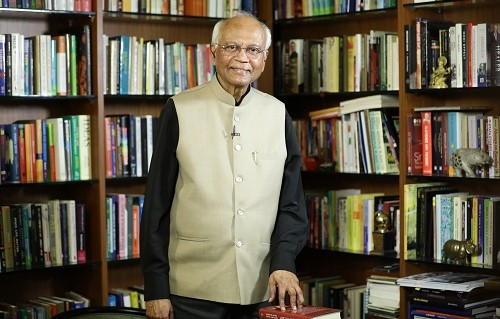
In the 1990s, India was facing a Biological Colonization. If Dr. R.A. Mashelkar had not stepped in, we might have ended up paying a royalty to a US corporation every time we used turmeric on a wound/exported Basmati rice.
In 1997, a Texas-based company called RiceTec was granted a patent by the USPTO (US Patent & Trademark Office) for Basmati Rice lines & grains. They claimed they had invented a superior strain of rice. Mashelkar realized that if this patent stood, Indian farmers would be barred from selling their own rice under the name Basmati in the US. It was a theft of Geographical Intellectual Property.
He did not just shout Injustice. He assembled a team to find Genetic Fingerprints. They proved that the new rice was actually derived from Indian germplasm that had existed for centuries. The USPTO was forced to strike down the majority of the claims.
2 researchers at the University of Mississippi were granted a patent for the use of turmeric in healing wounds. To a Western patent officer, this was a novel invention. To an Indian, it was something their grandmother did every day. Mashelkar produced an ancient Sanskrit text as Prior Art. The USPTO demanded a translation. He provided evidence from the Journal of the Indian Medical Association dating back to 1953 + ancient Ayurvedic texts.
This was the 1st time in history that a patent granted to a US entity was successfully challenged & revoked based on the Traditional Knowledge of a developing country.
Mashelkar also realized that India could not fight 10000 legal battles every yr. He needed a Scalable Solution. Patent officers in the West were not malicious; they were just Data Blind. They could not read Sanskrit/Tamil/Persian. If a discovery was not in an English journal, it did not exist in their system.
He hired 100s of experts (Ayurveda practitioners, IT engineers, & Patent lawyers). They took 500000+ formulations & converted them into a digitized Shloka to Code format. The data was rendered in English, French, German, Japanese, & Spanish.
Today, India has signed agreements with the USPTO, the European Patent Office, & others. Before an officer grants a patent, they run a TKDL Scan. If the herb/method is in the library, the patent is rejected instantly.
It feels like a quick recap of 2,000 years of history crammed into a few weeks:
- The Pope and the King are squabbling
- Persia is fighting its existential war
- (New) Rome has a mad king
- There’s a naval blockade
- There’s bloodshed around Jerusalem
- The Ottomans are flexing
- Small Arab states are squabbling with
each other
- Hungary has just overthrown its ruler
Yes, read it.
You'll know, and I quote Durant himself, directly from Grok:
“It is true that even across the Himalayan barrier India has sent to the west, such gifts as grammar and logic, philosophy and fables, hypnotism and chess, and above all numerals and the decimal system.”
“Nothing should more deeply shame the modern student than the recency and inadequacy of his acquaintance with India. Here is a vast peninsula of nearly two million square miles... an impressive continuity of development and civilization from Mohenjo-daro, 2900 B.C. or earlier, to Gandhi, Raman and Tagore... this is the India that patient scholarship is now opening up, like a new intellectual continent, to that Western mind which only yesterday thought civilization an exclusively European thing.”
“India was the motherland of our race, and Sanskrit the mother of Europe’s languages: she was the mother of our philosophy; mother, through the Arabs, of much of our mathematics; mother, through the Buddha, of the ideals embodied in Christianity; mother, through the village community, of self-government and democracy. Mother India is in many ways the mother of us all.”
“The Mohammedan Conquest of India is probably the bloodiest story in history. It is a discouraging tale, for its evident moral is that civilization is a precarious thing, whose delicate complex of order and liberty, culture and peace may at any time be overthrown by barbarians invading from without or multiplying within.”
“Perhaps, in return for conquest, arrogance and spoliation, India will teach us the tolerance and gentleness of the mature mind, the quiet content of the unacquisitive soul, the calm of the understanding spirit and a unifying, pacifying love for all living things.”
“India will teach us the tolerance and gentleness of mature mind, understanding spirit and a unifying, pacifying love for all human beings.”
“But the curse of every ancient civilization was that its men in the end became unable to fight. Materialism, luxury, safety, even sometimes an almost modern sentimentality, weakened the fibre of each civilized race in turn; each became in the end a nation of pacifists, and then each was trodden under foot by some ruder people that had kept that virile fighting power the lack of which makes all other virtues useless and sometimes even harmful.”
-Teddy Roosevelt
Kautilya's Arthaśāstra shows a very concrete, legal view of widows which is focused on rights, property, and family responsibility. Clearly the majority of Hindu widows at that time were not committing Sati. Nor were they simply passive or dependent figures, but could live with a real degree of independence in society.
Kautilya describes widows living “according to their own will,” so their personal agency was recognized. Hindu widows could own and manage wealth, and the Kautilya clearly acknowledges the presence of “rich widows.” Interestingly, he even mentions such rich independent widows being useful in roles like covert spies or secret agents, which implies trust, capability, and active participation in public life.
Legally also, their rights were clearly defined and protected. A widow was explicitly allowed to choose her path after her husband’s death. If she wanted to live a life of piety & restraint, then she was entitled to get her full endowment, ornaments, and the remainder of her dowry. But if she desired to have a family, then she could also remarry and the law recognized her right to receive what had been given to her by her husband and father-in-law at the time of her remarriage. Widowhood was not treated as the end of a Hindu woman's social or biological life - she could re-enter family life and have children again. At the same time, her property was not ignored but carefully regulated, sometimes to be returned with interest, or retained, depending on circumstances.
Ancient Hindu society did not perceive widowhood as a social dead end. The Arthaśāstra clearly shows us that over 2000 years ago, the majority of Hindu widows were not committing Sati but instead living independently, possessing their own property and owning considerable wealth, making choices about rebuilding their lives, and engaged in constructive useful roles to enrich society.
Calling Sehmat #Raazi ranks among the top books on espionage ever written, globally. It exposes Pakistan across border, hostile forces in Bollywood & a Punjab-based criminals within.
Appointing Meghna Gulzar was my gravest misjudgment. Despite clear warnings, I failed to foresee how ideological bias would end up diminishing the true spirit of the protagonist.
Nearly two decades later, the book continues to leave its mark across the world. Penguin best sellers; Vichhoda, Gobind, The Chabimaster are being scripted, for our beautiful nation deserves to see the complete truth.