@wollmersdorfer@mitsuhiko oh yeah, I remember how much annoyance that kind of philosophy brought to us in the ex-USSR as young programmers.
Even in early 2000s if you do not mark code file as unicode and have some russian comment,python2 will swear at you.Constant small pinpricks of annoyance, every day
users of our systems interact only with specific facets of the whole, but we - the builders of the systems, the people who control them - need a way to understand them as a whole that does not require to keep separate pages and pages of docs, code,text and dashboards in our heads
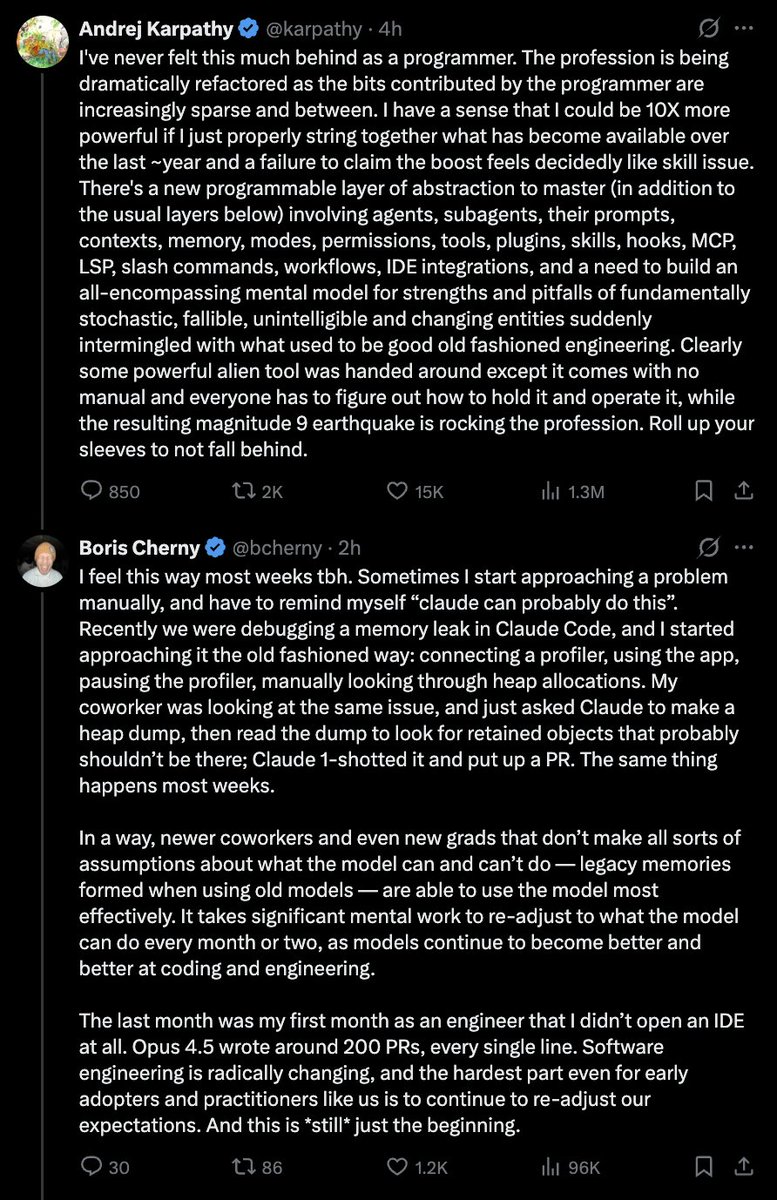
imo Karpathy thought direction is correct, but he does not go far enough.
We need to change how we represent whole systems,not just changes LLM do in them.
Code, infra, business workflows, logs, metrics, money transactions - all parts of a whole, but we show them as separate
We'll be spending a lot more time trying to understand the outputs of language models. A few thoughts, tips & tricks:
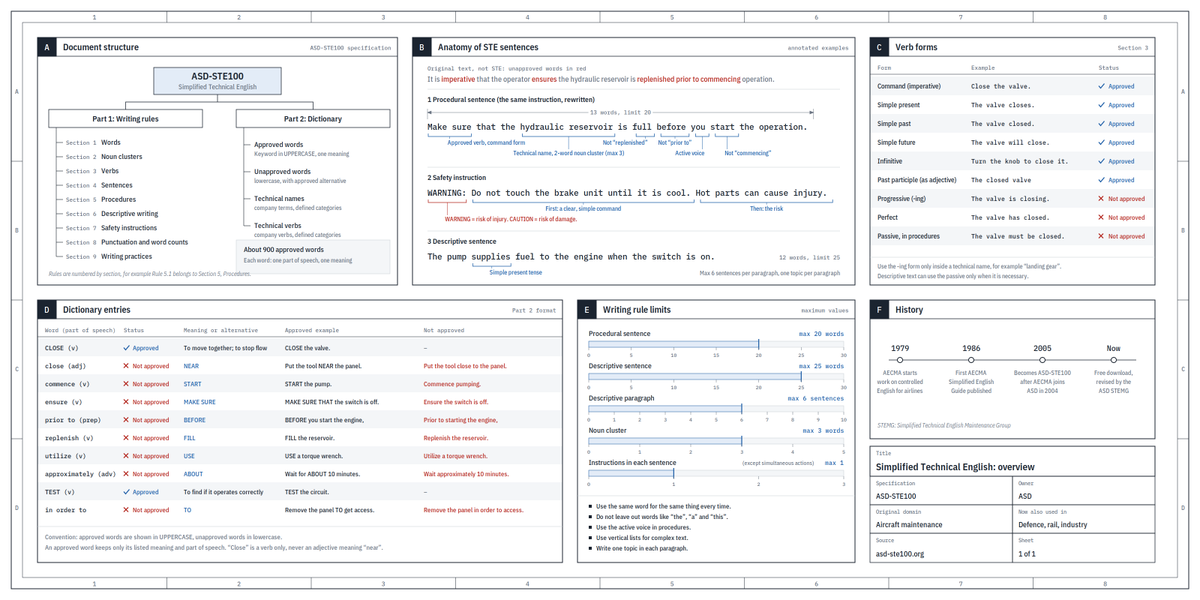
Writing. Something I've had success with: Ask your LLM to explain something in ASD-STE100, it's a controlled language specification originally developed for aerospace maintenance documentation. LLMs well-versed in this language and it comes with heavy constraints on clean writing style that I often find a lot more readable. Sometimes I've tried to soften it a bit e.g. ask for "80% of the way to ASD-STE100" because the spec is quite stringent. But even better:
Diagrams / images. Instead of writing, ask your LLM to create a diagram. These can be a lot easier to process, parse, and understand. But even better:
Web pages. Ask for output "in HTML" to get a beautiful, interactive webpage. LLMs are getting really good at frontend and can create beautiful experiences, animations, etc. But even better:
Explainer videos. The output format I am most bullish on is fully custom / bespoke explainer videos generated on any arbitrary topic. Experiment with things like "Create a 3b1b style video explainer on X. Use my ElevenLabs API key for audio narration". (you'd need an API key for the latter or you can ask your LLM to find you decent free alternatives that use your local compute). This is actually starting to work!
In summary:
- As LLMs get better, they will do more and more of the legwork autonomously, and a lot more of our work will rise up the abstractions into oversight and understanding.
- Luckily, LLMs can help here too because as intelligence and code are increasingly abundant, you can ask for large, custom, discardable software artifacts (e.g. web apps, video explainers) that would have never made sense to create before. Push the boundaries here and you'll be surprised.
a year ago, the engineering lift to maintain the kind of representation of live system I am thinking about would not be economical - too much needs to be changing constantly. Modern LLM solved that. I know this is the future.
I don’t know how this claim has gone so viral.
This was actually completely intentional by Novo.
Novo Nordisk does not operate in an “oops. lawyer forgot the $250 CAD fee” manner.
This is, with all due respect, a shallow read of Novo’s actual corporate strategy.
(1/)
youtube recommended “EPIC: The Musical” yesterday and it’s such a cool project - for two years, this guy was creating his own musical on tiktok, posting progress, casting singers there, fans there were making animations, and now its ready and IT IS EPIC! https://t.co/BfqGoZbqsN
https://t.co/12aOvX8EiG clocks generated by 12 different LLMs, code is updated every minute, very interesting to see progress from GPT-3.5 to 5.2 for example
@twolly11 Avatar: Legend of Korra has some of these themes - conflict of mages and spiritualism vs emerging technology of an industrial era. It is not a main theme by any means, and kinda blended into mages vs no-mages, but it’s there